Overview
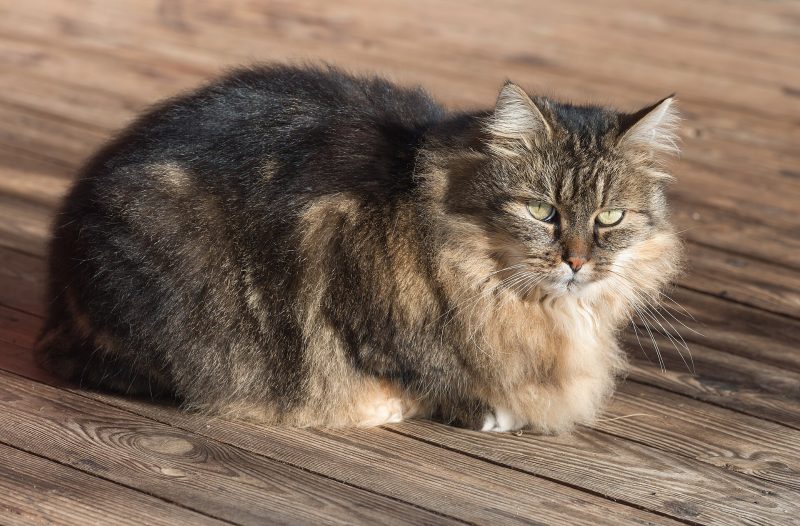
Domestic Longhair, or DLH, is the label for a cat of mixed or unknown ancestry whose coat is long. It is not a breed and has no standard; it is the fluffy end of the ordinary house-cat population, the cat a shelter files next to its shorthaired and mediumhaired cousins. A DLH might look like a small Maine Coon or a Norwegian Forest Cat, and usually it is neither, just a random-bred cat that inherited two copies of the long-hair gene.
The DLH suits people who love a luxurious coat and are willing to pay for it in combing time, roughly ten minutes a day. It is a good fit for families, apartment dwellers and anyone who wants the health and personality of a mixed-breed cat with a show-stopping look. It is a poor fit for owners who cannot commit to grooming; an uncombed long coat mats, hurts and ends in a shave at the vet. Allergy sufferers react to dander and saliva, not hair length, so a DLH is no better or worse on that score.
History & Origin
Long hair in cats is a single recessive trait. Researchers at the University of California, Davis, showed in 2007 that mutations in one gene, FGF5, which controls the hair growth cycle, account for long coats across breeds and random-bred cats alike; a kitten needs a copy from each parent, so two shorthaired carriers can produce a longhaired litter. The trait probably arose in the cold uplands of Western Asia, and longhaired cats from Turkey and Persia reached Europe in the sixteenth and seventeenth centuries as prized curiosities. Cold northern regions produced their own longhaired farm cats, which later became the Maine Coon, the Norwegian Forest Cat and the Siberian.
Outside those breeds, long hair simply spread through the general population wherever carriers met. Domestic Longhair is a modern descriptive label rather than a breed name; shelters and veterinarians use it as the file entry for any longhaired cat without papers. It is now the standard shelter category alongside DSH and DMH.
Appearance
A domestic longhair carries the moderate body of the random-bred cat under a coat that makes it look larger than it is. Most weigh eight to fourteen pounds, with big-boned males from farm or northern stock sometimes heavier. The head is rounded to gently wedged, with tufted ears, a normal muzzle rather than the flat Persian face, and often a ruff around the neck. The coat is long on the body, longest on the belly, the britches behind the thighs and the tail, which carries like a plume. Tufts of hair grow between the toes.
Texture varies: some DLH have fine, cottony coats that mat easily, others a silkier top coat over a lighter undercoat that sheds dirt and tangles. Every color and pattern occurs, from solid black and white through tabby, tortoiseshell and calico to colorpoint. Telling a DLH from a Maine Coon or Norwegian Forest Cat is a matter of pedigree and of degree: the breeds are larger and more uniform, with specific head shapes, while the DLH is simply a longhaired house cat.
Temperament & Personality
Coat length says nothing reliable about personality, so the DLH is as varied as any random-bred cat. In practice many owners describe their longhairs as calm and easygoing, and there may be a grain of truth in that, since longhaired cats that tolerate daily handling have an easier life and are more likely to be kept and bred. Expect anything from a chatty lap cat to a dignified observer, with the full range of playfulness and boldness in between.
Upbringing is the main influence. Kittens handled early are confident; adults from shelters come with known temperaments that a foster home can describe. Most DLH are devoted to their own people and reserved with strangers at first. With children they do well when handling is gentle, and the coat gives small hands something to grab, so supervision matters. With other cats and dogs, slow introductions work. A DLH that resents grooming needs patient desensitization from the first week, because combing is not optional.
Exercise & Activity
A domestic longhair needs the same daily hunting games as any cat: two or three sessions of ten to fifteen minutes with a wand toy, each ending in a catch and a small treat, plus puzzle feeders that make the cat work for part of its food. Climbing furniture, a window perch and scratching posts round out the territory. Play also helps the coat, since an active cat grooms more and carries less loose hair.
Long coats hold heat. A DLH is comfortable in a cool house and may seek tile floors, basements and window drafts in summer; keep play sessions shorter in hot weather and watch for panting, which in a cat is a warning sign. Winter is its season.
Boredom shows as overgrooming, which pulls out hair and makes hairballs worse, night-time racing and overeating
Rotate toys so they stay interesting
Older or heavier longhairs still need gentle daily play to keep weight down and joints moving
Training
The DLH trains like any cat, and one lesson matters more for it than for any other: accepting the comb. Start on day one with a few strokes of a wide-toothed comb paired with treats, stop before the cat objects, and build up to a daily session that covers the whole body. A cat that learns early that grooming predicts good things makes life easy for the next fifteen years.
Litter training is instinctive; provide one box per cat plus one, scooped daily, and keep the hair around the rear trimmed so that litter and waste do not cling. Scratching is redirected to tall sisal posts and horizontal scratchers placed where the cat already scratches, with nails trimmed every few weeks. Clicker training with food teaches sit, come and entering the carrier, which doubles as a tool for vet and groomer visits.
Socialize kittens to handling of paws, belly and ears, where mats form, and to the sound of clippers. Give adopted adults a quiet room and patience before expecting much.
Grooming & Care
Grooming is the whole story with a DLH. Comb daily with a wide-toothed metal comb, working in small sections down to the skin, then follow with a finer comb or slicker to catch what remains. Pay attention to the places mats start: behind the ears, under the chin, the armpits, the belly, the britches and under the tail. A tangle teased apart today is a mat tomorrow, and mats pull the skin, hide sores and parasites and must be shaved out. Never cut mats with scissors; the skin stretches into them.
A sanitary trim around the rear keeps the cat clean. Lion clips are a last resort for cats that cannot be maintained, and a professional groomer can do it safely. Seasonal shedding peaks in spring and fall, when combing twice a day pays off.
Hairballs: daily combing is the best prevention; ask your vet about diet if they are frequent
Baths: rarely needed; dry fully if you do
Nails every two to three weeks; teeth brushed daily if possible; ears checked monthly
Health
A random-bred longhair shares the broad gene pool of all mixed-breed cats, so the inherited diseases of pedigreed longhairs, such as polycystic kidney disease in Persians or the heart-muscle variants found in Maine Coons and Ragdolls, are uncommon; a DNA screen for those variants is available but rarely decisive in a cat of unknown ancestry. What the coat adds is a set of practical risks: hairballs that occasionally cause vomiting or, rarely, an obstruction; skin infections and parasites hidden under mats; and a tendency for weight gain to go unnoticed under the fur.
Otherwise the DLH faces the standard feline list: dental disease, obesity, chronic kidney disease and hyperthyroidism in older cats, diabetes, urinary tract disease and hypertrophic cardiomyopathy, which a vet may investigate with an echocardiogram if a murmur is heard. New cats should be tested for feline leukemia and feline immunodeficiency virus, vaccinated, treated for parasites and spayed or neutered. Repeated unproductive retching, loss of appetite or lethargy after a hairball warrants a prompt vet call. Indoor DLH commonly live into their mid-teens.
Nutrition
Feed a complete, balanced diet for the cat's life stage, kitten food to about a year and adult food after, with a senior or veterinary diet later if advised. Wet food adds water, which helps the kidneys and urinary tract; dry food keeps and works in puzzle feeders. Several small meals a day suit a cat better than one large one.
Two coat-specific points. First, hairball-control formulas add fiber that helps swallowed hair move through the gut, and a vet can advise whether one is worth trying for a cat that brings up hairballs often; they complement combing, not replace it. Second, long fur hides weight gain, so a monthly hands-on check matters more than a glance: ribs should be easy to feel and a waist should be visible from above when the coat is parted. Neutered indoor cats need fewer calories than the bag suggests. Measure portions, count treats, and offer water in several places or a fountain. Ask your vet before supplements or home-prepared diets.
Living With This Breed
A DLH lives happily in any home that gives it climbing space, hiding spots, a clean litter box and a daily grooming session. Apartments are fine. Indoor life is safest and keeps the coat clean; a longhaired cat outdoors collects burrs, mud and parasites and mats in days. A catio or harness walks give fresh air without the mess. Cool homes suit it; in hot climates keep air conditioning on and provide tile or a cooling mat.
Hair is a fact of life: expect it on furniture and clothes, especially in spring and fall, and keep a lint roller by the door. Dander, not hair, drives allergies, so a longhair is no worse for sufferers than a shorthair.
Time alone: a healthy adult copes with a workday; for trips, a daily sitter visit that includes combing keeps mats from forming while you are away
Children: teach gentle hands; the coat invites grabbing
Other pets: introduce slowly
For sitters: comb daily, check the rear is clean, watch for hairball vomiting and note appetite
Interesting Facts
Long hair in cats comes from one recessive gene, FGF5, and two shorthaired parents can each carry it and produce a fluffy kitten.
Longhaired cats from Turkey and Persia were exotic luxuries in sixteenth-century Europe; today their descendants fill shelters as ordinary DLH.
Shelter staff often get asked whether a DLH is a Maine Coon; without a pedigree the answer is simply a longhaired house cat.
A hairball is usually long and thin rather than round, because it takes the shape of the esophagus on the way up.
The Maine Coon, the Norwegian Forest Cat and the Siberian all began as longhaired working cats that were later written into breed standards.
Small tangles can be teased apart, but established mats felt from loose undercoat and usually have to be shaved out, which is why daily combing matters.
What Domestic Longhair owners say
Real pets, photos, stories and tips from the SitterNation community — separate from the editorial guide above.
Log in to add your pet, photos, stories and tips.
Meet Domestic Longhairs on SitterNation
No Domestic Longhairs have joined yet. Owners can show their pet here from the pet's profile.
Domestic Longhair community photos
No Domestic Longhairs photos yet — be the first to share one.
Stories from Domestic Longhair owners
No stories yet. What is life with yours really like?
Tips from Domestic Longhair owners
No tips yet. One practical thing that works for you is enough.
Ask Domestic Longhair owners
No questions yet. Ask the people who live with the breed.