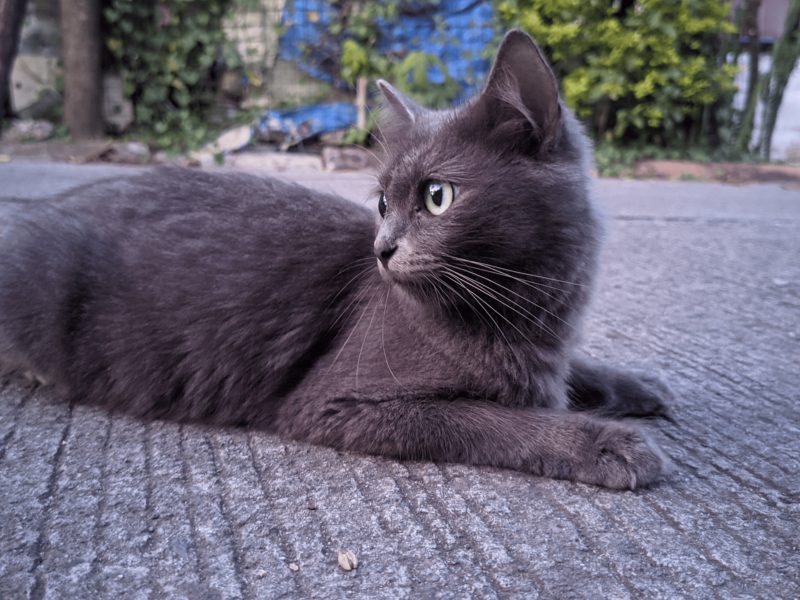
Overview
Domestic Medium Hair, or DMH, is the shelter and veterinary label for a cat of mixed or unknown ancestry whose coat is neither short nor truly long: plush and a little shaggy, with a modest ruff and a fluffy tail, but without the flowing belly fur and britches of a longhair. It is not a breed, and it is the least precise of the three coat labels, because where medium ends and long begins is a judgment call made at intake.
The DMH suits people who like a soft, touchable coat but do not want the daily combing a longhair demands; a couple of sessions a week keeps most of them tidy. Like every random-bred cat it comes with a wide gene pool, a low price and, if adopted as an adult, a personality you can meet first. It is a good fit for families, apartments and first-time owners. The only caution is that some medium coats mat more than their length suggests, so a quick weekly check of the armpits and belly is wise.
History & Origin
The medium coat is a by-product of cat coat genetics. Hair length in cats is governed mainly by one gene, FGF5, with long hair recessive to short, but the many other genes that set undercoat density, hair texture and the length of the ruff and tail hair vary independently. The result is a continuum: some genetically longhaired cats carry sparse coats, some shorthaired cats carry thick plush ones, and the middle of the range looks like neither. Random breeding shuffles these every generation, so medium coats appear in any population where long hair is present.
The label itself is a late addition. Early cat fancy and early shelters sorted cats as shorthaired or longhaired; the semi-longhair idea arrived with breeds such as the Maine Coon, Norwegian Forest Cat, Birman and Ragdoll, whose standards describe coats of medium to long length, and American shelters added Domestic Medium Hair in the late twentieth century as a third bin for cats that fit neither of the others. British records still fold most of them into Domestic Semi-Longhair.
Appearance
A domestic medium hair has the same moderate body as any random-bred cat, roughly eight to thirteen pounds, with a rounded or gently wedged head, medium ears that may carry small tufts, and a tail that reads as fluffy rather than plumed. The coat is the distinguishing feature: longer than the sleek lie of a shorthair, with a visible undercoat that stands the fur slightly away from the body, a modest ruff at the neck, light feathering on the backs of the legs and a bushy tail, but a belly and britches that stay short enough not to tangle on their own.
As with every mixed-breed cat, all colors and patterns occur, and tabby, tortoiseshell, black and bicolor are the commonest. The in-between coat often looks fuller in winter and closer to short in summer, so a cat labeled DMH in January may be mistaken for a DSH in July. Semi-longhaired breeds such as the Maine Coon and Ragdoll are larger, more uniform and come with papers; the DMH is the house-cat version.
Temperament & Personality
Coat length does not predict personality, and the DMH is as varied as the population it belongs to. Most are moderate cats: affectionate with their own people, polite then friendly with visitors, playful well into middle age and content indoors. Within that, expect the whole spread from lap cat to independent observer, from constant talker to near-silent companion.
Early handling shapes the adult. Kittens raised with people between two and seven weeks of age grow up confident; those found outdoors later may stay shy. An adult DMH from a shelter or foster home comes with a described temperament, which beats any guess from coat or color. Most are fine with gentle children, and the plush coat invites petting, which suits cats that enjoy it and irritates those that do not; teach children to watch the tail and ears. With other cats and dogs, slow scent-first introductions over a week or two usually succeed. The DMH generally accepts grooming more readily than a longhair simply because sessions are shorter.
Exercise & Activity
Like every cat, a DMH needs daily opportunities to hunt. Two or three play sessions of ten to fifteen minutes with a wand toy, each ending in a catch and a small reward, keep most adults fit; kittens and young cats want more, seniors less. Puzzle feeders and food scattered across the floor turn meals into work. A cat tree, a window perch and a couple of shelves add the vertical territory cats use to feel secure, and scratching posts keep claws and shoulders in shape.
The medium coat is a good all-weather coat: warm enough for a cool house, light enough that heat is rarely a problem indoors. In hot spells, shorten play and offer cool floors.
Boredom shows as night-time racing, overgrooming, ankle attacks or overeating
Rotate toys weekly
A catio or harness walks give outdoor time without outdoor risks
Play during the spring and fall sheds helps loosen the old coat, so comb afterward
Training
The DMH trains like any cat. Litter training is instinctive; provide one box per cat plus one, in quiet corners, with unscented clumping litter scooped daily. A lapse usually points to illness, stress or a box the cat dislikes, so see your vet first. Redirect scratching to a tall sisal post beside the furniture the cat has chosen and a horizontal cardboard scratcher, and reward use. Trim nails every two to three weeks.
Clicker training with food teaches sit, come, a high-five and, most usefully, walking into a carrier on cue; keep sessions to a few minutes before meals. A harness is easiest introduced to kittens, but patient adults learn too.
Two habits are worth building early. Pair the comb with treats from the first week so the twice-weekly grooming session is welcome, and handle paws, belly and ears regularly so you can check for mats and fleas without a fight. Give an adopted adult a quiet room and a week or two to settle before expecting much.
Grooming & Care
A medium coat needs more than a shorthair and much less than a longhair. Comb two or three times a week with a wide-toothed metal comb, then a finer comb or slicker, working against the lie of the fur to reach the undercoat. Check the places mats begin: behind the ears, under the chin, the armpits, the belly and the britches. Most DMH coats resist matting, but the cottony ones do not, and a small tangle teased apart with fingers saves a shave later. Never cut mats with scissors.
Seasonal shedding is the busy time. In spring and again in fall the undercoat turns over, and daily combing for a few weeks cuts hairballs and keeps fur off the furniture. Baths are rarely needed; a damp cloth handles small messes.
A sanitary trim around the rear helps cats with fuller britches
Nails every two to three weeks; teeth brushed daily if possible; ears checked monthly
Seniors and overweight cats need help with the lower back where they can no longer reach
Health
A random-bred medium hair shares the wide gene pool of all mixed-breed cats, so the inherited diseases of pedigreed semi-longhairs, such as the heart-muscle gene variants of Maine Coons and Ragdolls, are uncommon; consumer DNA panels can test for them but are rarely decisive in a cat of unknown ancestry. Mixed ancestry does not change the standard list every cat faces: dental disease, obesity, lower urinary tract disease, chronic kidney disease and hyperthyroidism in older cats, diabetes in overweight ones, and hypertrophic cardiomyopathy, which a vet may investigate with an echocardiogram if a murmur is heard. A large British study found non-pedigree cats outlived pedigreed ones on average.
The coat adds a modest hairball risk, highest during the seasonal sheds, and a tendency for weight gain to hide under the fur. New cats should be tested for feline leukemia and feline immunodeficiency virus, vaccinated, treated for parasites and spayed or neutered. Frequent hairball vomiting, unproductive retching, a dull or greasy coat or sudden overgrooming are reasons to see your vet. Indoor DMH commonly live fifteen years or more.
Nutrition
Feed a complete, balanced diet for the cat's life stage, kitten food to about a year and adult food after, with a senior or veterinary diet later if your vet recommends it. Wet food adds water for the kidneys and urinary tract; dry food keeps well and works in puzzle feeders; many owners use both. Several small meals a day suit a cat better than one bowl.
Weight is the main concern. Neutered indoor cats need fewer calories than packaging suggests, and a plush coat softens the outline enough that extra pounds go unnoticed until the vet puts the cat on the scale. Measure portions, count treats, and do a monthly hands-on check: ribs easy to feel, waist visible from above with the fur parted.
During shedding seasons a hairball-control formula, which adds fiber to move swallowed hair through the gut, can help a cat that brings up hairballs often; ask your vet whether it is worth trying alongside combing. Offer fresh water in several places. Change foods over a week, skip milk, and ask before supplements or home-prepared diets.
Living With This Breed
A DMH suits any home that offers vertical space, hiding places, a clean litter box, a window and daily attention. Apartments are fine. Indoor life is safest and longest; a catio or harness walks give the outdoors without traffic, fights and disease. The medium coat tolerates most indoor climates and sheds visibly in spring and fall, so expect hair on dark clothes and keep a lint roller handy. Allergies respond to dander and saliva rather than hair length, so a DMH is neither better nor worse for sufferers than other cats.
Time alone: a healthy adult copes with a workday and often an overnight with food, water and a clean box; longer trips need a daily sitter visit
Children: supervise and teach gentle handling
Other pets: introduce gradually with separate resources
For sitters: keep the routine, note appetite and litter use, comb once during the visit if the owner asks, and check the armpits and belly for mats
Escape habits: watch doors and window screens
Interesting Facts
The DMH label is a shelter invention; British records usually file the same cats as Domestic Semi-Longhair.
A single cat can be logged as medium hair in winter and shorthair in summer, because the undercoat thickens and thins with the seasons.
Semi-longhaired breeds such as the Maine Coon, Norwegian Forest Cat, Birman and Ragdoll all describe their coats as medium to long, and their random-bred look-alikes fill the DMH column.
Two shorthaired parents who each carry the recessive long-hair gene can produce a litter with short, medium and long coats side by side.
The medium coat is the all-weather option: warm enough for drafty farmhouses, light enough for centrally heated apartments.
Hairballs tend to increase during the spring shed, when the thick winter undercoat comes out over a few weeks.
What Domestic Medium Hair owners say
Real pets, photos, stories and tips from the SitterNation community — separate from the editorial guide above.
Log in to add your pet, photos, stories and tips.
Meet Domestic Medium Hairs on SitterNation
No Domestic Medium Hairs have joined yet. Owners can show their pet here from the pet's profile.
Domestic Medium Hair community photos
No Domestic Medium Hairs photos yet — be the first to share one.
Stories from Domestic Medium Hair owners
No stories yet. What is life with yours really like?
Tips from Domestic Medium Hair owners
No tips yet. One practical thing that works for you is enough.
Ask Domestic Medium Hair owners
No questions yet. Ask the people who live with the breed.