Overview
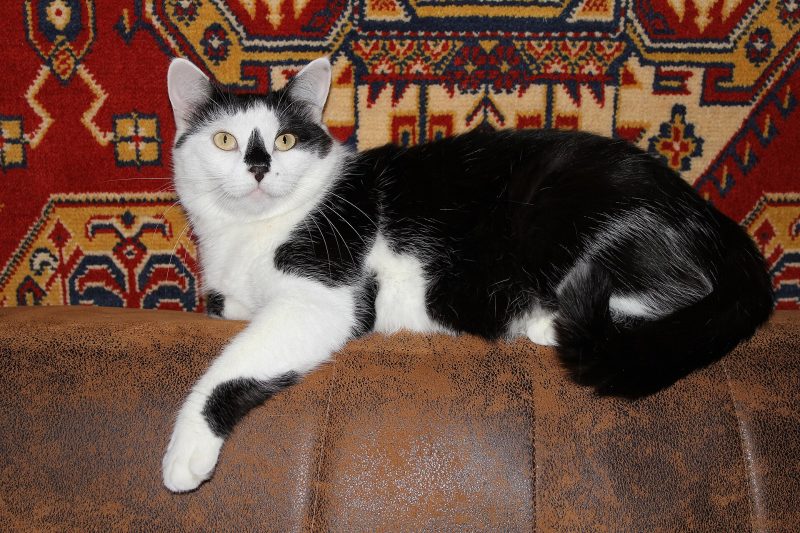
A mixed-breed cat is any cat without a pedigree, which is to say almost every cat. Pedigreed breeds make up only a small slice of the population; the rest are random-bred house cats, the moggies of Britain and the domestic shorthairs, mediumhairs and longhairs of American shelter paperwork. There is no standard and no typical cat, only a vast, healthy, varied population that has been breeding itself for thousands of years.
Mixed-breed cats suit nearly everyone: first-time owners, families, apartment dwellers, seniors, and people who want a companion without a breeder's price tag or a breed's list of inherited problems. They come in every coat and color, and an adult from a shelter arrives with a known personality. The only people they suit less well are those set on a specific look or a specific breed trait, and even then a visit to a shelter often changes minds. For most homes, the cat in the next cage is as good a cat as exists.
History & Origin
Cats domesticated themselves around ten thousand years ago in the Near East, moving into the first grain stores to hunt rodents and travelling onward with farmers and sailors. For almost all of that time there were no breeds, only regional populations that differed a little in color and build. Genetic surveys show today's random-bred cats still cluster by region, with the Mediterranean, Western Europe, East Asia and East Africa each having a recognizable signature, and nearly every pedigreed breed was drawn from one of those pools within the last 150 years. The first cat show at London's Crystal Palace in 1871 marks the start of breed fancy; the cats outside the hall carried on as before.
In the United States, roughly five of every six owned cats are random-bred, and in Britain the figure is close to nine in ten. Shelters do not guess breeds for cats the way they once did for dogs; they sort by coat length, so a mixed-breed cat is logged as a domestic shorthair, mediumhair or longhair, with a color and pattern added.
Appearance
The range is the whole species. Random-bred cats typically weigh between eight and twelve pounds, with intact males at the top of that and a few farm-bred giants beyond it, and they share the moderate build that natural selection favors: a wedge-to-round head, medium ears, a tail about the length of the body, and legs built for climbing and pouncing. Mutations such as folded ears or hairlessness do crop up in random-bred cats, and the Scottish Fold and Sphynx both began that way, but extremes like very flat faces are kept going only by deliberate pedigree breeding.
Color and pattern follow a short list of genes. Tabby is the default, in mackerel stripes, classic swirls, spotted or ticked forms. Solid black, blue, chocolate and white, orange and cream, tortoiseshell and calico, white spotting from a locket to a tuxedo, and the pointed pattern of Siamese ancestry all turn up in shelters every week. Eye color runs from copper through gold and green to blue. Coat length is short in most cats, long in some, and in-between in the rest.
Temperament & Personality
There is no mixed-breed temperament, only individual cats, and that is the great advantage of adopting an adult: the personality is already formed and the shelter or foster home can describe it. Some are lap cats who follow you from room to room and talk constantly; some are dignified observers who want company but not handling; some are playful athletes who need a job. Early handling between two and seven weeks of age matters more than ancestry, which is why kittens raised underfoot in a home tend to be more confident with people than those born outdoors.
Most random-bred cats are moderately active, with bursts of play at dawn and dusk and long naps between. They bond closely with their household and are usually reserved with strangers at first. With children they do well when the children are taught to let the cat come to them. With other cats and with dogs, slow introductions over days or weeks work far better than putting animals together and hoping.
Exercise & Activity
Cats exercise in short, intense bursts, and an indoor cat relies on you to provide the triggers. Aim for two or three play sessions a day of ten to fifteen minutes with a wand toy that moves like prey, ending with a catch and a small treat so the hunt has a conclusion. Rotate toys so they stay interesting, and let the cat work for part of its food with a puzzle feeder or a scatter across the floor.
Vertical space is exercise too. A tall cat tree, a cleared windowsill and a shelf or two let a cat climb, survey and retreat, which it needs for peace of mind as much as for muscle. Scratching posts, both upright and flat, keep claws and shoulders in shape.
Boredom shows as night-time zoomies, overgrooming, attacking ankles or overeating
Older cats still need play, just gentler and shorter
A screened porch or a harness walk adds safe outdoor time for cats that enjoy it
Training
Cats are trainable; most people simply never try. Litter training is nearly automatic, since cats bury waste by instinct: provide one box per cat plus one, in quiet spots, scooped daily, with unscented litter deep enough to dig. Lapses usually mean a medical problem, a dirty box or stress rather than spite, and a vet visit is the first step.
Scratching is also instinct, so you redirect rather than suppress it. Put sturdy posts where the cat already scratches, reward use, and keep nails trimmed. Clicker training works well for cats with food or play rewards; sit, come, high-five, going into a carrier on cue and tolerating a harness are all realistic goals in short sessions. A carrier that lives in the room as furniture, with treats inside, turns vet trips from a battle into a routine.
Socialize kittens early to handling, nail trims, tooth brushing, visitors and the vacuum. Adult shelter cats need time; a quiet room, a hiding place and patience for a week or two do more than any technique.
Grooming & Care
Grooming depends on the coat the cat happens to have. Shorthaired cats manage well on their own and need a weekly brush with a rubber mitt or fine comb to lift loose hair and reduce hairballs, more often in spring and fall when the coat turns over. Mediumhaired cats need a comb two or three times a week with attention to the ruff, belly and britches. Longhaired cats need daily combing to the skin and regular checks for mats behind the ears, in the armpits and around the rear.
Baths are rarely needed for a healthy cat and are stressful for most; a damp cloth handles minor messes. Every cat benefits from the basics.
Nails: trim every two to three weeks, especially for indoor cats
Teeth: daily brushing with a cat toothpaste is the gold standard; dental disease is the most common problem vets find in adult cats
Ears: check monthly; healthy ears need no cleaning
Seniors: help with grooming as flexibility fades
Health
Random-bred cats are already outbred, so the hybrid vigor argument matters less than it does in dogs: the breed-specific inherited diseases of pedigreed cats, such as polycystic kidney disease in Persians or the heart-muscle gene variants of Maine Coons and Ragdolls, are rare in the general population. A large British study found non-pedigree cats outlived pedigreed ones by well over a year on average. What mixed ancestry does not change is the ordinary disease list every cat faces: dental disease, obesity, chronic kidney disease, hyperthyroidism, diabetes, urinary tract disease and hypertrophic cardiomyopathy, the common heart condition that a vet may screen for with an echocardiogram if a murmur is heard.
New cats should be tested for feline leukemia and feline immunodeficiency virus, vaccinated, treated for parasites and spayed or neutered. Consumer DNA tests for cats report genetic similarity to breed groups rather than true ancestry and screen a modest list of variants; ask your vet whether any result changes care. Indoor cats commonly live into their mid-teens and beyond; annual exams, twice yearly for seniors, catch most problems early.
Nutrition
Cats are obligate carnivores and need a complete, balanced diet formulated for their life stage: kitten food through about a year, adult food after, and a senior or therapeutic diet later if your vet recommends one. Wet food, dry food or a mix all work; wet food adds water, which helps urinary health, and dry food is convenient for puzzle feeders. Several small meals a day suit a cat's natural pattern better than one large one.
Obesity is the most common nutritional problem in house cats and feeds directly into diabetes, arthritis and urinary disease. Measure food, avoid free-feeding unless the cat self-regulates, count treats in the daily total, and check body condition monthly: ribs easy to feel, a waist visible from above. Neutered indoor cats need fewer calories than the bag suggests.
Fresh water in several places, or a fountain, encourages drinking. Milk is not a cat food, and sudden diet changes cause upsets; transition over a week. Ask your vet before supplements or home-prepared diets.
Living With This Breed
A mixed-breed cat fits any home that is willing to think like a cat: places to climb, places to hide, a clean litter box, a window with a view and people who respect its moods. Apartments are fine. Indoor life is safest and longest; outdoor cats face traffic, disease, fights and predators, and the compromise most vets favor is indoor living with a catio, a screened porch or harness walks for cats that enjoy them. Community cats, the unowned outdoor cats managed by trap-neuter-return programs and marked with a tipped ear, are a separate population; some adapt to homes, especially when young, and many do not.
Time alone: an adult cat copes with a workday and often a night with food, water and clean litter; longer absences need a daily visit
Children: supervise and teach gentle handling
Other pets: introduce slowly, with separate resources
For sitters: keep the routine, respect hiding, check that the cat eats, drinks and uses the box daily
Escape habits: watch doors and screens
Interesting Facts
Roughly five of every six owned cats in the United States are random-bred, and in Britain about nine in ten; pedigreed cats are the rare exception.
About 2.2 million cats were adopted from American shelters in 2024, and strays made up the largest share of intake.
Random-bred cats still carry the genetic signature of the region their ancestors came from, which is how researchers traced domestication to the Near East.
About four in five orange cats are male and nearly all calicos are female, because the orange gene sits on the X chromosome.
A community cat with the tip of one ear removed has been neutered and vaccinated through a trap-neuter-return program.
Moggy, the British word for a mixed-breed cat, is first recorded in the early twentieth century and may come from a pet form of Margaret.
What Mixed Breed Cat owners say
Real pets, photos, stories and tips from the SitterNation community — separate from the editorial guide above.
Log in to add your pet, photos, stories and tips.
Meet Mixed Breed Cats on SitterNation
No Mixed Breed Cats have joined yet. Owners can show their pet here from the pet's profile.
Mixed Breed Cat community photos
No Mixed Breed Cats photos yet — be the first to share one.
Stories from Mixed Breed Cat owners
No stories yet. What is life with yours really like?
Tips from Mixed Breed Cat owners
No tips yet. One practical thing that works for you is enough.
Ask Mixed Breed Cat owners
No questions yet. Ask the people who live with the breed.