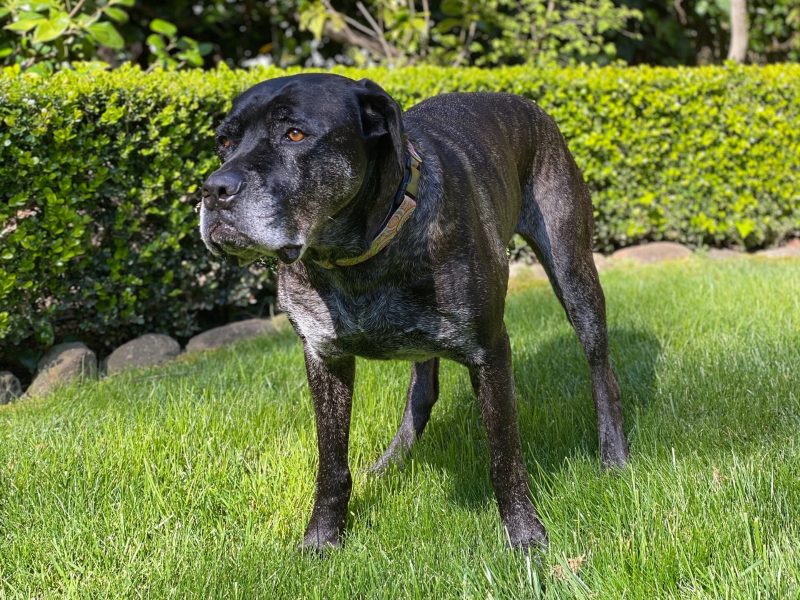
Typical tendencies
Energy level
Needs a real outlet most days.
Good with children
Patient with kids when well supervised.
Good with other dogs
Selective; careful introductions needed.
Trainability
Quick to learn and keen to please.
Shedding
A light scatter, easy to keep up with.
Apartment friendly
Needs space and a garden to be happy.
More traits
Exercise needs
Adaptability
Grooming needs
Drooling
Intelligence
Family friendly
Good with cats
Friendly with strangers
Sociability
Protectiveness
Prey drive
Overview
The Cane Corso is a large Italian mastiff built for guarding and hard farm work, and it still thinks like a guardian. Devoted, intelligent and surprisingly athletic for a dog weighing around a hundred pounds, it forms an intense bond with its family and treats everyone else as a question to be answered later. That makes it a superb companion for an experienced owner who will train daily, socialize relentlessly and provide real exercise, and a poor choice for a first-time owner, a busy household or anyone who wants a dog that loves the whole neighborhood. Corsos are calm indoors when their needs are met, affectionate with their own children, and steady rather than excitable. They need space, a secure fence and an owner who is comfortable being the decision-maker. Choose this breed because you want a working partner, not because it looks impressive.
History & Origin
The Corso descends from the molossian dogs of ancient Rome, heavy war and guard dogs that spread through Italy with the legions. When the empire fell, their descendants settled into rural life in the south, where for centuries they guarded farmsteads, drove cattle and pigs to market, held wild boar for hunters and kept watch over the family. The name is usually read as bodyguard dog or guardian of the courtyard. Mechanized farming and two world wars nearly wiped the type out, and by the 1970s only scattered working dogs remained on remote farms. A small group of Italian enthusiasts located and bred them from the late 1970s; a 1980 litter produced the model for the first standard, the Italian club formed in 1983 and the FCI provisionally accepted the breed in 1996. The first Corsos arrived in the United States in 1988. The AKC admitted the breed to its Miscellaneous Class in 2007 and granted full recognition in the Working Group in 2010.
Appearance
A Cane Corso is a large, powerful dog that should look athletic rather than ponderous, standing 25 to 27.5 inches for males and 23.5 to 26 for females, with weight in proportion to height. The head is broad with a short, square muzzle, giving a serious expression; the lips are moderately loose, so expect some slobber. Ears are medium and triangular, hanging naturally, though cropped ears are still common in the United States. The chest is deep, the back straight and the overall outline slightly longer than tall. The coat is short, stiff and dense with a light undercoat, in black, gray, fawn or red, solid or brindled, with fawn and red dogs wearing a black or gray mask. Compared with the Neapolitan Mastiff, the Corso is lighter, tighter-skinned and far less wrinkled; compared with a Boxer it is much heavier and lacks the upturned jaw.
Temperament & Personality
Temperament is the whole story with this breed. A well-bred, well-raised Corso is confident, quiet and watchful, deeply attached to its household and indifferent to strangers rather than hostile. It does not seek attention from visitors and does not need to. Its protective instinct is strong and switches on without training, so the owner's job is to teach the dog when protection is not needed. Corsos are serious dogs that enjoy work and play with their own people and can be gentle with children they live with, but they should always be supervised around other children, whose running and squealing can be misread. Same-sex dog aggression is common in adults and small animals can trigger prey drive. Poorly socialized or under-exercised Corsos become suspicious and reactive. This is a thinking guardian: it assesses, decides and acts, which is exactly why it needs an owner who makes the decisions first.
Exercise & Activity
Adult Corsos need an hour or more of real exercise every day, ideally two long walks of a mile or more plus purposeful activity such as obedience work, scent games, cart pulling or structured play in a securely fenced yard. Puppies need shorter, more frequent outings with no forced running or jumping while growth plates are open, usually until 18 months. Mental work is as important as mileage; twenty minutes of training a day does more for a Corso's behavior than an extra hour of walking. They tolerate cold reasonably well and heat poorly because of the short muzzle and heavy build, so avoid exertion in hot weather. Bored or under-worked Corsos dig, chew, fence-fight and become harder to live with.
Two walks daily plus 20 minutes of training or a job
No off-leash exercise outside secure fencing
Keep workouts easy in heat and for growing puppies
Training
Corsos are intelligent and want to work with the person they respect, which makes them trainable, but they are not pushovers. Start formal training the week the puppy comes home and continue for life. Reward-based methods work well because the breed is food-motivated and sensitive to its owner's mood; heavy-handed corrections create either a shut-down dog or a defensive one, neither of which you want at a hundred pounds. Reliability on four behaviors is non-negotiable: coming when called, down, stay and walking on a loose leash. Socialization must be heavy and ongoing: calm exposure to many people, places, surfaces, sounds and well-mannered dogs through the first year and beyond, so that adult reserve stays neutral instead of tipping into suspicion. Do the training yourself rather than sending the dog away; the relationship is the point. Common sticking points are leash reactivity toward other dogs and guarding behavior at doors and in the car.
Grooming & Care
Grooming is the easy part of Corso ownership. The short, dense coat needs a weekly going-over with a rubber curry or bristle brush to lift dead hair, with daily sessions during the spring and fall sheds when the undercoat lets go in handfuls. Bathe every couple of months or when the dog finds something foul to roll in; frequent bathing dries the skin. Check the hanging ears weekly and clean only if there is wax or odor, since moisture and folded ears invite infection. Nails grow fast on a dog this heavy and should be trimmed every two to three weeks; clicking on the floor means they are too long. Brush teeth a few times a week. Keep a towel by the door for drool and wet jowls, and check the facial folds if your dog has them.
Weekly brushing, daily during seasonal shedding
Ears weekly, nails every 2 to 3 weeks, teeth several times a week
Wipe jowls after drinking
Health
Most Corsos live 9 to 12 years, a reasonable span for a dog of this size. Orthopedic problems lead the list: hip and elbow dysplasia are common enough that breeders should show OFA or PennHIP hip results and OFA elbow results for both parents. Idiopathic epilepsy, with seizures beginning in young adulthood, is well documented in the breed, and demodectic mange is seen in puppies and young adults with immature immune systems. Eyelid problems such as entropion, ectropion and cherry eye may need surgical correction. As a deep-chested giant, the Corso is at risk of gastric dilatation-volvulus (bloat), a true emergency; many owners discuss a preventive gastropexy with their vet. Heart screening matters because dilated cardiomyopathy occurs in the breed. Two inherited conditions have DNA tests: neuronal ceroid lipofuscinosis and dental-skeletal-retinal anomaly. The parent club's CHIC program asks for hip, elbow, cardiac and patella evaluations plus both DNA tests. See a vet immediately for a swollen abdomen, unproductive retching or collapse.
Nutrition
Corso puppies grow fast, and controlled growth protects their joints: feed a large-breed puppy formula, which moderates calcium and calories, and keep puppies lean rather than roly-poly until they finish growing at around 18 to 24 months. Adults do best on two or three measured meals a day instead of one large one, which along with avoiding hard exercise an hour either side of meals is the standard advice for reducing bloat risk; raised bowls are no longer recommended. Portion by body condition, not by the bag: you should feel ribs easily under a thin layer of fat and see a waist from above. Obesity shortens lives and worsens hips and elbows. Treats count toward daily calories. Joint supplements are common but ask your vet before adding anything, and raise any sudden change in appetite or thirst at the next visit. Sitters should stick to the owner's exact portions and schedule.
Living With This Breed
A Cane Corso belongs in a house with a secure, solid fence and an owner at home a good part of the day. Apartments and long hours alone do not suit the breed; it should live indoors with the family, not in a kennel or yard. Climate tolerance is moderate, with heat the bigger risk. With its own children a well-raised Corso is patient, but visiting children and their friends need supervision and the dog needs a quiet retreat. Multi-dog homes work best with opposite-sex pairs; cats and small pets depend entirely on early socialization. Corsos are not noisy but have a bark you will remember. Expect drool, seasonal hair and occasional insurance or housing restrictions on mastiff breeds.
Pet sitters should meet the dog with the owner present before the first visit
Keep the dog's routine, use the owner's leash and gear, no dog parks
Daycare is generally a poor fit; one-on-one walks or home visits work better
Interesting Facts
The name Cane Corso is pronounced roughly KAH-neh KOR-so, and Italians use Cani Corsi for the plural.
Dogs of this type appear in Italian art and engravings from the Renaissance onward, often shown holding boar or guarding farmyards.
The breed went from near extinction on remote southern farms in the 1970s to the top twenty most popular AKC breeds within fifteen years of recognition.
Corsos were traditionally used to hold wild boar at bay and to manage semi-wild pigs and cattle on the way to market, which is why they combine power with real agility.
The first Corsos were imported to the United States in 1988, more than twenty years before the AKC granted the breed full recognition.
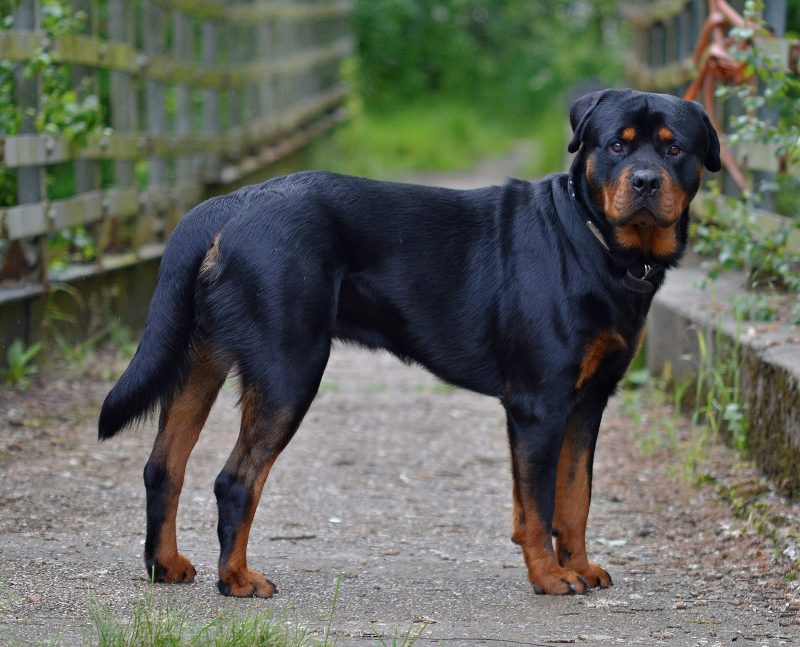
Breeds similar to the Cane Corso
What Cane Corso owners say
Real pets, photos, stories and tips from the SitterNation community — separate from the editorial guide above.
Log in to add your pet, photos, stories and tips.
Meet Cane Corsos on SitterNation
No Cane Corsos have joined yet. Owners can show their pet here from the pet's profile.
Cane Corso community photos
No Cane Corsos photos yet — be the first to share one.
Stories from Cane Corso owners
No stories yet. What is life with yours really like?
Tips from Cane Corso owners
No tips yet. One practical thing that works for you is enough.
Ask Cane Corso owners
No questions yet. Ask the people who live with the breed.