Typical tendencies
Energy level
Calm at home with short bursts of play.
Good with children
Patient with kids when well supervised.
Good with other dogs
Selective; careful introductions needed.
Trainability
Learns, but on its own schedule.
Shedding
Keep the lint roller within reach.
Apartment friendly
Needs space and a garden to be happy.
More traits
Exercise needs
Adaptability
Grooming needs
Drooling
Intelligence
Family friendly
Good with cats
Friendly with strangers
Sociability
Protectiveness
Prey drive
Overview
The Anatolian Shepherd Dog is a rugged Turkish livestock guardian: a giant, steady, self-reliant dog bred for thousands of years to live with flocks on the open plateau and to decide for itself when a threat needs answering. Males stand 29 to 32 inches and weigh 110 to 150 pounds, and the breed is calm, loyal to its people and animals, and suspicious of everything else. It needs little formal exercise but a great deal of space, a serious fence and an owner who understands that independence, territorial barking and wariness of strangers are features, not faults. On a farm or a large rural property with stock to guard, an Anatolian is in its element. In a suburban yard it is a lot of dog. It is not a breed for first-time owners, apartments, busy social households or anyone who wants an obedient, eager-to-please companion.
History & Origin
Large guardian dogs have protected sheep and goats on the Anatolian plateau for thousands of years, probably sharing ancestry with the mastiff-type dogs of Central Asia and shaped over time by crosses with local sighthounds for speed and endurance. In Turkey these dogs are simply coban kopegi, shepherd's dogs, and regional types such as the Kangal and Akbash fall under that name; folklore says a shepherd who lost one had to be compensated with a pile of grain as tall as the dog was long. The breed came to the United States in two waves: a pair sent by a Turkish diplomat to the government's Sheep Dog Project in the late 1930s, a program closed by wartime rationing, and a steady trickle of imports in the 1950s through 1970s, many brought home by American servicemen stationed in Turkey. The Anatolian Shepherd Dog Club of America was founded in 1970, the AKC recognized the breed in the late 1990s, and it has competed in the Working Group since 1999.
Appearance
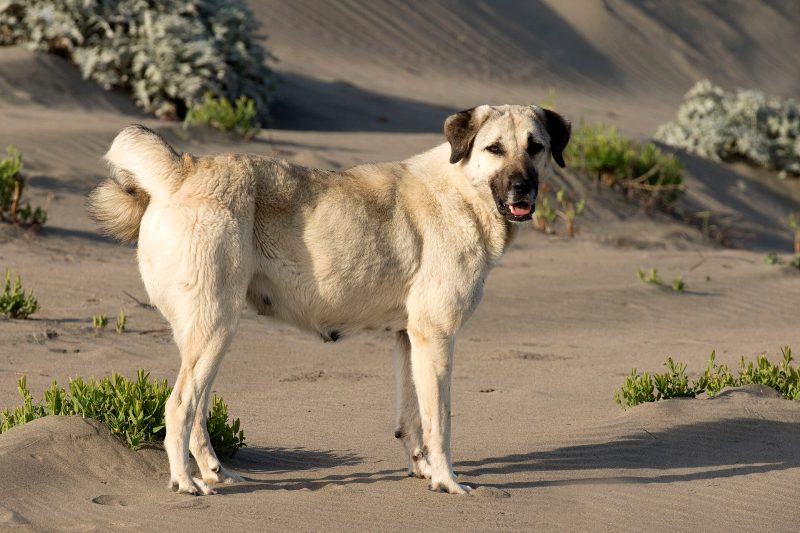
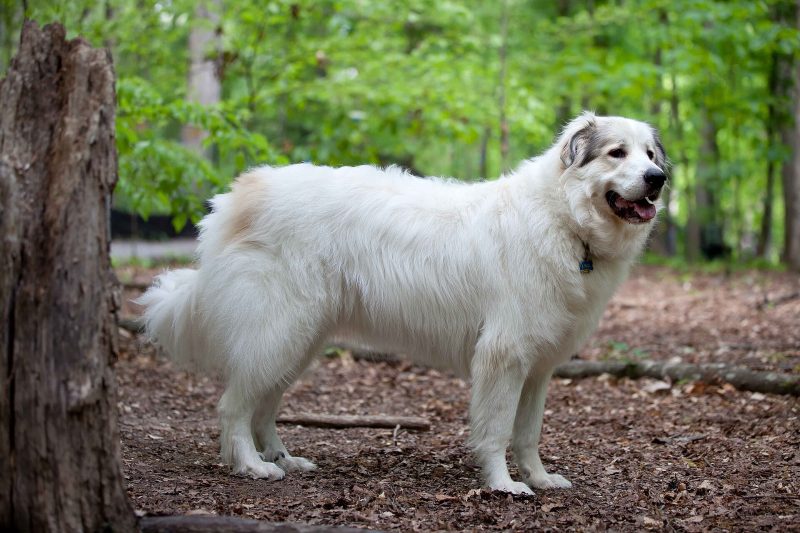
An Anatolian is a big, powerful, rangy dog that still looks fast: tall and slightly longer than it is high, with a deep chest, a strong level back and a long tail carried low at rest and curled over the back when alert. The head is large and broad with a slightly rounded skull, a blunt rectangular muzzle, pendant triangular ears and almond-shaped eyes that give a serious, assessing expression. The double coat is usually short, about an inch long, but can be rougher and up to four inches, with a thick undercoat and a heavier ruff and feathering in winter. Any color is acceptable; the most familiar is fawn with a black mask and ears, but brindle, white, pinto and liver all occur. Compared with the Great Pyrenees it is leaner, shorter-coated and darker; compared with the Kangal, which some registries treat as a separate breed, the Anatolian allows a wider range of colors and coats.
Temperament & Personality
The Anatolian is calm, watchful and independent to the core. It was bred to work alone for days without direction, to patrol its territory, to warn off intruders with a deep bark and to act decisively if the warning is ignored. At home that translates to a dog that is quietly affectionate with its own family, tolerant of the children and animals it considers its charges, and reserved to downright suspicious with strangers, unfamiliar dogs and anything new on its property. It is not a dog that greets visitors; it watches them. Anatolians bark, especially at night when they are most active, and they take ownership of fences, gates and the view from the porch. They are intelligent, slow to mature and not interested in pleasing for its own sake. With early, careful socialization an Anatolian can be a steady family dog, but the guardian instinct never switches off.
Exercise & Activity
An Anatolian does not need a running partner; it needs room. Adults are content with one or two long, leashed walks a day and the freedom to patrol a securely fenced property, where they will walk the boundary at dusk and dawn and nap in a vantage spot in between. Puppies should grow up on soft ground with free play and no forced running or stairs until the growth plates close, since giant-breed joints are easily damaged. The thick coat handles cold weather and the breed copes with heat better than many giants if it has shade and water. Dog parks and off-leash areas are a poor idea; recall is unreliable and other dogs may be seen as intruders.
Tall, secure fencing; Anatolians climb, dig and roam
Leashed walks on a sturdy harness or collar you can hold
Mental work: patrolling, scent games, having a job
Training
Training an Anatolian means earning cooperation rather than demanding obedience. The breed is highly intelligent but was selected to make its own decisions, so it learns quickly, complies when it sees the point and ignores repetition it considers pointless. Calm, consistent, reward-based training in short sessions works; force produces a dog that resists or shuts down. Begin socialization the week the puppy arrives and keep it going for two years, with many calm introductions to people, places, vehicles and other animals, so that new things read as normal rather than threatening. Priorities are loose-leash walking before the dog outweighs you, a reliable down, polite behavior at the gate and acceptance of handling and vet care. For farm dogs, the real training is supervised time with stock from puppyhood. Sitters should be introduced by the owner in advance and should never enter the property unannounced.
Grooming & Care
The short double coat is easy for most of the year: a thorough weekly brushing with a slicker or rake removes loose hair and dirt. Twice a year the undercoat drops in impressive quantities, and during those weeks brushing every other day with an undercoat rake keeps the house livable. Bathe only a few times a year or when muddy; the coat sheds dirt on its own. Check the eyes for redness or discharge, since entropion occurs in the breed, clean the pendant ears every couple of weeks and after swimming, trim nails regularly, which is far easier if started in puppyhood, and brush teeth a few times a week. Working dogs should be checked for burrs, ticks and injuries.
Weekly brushing, heavy seasonal shedding twice a year
Few baths; the coat is weather-resistant
Start nail and ear handling early with a giant breed
Health
Anatolians typically live 11 to 13 years, long for a giant breed, and are generally hardy. The parent club recommends hip and elbow evaluations before breeding, and screening for eye and thyroid disorders is also common. Entropion, an inward-rolling eyelid that irritates the cornea, occurs and is usually corrected surgically. Hypothyroidism can show up as weight gain, lethargy and coat changes. Like other deep-chested giants, Anatolians are at risk of gastric dilatation-volvulus, or bloat, a sudden emergency marked by retching, a swollen belly and distress. The breed has a reputation for sensitivity to anesthesia and a slow recovery from it, linked to its lean body and low body fat, so tell your vet before any procedure. Demodectic mange and ear infections are the usual minor problems. Ask the breeder for OFA results on both parents, and ask your vet about a preventive gastropexy and about joint care for a dog this size.
Nutrition
Anatolians are efficient eaters that evolved on a sparse diet, and they need less food per pound than their size suggests. Puppies should eat a large- or giant-breed growth formula with controlled calcium and calories so they grow slowly and stay lean; rapid growth and extra weight damage developing joints. Adults do well on a complete large-breed diet split into two or three meals a day, served at floor level with no vigorous exercise for an hour either side, to reduce the risk of bloat. Keep adults lean, with a visible waist and ribs easy to feel under the coat. Working dogs on a farm may need more in winter. Supplements are rarely needed on a good diet; ask your vet before adding any. Fresh water should always be available, and a dog guarding stock needs a trough it can reach. Sitters should follow the owner's feeding and rest routine and know the signs of bloat.
Living With This Breed
The right home for an Anatolian is a house on land, ideally with livestock to guard, surrounded by a tall, secure fence. Apartments, townhouses and small suburban lots with close neighbors are poor fits because of the barking, the territorial instinct and the sheer size. The breed is fine spending hours alone outdoors as long as it has its territory and family nearby, and it is good with the children and animals of its own household, but visiting children, unfamiliar dogs and delivery people should be managed carefully. Fences must be inspected regularly, since Anatolians roam, dig and climb. Daycare and kennel boarding stress most Anatolians; a sitter the dog already knows, visiting the home, works much better.
Sitters: be introduced in advance, never surprise the dog, keep gates closed
Walk on leash only, with the strength to hold a 130-pound dog that spots a threat
Expect night barking and a dog that watches you work
Interesting Facts
Since 1994 the Cheetah Conservation Fund in Namibia has placed nearly 600 Anatolian Shepherd and Kangal dogs with farmers, and more than 80 percent report fewer livestock losses, which means fewer cheetahs shot.
Turkish folklore says a shepherd who killed another's guardian dog owed a heap of grain as tall as the dog was long.
A pair of Anatolians sent to the US government's Sheep Dog Project in the late 1930s ended up auctioned to a buyer from the Virgin Islands when wartime rationing closed the program.
American ranchers use Anatolians to guard not only sheep and goats but ostriches, alpacas, poultry and even smaller dogs.
In Turkey the dogs are simply called coban kopegi, shepherd's dog, and the Kangal name refers to a regional type that some registries list as a separate breed.
An Anatolian on duty often sleeps all day and patrols all night, the opposite of a pet schedule.
Breeds similar to the Anatolian Shepherd Dog
What Anatolian Shepherd Dog owners say
Real pets, photos, stories and tips from the SitterNation community — separate from the editorial guide above.
Log in to add your pet, photos, stories and tips.
Meet Anatolian Shepherd Dogs on SitterNation
No Anatolian Shepherd Dogs have joined yet. Owners can show their pet here from the pet's profile.
Anatolian Shepherd Dog community photos
No Anatolian Shepherd Dogs photos yet — be the first to share one.
Stories from Anatolian Shepherd Dog owners
No stories yet. What is life with yours really like?
Tips from Anatolian Shepherd Dog owners
No tips yet. One practical thing that works for you is enough.
Ask Anatolian Shepherd Dog owners
No questions yet. Ask the people who live with the breed.