Typical tendencies
Energy level
Always on; boredom turns into mischief.
Good with children
Gentle and tolerant around children.
Good with other dogs
Enjoys most canine company.
Trainability
Lives for the lesson; a trainer's dream.
Shedding
A light scatter, easy to keep up with.
Apartment friendly
Can manage in a flat with plenty of outings.
More traits
Exercise needs
Adaptability
Grooming needs
Drooling
Intelligence
Family friendly
Good with cats
Friendly with strangers
Sociability
Protectiveness
Prey drive
Overview
An Aussiedoodle is an Australian Shepherd crossed with a Poodle: a medium-size, athletic, extremely clever dog with a wavy or curly coat that is often merle. It suits active people who hike, run or train, who have time for daily mental work and who want a dog that learns anything you can teach. Most Aussiedoodles are affectionate, playful and good with family members of all ages, and they shed far less than an Australian Shepherd.
This is a cross, not a breed, with no standard and no kennel-club recognition, and it combines two of the most energetic, intelligent breeds in the world. An underworked Aussiedoodle invents jobs: herding children, barking at the window, chewing the furniture. Expect serious grooming, a strong need for exercise, some herding instincts and sensitivity to being left alone. It is a poor match for a sedentary home or a first-time owner who wants an easy dog.
History & Origin
The Aussiedoodle appeared in the United States in the 2000s, with some crosses probably bred in the late 1990s, as breeders worked through the popular breeds looking for new Poodle combinations after the Labradoodle and Goldendoodle. The appeal was a dog with the Australian Shepherd's athleticism, trainability and striking merle coloring in a lower-shedding, curlier coat. Mini versions bred from Miniature American Shepherds or small Aussies and Miniature Poodles followed quickly. No founding breeder or first litter is documented.
Neither parent is what its name suggests: the Australian Shepherd was developed on ranches in the American West, and the Poodle is a German-French water retriever. No kennel club recognizes the Aussiedoodle; the American Kennel Club registers the two parent breeds separately, there is no written standard, and the cross cannot compete in conformation. Designer-dog registries will record litters for a fee, which proves nothing. Most Aussiedoodles are F1 crosses, with F1b and multigenerational lines used for curlier coats.
Appearance
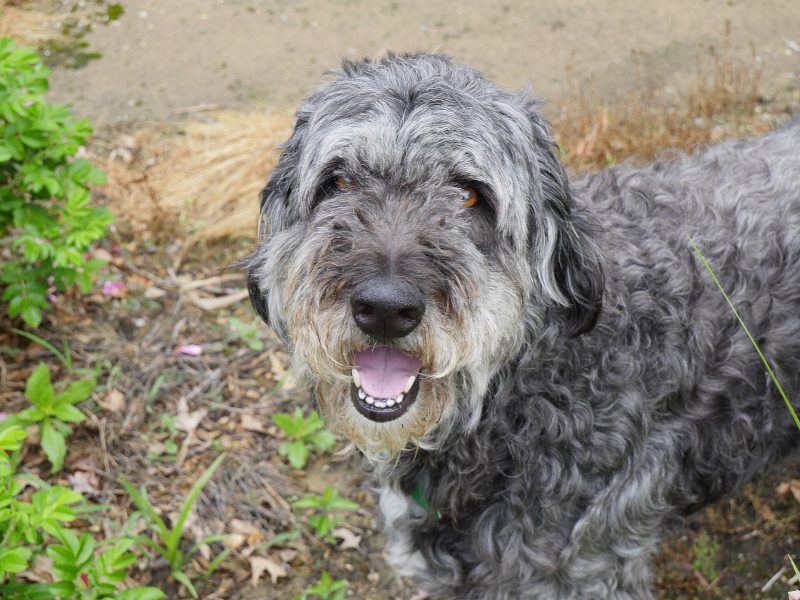
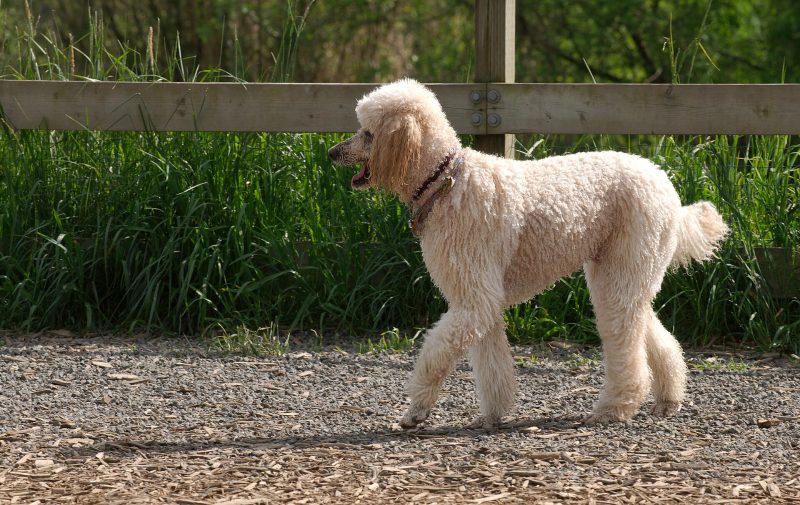
An Aussiedoodle is an athletic dog whose size follows its Poodle parent: a standard from a Standard Poodle stands about 19 to 25 inches and weighs 45 to 70 pounds, a mini from a Miniature Poodle 12 to 18 inches and 15 to 35 pounds, and a toy from a Toy Poodle about 10 to 12 inches and 10 to 15 pounds. Within a litter, size and build vary more than in a purebred. The body is slightly longer than tall, the head moderately broad with floppy ears and expressive eyes that may be brown, blue, amber or one of each.
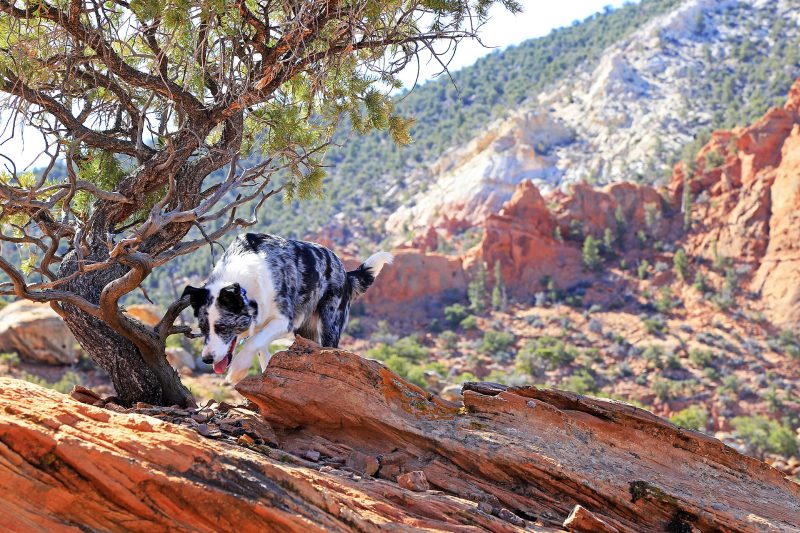
The coat is wavy to curly and medium length, though a few puppies get a straighter, more Aussie-like coat that sheds more. Blue merle and red merle are the signature colors, with black, red, tricolor and parti also common, often with white markings and tan points. Beside an Australian Shepherd, an Aussiedoodle is curlier and usually has a full tail; beside a Standard Poodle it is sturdier, lower and more often merle.
Temperament & Personality
Aussiedoodles are affectionate, playful and intensely attached to their people. The Australian Shepherd side brings loyalty, a work ethic and a wish to be involved in everything; the Poodle side brings sensitivity, humor and a quick mind. Indoors a well-exercised adult is a cuddly companion that settles once its needs are met; an underexercised one paces, barks and finds trouble. Outdoors it is tireless and eager for a job.
They are usually good with children, though herding instincts can lead to nipping at heels or circling running kids, and they get along with other dogs. Cats are fine if raised together, with supervision. Many are a little reserved with strangers at first and settle once introduced; early socialization keeps that reserve from becoming shyness. They bond so closely that separation anxiety is common. Temperament varies within litters, so meet the parents and ask the breeder which puppies are calmer.
Exercise & Activity
Plan on 60 to 90 minutes of exercise a day, including something more demanding than a leash walk: running, hiking, swimming, fetch or a dog sport. Mini Aussiedoodles need a little less distance but the same intensity. Growing puppies should get short, frequent play rather than long runs until their joints mature at 12 to 18 months.
The mind needs as much work as the body. Trick training, scent games, puzzle feeders and agility or obedience classes keep an Aussiedoodle satisfied. Without them, boredom shows up as chewing, digging, nipping, herding the family and barking at everything outside. Heat is a limit for a thick-coated dog, so exercise early and late in summer; cold is rarely a problem.
Teach a reliable recall before off-leash hikes; herding dogs may chase bikes or wildlife.
Rotate activities to prevent obsessive fetch behavior.
On busy days, swap a walk for a 15-minute training session and a frozen food toy.
Training
Aussiedoodles are among the easiest dogs to train and the hardest to live with untrained. Both parents learn in a few repetitions, so reward-based methods with food, toys and praise produce fast results; harsh handling makes these sensitive dogs anxious. Keep sessions short, varied and challenging, because a bored Aussiedoodle starts teaching itself.
Typical sticking points are herding behavior toward children and other pets, which needs redirection to toys and a solid leave-it; mouthiness in adolescence; leash reactivity toward bikes and joggers; and separation anxiety, which is prevented by practicing calm absences from the first week. Socialize puppies deliberately to strangers, children, other dogs, surfaces and noises between 8 and 16 weeks, since the Aussie side can be wary without it. Most Aussiedoodles thrive in agility, obedience, rally, scent work, dock diving and disc sports, and the calmer ones make excellent therapy or assistance dogs.
Grooming & Care
The wavy or curly coat sheds little but mats quickly, so brush three or four times a week, daily in a full coat, with a slicker brush followed by a metal comb to the skin. Pay special attention behind the ears, under the collar, in the armpits and on the feathering of the legs and tail. Most owners book a professional groom every six to eight weeks for a trim and bath; a shorter cut makes an active dog easier to maintain. Straighter-coated Aussiedoodles shed noticeably and benefit from an undercoat rake in spring and fall.
Floppy ears trap moisture, so check and clean them weekly and dry them after swimming. Trim nails every three to four weeks and brush teeth several times a week.
Check the coat for burrs, ticks and mats after hikes.
Keep hair between the paw pads trimmed for traction and cleanliness.
Introduce brushing, dryers and clippers in puppyhood.
Health
An Aussiedoodle can inherit conditions from both parents, and crossing does not cancel them; a 2024 Royal Veterinary College study found popular doodle crosses had health broadly matching their parent breeds. From the Australian Shepherd come the MDR1 drug-sensitivity mutation, hip and elbow dysplasia, hereditary cataracts, Collie eye anomaly, progressive retinal atrophy, epilepsy, autoimmune thyroiditis and some cancers. From the Poodle come hip dysplasia, prcd-PRA, Addison's disease, sebaceous adenitis, von Willebrand disease, bloat in the larger dogs and patellar luxation in the smaller ones.
Merle carries its own rule: two merle parents can produce double-merle puppies that are often deaf or blind, so a responsible breeder never pairs merle with merle. Ask for OFA or PennHIP hip results, OFA elbow and thyroid evaluations and an ACVO eye exam on both parents, DNA tests for MDR1, hereditary cataracts and Collie eye anomaly on the Aussie and prcd-PRA and von Willebrand disease on the Poodle, and a BAER hearing test on merle puppies. Lifespan is 10 to 14 years. See your vet for lameness, cloudy eyes, seizures, lethargy or a swollen belly.
Nutrition
Feed an Aussiedoodle to match its size and workload. Standard puppies that will exceed 50 pounds should eat a large-breed puppy food, which moderates growth to protect developing joints; mini puppies can eat a regular puppy formula. Three meals a day until about six months, then two; ask your vet when to switch to adult food, usually between 12 and 18 months for larger dogs.
Active adults burn more than the bag assumes and couch-bound ones less, so adjust portions to body condition and weigh the dog monthly; a lean dog protects hips and elbows. Because the Poodle side is deep-chested and prone to bloat, split food into two meals, slow fast eaters with a puzzle bowl and avoid hard exercise right after eating. Dogs that carry the MDR1 mutation react badly to certain medications, so tell every vet and sitter the dog's test status before any treatment; food itself is not affected, but it is the kind of note that belongs on the care sheet. Fresh water should always be available.
Living With This Breed
An Aussiedoodle needs a house with a fenced yard or an owner committed to daily outings; apartments work only for the most active people. It thrives in cool and temperate climates and copes with heat if exercise is timed well. This is not a dog to leave alone all day: separation anxiety and boredom barking are common complaints, and daycare, dog walkers or a working-from-home routine make a real difference.
Families with older, active children are an excellent fit; toddlers may get herded. Other dogs are welcome playmates, and cats raised with the dog usually coexist. Fences should be secure and gates latched, because an agile herding dog can clear or dig under a low one.
For sitters: expect to exercise, not just walk, and bring a training game or two.
Note the dog's MDR1 status and any herding triggers such as bikes or running kids.
Brush during the stay and dry ears after swims.
Interesting Facts
Neither parent is Australian: the Australian Shepherd was shaped on American ranches, and the Poodle comes from Germany and France.
Aussiedoodles often have two different eye colors, a trait inherited from the Australian Shepherd side.
The merle coat pattern that makes the cross famous cannot safely be doubled; breeders pair merle with solid parents to avoid deaf or blind puppies.
Some Aussiedoodles carry the MDR1 mutation, so a simple cheek-swab DNA test is worth doing before the first vet visit.
Many Aussiedoodles enjoy agility and disc sports, and as mixed breeds they can compete in AKC Canine Partners and other all-breed events.
Like their Aussie parent, many Aussiedoodles wiggle their whole back end instead of just wagging a tail.
What Aussiedoodle owners say
Real pets, photos, stories and tips from the SitterNation community — separate from the editorial guide above.
Log in to add your pet, photos, stories and tips.
Meet Aussiedoodles on SitterNation
No Aussiedoodles have joined yet. Owners can show their pet here from the pet's profile.
Aussiedoodle community photos
No Aussiedoodles photos yet — be the first to share one.
Stories from Aussiedoodle owners
No stories yet. What is life with yours really like?
Tips from Aussiedoodle owners
No tips yet. One practical thing that works for you is enough.
Ask Aussiedoodle owners
No questions yet. Ask the people who live with the breed.