Typical tendencies
Energy level
Always on; boredom turns into mischief.
Good with children
Gentle and tolerant around children.
Good with other dogs
Enjoys most canine company.
Trainability
Lives for the lesson; a trainer's dream.
Shedding
Keep the lint roller within reach.
Apartment friendly
Can manage in a flat with plenty of outings.
More traits
Exercise needs
Adaptability
Grooming needs
Drooling
Intelligence
Family friendly
Good with cats
Friendly with strangers
Sociability
Protectiveness
Prey drive
Overview
The Australian Shepherd is a medium-sized herding dog with a brilliant mind, striking merle colors and an engine that does not idle. Developed on the ranches of the American West, it was bred to work livestock all day and solve problems on its own, and it still expects a daily job. Aussies suit active owners who like training and dog sports, families with time to spend and anyone who wants a loyal, watchful companion that will follow them anywhere.
They are not a good match for people who are out all day, who want a calm apartment dog or who are not prepared for shedding and herding behavior. Give an Aussie exercise, teaching and a role in the household and you get a devoted, entertaining partner; skip those things and the same intelligence turns into barking, chewing and herding the children.
History & Origin
Despite the name, the Australian Shepherd is an American breed. Its ancestors were the collie-type herding dogs that came west with sheep in the 1800s, some arriving with flocks shipped from Australia, others with Basque and other European shepherds who worked the ranges of California, Colorado and the Great Basin. Ranchers simply called the little blue-merle dogs that came off the boats Australian shepherds, and the name stuck.
The breed developed for work, not shows, so it stayed varied and obscure until the 1950s, when rodeo performer Jay Sisler's trick-dog act with Aussies toured the country and appeared in Disney films. The Australian Shepherd Club of America was founded in 1957 and has kept its own registry and standard ever since. The AKC recognized the breed in 1991 and it began competing in the Herding Group in 1993, a move many working-dog breeders opposed. The smaller Miniature American Shepherd was later split off as a separate breed.
Appearance
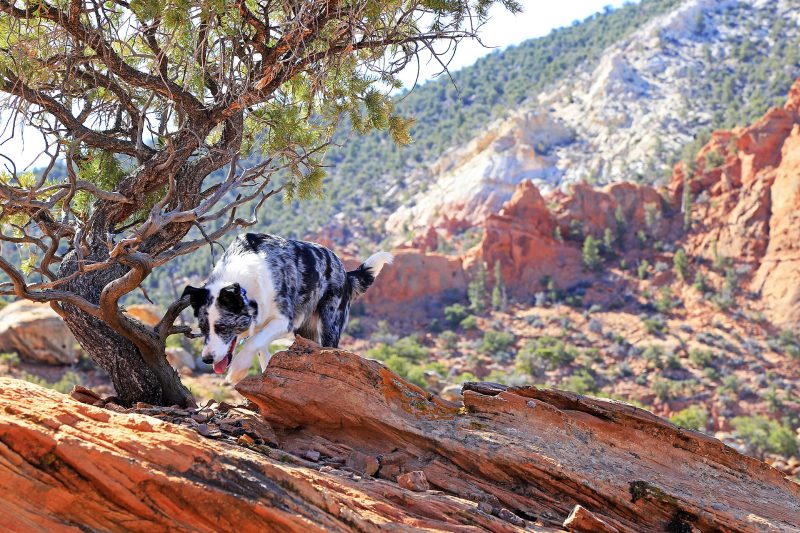
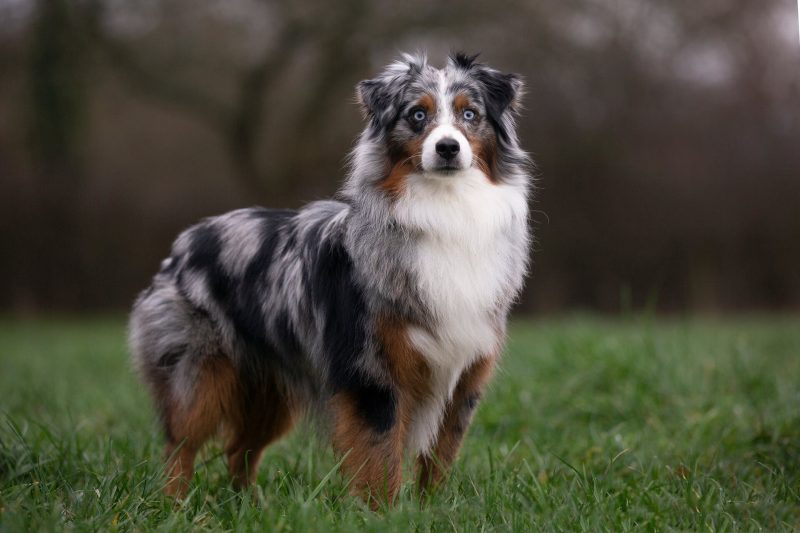
The Aussie is slightly longer than tall, athletic and medium boned, with males standing 20 to 23 inches and weighing 50 to 65 pounds and females 18 to 21 inches and 40 to 55 pounds. The head is clean and in proportion, with triangular ears that fold forward or to the side and eyes that may be brown, blue, amber or any combination, including marbled or split eyes. Many are born with a natural bobtail; others are docked where permitted.
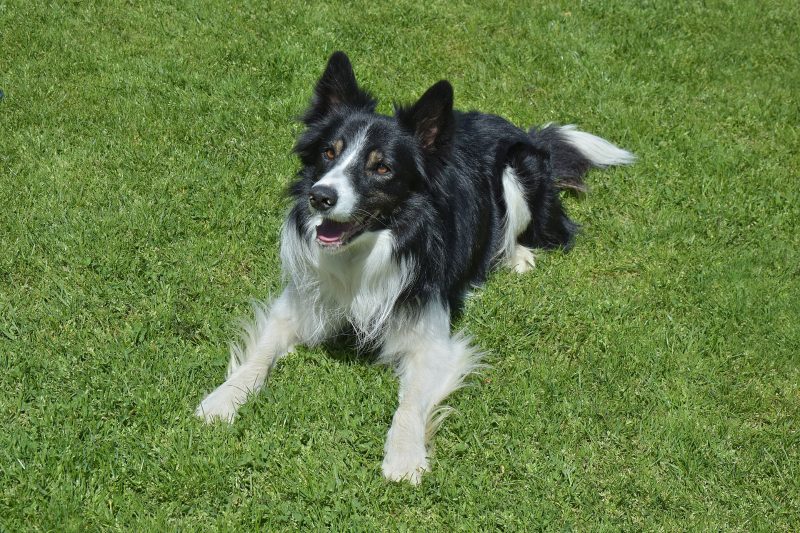
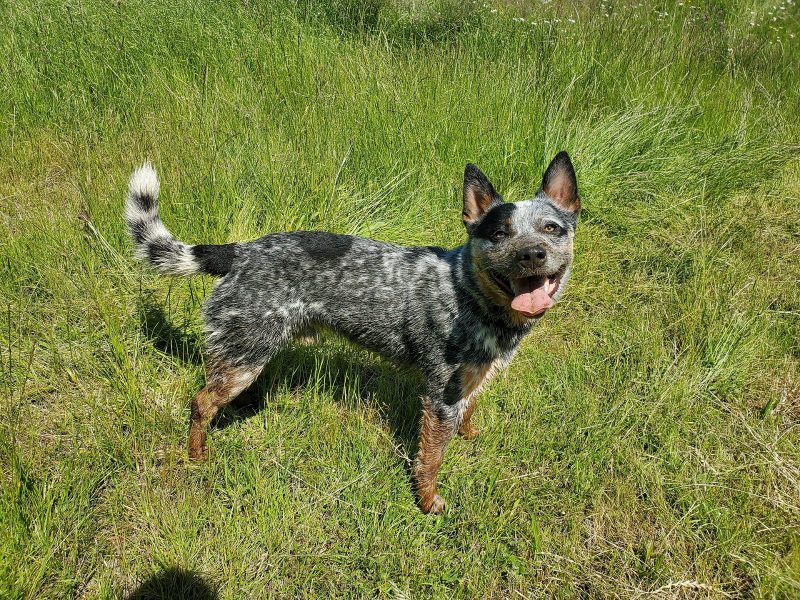
The weather-resistant double coat is medium length, straight to wavy, with a mane and frill on males and feathering on the backs of the legs. Four base colors are accepted: blue merle, red merle, solid black and solid red, each with or without white trim and copper points. Border Collies are lighter and lower-stationed with a long tail; Miniature American Shepherds are the same picture in a smaller frame; Australian Cattle Dogs are stockier with a short speckled coat.
Temperament & Personality
Aussies are intensely loyal, attentive and intelligent dogs that form strong bonds with their family and tend to be reserved with strangers, sizing people up before deciding they are acceptable. They make natural watchdogs and will bark at anything unusual. With their own people they are affectionate, playful and often silly, and they want to be involved in every activity.
The herding drive is strong: many Aussies circle, stare at and nip the heels of running children, cyclists and other pets, and this needs management rather than punishment. They are usually good with other dogs and with cats raised alongside them. Working-line dogs are more intense than show lines, but all Aussies have energy to spare and a low tolerance for boredom. Under-socialized or under-stimulated dogs can become anxious, reactive or obsessive about shadows and lights. A well-raised Aussie is confident, steady and one of the most trainable dogs you will meet.
Exercise & Activity
Budget at least one to two hours of exercise a day, and make a good part of it mental. Long hikes, running alongside a bike, fetch and frisbee, swimming and off-leash time in a fenced area cover the physical side; agility, herding lessons, obedience, scent work, disc dog and trick training cover the brain. Fifteen minutes of focused training tires an Aussie more than an hour of pacing a yard.
Puppies should get free play and short sessions rather than forced running until their joints mature. The double coat handles cold and snow with enthusiasm, but heat is harder; exercise early or late in summer and offer water and shade. A bored Aussie barks, digs, chews, herds the family and may develop repetitive behaviors like chasing light reflections.
1 to 2 hours daily, mixing hard exercise and training
A dog sport or herding outlet is close to essential
Heat management in summer
Training
Australian Shepherds are among the easiest breeds to teach and among the easiest to teach the wrong thing, because they learn from everything. They respond to food, toys and praise, pick up new cues in a few repetitions and thrive on clear, consistent handling. Harsh methods damage their confidence. Start young with a solid recall, loose-leash walking and an off switch, and teach a settle on a mat so the dog learns to relax while life goes on.
Herding behaviors such as heel nipping, chasing and staring at other pets need redirection into toys and sports. Socialization is the other priority: expose puppies carefully to many people, dogs, places and sounds, because the breed's reserve can tip into fearfulness without it. Aussies dominate agility, obedience and disc competitions, and many do therapy and service work. Keep sessions varied; this dog gets bored with drills long before you do.
Grooming & Care
The Aussie's double coat looks like more work than it is, but it does shed year round and heavily in spring and fall. Brush thoroughly once or twice a week with a slicker brush and undercoat rake, working down to the skin behind the ears, in the pants and under the front legs, where mats start. During the seasonal coat blow, brush daily and consider a bath and blow-dry to speed things along. Never shave the coat; it insulates against heat and sun.
Trim the hair around the feet and between the pads to keep them tidy and reduce mud. Bathe every six to eight weeks or as needed. Check the folded ears weekly, trim nails every two to three weeks and brush teeth regularly. Check for burrs, foxtails and ticks after hikes.
Brush 1 to 2 times weekly, daily in shedding season
Tidy feet and ear fringes; no shaving
Post-hike checks for seeds and ticks
Health
Australian Shepherds live 12 to 15 years on average and are generally healthy, but several inherited conditions are well documented. Breeders screen hips and elbows by radiograph and have a veterinary ophthalmologist examine eyes annually, since hereditary cataracts, Collie eye anomaly, progressive retinal atrophy and iris colobomas occur; DNA tests exist for the HSF4 cataract mutation, CEA and PRA. The breed carries the MDR1 mutation at a high rate, which makes affected dogs dangerously sensitive to several common drugs, so a DNA test is strongly recommended and your vet should know the result before prescribing.
Epilepsy is a significant problem with no genetic test yet. Breeding two merles produces double-merle puppies that are often deaf or blind, which is why responsible breeders never do it. Hypothyroidism, degenerative myelopathy and cancers such as hemangiosarcoma and lymphoma also appear. Ask your vet about MDR1 testing and about any seizure, limp or vision change.
Nutrition
Feed an Aussie according to its workload, which can vary a great deal between a weekend hiker and a dog doing herding trials. A complete adult food fed in two measured meals suits most dogs; active dogs may need a performance formula during heavy training seasons, and couch-leaning dogs need less than the label suggests. Puppies grow steadily on a medium- or large-breed growth food fed three times a day until about six months.
Watch body condition closely, because the thick coat hides weight gain; you should feel ribs easily and see a waist when the dog is wet. Treats used in training add up fast, so use part of the daily ration or very small pieces. Dogs with the MDR1 mutation have no special dietary needs, but tell your vet before any medication is given. Seniors benefit from a diet adjusted for lower activity and joint support; ask your vet before changing foods.
Living With This Breed
An Aussie does best in a house with a securely fenced yard and people who are home a good part of the day, although a committed owner can make a townhouse work with enough outings. The breed is a family dog that wants to be indoors with you and should not be left in the yard alone, where it will bark and dig. It tolerates cold well and needs shade in heat.
Aussies are loyal to children but may herd them, so teach kids not to run screaming and teach the dog to leave it. They generally do well with other dogs and household cats. Time alone should be limited to a few hours with exercise beforehand. A sitter or daycare should expect a dog that needs a real workout, may be aloof at first, might try to herd other dogs and will notice any gap in a fence.
Fenced yard, tall and secure
Not a dog to leave alone all day
Tell sitters and vets about MDR1 status
Interesting Facts
Jay Sisler's rodeo Aussies could walk on their front legs, jump rope and balance on each other, and his act toured North America for two decades.
Aussies often have two different colored eyes or marbled eyes, which an old Native American saying called ghost eyes.
Many Aussies are born with a natural bobtail, a dominant trait that breeders must manage carefully because doubling it can cause spinal defects.
The breed is a regular at the top of agility, disc dog and frisbee freestyle competitions.
Despite the name, no kennel club in Australia recognized the breed until 1994.
Famous owners include actress Amanda Seyfried, whose Aussie Finn has a large social media following of his own.
Breeds similar to the Australian Shepherd
Popular Australian Shepherd crosses
What Australian Shepherd owners say
Real pets, photos, stories and tips from the SitterNation community — separate from the editorial guide above.
Log in to add your pet, photos, stories and tips.
Meet Australian Shepherds on SitterNation
No Australian Shepherds have joined yet. Owners can show their pet here from the pet's profile.
Australian Shepherd community photos
No Australian Shepherds photos yet — be the first to share one.
Stories from Australian Shepherd owners
No stories yet. What is life with yours really like?
Tips from Australian Shepherd owners
No tips yet. One practical thing that works for you is enough.
Ask Australian Shepherd owners
No questions yet. Ask the people who live with the breed.