Typical tendencies
Energy level
Always on; boredom turns into mischief.
Good with children
Gentle and tolerant around children.
Good with other dogs
Enjoys most canine company.
Trainability
Lives for the lesson; a trainer's dream.
Shedding
Keep the lint roller within reach.
Apartment friendly
Fine in a flat if exercise is kept up.
More traits
Exercise needs
Adaptability
Grooming needs
Drooling
Intelligence
Family friendly
Good with cats
Friendly with strangers
Sociability
Protectiveness
Prey drive
Overview
The Miniature American Shepherd is what you get when you take the Australian Shepherd, with its brains, drive and devotion, and scale it down to a dog that fits in a horse trailer or a city apartment. It suits active people who want a serious sports or trail partner in a 20 to 40 pound package, and it has become a favorite of equestrians, hikers and agility competitors. It is bright, quick to train, deeply attached to its family and naturally watchful of strangers. Like its larger cousin it needs daily exercise and mental work, sheds heavily twice a year, and carries herding instincts that need direction. It is not a lower-energy Aussie, just a smaller one. Health testing matters in this young breed, particularly for eyes and the MDR1 drug-sensitivity gene. For someone who wants a portable, trainable herding dog and is prepared to keep it busy, the Mini American is hard to beat.
History & Origin
In the late 1960s, small dogs believed to be Australian Shepherds began appearing around the rodeo and horse-show circuit in California, where their size made them easy traveling companions. A Quarter Horse breeder named Doris Cordova in Norco, California, set out to establish a line of small Aussies and in 1980 registered a 13-inch male, Cordova's Spike, with the National Stock Dog Registry, the Australian Shepherd's registry at the time. She and a handful of other breeders built the population through the 1980s, and the dogs spread across the country with traveling equestrians. The first parent club and registry, now the Miniature American Shepherd Club of the USA, formed in 1990 and incorporated in 1993. When the breed sought AKC recognition, Australian Shepherd fanciers objected to sharing the name, so members voted to call it the Miniature American Shepherd. It entered the AKC Foundation Stock Service in May 2011 and gained full recognition in the Herding Group in 2015.
Appearance
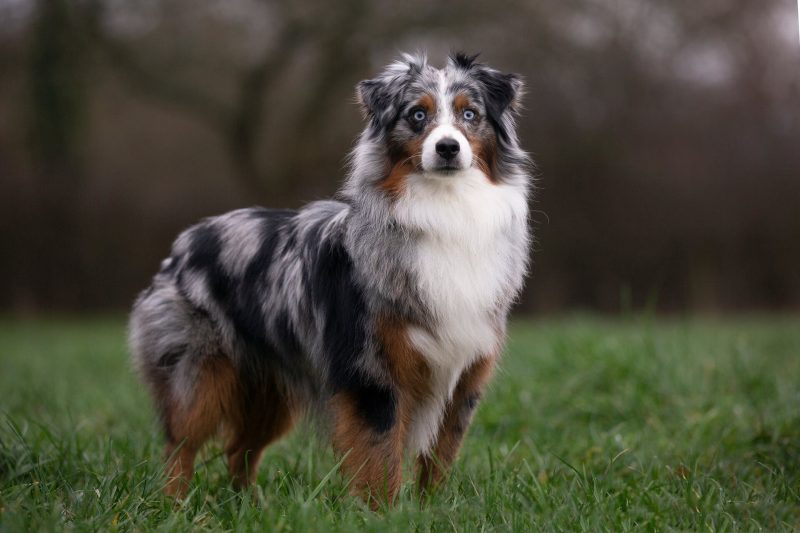
The Mini American looks like a slightly compact Australian Shepherd: a small, well-balanced herding dog, a little longer than tall, standing 14 to 18 inches for males and 13 to 17 inches for females and weighing 20 to 40 pounds. The head is clean and moderate, with triangular ears that fold forward or to the side and expressive eyes that may be brown, blue, amber or any combination, including marbled and flecked. Many are born with a naturally bobbed tail; others are traditionally docked where that is permitted. The coat is medium length, straight to wavy, double and weather resistant, with a moderate mane, feathering on the back of the legs and britches on the thighs. Four colors are accepted: black, blue merle, red and red merle, each with or without white markings and copper points. Compared with a full-sized Aussie it is simply smaller; compared with a Sheltie it is sturdier, shorter-muzzled and often tailless.
Temperament & Personality
This is a devoted, intelligent and attentive dog that wants to be part of everything its family does. It is affectionate and often clingy with its people, good with children it has grown up with, and generally sociable with other dogs. With strangers it is reserved and watchful rather than aloof; most warm up once introduced, but early socialization is what keeps that reserve from becoming suspicion. The herding heritage is obvious in a tendency to gather and circle, to nip at the heels of running children, and to keep a close eye on the household. Mini Americans are alert barkers. Indoors a well-exercised dog settles well and is tidy and quiet; an under-stimulated one is restless and vocal. Many are sensitive to tone of voice and to loud noises. Cats raised with the dog are usually accepted, though chasing is likely at first; small pets should be protected.
Exercise & Activity
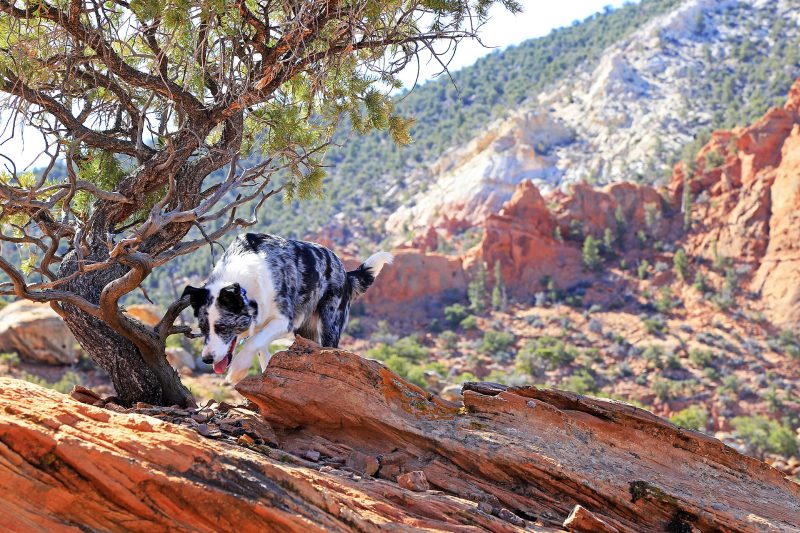
Despite the size, this is a working herding dog that needs an hour or more of real activity every day, plus mental work. Walks alone will not do it. Mini Americans excel at agility, obedience, rally, flyball, disc, herding and trick training, and they make excellent hiking and trail-riding companions; many run happily alongside a horse for miles. Fetch, tug and scent games fill the gaps on busy days. The double coat copes well with cold and wet but can overheat in summer, so exercise early and late and provide water. Puppies should be kept to shorter sessions on soft ground until their joints mature. A bored Mini American invents work, usually the kind you do not want.
Herding and heel nipping at children, bikes or the cat
Nonstop barking at windows
Digging, chewing and escaping the yard
Training
Mini Americans are among the most trainable small dogs. They learn new behaviors in a few repetitions, love to work, and are motivated by toys, food and simply doing things with their person. Reward-based methods and short, varied sessions suit them best; harsh handling makes a sensitive dog shut down or become wary. Priorities for a puppy are early, broad socialization to people and places so that natural reserve stays friendly, a reliable recall, a solid settle for calm time in the house, and redirecting herding nips to toys the moment they appear. They can be barky, so teach a quiet cue early and reward silence around triggers. Because they are clever, they also learn to open gates, raid counters and manipulate routines, so consistency across the household matters. Giving the dog a sport or a job channels its drive and makes everyday manners dramatically easier.
Grooming & Care
Grooming is moderate. Brush the coat thoroughly once a week with a slicker or pin brush and an undercoat rake, paying attention to the mane, behind the ears, the feathering on the legs and the britches, where mats form. During the spring and fall sheds, daily brushing for a couple of weeks keeps the undercoat off your floors. Bathe every month or two, or when dirty. Tidy the feet, the hair between the pads and the ear edges for a neat look; the coat should otherwise be left natural and never shaved. Check ears weekly, especially in dogs that swim, trim nails every few weeks and brush teeth regularly.
Brushing: once a week, daily during seasonal sheds
Professional grooming: optional tidy every couple of months
Shedding: moderate year-round, heavy twice a year
Health
Mini Americans typically live 12 to 13 years or more and share most of their health concerns with the Australian Shepherd. The parent club requires six screens for its CHIC number: hip radiographs, an annual eye examination by a veterinary ophthalmologist, and DNA tests for progressive retinal atrophy of the prcd type, hereditary cataracts of the HSF4 type, the MDR1 multidrug sensitivity mutation and neuroaxonal dystrophy of the MAS type, a degenerative nerve disease. It further recommends elbow radiographs, patellar evaluation, dental checks and DNA tests for Collie eye anomaly, degenerative myelopathy, chondrodystrophy with its disc-disease risk, hyperuricosuria and multifocal retinopathy. Cardiac evaluation and tests for exercise-induced collapse and neuronal ceroid lipofuscinosis are optional. Breeding two merles together can produce puppies that are deaf, blind or both, so responsible breeders never pair merle to merle. MDR1 status matters for every owner because affected dogs react badly to several common medications. Ask your vet for the test and keep the result on file.
Nutrition
Feed a complete diet in two measured meals a day and adjust portions to body condition, since activity levels vary from a casual walking companion to a dog that runs trails with horses all weekend. You should feel ribs easily under a light cover and see a waist from above; the fluffy coat can hide weight gain, so check by hand. Puppies should eat a growth diet suited to small or medium breeds until about ten to twelve months. Avoid supplements intended to speed growth. Dogs that carry hyperuricosuria may need a diet that limits purines to reduce bladder-stone risk, and dogs on long-term medication may need adjustments, so ask your vet if a DNA result or a diagnosis applies. This breed is highly food motivated, which makes training easy but means treats add up quickly; use pieces of kibble or very small treats and count them. Feed after exercise rather than right before, and keep fresh water available at all times.
Living With This Breed
The Mini American's size makes it more adaptable than a full-sized Aussie. It can live in an apartment with a committed exercise routine and does well in a house with a fenced yard. It handles cold comfortably and needs shade in heat. It is good with respectful children and other dogs, usually fine with cats after introduction, and watchful of visitors. It tolerates a working day better than some herding breeds if it has been exercised first, but it is a companion breed at heart and may bark or chew when lonely. It can clear surprisingly high fences and will chase bikes and cars through open gates.
For sitters: expect a smart, attentive dog that wants a task; bring a puzzle toy
Ask about MDR1 status before giving any medication
Keep it leashed near roads and livestock
Introduce yourself calmly and let the dog decide to approach
Interesting Facts
The breed was shaped on the rodeo and horse-show circuit, where small Aussies rode along in trucks and trailers and spread from state to state with their equestrian owners.
The AKC recognized the breed in 2015, making it one of the newest American breeds; it had entered the Foundation Stock Service only four years earlier.
Its name was changed from Miniature Australian Shepherd to Miniature American Shepherd after Australian Shepherd fanciers objected to sharing their name.
Eyes can be brown, blue, amber or a marbled mix, and two different-colored eyes are perfectly acceptable.
Many puppies are born with natural bobtails of varying lengths.
The breed's required DNA test for neuroaxonal dystrophy is for a form of the disease identified specifically in Miniature American Shepherds.
Breeds similar to the Miniature American Shepherd
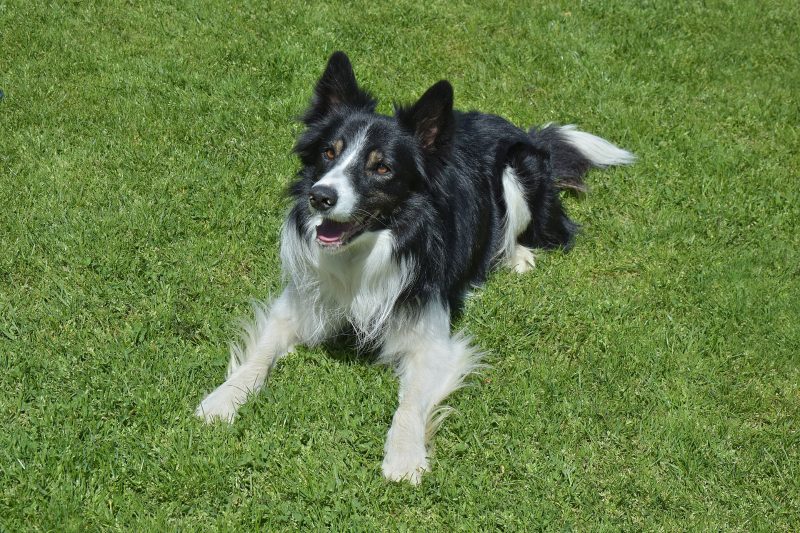
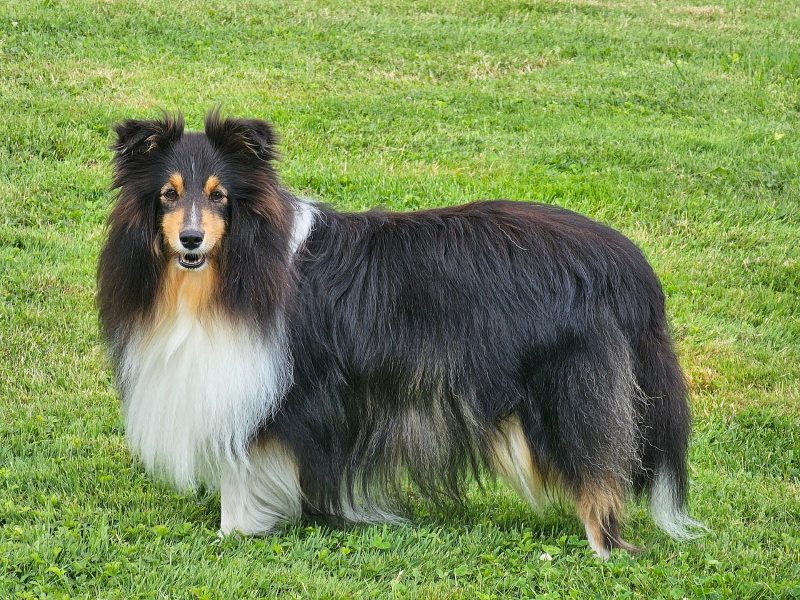
What Miniature American Shepherd owners say
Real pets, photos, stories and tips from the SitterNation community — separate from the editorial guide above.
Log in to add your pet, photos, stories and tips.
Meet Miniature American Shepherds on SitterNation
No Miniature American Shepherds have joined yet. Owners can show their pet here from the pet's profile.
Miniature American Shepherd community photos
No Miniature American Shepherds photos yet — be the first to share one.
Stories from Miniature American Shepherd owners
No stories yet. What is life with yours really like?
Tips from Miniature American Shepherd owners
No tips yet. One practical thing that works for you is enough.
Ask Miniature American Shepherd owners
No questions yet. Ask the people who live with the breed.