Typical tendencies
Energy level
Needs a real outlet most days.
Good with children
Gentle and tolerant around children.
Good with other dogs
Enjoys most canine company.
Trainability
Lives for the lesson; a trainer's dream.
Shedding
Keep the lint roller within reach.
Apartment friendly
Fine in a flat if exercise is kept up.
More traits
Exercise needs
Adaptability
Grooming needs
Drooling
Intelligence
Family friendly
Good with cats
Friendly with strangers
Sociability
Protectiveness
Prey drive
Overview
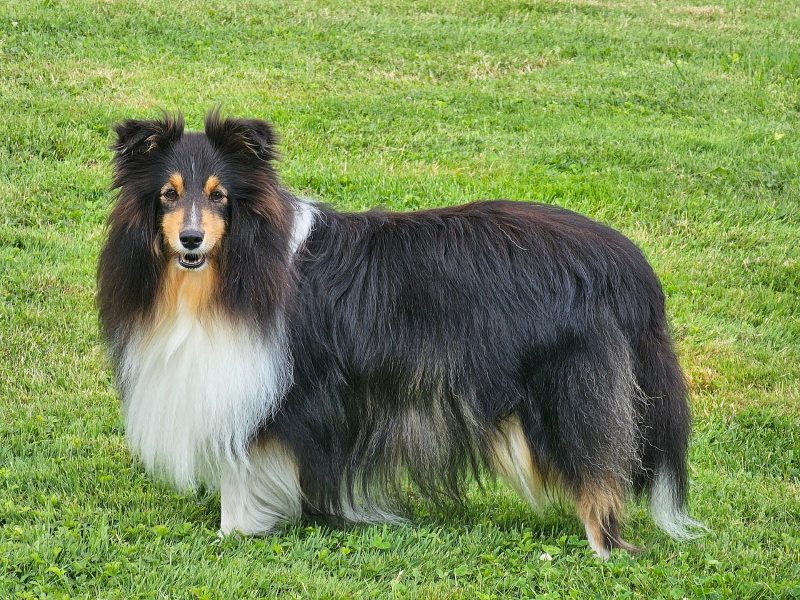
The Shetland Sheepdog, or Sheltie, is a small herding dog that looks like a Rough Collie in miniature and behaves like a very bright, slightly worried personal assistant. It suits people who enjoy training, because few breeds learn faster or care more about getting things right, and it is a fixture at the top of obedience and agility competitions. At home it is devoted, gentle with children it knows, and content in a modest house or a larger apartment as long as it gets daily walks and something to think about. The things to plan for are the coat, which sheds heavily and needs regular brushing, and the voice; Shelties are alert barkers by nature. They are typically reserved with strangers rather than outgoing, so early socialization matters. For an active household that wants a sensitive, trainable companion and does not mind hair on the furniture, the Sheltie is an excellent choice.
History & Origin
The breed grew up on the Shetland Islands, the windswept archipelago north of mainland Scotland, where small, hardy livestock such as Shetland ponies and sheep were the rule. Island crofters kept small dogs to work stock, keep birds off the vegetable patch and guard the croft. These early dogs were a mix of spitz-type dogs brought by fishermen, small spaniels and, later, working collies that arrived with mainland sheep. In the early 1900s fanciers in Britain took an interest, crossed in show Rough Collies to refine the type, and formed clubs. The Kennel Club recognized the breed in 1909 under the name Shetland Collie; Collie breeders objected and the name was changed to Shetland Sheepdog. The American Kennel Club registered its first Sheltie, Lord Scott, in 1911. The American Shetland Sheepdog Association was founded in 1929 and adopted the current standard, including the 13 to 16 inch height range, in 1952.
Appearance
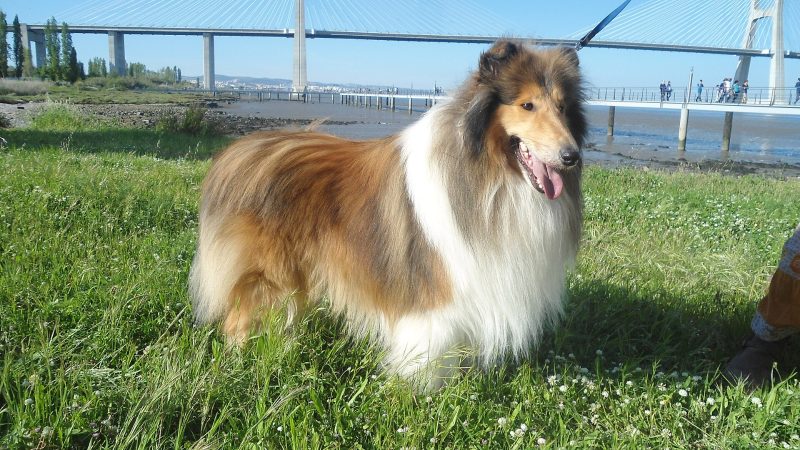
A Sheltie is a small, graceful dog standing 13 to 16 inches and weighing roughly 15 to 25 pounds, with a long, refined wedge-shaped head, almond eyes and small ears that fold over at the tips. The outline is a slightly elongated rectangle carried on light, agile legs. The coat is double: a long, straight, harsh outer coat over a dense, soft undercoat, with a prominent mane and frill around the neck, feathering on the legs and a full tail. Males carry more coat than females. The three main colors are sable, from pale gold to deep mahogany; black, usually with tan and white as a tricolor; and blue merle, a marbled gray with black patches, often with blue eyes. White markings on the chest, collar, legs and tail tip are typical. Compared with a Rough Collie the Sheltie is far smaller with a proportionally shorter muzzle; compared with a Border Collie it is lighter, longer-coated and more refined.
Temperament & Personality
Shelties are intensely loyal to their families and often choose one person as their special focus. They are sweet and playful with children they have grown up with, generally fine with other dogs and cats, and very responsive to mood; a Sheltie knows when you are upset. With strangers most are reserved and some are shy, so puppies need plenty of gentle, positive exposure to visitors and public places. They are watchful and vocal, barking at arrivals, passing dogs and anything out of the ordinary, which makes them good alarm dogs but can irritate neighbors if unmanaged. The herding instinct shows up as circling and heel nipping during excited play, especially with running children. Indoors they are calm and tidy; outdoors they are quick, agile and keen to work. Sensitivity is the key to the breed: it responds to a soft voice and shrinks from a harsh one.
Exercise & Activity
Shelties are energetic but not demanding. An hour of activity a day, split between walks and play, suits most adults, and they are happy to do more on a hiking weekend. What they really need is mental work. Trick training, puzzle feeders, scent games and especially dog sports such as agility, obedience, rally and herding make the difference between a settled Sheltie and a restless one. They are fast and love to run, so a securely fenced yard or a safe open space for fetch and recall games is valuable. The double coat handles cold and rain well but overheats in summer, when walks should move to early and late in the day. A bored Sheltie expresses itself loudly.
Persistent barking at windows and sounds
Spinning, shadow chasing or other repetitive habits
Herding children, cats or the vacuum cleaner
Training
Few breeds are as easy or as rewarding to train. Shelties are highly intelligent, attentive and eager to please, and they often seem to anticipate the next cue. They learn with gentle, consistent, reward-based methods using food, toys and praise, and they can be ruined by harsh handling, which produces an anxious, avoidant dog. The usual challenges are barking, shyness and sound sensitivity. Teach a quiet cue early and reward calm behavior around triggers rather than scolding noise. Socialize puppies broadly and positively to build confidence with strangers, traffic and new environments, and keep that up through adolescence. Herding nips at children's heels should be redirected to a toy immediately. Because they are so sharp, Shelties can also learn unwanted things quickly, such as that barking gets attention. Give them a job: obedience, agility, rally, tricks or therapy work all suit the breed's temperament and keep its mind occupied.
Grooming & Care
The Sheltie's coat is beautiful and sheds a great deal. Brush thoroughly once or twice a week, more often during the spring and fall coat drops when the undercoat comes out in handfuls. Use a pin brush and an undercoat rake, working in layers with a light mist of water to avoid breaking the hair, and pay special attention to the fine hair behind the ears, under the front legs and in the pants, where mats form. Bathe every month or two. Do not shave a Sheltie; the double coat insulates against heat as well as cold and may not grow back properly. Tidy the feet and hocks and trim the hair between the pads. Check ears weekly, trim nails every few weeks and brush teeth regularly, since small breeds are prone to dental disease.
Brushing: 1 to 2 thorough sessions a week, more in shedding season
Professional grooming: optional tidy every couple of months
Shedding: heavy, especially twice a year
Health
Shelties live about 12 to 14 years and are generally sound, but the breed has a distinctive list of inherited conditions. Eyes come first: Collie eye anomaly and progressive retinal atrophy both have DNA tests, and annual examinations by a veterinary ophthalmologist are standard. Dermatomyositis, sometimes called Sheltie skin syndrome, causes skin lesions and muscle weakness in young dogs and runs in families. The MDR1 gene mutation, common in herding breeds, makes affected dogs dangerously sensitive to certain common drugs, so a DNA test is worth doing for every Sheltie before any treatment. Hip dysplasia, hypothyroidism, von Willebrand's disease, epilepsy and Legg-Calve-Perthes disease are also seen, and the breed is strongly predisposed to gallbladder mucoceles in middle age. The American Shetland Sheepdog Association recommends hip and eye evaluations for breeding stock, and many breeders also test thyroid function and MDR1 status. If your Sheltie has skin sores on the face or vomiting with lethargy, ask your vet.
Nutrition
Shelties are small, efficient dogs that do not need large meals, and the thick coat hides extra pounds, so measure food and check body condition by hand every month. Feed a complete diet in two meals a day, with puppies on three smaller meals until about six months. Many Shelties maintain well on less than the package suggests, especially neutered or less active dogs, and obesity worsens hip and thyroid problems. A diet with adequate omega fatty acids supports the coat and skin. Because gallbladder disease is a breed concern, ask your vet whether a lower-fat diet makes sense for an older dog or one with a history of pancreatitis or high blood lipids. Dogs on thyroid medication may need portion adjustments as their metabolism changes. Avoid rich table scraps. Treats are a powerful training tool for this food-responsive breed, so use small pieces and count them in the daily allowance. Fresh water should always be available.
Living With This Breed
A Sheltie adapts to a house or a larger apartment as long as it is exercised and its barking is managed; a thin-walled building with close neighbors is the hardest setting. It copes well with cold and should be kept cool in summer. It is affectionate with family children and tolerant of other pets, and it usually accepts being home alone for a working day if it has had a walk, though it will announce every delivery. It is not an escape artist but it is quick and may chase cars or bikes, so fences and leashes matter. Daycare works for confident dogs; shy ones may do better with a sitter at home.
For sitters: introduce yourself calmly and let the dog approach
Confirm which medications are safe if the dog is MDR1 affected
Expect barking at the door; a treat for quiet helps
Brush out any tangles behind the ears
Interesting Facts
Shelties are regularly among the top breeds in obedience and agility competition and are often listed among the most intelligent dogs.
The breed was first registered in Britain in 1909 as the Shetland Collie, but Collie breeders objected and the name was changed.
Island crofters are said to have called their dogs toonie dogs, after the Shetland word for a farm.
The Shetland Islands are also home to miniature ponies, sheep and cattle; small livestock and scarce food favored small dogs.
Blue merle Shelties can have blue or partly blue eyes, the only color in which that is accepted.
A Sheltie's double coat can look twice the size of the dog underneath; a wet Sheltie is a surprisingly slim animal.
Breeds similar to the Shetland Sheepdog
What Shetland Sheepdog owners say
Real pets, photos, stories and tips from the SitterNation community — separate from the editorial guide above.
Log in to add your pet, photos, stories and tips.
Meet Shetland Sheepdogs on SitterNation
No Shetland Sheepdogs have joined yet. Owners can show their pet here from the pet's profile.
Shetland Sheepdog community photos
No Shetland Sheepdogs photos yet — be the first to share one.
Stories from Shetland Sheepdog owners
No stories yet. What is life with yours really like?
Tips from Shetland Sheepdog owners
No tips yet. One practical thing that works for you is enough.
Ask Shetland Sheepdog owners
No questions yet. Ask the people who live with the breed.