Typical tendencies
Energy level
Needs a real outlet most days.
Good with children
Gentle and tolerant around children.
Good with other dogs
Enjoys most canine company.
Trainability
Quick to learn and keen to please.
Shedding
Fur on everything, all year round.
Apartment friendly
Settles well into smaller homes.
More traits
Exercise needs
Adaptability
Grooming needs
Drooling
Intelligence
Family friendly
Good with cats
Friendly with strangers
Sociability
Protectiveness
Prey drive
Overview
The Pembroke Welsh Corgi packs a big herding dog's brain and drive into a body a foot tall. It was designed to nip at the heels of cattle and duck the kicks, and that history shows in a dog that is quick, confident, vocal and endlessly interested in what everyone is doing. Pembrokes suit active households that enjoy training and want a sturdy companion for walks, games and dog sports, and they adapt well to apartments as long as they get out every day.
They are affectionate without being clingy, good with children who respect them and sociable with other animals. People who dislike dog hair, barking or being supervised in their own kitchen should think twice. A Pembroke that is kept lean, exercised and given a job is one of the most cheerful small dogs there is.
History & Origin
Corgis have worked the farms of Pembrokeshire in southwest Wales for centuries, and the breed's own legends run back to the 1100s, when Flemish weavers settled in the region and are said to have brought their spitz-type farm dogs with them. The name is usually traced to Welsh words for dwarf and dog. Their job was to drive cattle to common grazing and back, nipping heels and dropping flat to avoid hooves, as well as ratting and raising the alarm.
Pembrokes and the longer, heavier-boned Cardigan Welsh Corgi were shown together as one breed in the 1920s; the Kennel Club recognized Welsh Corgis in 1928 and separated the two in 1934. A year earlier the Duke of York, the future George VI, had bought a Pembroke named Dookie for his daughters, and the young Princess Elizabeth became the breed's most famous owner, keeping Pembrokes for the rest of her life. The first Pembrokes reached the United States in the early 1930s and the AKC recognized the breed in 1934.
Appearance
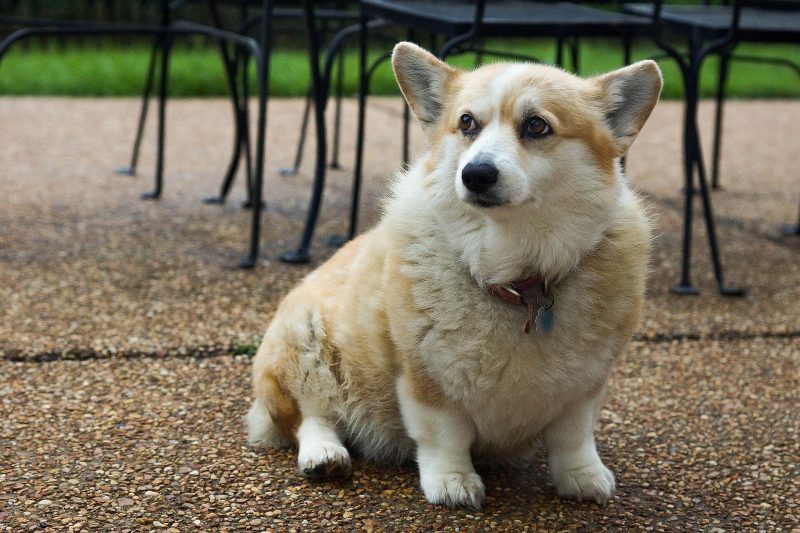
A Pembroke is a long, low, sturdy dog standing 10 to 12 inches at the shoulder and weighing roughly 25 to 30 pounds for males and 24 to 28 for females, though many pets are heavier than they should be. The head is distinctly fox-like, with a flat skull, a tapering muzzle, oval dark eyes and large erect ears that are slightly rounded at the tip. The body is deep and oval-ribbed, the legs short and straight, and the tail is either naturally short or docked where allowed, giving the breed its characteristic rounded rear.
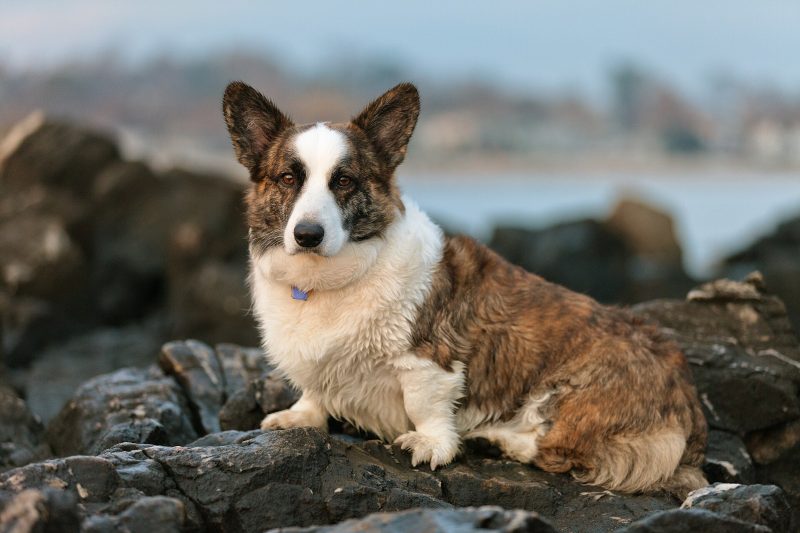
The thick double coat is medium length with a dense undercoat and a slightly longer ruff; colors are red, sable, fawn and black and tan, usually with white on the chest, legs, muzzle and neck. The Cardigan Welsh Corgi is the look-alike: it has a long bushy tail, rounder ears, heavier bone and comes in blue merle and brindle, which Pembrokes do not.
Temperament & Personality
Pembrokes are bright, bossy and funny. They like to be in the middle of things, keep an eye on the household and tell you when something is out of place, which means plenty of barking unless you teach an off switch. They are affectionate with their family but not needy, and they usually greet strangers with friendly interest after an initial announcement.
With children they are playful and tolerant, but the herding instinct can surface as heel nipping when kids run and squeal, so supervise and redirect. Most Pembrokes get along well with other dogs and cats, although they can be pushy about toys and may try to herd anything that moves. They are watchful rather than aggressive, confident rather than nervous. Indoors they settle happily once exercised; outdoors they are surprisingly fast and love a job, whether that is fetching, agility or trailing a child around the yard.
Exercise & Activity
Do not let the short legs fool you: a Pembroke was bred to run all day behind cattle and needs about an hour of activity daily. A brisk walk or two, a game of fetch, a trip to a fenced field for off-leash sprints and some training will do it. The breed excels at agility, rally, herding trials, scent work and tricks, all of which provide the mental work it craves.
Puppies should avoid repeated stairs and jumping off furniture while growing, and adults benefit from ramps too, since the long back and short legs make them prone to disc injury. The double coat handles cold well but overheats in summer; walk early or late and provide shade and water. A Pembroke that is under-exercised gets loud, herds the family and gains weight fast.
About 60 minutes a day of walking and play
Dog sports or herding for mental stimulation
Ramps and limited jumping to protect the spine
Training
Pembrokes learn fast, enjoy working and are motivated by food to a fault, which makes training easy and overfeeding a hazard. Use tiny treats, short sessions and lots of variety; a bored Corgi starts improvising. They have opinions and will test rules, so be consistent about furniture, doorways and barking from the start. Teach a quiet cue and reward calm behavior around the window and the door.
Herding instincts need an outlet and clear boundaries: redirect heel nipping onto a toy, never let it become a game with children, and consider herding lessons if your dog is keen. Recall is usually reasonable because the breed likes to stay near its people, but practice it anyway. Socialize puppies early with visitors, other dogs and handling. Pembrokes do very well in obedience, rally and agility, and many enjoy trick training as a party piece. They can be stubborn with harsh handlers and sparkle with upbeat ones.
Grooming & Care
The Pembroke's double coat sheds every day of the year and lets go in sheets twice a year. Brush two or three times a week with a slicker brush and an undercoat rake, increasing to daily during the spring and fall coat blow, when a bath followed by a thorough blow-dry loosens the undercoat dramatically. Never shave a Corgi; the coat insulates against both heat and cold and may not grow back properly. Bathe every month or two or when dirty.
The upright ears stay fairly clean but should be checked weekly. Trim nails every two to three weeks, because overgrown nails change the gait and stress the back. Brush teeth several times a week. Check the thick ruff and the feathering on the rear for burrs and mats, and keep the fur between the paw pads trimmed so the dog does not slip on hard floors.
Brush 2 to 3 times a week, daily in shedding season
No shaving of the double coat
Nails short to protect the back
Health
Pembrokes typically live 12 to 13 years and are a fairly healthy breed, but a few inherited problems are worth knowing. Hip dysplasia and inherited eye diseases such as progressive retinal atrophy and cataracts are screened by radiographs and an eye exam from a veterinary ophthalmologist, which together form the parent club's CHIC requirements. Degenerative myelopathy, a slowly progressive spinal cord disease of older dogs, is common in the breed and has a DNA test for the SOD1 mutation; breeders use it to avoid producing at-risk puppies. Von Willebrand disease, a bleeding disorder, also has a DNA test.
As a chondrodysplastic breed, the Pembroke is prone to intervertebral disc disease, so sudden back pain or hind-end weakness needs a prompt vet visit. Obesity is the most common and most preventable problem and worsens nearly everything else. Epilepsy and some cancers appear in the breed. Ask your vet about screening results when choosing a puppy and about weight at every checkup.
Nutrition
A Corgi will eat whatever you give it and then ask for more, so portion control is the main nutritional task. Feed measured meals twice a day, weigh the food rather than scooping, and subtract training treats from the daily allowance; vegetables such as green beans make good low-calorie rewards. Puppies do well on a quality small- or medium-breed growth food three times a day until about six months.
Adults need a complete maintenance diet; many Pembrokes need less than the bag suggests. You should be able to feel ribs under a light layer of fat and see a waist from above, which is harder to judge under the thick coat, so use your hands. Senior dogs and those with joint issues may benefit from a lower-calorie food with joint support; ask your vet. Keep an eye on weight after neutering, when energy needs drop.
Living With This Breed
Pembrokes fit into apartments, suburban homes and farms alike, as long as they get daily exercise and someone manages the barking, which can irritate close neighbors. They are indoor family dogs that want to be part of the action, cope with a few hours alone and do best with a midday break on long workdays. They are good with respectful children and with other pets, though herding behavior needs supervision around small kids. They tolerate cold well and heat poorly.
Most are not escape artists, but they are quick and will chase. A sitter should know to keep portions exact, discourage jumping on and off furniture, watch for back trouble, expect a lot of hair and be ready for a dog that will supervise them closely and comment on it. Daycare suits sociable Pembrokes that enjoy group play.
Bark management is part of ownership
Strict portions, ramps and no high jumps
Loves company; a sociable, trainable sitter dog
Interesting Facts
Queen Elizabeth II owned more than 30 Pembrokes over her lifetime, most descended from Susan, a dog she received on her eighteenth birthday in 1944.
Welsh folklore says fairies rode Corgis into battle, and the darker saddle-shaped markings on some dogs are still called the fairy saddle.
Many Pembrokes are born with a natural bobtail, a trait selected long before docking became common.
The breed's name is usually explained as Welsh for dwarf dog, though some argue it comes from a word meaning to watch over.
Corgi butts, the rounded rear made fluffier by the thick coat, have their own online following and merchandise.
Despite its size, the Pembroke competes in AKC herding trials and can move cattle and sheep with real authority.
Breeds similar to the Pembroke Welsh Corgi
What Pembroke Welsh Corgi owners say
Real pets, photos, stories and tips from the SitterNation community — separate from the editorial guide above.
Log in to add your pet, photos, stories and tips.
Meet Pembroke Welsh Corgis on SitterNation
No Pembroke Welsh Corgis have joined yet. Owners can show their pet here from the pet's profile.
Pembroke Welsh Corgi community photos
No Pembroke Welsh Corgis photos yet — be the first to share one.
Stories from Pembroke Welsh Corgi owners
No stories yet. What is life with yours really like?
Tips from Pembroke Welsh Corgi owners
No tips yet. One practical thing that works for you is enough.
Ask Pembroke Welsh Corgi owners
No questions yet. Ask the people who live with the breed.