Typical tendencies
Energy level
Needs a real outlet most days.
Good with children
Patient with kids when well supervised.
Good with other dogs
Gets along with known, polite dogs.
Trainability
Learns, but on its own schedule.
Shedding
A light scatter, easy to keep up with.
Apartment friendly
Settles well into smaller homes.
More traits
Exercise needs
Adaptability
Grooming needs
Drooling
Intelligence
Family friendly
Good with cats
Friendly with strangers
Sociability
Protectiveness
Prey drive
Overview
The Basenji is a small, elegant hunting hound from the Congo Basin that behaves less like a typical dog and more like a cat that happens to enjoy running. Males stand 16 to 17.5 inches and weigh 22 to 26 pounds, females a touch less, and most live 13 to 14 years. Basenjis do not bark; they yodel, chortle and occasionally shriek, and they wash themselves with their paws the way a cat does. They suit active, patient people who enjoy a clever, independent companion and do not need constant obedience. They are a poor match for homes with cats, rabbits or free-roaming small pets, for anyone who wants a dog that comes when called off leash, or for a household that leaves a dog alone and unoccupied for long stretches. Give a Basenji daily running, puzzles and a secure yard, and you get a quiet, clean, endlessly curious housemate.
History & Origin
Dogs of Basenji type have hunted alongside people in central Africa for thousands of years. Rock art in Libya shows prick-eared, curly-tailed hounds, and similar dogs appear in ancient Egyptian art. In the forests of the Congo Basin, villagers used them to drive small game into nets and to warn of danger, valuing their silence and independence. The first dogs shown in Britain, at Crufts in 1895, died of distemper soon afterward, and a group brought from Sudan in the 1920s was lost to early vaccines. Lasting foundation stock arrived in England in 1936 through Olivia Burn, and the first live Basenjis reached the United States in 1937. The Basenji Club of America formed in 1942 and the AKC accepted the breed in 1943. Because the gene pool was tiny, breeders returned to Africa in 1987 and 1988, and those imports were registered as foundation stock in 1990. The AKC reopened the stud book again in 2009, and African dogs continue to be evaluated and added.
Appearance
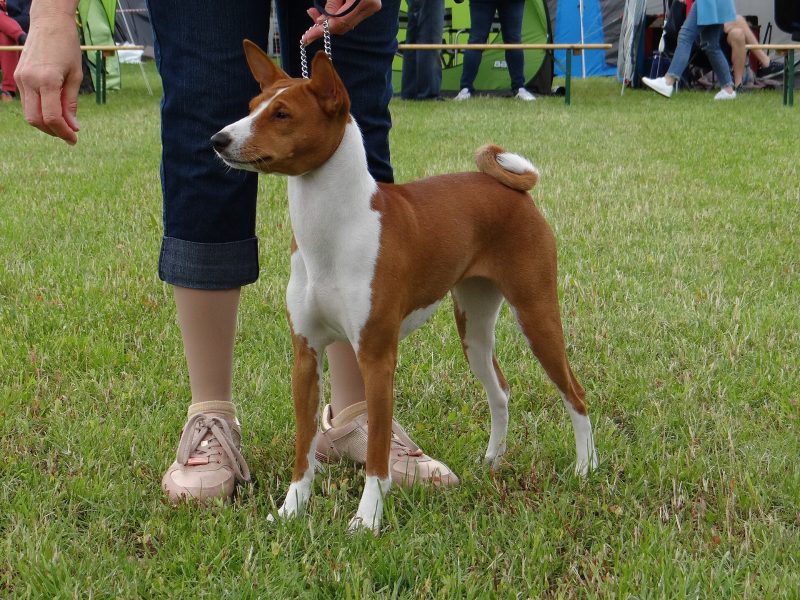
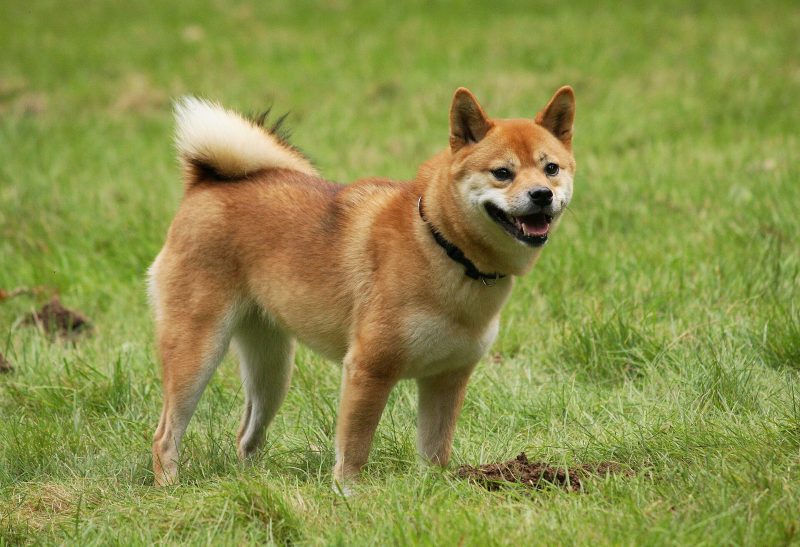
A Basenji is a compact, lightly built hound that looks poised to spring. The head is finely chiseled with a flat skull, small erect ears set well forward and almond-shaped dark eyes; when the dog is alert, the forehead creases into a set of fine wrinkles that give it a worried, thoughtful look. The neck is long and arched, the back short and level, and the legs are long for the body, which gives the breed its light, reaching trot. The tail curls tightly over one hip in one or two loops. The coat is short, fine and sleek and comes in chestnut red, black, tricolor and brindle, always with white feet, chest and tail tip, and often a white blaze or collar. People sometimes confuse a Basenji with a Shiba Inu, but the Basenji is taller and lighter, with a smooth rather than plush coat and a far tighter tail curl.
Temperament & Personality
Basenjis are intelligent, independent and reserved, with a strong sense of their own dignity. They bond deeply with their family and will follow a favorite person from room to room, yet they are not clingy and rarely demand petting. With strangers they are polite but aloof, and they watch newcomers carefully before deciding to approach. Indoors a well-exercised Basenji is quiet and tidy; outdoors it is a hunter, and anything that runs will be chased. Prey drive is intense, so cats and small pets are seldom safe. They can live happily with other dogs, especially other Basenjis, though some adults are choosy. With children they do best when the kids are old enough to respect a dog's space. Basenjis are famous problem solvers and climbers, and a bored one will open cupboards, scale fences and shred whatever it finds. They are not watchdogs in the barking sense, but they will alert you with a growl or a yodel.
Exercise & Activity
Plan on at least 60 minutes of real exercise every day, ideally split between a brisk walk and a chance to run flat out. A Basenji's favorite activities are sprinting, chasing a flirt pole, lure coursing and agility, and the breed also does well in scent work and barn hunt. Mental work matters as much as mileage: food puzzles, trick training and hide-and-seek games wear out that busy brain. Basenjis dislike rain and cold and will refuse to go out in bad weather, so keep a coat handy and have indoor games ready for winter. They handle heat better than most breeds but still need shade and water.
Off-leash running only inside a fence of at least six feet, because Basenjis jump and climb
A bored Basenji chews, digs and escapes; exercise prevents most trouble
Sitters should keep a firm hold on the leash around squirrels, cats and rabbits
Training
Basenjis learn fast and forget nothing, but they see no reason to repeat a behavior that no longer pays. Training works when it is short, upbeat and rewarding, with strong-smelling treats, play and the chance to run as currency. Harsh corrections shut this breed down and teach it to avoid you. Start socialization the week the puppy comes home, with lots of calm people, friendly dogs and new places, because a poorly socialized Basenji can become shy or suspicious. Recall is the hardest skill: even well-trained Basenjis will chase prey instead of coming back, so practice it as a game and never rely on it near roads. Teach a solid leave-it, a settle cue and crate comfort early. Housetraining is usually easy because the breed is naturally clean. Puppies are mouthy and chew a great deal, so provide plenty of legal outlets and keep shoes out of reach.
Grooming & Care
This is one of the easiest breeds to keep clean. The short coat sheds lightly, with a heavier drop in spring, and a weekly rub with a soft brush or grooming mitt is all it needs. Basenjis wash themselves and have little doggy odor, so bathing is only necessary when they roll in something unpleasant. Check the ears weekly and clean them every few weeks with a vet-approved solution. Nails grow quickly and should be trimmed every two to three weeks; a Basenji that clicks across the floor is overdue. Brush teeth several times a week, since small dogs accumulate tartar fast. Keep an eye on the skin for dryness in winter and on the eyes for redness or discharge.
Weekly brushing, rare baths, no professional grooming required
Nails every two to three weeks, ears checked weekly
Expect some extra hair for a couple of weeks each spring
Health
Basenjis typically live 13 to 14 years, and the parent club asks breeders to run several screenings. The most important is a DNA test for Fanconi syndrome, an inherited kidney disorder in which sugar and nutrients leak into the urine; a direct gene test has been available since 2011, and owners of affected or untested dogs can check urine with glucose strips. A second DNA test identifies the Basenji form of progressive retinal atrophy, and breeding dogs should still see a veterinary ophthalmologist yearly because other eye problems, including persistent pupillary membranes, occur. The club also recommends a thyroid panel, since hypothyroidism is relatively common, and hip evaluation through OFA or PennHIP. Less frequent concerns include immunoproliferative small intestinal disease, a chronic bowel condition, umbilical hernias and, historically, pyruvate kinase deficiency, now nearly eliminated through testing. Ask your vet about any increase in thirst or urination, weight change, dull coat or night blindness, and ask breeders to show OFA results.
Nutrition
Feed a complete and balanced food suited to the dog's life stage, with puppies kept on a growth formula for about their first year. Adults do well on two measured meals a day. A Basenji is a lean, athletic dog of only 20 to 26 pounds, so treats add up quickly; keep them under a tenth of daily calories and use part of the regular ration for training. You should see a clear waist from above and feel the ribs easily under a thin layer of flesh. Research suggests Basenjis carry fewer copies of a starch-digesting gene than most breeds, which is one reason some do better on moderate-carbohydrate diets, but talk with your vet before changing food. Dogs with Fanconi syndrome need a specific feeding and supplement plan from their veterinarian. Puzzle feeders turn mealtime into the mental work this breed craves. Sitters should feed exactly what the owner provides and keep counters clear, since Basenjis are skilled thieves.
Living With This Breed
A Basenji adapts well to an apartment as long as it gets out to run every day, and its quiet nature makes it a good neighbor. It should live indoors as part of the family and will happily spend evenings curled under a blanket on the sofa. Alone time needs to be built up gradually and paired with chew toys and a crate or dog-proofed room, because a lonely Basenji invents its own entertainment. Fences must be tall and solid: this breed climbs chain link and squeezes through gaps. Households with cats, rabbits or rodents should look elsewhere. Children who are calm and respectful generally get on well with Basenjis, while toddlers may be too grabby for the breed's liking.
Sitters: leash on at all times outdoors, double-check gates and doors
Expect yodels, not barks, and a dog that may ignore a casual recall
Provide a warm bed and a coat in cold or wet weather
Interesting Facts
Basenjis cannot bark because of the unusual shape of their larynx; instead they produce a yodel that fans call a baroo.
Unlike most domestic dogs, Basenji females normally come into season only once a year, a trait shared with wolves and dingoes.
A Basenji named My Lady of the Congo starred in the 1956 film Good-bye, My Lady, based on James Street's novel, and sparked a wave of American interest in the breed.
Basenjis groom themselves with their paws like cats and have almost no doggy smell.
The first Basenjis shown in England in 1895 were entered at Crufts as African Bush Dogs or Congo Terriers.
The breed's gene pool was refreshed with dogs brought from Africa in 1987 and 1988, and new African imports are still evaluated and registered today.
Breeds similar to the Basenji
What Basenji owners say
Real pets, photos, stories and tips from the SitterNation community — separate from the editorial guide above.
Log in to add your pet, photos, stories and tips.
Meet Basenjis on SitterNation
No Basenjis have joined yet. Owners can show their pet here from the pet's profile.
Basenji community photos
No Basenjis photos yet — be the first to share one.
Stories from Basenji owners
No stories yet. What is life with yours really like?
Tips from Basenji owners
No tips yet. One practical thing that works for you is enough.
Ask Basenji owners
No questions yet. Ask the people who live with the breed.