Typical tendencies
Energy level
Needs a real outlet most days.
Good with children
Patient with kids when well supervised.
Good with other dogs
Selective; careful introductions needed.
Trainability
Learns, but on its own schedule.
Shedding
Fur on everything, all year round.
Apartment friendly
Settles well into smaller homes.
More traits
Exercise needs
Adaptability
Grooming needs
Drooling
Intelligence
Family friendly
Good with cats
Friendly with strangers
Sociability
Protectiveness
Prey drive
Overview
The Shiba Inu is Japan's smallest native breed and its most popular companion dog, a compact, fox-faced hunter with a plush coat, a curled tail and an unmistakable sense of self. Shibas are clean, quiet and undemanding in the house, which makes them appealing to apartment dwellers, and they are alert enough to make good watchdogs. They are also independent to the point of aloofness, famously hard to call back once loose, and capable of a piercing scream when they object to something.
The breed suits people who enjoy a dog with cat-like reserve, can commit to lifelong leash walking and have the patience for a stubborn learner. It is less ideal for homes with small pets, for owners who want an eager-to-please dog, or for anyone who dislikes seasonal shedding on a heroic scale. Shibas typically live 13 to 16 years, so the choice is a long one.
History & Origin
Small hunting dogs of Shiba type have lived in Japan for thousands of years; clay figurines from the prehistoric Jomon period show dogs with the same pricked ears and curled tail. The name is usually read as "brushwood dog," after the scrubby terrain where the dogs flushed birds and small game, though it may also refer to the red coat or to small size. Regional strains developed, notably the Shinshu, Mino and San'in lines.
By the early 1900s crossing with imported Western breeds had almost erased the pure type, and from the late 1920s hunters and scholars set out to save it. The first Japanese standard appeared in 1934, and in 1936 the Shiba was declared a Natural Monument of Japan. The Second World War and a post-war distemper epidemic nearly finished the breed, which was rebuilt mainly from Shinshu stock. An American military family brought the first Shiba to the United States in 1954, the National Shiba Club of America formed in 1983, and the American Kennel Club recognized the breed in 1992, placing it in the Non-Sporting Group the following year.
Appearance
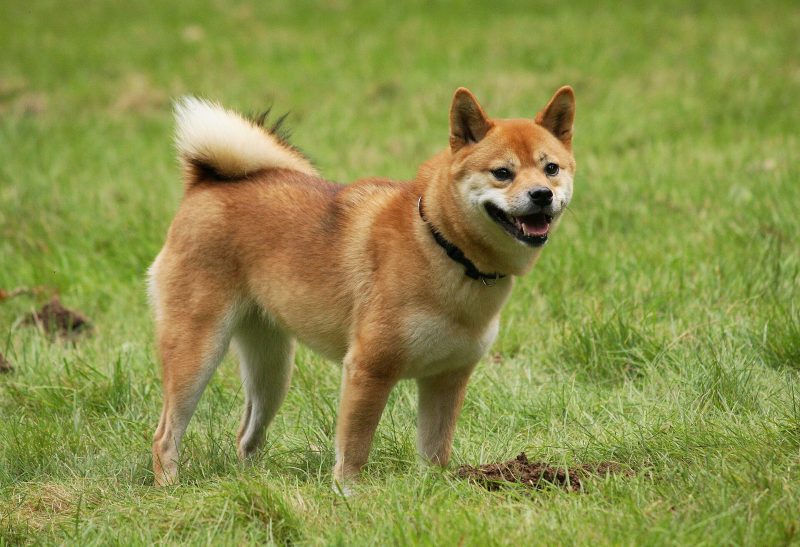
A Shiba looks like a small, well-muscled fox with a spitz outline. Males stand 14.5 to 16.5 inches at the shoulder and weigh 20 to 25 pounds; females are 13.5 to 15.5 inches and 15 to 20 pounds. The body is slightly longer than tall, the chest is deep and the tail is thick and carried in a curl or sickle over the back. The head has a broad forehead, a tapering muzzle, small triangular ears tilted slightly forward and dark, almond-shaped eyes set at an upward slant, which gives the breed its knowing expression.
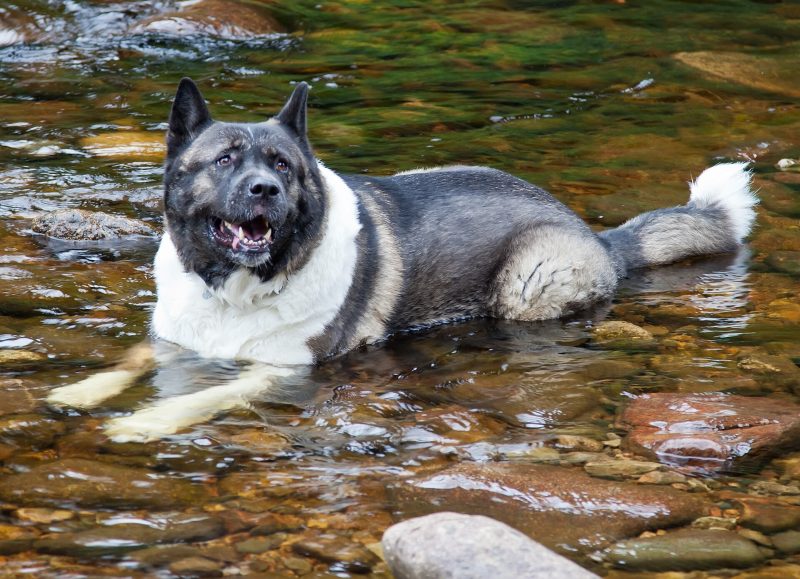
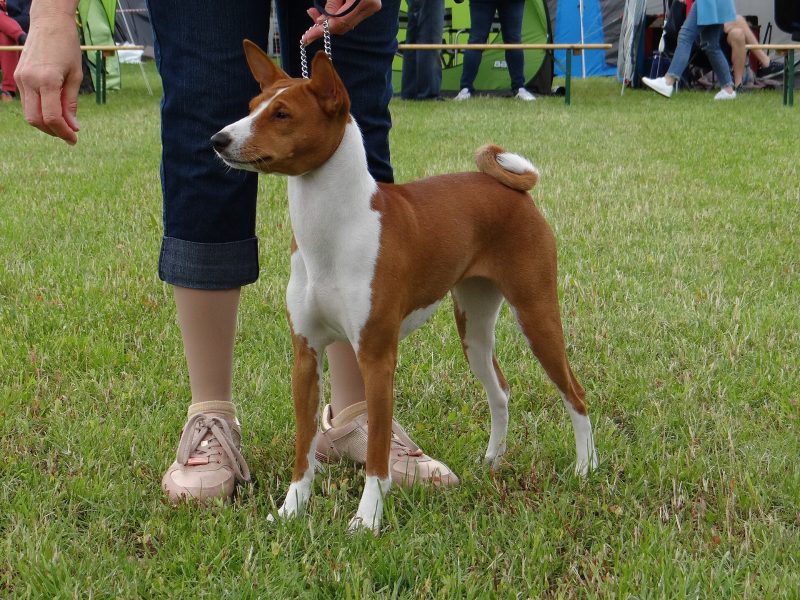
The double coat is stiff and straight on top over a soft, dense undercoat, short on the face and legs and a little longer on the tail. Colors are red, black and tan, and sesame, which is red with black-tipped hairs; cream exists but is faulted in the show ring. Every color should carry urajiro, the cream-to-white shading on the cheeks, muzzle, throat, chest and underside. The Akita is far larger; the Basenji has a tight coat and no undercoat.
Temperament & Personality
The Japanese describe the ideal Shiba with three words: spirited boldness, good nature and an unaffected forthrightness. In practice that means a confident, alert dog that is affectionate with its family on its own terms, dignified rather than demonstrative and perfectly happy to entertain itself. Shibas are fastidious, grooming their coats like cats and avoiding puddles, and they are generally quiet apart from the famous scream, a high-pitched protest reserved for nail trims, baths or other indignities.
With strangers the breed is reserved and watchful. With other dogs it can be prickly, especially between intact males, and many Shibas guard food, toys and people from other animals. Prey drive is strong; squirrels, cats and small pets are chased without hesitation. Shibas are usually fine with respectful older children but have little patience for grabbing or rough handling. They form deep bonds, but a Shiba rarely begs for attention, and new owners sometimes mistake its independence for indifference.
Exercise & Activity
A Shiba is more athletic than its size suggests and needs about an hour of activity a day, split between walks and play. A brisk 30- to 45-minute walk with time to sniff, plus a game of chase or fetch in a secure yard, keeps most adults content. Many enjoy hiking and can keep up with a runner for miles once mature, and the breed does well in agility, where its speed and nimbleness shine.
All of that happens on a leash or behind a fence. Shibas are notorious escape artists and will bolt after anything that moves; recall is rarely reliable enough to trust off leash in open spaces. The thick coat handles cold well, but exercise in heat should be kept short with water available. Mental work matters as much as mileage: food puzzles, scent games and short training sessions take the edge off.
An under-exercised Shiba becomes destructive, vocal and anxious.
Check fences for gaps and dig-proofing; Shibas climb and squeeze.
Training
Shibas are intelligent and learn fast, which is not the same as being obedient. They weigh every request against their own preferences, grow bored with repetition and simply walk away from drilling. Training succeeds when it is short, upbeat and built on rewards the dog actually values, with plenty of variety and a sense of humor on the owner's part. Harsh methods backfire; a Shiba that feels bullied shuts down or fights back.
Start socialization early and keep it going, exposing the puppy to people, dogs, handling and new places so the adult's natural reserve settles into tolerance. Teach the puppy to accept nail trims, brushing and being picked up, because an adult that objects will scream about it. Work on resource guarding before it starts by trading up rather than snatching. Recall should be practiced for life on a long line, and even then treated as unreliable. Housetraining is usually easy; the breed is naturally clean. Agility, rally and nose work give a Shiba a productive outlet.
Grooming & Care
For most of the year a Shiba needs only a weekly brushing with a slicker or pin brush to lift loose hair and keep the coat glossy. Twice a year, in spring and fall, the undercoat lets go all at once, and for two to four weeks daily brushing with an undercoat rake, plus the occasional warm bath and blow-dry to loosen the fluff, is the only way to stay ahead of it. Shedding during these blows is dramatic even for a small dog.
The coat is naturally clean and repels dirt, so baths are rarely needed outside shedding season. Never shave a Shiba; the double coat protects against heat and sun as well as cold. Trim nails every two to three weeks, check ears weekly and brush teeth several times a week, since small breeds accumulate tartar quickly.
Introduce brushing and nail trims in puppyhood to avoid the scream.
No professional trimming needed, though many owners book a de-shedding bath twice a year.
Health
Shibas are a long-lived, generally sturdy breed, but a few problems recur. Allergies are the most common complaint: atopic dermatitis and flea allergy show up as itchy skin, recurrent ear infections and chewed feet, and often need lifelong management. Patellar luxation, a kneecap that slips out of its groove, is frequent though often mild. Primary glaucoma is strongly overrepresented in the breed and can cause sudden, painful blindness, so a red, cloudy or squinting eye is an emergency. Hip dysplasia, cataracts, progressive retinal atrophy and hypothyroidism also occur. GM1 gangliosidosis is a fatal inherited storage disease with a DNA test; carriers are rare and should only be bred to clear dogs.
Responsible breeders screen hips and patellas through the OFA, have eyes examined annually by a veterinary ophthalmologist and test for GM1. Typical lifespan is 13 to 16 years, among the longest of any purebred dog. Ask your vet about persistent scratching, skipping on a hind leg or any change in the eyes.
Nutrition
Shibas are easy keepers that do well on a complete and balanced food suited to their life stage and activity. A puppy formula for small or medium breeds until about a year, then an adult diet in two measured meals a day, is the usual pattern. Portion by body condition rather than the bag: a Shiba should have a visible waist from above and ribs that are easy to feel under the plush coat, which hides extra weight well.
Many Shibas are picky or eat lightly, which is normal for the breed; resist the urge to tempt a healthy dog with ever-richer food. Others gain weight easily after neutering or in middle age. Dogs with skin allergies sometimes benefit from a diet trial supervised by a vet to rule out food triggers, and dogs with urinary or kidney issues may need specific diets. Treats should stay under a tenth of daily calories, which for a 20-pound dog is not much. Fresh water should always be available, especially during the heavy shedding seasons when dogs groom more.
Living With This Breed
A Shiba is one of the better small breeds for apartment life: quiet, clean, odorless and content to nap while you work, provided it gets its walks. It tolerates cold cheerfully and heat reasonably. Shedding is the main housekeeping cost, concentrated in two intense seasons. Shibas handle being alone for a workday better than most companion breeds, though they still need company and exercise at either end of it.
The breed suits households with older children and no small pets. Cats are a gamble unless the dog is raised with them; rabbits and rodents are prey. Multi-dog homes work best with opposite-sex pairs and careful management of toys and food.
Sitters must treat every door and gate as an escape route and never walk the dog off leash.
Expect reserve with a new person; let the dog approach in its own time.
A Shiba may scream at a bath or nail trim; it is drama, not injury.
Daycare suits some Shibas and not others; a small, calm group is best.
Interesting Facts
Kabosu, the Shiba whose sideways glance became the Doge meme in 2013, inspired the cryptocurrency Dogecoin.
The Shiba is the smallest of Japan's six native spitz breeds; the others are the Akita, Kai, Kishu, Shikoku and Hokkaido.
The breed was declared a Natural Monument of Japan in 1936, one of only a handful of native dogs to receive the designation.
Mari, a Shiba in Yamakoshi village, protected her newborn puppies and alerted her elderly owner during the 2004 Niigata earthquake, a story later made into a Japanese film.
The "Shiba scream" is a genuine breed trait: a high, piercing cry produced when the dog is restrained, bathed or simply disagrees.
Shiba Inu is the most popular companion breed in Japan, where registrations outnumber every other native breed.
Breeds similar to the Shiba Inu
What Shiba Inu owners say
Real pets, photos, stories and tips from the SitterNation community — separate from the editorial guide above.
Log in to add your pet, photos, stories and tips.
Meet Shiba Inus on SitterNation
No Shiba Inus have joined yet. Owners can show their pet here from the pet's profile.
Shiba Inu community photos
No Shiba Inus photos yet — be the first to share one.
Stories from Shiba Inu owners
No stories yet. What is life with yours really like?
Tips from Shiba Inu owners
No tips yet. One practical thing that works for you is enough.
Ask Shiba Inu owners
No questions yet. Ask the people who live with the breed.