Typical tendencies
Energy level
Ready to go when you are, settles after.
Good with children
Patient with kids when well supervised.
Good with other dogs
Prefers to be the only dog around.
Trainability
Picks up cues with steady, short sessions.
Shedding
Fur on everything, all year round.
Apartment friendly
Can manage in a flat with plenty of outings.
More traits
Exercise needs
Adaptability
Grooming needs
Drooling
Intelligence
Family friendly
Good with cats
Friendly with strangers
Sociability
Protectiveness
Prey drive
Overview
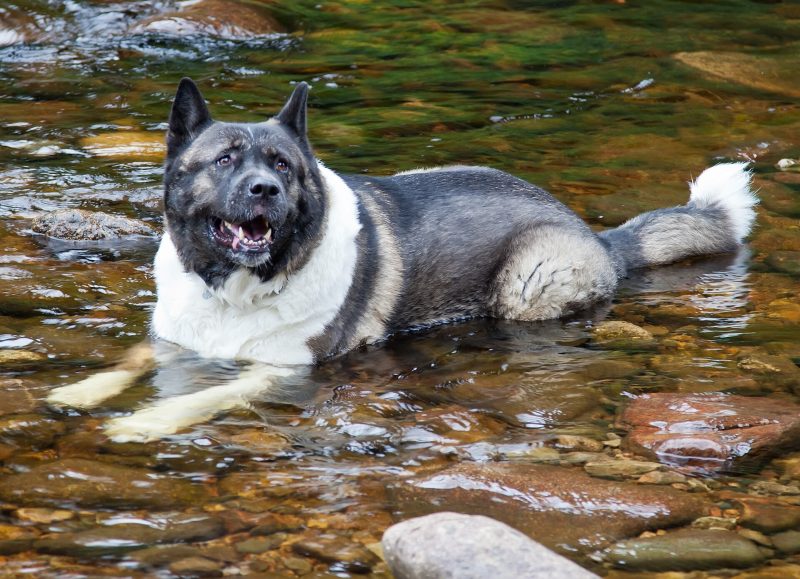
The Akita is a large, powerful spitz from the mountains of northern Japan, bred to hunt big game and guard the household, and it carries itself like it knows it. The dog recognized by the American Kennel Club is the heavier, bear-headed American type; Japan and most of the world now treat the lighter, fox-faced Japanese Akita Inu as a separate breed. Both share a profound loyalty to their own people, a dignified reserve with everyone else and a strong dislike of other dogs of the same sex.
This is a breed for experienced owners who can provide early, thorough socialization, calm and consistent leadership and secure fencing, and who do not need a dog that loves everyone. It is quiet, clean and surprisingly undemanding indoors, and it sheds spectacularly twice a year. The Akita is not a first dog, a dog-park dog or a dog for a household that wants an open-door social life. Lifespan is typically 10 to 13 years.
History & Origin
Large hunting dogs of the matagi, the traditional hunters of northern Honshu, worked bear, boar and deer around Odate in Akita Prefecture for centuries. From the 1600s local lords also used them as guard and fighting dogs, and a late-1800s dog-fighting craze brought crosses with Tosa and mastiff types that nearly swamped the native spitz character. A preservation society formed in Odate in 1927, and in 1931 the Akita was declared a Natural Monument of Japan. Hachiko, who waited at Shibuya Station for his dead master for nearly ten years, made the breed a national symbol in the 1930s.
Helen Keller brought the first Akita to America in 1937. The Second World War nearly wiped the breed out, and survivors were rebuilt along two lines, one leaning on German Shepherd crosses and one on the older hunting type. American servicemen took home the heavier dogs, which became the American Akita; the Akita Club of America formed in 1956 and the AKC admitted the breed to its Stud Book in 1972, with Working Group status in 1973. In 1999 the FCI formally separated the two types.
Appearance
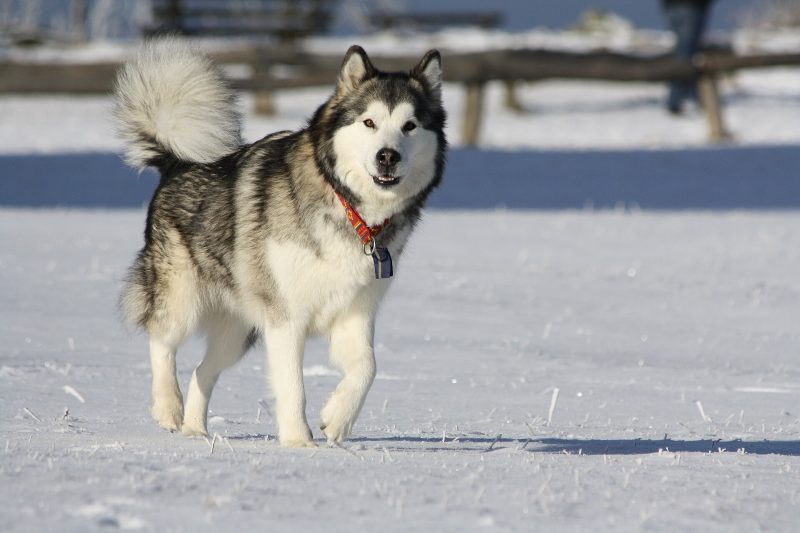
The American Akita is a big, heavy-boned dog with a broad, bear-like head, small erect ears set in line with the neck, small deep-set triangular eyes and a large, curled tail carried over the back. Males stand 26 to 28 inches at the shoulder and weigh 100 to 130 pounds; females are 24 to 26 inches and 70 to 100 pounds. The body is slightly longer than tall, with a deep chest, level back and powerful hindquarters, and the dog moves with a brisk, ground-covering stride.
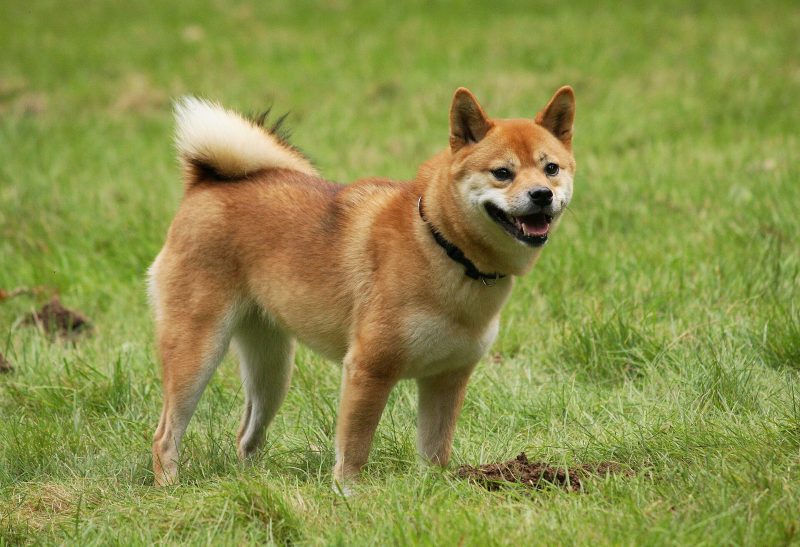
The double coat has a harsh, straight outer layer over a thick, soft undercoat, and it stands slightly off the body. Any color is allowed, including white, brindle and pinto, with or without a black mask; markings are often bold and well defined. The Japanese Akita Inu is lighter, with a narrower, fox-like head, and comes only in red, brindle, sesame or white, always with pale urajiro shading and never a black mask. A Shiba is a fraction of the size; an Alaskan Malamute has a wedge-shaped head and a plumed rather than curled tail.
Temperament & Personality
Akitas are dignified, quiet and deeply loyal. They do not fawn, bark for no reason or demand attention; they settle somewhere with a view of the family and keep watch. With their own people, including children they have grown up with, they are affectionate and often playful in a slow, rumbling way, and many have a habit of carrying things around in their mouths and of grooming themselves like cats. They are naturally clean and easy to housetrain.
With strangers the breed is aloof and watchful, and it takes guarding seriously; a well-socialized Akita tolerates visitors without warmth, an unsocialized one can be a liability. The breed is often aggressive toward other dogs, especially of the same sex, and has a strong prey drive toward cats and small animals. It can misread rough children's play as a threat, so visiting children need supervision. Akitas are willful and sensitive at the same time; they resent harsh handling and simply stop cooperating. Some jurisdictions restrict the breed.
Exercise & Activity
An adult Akita needs one to two hours of exercise a day, but it is not a frantic breed. Long, steady walks or hikes with the dog on a leash, a chance to patrol a securely fenced yard and some structured play are enough for most. Many enjoy pulling a sled or cart in winter, carrying a pack on hikes or working in obedience and rally. Dog parks are a bad idea for almost every Akita because of the breed's intolerance of strange dogs.
The thick coat is built for snow, and Akitas are at their happiest in cold weather. In heat they tire quickly and overheat, so summer exercise belongs in the cool hours with water and shade. Puppies grow fast and should be kept to free play and short walks until about 18 months to protect their joints.
Boredom produces digging, chewing and fence-testing.
Keep hard exercise an hour away from meals to lower bloat risk.
Akitas are escape-capable; check gates and fence height.
Training
Akitas are intelligent and learn quickly, but they are independent thinkers that need a reason to comply and lose respect for anyone they can push around. The most effective approach is calm, consistent, reward-based training from the first week, with clear house rules that never change and no bullying. Short, varied sessions keep the dog engaged; endless repetition does not. Harsh corrections or physical confrontation with a 110-pound guardian breed are both ineffective and dangerous.
Socialization is not optional. Expose puppies carefully and positively to many people, places, sounds and well-behaved dogs, and continue through adolescence, when guarding instincts and dog intolerance tend to emerge. Teach a rock-solid leave-it and recall, manage the dog around other animals rather than hoping for the best, and prevent resource guarding by trading rather than taking. Teach the puppy to accept handling of mouth, feet and ears for grooming and vet visits. A professional trainer experienced with guardian breeds is money well spent. Akitas do well in obedience, rally and weight pull.
Grooming & Care
For most of the year an Akita's coat needs only a thorough weekly brushing with a slicker brush and a metal comb to remove loose hair and keep the undercoat from packing. Twice a year the undercoat sheds all at once, and for several weeks daily sessions with an undercoat rake, plus a warm bath and a high-velocity dryer if you have one, are the only way to keep up. The amount of hair is startling. Shedding is lighter but continuous in between.
Akitas are naturally clean and have little odor, so baths every couple of months are plenty. Never shave the coat; it insulates against heat as well as cold and may not grow back properly. Trim nails every few weeks, check ears weekly and brush teeth regularly.
A professional de-shedding groom at the start of each coat blow saves days of work.
Watch for bald patches, scaling or a dull, brittle coat, which can signal the skin and thyroid problems the breed is prone to.
Health
Akitas are prone to a cluster of immune-mediated diseases. Sebaceous adenitis destroys the skin's oil glands and causes scaling, hair loss and a dull, brittle coat; diagnosis requires a skin biopsy. A condition similar to human Vogt-Koyanagi-Harada syndrome attacks pigment in the eyes and skin, producing painful eye inflammation and whitening of the nose and eyelids, and can cause blindness if not treated quickly. Pemphigus, autoimmune thyroiditis leading to hypothyroidism and Addison's disease also appear. Beyond the immune system, hip and elbow dysplasia, bloat, progressive retinal atrophy, microphthalmia, glaucoma and entropion are the main concerns. Some Akitas are sensitive to certain drugs and anesthetics, and the breed's red blood cells can produce a falsely high potassium reading on blood tests, which your vet should know.
The Akita Club of America has run a health and genetics committee since 1994 and encourages OFA hip, elbow, thyroid and eye screening for breeding stock. Typical lifespan is 10 to 13 years. See your vet promptly for red, cloudy or squinting eyes, loss of pigment, skin changes or a swollen abdomen.
Nutrition
Feed an Akita puppy a large-breed growth formula so it grows steadily rather than quickly, and keep it lean; extra weight on a fast-growing frame contributes to joint problems. Adults are not big eaters for their size and gain weight easily once mature or neutered, and the heavy coat hides it, so judge condition by feeling for ribs and a waist. Two measured meals a day suit the breed better than free feeding.
Because the Akita is deep-chested, take bloat precautions: no exercise for an hour either side of meals, no gulping huge portions, and a conversation with your vet about preventive gastropexy. Dogs with sebaceous adenitis or hypothyroidism are managed medically, but your vet may suggest dietary fatty-acid support for the skin; ask before adding supplements. Some Akitas have food sensitivities that show up as itchy skin or ear infections, and a supervised elimination diet can help sort them out. Many Akitas guard food, so feed them separately from other pets and teach children to leave an eating dog alone. Fresh water should always be available.
Living With This Breed
An Akita needs a house with a securely fenced yard, a cool place to lie in summer and a family that is home a reasonable amount. It is quiet, clean and calm indoors, and it handles a workday alone better than most breeds, but it should not be the dog that gets left in the yard, where it will guard and may test the fence. Apartment life is possible only with serious commitment to exercise and management in shared spaces.
The breed is best as the only dog, or with a well-matched dog of the opposite sex, and is risky with cats and small pets. It suits families with older children and few casual visitors.
Sitters should meet the dog in advance, with the owner present, and keep introductions calm and brief.
Walk on leash only, well away from other dogs; never use a dog park.
Feed separately from other animals and do not reach into the bowl.
Daycare and group boarding are generally unsuitable; in-home care works far better.
Interesting Facts
Hachiko, an Akita, met his owner's train at Shibuya Station every day for nearly ten years after the professor died in 1925; his bronze statue is still a Tokyo landmark.
Helen Keller received the first Akita in America, Kamikaze-go, during a 1937 visit to Japan, and a second, Kenzan-go, after the first died young.
In Japan a small Akita figurine is a traditional gift to new parents or someone who is ill, as a wish for health and long life.
The Akita is the largest of Japan's native breeds and was declared a Natural Monument in 1931.
When the FCI split the breed in 1999, the American type was briefly named the Great Japanese Dog before becoming the American Akita in 2006.
Akitas groom themselves like cats, licking their coats and washing their faces with a paw.
Breeds similar to the Akita
What Akita owners say
Real pets, photos, stories and tips from the SitterNation community — separate from the editorial guide above.
Log in to add your pet, photos, stories and tips.
Meet Akitas on SitterNation
No Akitas have joined yet. Owners can show their pet here from the pet's profile.
Akita community photos
No Akitas photos yet — be the first to share one.
Stories from Akita owners
No stories yet. What is life with yours really like?
Tips from Akita owners
No tips yet. One practical thing that works for you is enough.
Ask Akita owners
No questions yet. Ask the people who live with the breed.