Typical tendencies
Energy level
Needs a real outlet most days.
Good with children
A famously patient playmate for kids.
Good with other dogs
Loves every dog at the park.
Trainability
Learns, but on its own schedule.
Shedding
Noticeable, with heavier seasonal blows.
Apartment friendly
Fine in a flat if exercise is kept up.
More traits
Exercise needs
Adaptability
Grooming needs
Drooling
Intelligence
Family friendly
Good with cats
Friendly with strangers
Sociability
Protectiveness
Prey drive
Overview
The Beagle is a merry, sturdy little hound built for following a rabbit's scent all day with a pack of friends, and that heritage explains almost everything about living with one. Beagles suit active families with children, homes with another dog or people around most of the day, owners who enjoy walks and sniffing adventures, and anyone who wants a compact, easy-care, good-natured companion. They are a poor fit for people who want a reliable off-leash dog, a quiet dog in a thin-walled apartment, a tidy eater or a pushover in training; the Beagle nose and the Beagle voice both have minds of their own. Choose a breeder who screens hips, eyes, heart and the breed's DNA conditions, or adopt through one of the many Beagle rescues, fence the yard properly and keep the dog lean, and you get a cheerful friend for 10 to 15 years.
History & Origin
Small scent hounds for hunting hare on foot existed in England long before the word Beagle first appeared in print in 1475; the name may come from the French begueule, open throat, or from an old word for small. Tudor nobles kept 'pocket Beagles' tiny enough to ride in a saddlebag, and Elizabeth I reportedly owned a pack. Fox hunting on horseback eclipsed the little hare hounds in the 1700s, and the modern breed owes much to the Reverend Phillip Honeywood, who established a pack in Essex in the 1830s, and to breeders who added good looks to working ability. In the United States, General Richard Rowett of Illinois imported English Beagles in the 1870s, and his dogs became the model for the first American standard in 1887. The AKC registered its first Beagle in 1885, the National Beagle Club formed in 1888 and held its first field trials in 1890, and the breed was divided into 13-inch and 15-inch varieties in 1928.
Appearance
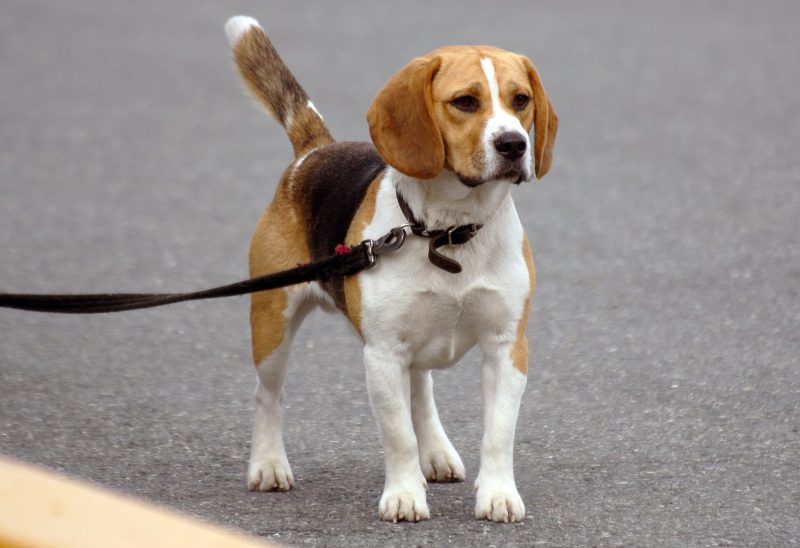
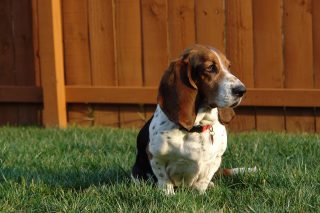
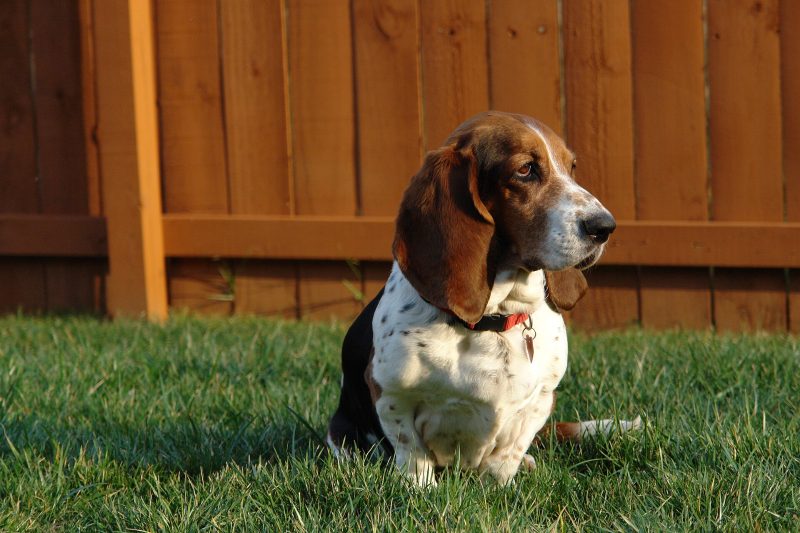
A Beagle looks like a Foxhound in miniature: a solid, square little hound with a slightly domed skull, a straight muzzle, large brown or hazel eyes with a soft, pleading expression and long, low-set ears that reach nearly to the nose. The AKC recognizes two varieties by height, 13 inches and under and over 13 up to 15 inches; weight runs 18 to 30 pounds. The neck is strong, the chest deep, the back short and level, and the tail is set high and carried up with a white tip, bred so hunters could see it in cover. The coat is short, dense and weatherproof. Tricolor, a black saddle with tan and white, is classic, but red and white, lemon and white and tan and white are all correct; any hound color is acceptable. The Basset Hound is far heavier and longer with much shorter legs; the Harrier and American Foxhound are the same shape but noticeably taller.
Temperament & Personality
Beagles are happy, curious and sociable. They were bred to work in packs, so they get along with almost every dog, are friendly with strangers and usually love children, who match their energy and tolerance for noise. They are affectionate without being clingy and will happily share a sofa with anyone. Independence is the flip side: a Beagle following a scent is temporarily deaf, and this is not disobedience so much as genetics. They are vocal, with a bark, a bay and a howl deployed at squirrels, doorbells, loneliness and sheer joy. Prey drive is strong, so cats need careful introduction and small pets such as rabbits are best kept apart. Indoors a well-exercised Beagle is calm; an under-exercised one is a counter-surfing escape artist. They dislike being alone for long hours and are happiest with another dog or a human around. Mischief, usually involving food, is a lifelong hobby.
Exercise & Activity
A Beagle needs about an hour of exercise a day, and the best of it involves the nose. Long sniffing walks, hikes on a long line, scent games in the yard and organized nose work or tracking satisfy the hound brain far better than a fast jog. Fetch and tug work for some Beagles; most prefer to follow their noses. Off-leash exercise is only safe in a securely fenced area, since a Beagle on a scent will cross roads without noticing them. Puppies need shorter, more frequent outings. The breed handles cold and heat reasonably well, but its appetite for a trail outruns its common sense on hot days, so carry water. Mental work and food puzzles are especially effective for this food-driven breed. A bored Beagle howls, digs under fences, chews and raids the trash.
Daily: a long sniff walk plus a play or scent session
Weekly: a new trail or a nose work class
Fencing: at least five feet high and secured at the base
Training
Beagles are clever but easily distracted and were bred to make their own decisions in the field, which makes them a humbling project for owners used to retrievers. The good news is that they are intensely food-motivated, so a pocket of small treats buys attention. Keep sessions short and fun, train in low-distraction places first and build up slowly, and accept that recall will never be fully reliable around a fresh scent; a long line is a Beagle owner's best friend. House training can take time and patience, and crate training helps with both that and separation anxiety. Teach a strong 'leave it', because Beagles eat first and think later. Socialization is usually easy since the breed is naturally friendly, but exposure to being alone and to being handled matters. Nose work, tracking, barn hunt and rally play to the breed's strengths. Harsh corrections just shut a Beagle down.
Grooming & Care
Beagles are low-maintenance. The short, dense coat sheds moderately all year and more in spring, and a weekly brush with a rubber hound glove or medium-bristle brush keeps loose hair in check. Bathe every month or two or when the dog has found something to roll in, which will be often. The long drop ears are the main grooming job: they limit airflow and trap moisture and debris, so check them weekly, dry them after swimming or baths and clean with a vet-recommended cleaner when there is wax, odor or head shaking. Trim nails every three to four weeks; Beagle nails are hard and the quick is easy to hit, so start young. Brush teeth several times a week. Check the eyes for redness or a pink swelling in the inner corner, and run your hands over the body regularly to catch ticks after outdoor adventures.
Brush: weekly
Ears: check weekly, dry after water
Nails: every 3–4 weeks
Health
Beagles are generally hardy and live 10 to 15 years. Obesity is the most common problem and drives many others. Epilepsy is more frequent than in most breeds, including Lafora disease, a late-onset form with a DNA test. Hypothyroidism, intervertebral disc disease, hip dysplasia, patellar luxation and cruciate ligament tears occur. Eye conditions include cherry eye, glaucoma, cataracts and progressive retinal atrophy. Ear infections are frequent because of the long ears. The breed has several inherited conditions with DNA tests: Musladin-Lueke syndrome, which causes stiff joints and tight skin; neonatal cerebellar cortical degeneration; Factor VII deficiency, a mild bleeding disorder; and Imerslund-Gräsbeck syndrome, a vitamin B12 absorption defect. Steroid-responsive meningitis-arteritis, sometimes called Beagle pain syndrome, affects young dogs. The National Beagle Club asks breeders for OFA hip evaluations, an eye exam by a veterinary ophthalmologist, a cardiac exam, an OFA thyroid evaluation and the MLS DNA test, with Factor VII, NCCD and Lafora testing recommended. See your vet for seizures, neck or back pain, head shaking or a sudden weight change.
Nutrition
A Beagle will eat anything, anytime, in any amount, and most are overweight by middle age unless someone intervenes. Measure every meal, feed twice a day, never free-feed and count every treat, including the ones used in training; keep treats under a tenth of daily calories and use part of the dinner ration as rewards. Puppies do well on a complete small- or medium-breed puppy food until about 12 months; adults move to maintenance and seniors to a lower-calorie formula if activity drops. Body condition is the guide: ribs easy to feel and a waist visible from above. Food puzzles and slow-feeder bowls turn mealtime into enrichment and slow a dog that inhales food. Secure the trash, the counters and the pantry, and warn visitors, because Beagles steal with skill and eat things that make them sick. If weight creeps up despite measured portions, ask your vet about a weight-management diet. Keep fresh water available.
Living With This Breed
Beagles adapt to houses and apartments alike, with one caveat: they are loud. Baying at passers-by or howling when left alone can strain neighborly relations, so apartment living suits a Beagle only if it has company and exercise. A fenced yard must be escape-proof, since Beagles dig under, squeeze through and occasionally climb. They are wonderful with children and other dogs and are often happiest in multi-dog homes. They tolerate most climates. Long solitary days lead to howling and destruction. For sitters and daycare staff: never let a Beagle off leash outside a fence, hold the leash firmly because scent-triggered lunges are sudden, secure all food and trash, watch for scavenging on walks and be ready for group play that is enthusiastic and vocal.
Leash on, always, outside fenced areas
Food out of reach, including bags and jackets with treats
Expect baying when someone comes to the door
Interesting Facts
Snoopy, the world's most famous Beagle, made his debut in the Peanuts comic strip in 1950 and has flown to the Moon as NASA's safety mascot.
HMS Beagle, the ship that carried Charles Darwin around the world, was named after the breed.
Uno became the first Beagle to win Best in Show at Westminster in 2008, baying at the crowd when he won; Miss P repeated the feat in 2015.
President Lyndon Johnson kept Beagles named Him and Her at the White House and caused an uproar when he was photographed lifting one by the ears.
The United States Department of Agriculture's Beagle Brigade sniffs out prohibited fruit, meat and plants in airport baggage halls, chosen because the breed is friendly and non-threatening to travelers.
A Beagle's nose has roughly 220 million scent receptors, compared with about five million in a human, and the long ears are thought to help waft scent toward it.
Breeds similar to the Beagle
Popular Beagle crosses
What Beagle owners say
Real pets, photos, stories and tips from the SitterNation community — separate from the editorial guide above.
Log in to add your pet, photos, stories and tips.
Meet Beagles on SitterNation
No Beagles have joined yet. Owners can show their pet here from the pet's profile.
Beagle community photos
No Beagles photos yet — be the first to share one.
Stories from Beagle owners
No stories yet. What is life with yours really like?
Tips from Beagle owners
No tips yet. One practical thing that works for you is enough.
Ask Beagle owners
No questions yet. Ask the people who live with the breed.