Typical tendencies
Energy level
Calm at home with short bursts of play.
Good with children
A famously patient playmate for kids.
Good with other dogs
Loves every dog at the park.
Trainability
Learns, but on its own schedule.
Shedding
Keep the lint roller within reach.
Apartment friendly
Settles well into smaller homes.
More traits
Exercise needs
Adaptability
Grooming needs
Drooling
Intelligence
Family friendly
Good with cats
Friendly with strangers
Sociability
Protectiveness
Prey drive
Overview
The Basset Hound is a big dog on short legs: a 40-to-65-pound scent hound built low so hunters on foot could keep up with it. Today it is one of the most recognizable and most relaxed family dogs around, with a soft, mournful face that hides a cheerful, stubborn, food-driven character. It suits households that want a gentle, sociable companion for children and other pets, do not mind drool, baying and a strong doggy smell, and are willing to walk daily but not run.
It does not suit anyone who needs instant obedience, a dog that comes when called in an open field, or a tidy house. Bassets are easygoing about almost everything except a scent trail and a plate of food, and both will test your patience. For the right people, the trade is a loyal, funny, deeply comfortable dog.
History & Origin
The Basset descends from the hounds kept at the Abbey of St. Hubert in the Ardennes from around the 700s, the same stock that produced the Bloodhound. Short-legged hounds appear in French hunting literature by the 1500s, with the name first recorded in a 1585 text; it comes from bas, meaning low. After the French Revolution, hunters who could not afford horses valued a hound slow enough to follow on foot through rabbit and hare country, and several regional basset types developed, with the Basset Artésien Normand closest to the modern breed.
The breed crossed to England in the 1860s and 1870s, where Sir Everett Millais, often called its father, bred and showed it and introduced Bloodhound crosses that gave the heavier head. The Kennel Club recognized it in 1880; a Basset appeared at Westminster in 1884 and the American Kennel Club recognized the breed in 1885. The Basset Hound Club of America formed in 1935, and the current standard dates from 1964.
Appearance
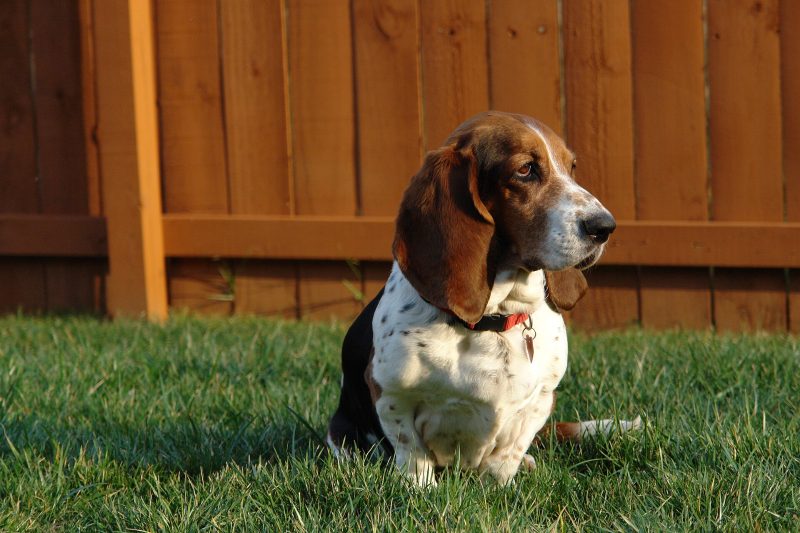
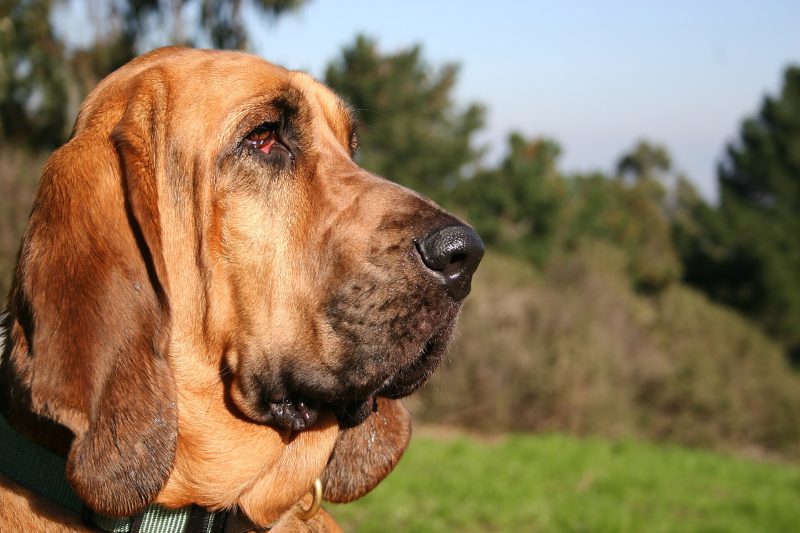
A Basset is long, low and heavy: no more than 15 inches at the shoulder but 40 to 65 pounds, with more bone for its size than almost any other breed. The legs are short and slightly crooked at the front, the chest is deep and the body is long with a tail carried up like a flag so hunters could see it in cover. The head is large, with a domed skull, a pronounced dewlap, loose skin that falls into wrinkles when the head is down, and extremely long, soft ears that trail on the ground and sweep scent toward the nose. The eyes are dark, slightly sunken and show some haw, giving the famously sad look.
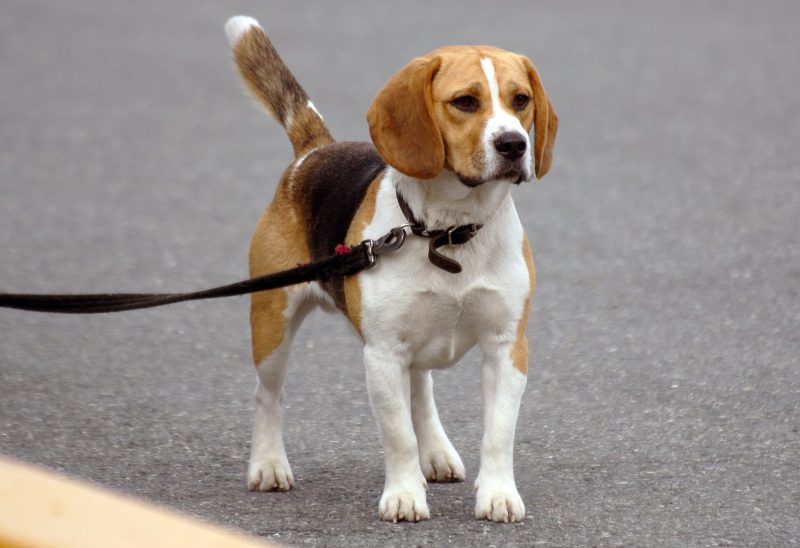
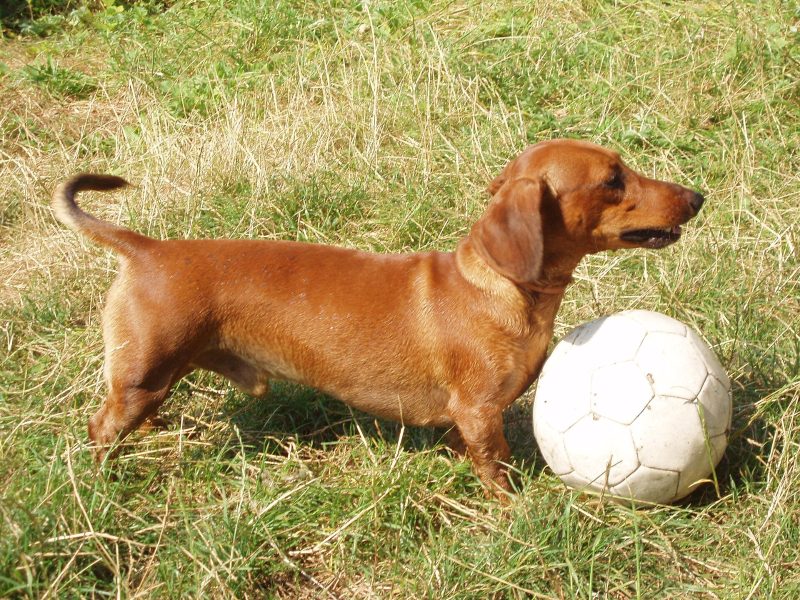
The coat is short, smooth and dense and sheds steadily. Tricolor and red and white are most common; lemon and white and black and white also occur. Next to a Beagle a Basset is far heavier and lower; next to a Dachshund it is much bigger with a broader head.
Temperament & Personality
Bassets are among the most good-natured of all dogs. They are affectionate without being needy, patient with children, friendly to visitors and genuinely pack-oriented, so they get on well with other dogs and usually with cats. Protective instinct is low; a Basset will announce a stranger with a deep bay and then lead them to the kitchen.
Indoors the energy level is low to the point of comedy: long naps, slow stretches, a thump of the tail. Outdoors the nose takes over and a different dog appears, intent, deaf to its name and capable of surprising stamina on a trail. The breed is independent and methodical rather than disobedient; it simply weighs your request against the smell it is following. Bassets are vocal, with a bay that carries for blocks, and many howl when lonely. Left alone too long they can become destructive or noisy.
Exercise & Activity
A Basset needs a daily walk of 30 to 60 minutes at its own sniffing pace, plus some play in the yard. Steady, moderate exercise keeps the breed from gaining weight and keeps the long back and heavy front supported by muscle. Long-distance running, repeated stair climbing and jumping on and off furniture are hard on the joints and spine, so skip them, especially before 18 months while the dog is still growing.
The best enrichment is the one the breed was built for: scent. Hide treats around the house, lay a trail in the yard, or try tracking and nose work classes. A Basset that has used its nose is a content Basset.
Walk on leash or in fenced areas only; recall evaporates on a scent.
Bassets manage cold well but overheat easily in hot, humid weather.
Boredom looks like howling, digging and raiding the trash.
Training
Bassets rank near the bottom of most trainability lists, which is unfair to a dog that learns quickly but sees little reason to comply without a good incentive. The incentive is food. Reward-based training with small treats works; nagging, force or repetition does not, and a Basset that decides it is being pushed will plant itself and refuse to move. Keep sessions short and upbeat and end on a success.
House-training can be slow and benefits from a strict schedule and crate training. Recall is the breed's weakest skill and should never be relied on off leash in open country. Counter-surfing and trash raiding need management more than training, because the reward is too high. Socialize puppies broadly; it is easy with such a friendly breed, and it prevents the occasional shy Basset. Many enjoy tracking, scent work and the breed's own field trials, where the stubbornness becomes persistence.
Grooming & Care
The short coat needs only a weekly brush with a rubber curry or hound glove to remove loose hair, though Bassets shed more than people expect and the hair clings to fabric. A monthly bath helps with the distinctive hound odor that the oily coat produces; dry the skin folds thoroughly afterward. The real grooming jobs are the ears and the folds.
Those long, heavy ears block air flow and drag through food, water and mud, so check and clean them at least weekly with a vet-recommended cleaner and watch for redness, smell or head shaking. Wipe the facial wrinkles, lips and dewlap daily; food and drool collect there.
Trim nails every two to three weeks; the heavy front puts weight on them.
Brush teeth several times a week.
Keep a drool towel by the water bowl; Bassets slobber after drinking.
Health
Bassets are built on a dwarfing mutation, and several problems follow from it. Intervertebral disc disease is a risk in any long-backed breed; keep the dog lean and limit jumping. Elbow dysplasia, often as an ununited anconeal process, and hip dysplasia occur, and a DNA test for the disc-disease-associated gene is available in breed panels. Primary glaucoma is a serious concern, screened by gonioscopy and a DNA test for the open-angle form; annual eye exams also catch cherry eye and entropion. Basset Hound thrombopathia, a bleeding disorder, mucopolysaccharidosis type I and Lafora disease, a late-onset epilepsy, all have DNA tests that the Basset Hound Club of America describes.
Ear infections are near-universal without routine cleaning, and skin fold infections and seborrhea are common. Bloat is a leading cause of death in the breed. Obesity is the most common and most preventable problem of all. Typical lifespan is 12 to 13 years. Ask your vet about any eye cloudiness or redness the same day; glaucoma is an emergency.
Nutrition
Bassets gain weight easily, and every extra pound loads a spine and set of joints that were already compromised by the breed's short legs. Feed measured meals twice a day, weigh the food rather than scooping, and count treats, which the breed will campaign for relentlessly. Check body condition every few weeks: you should feel ribs under a light cover and see a waist from above, which on a Basset takes a practiced eye.
Puppies should eat a large-breed growth food that keeps growth steady; fast-growing heavy puppies are more likely to develop joint problems. Ask your vet when to switch to adult food, usually around a year. Because bloat is a real risk in this deep-chested breed, split the daily ration into at least two meals, use a slow-feeder bowl and keep an hour of rest around mealtimes. Secure the trash and the counters; a Basset will eat things that make it ill.
Living With This Breed
Bassets adapt well to apartments and houses alike as long as they get their daily walk, though their bay carries through walls and can bother neighbors. Stairs are a problem for the long back and short legs; a ground-floor home or ramps help, and the dog should be lifted or ramped in and out of cars. They are fine in most climates but overheat in hot, humid weather.
The breed is excellent with children and other pets and copes moderately well with time alone, better with a canine companion. Expect drool, shedding, odor and a dog that steals food from a table at head height.
Sitters and walkers: leash at all times, no off-leash parks, and expect a slow walk with constant sniffing.
Keep food, trash and medications out of reach, including on counters.
Have the ear-cleaning routine and any eye drops written down.
Interesting Facts
The Basset's nose is generally ranked second only to the Bloodhound's, with more than 200 million scent receptors and ears that sweep smells toward it.
A Basset Hound has been the face of Hush Puppies shoes since 1958, and the breed is still widely called the Hush Puppy dog.
A Basset made the cover of Time magazine in 1928, covering the Westminster show, and the publicity helped launch the breed in America.
Fred Basset, the British newspaper strip, has run since 1963; Droopy, the Tex Avery cartoon hound, debuted in 1943.
Flash, Sheriff Rosco's dog in The Dukes of Hazzard, was a Basset who spent most episodes asleep in the patrol car.
The breed's name comes from the French bas, low, and Shakespeare's description of hounds with ears that sweep the morning dew is often read as an early portrait of the type.
Breeds similar to the Basset Hound
What Basset Hound owners say
Real pets, photos, stories and tips from the SitterNation community — separate from the editorial guide above.
Log in to add your pet, photos, stories and tips.
Meet Basset Hounds on SitterNation
No Basset Hounds have joined yet. Owners can show their pet here from the pet's profile.
Basset Hound community photos
No Basset Hounds photos yet — be the first to share one.
Stories from Basset Hound owners
No stories yet. What is life with yours really like?
Tips from Basset Hound owners
No tips yet. One practical thing that works for you is enough.
Ask Basset Hound owners
No questions yet. Ask the people who live with the breed.