Typical tendencies
Energy level
Ready to go when you are, settles after.
Good with children
Gentle and tolerant around children.
Good with other dogs
Enjoys most canine company.
Trainability
Learns, but on its own schedule.
Shedding
Noticeable, with heavier seasonal blows.
Apartment friendly
Needs space and a garden to be happy.
More traits
Exercise needs
Adaptability
Grooming needs
Drooling
Intelligence
Family friendly
Good with cats
Friendly with strangers
Sociability
Protectiveness
Prey drive
Overview
The Bloodhound is the world's most famous tracking dog, a large, loose-skinned scent hound whose nose is trusted by police forces and, in some jurisdictions, by courts. Off duty it is one of the gentlest and most easygoing of big dogs, affectionate with its family, tolerant of children and friendly to almost everyone. On a trail it is a different animal: single-minded, deaf to recall and capable of following a scent for miles.
The breed suits owners with a house, a tall and secure fence, time for long leashed walks and a high tolerance for drool, baying and a certain houndy smell. It is not a dog for apartments, for people who want quick obedience or for anyone who needs the dog to come when called in open country. Lifespan is typically 10 to 12 years, with bloat the major risk to watch. For the right household a Bloodhound is a wonderfully mellow, affectionate companion.
History & Origin
The breed descends from the St. Hubert hounds kept by monks at the Abbey of Saint-Hubert in the Belgian Ardennes, which is why its formal name is Chien de Saint-Hubert and Belgium is recognized as its country of origin. Tradition says the monks were sending pairs of their black hounds to the French court each year by around 1200, and the type spread through medieval Europe as a slow, deliberate hunting hound. The English word bloodhound was in use by the 1330s. Whether it meant a hound of pure blood or a hound that followed a blood trail is still argued.
In Britain the Bloodhound became a specialist in trailing people as well as game, and nineteenth-century English breeders fixed the modern type with its heavy wrinkle and long ears. The American Kennel Club recognized the breed in 1885, the year after its founding, and the British breed standard of 1896 has changed little since. In the twentieth century Bloodhounds became the standard tool for finding lost children, escaped prisoners and missing hikers, and that is still their main work.
Appearance
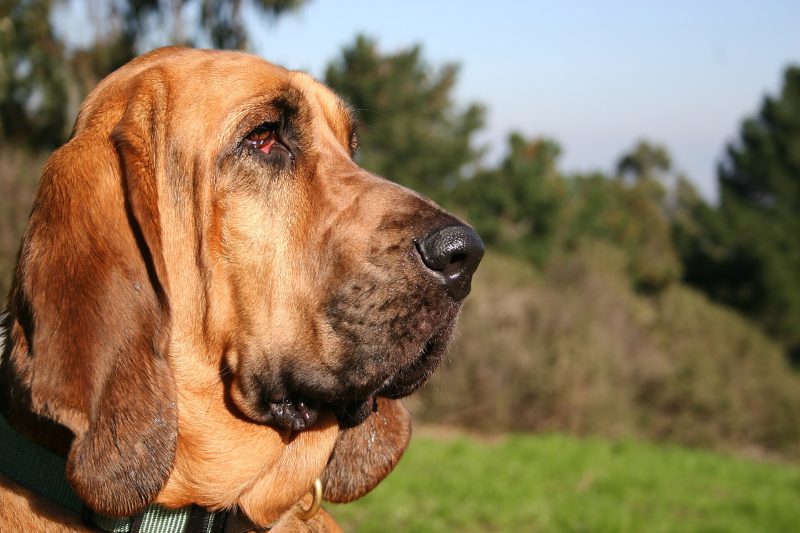
A Bloodhound is a big, powerful hound that seems to have been issued a coat two sizes too large. Males stand 25 to 27 inches at the shoulder and weigh 90 to 110 pounds; females are 23 to 25 inches and 80 to 100 pounds. The head is long and narrow with a pronounced occiput, and the skin hangs in deep folds over the forehead and down the sides of the face into heavy flews and a dewlap. The ears are extraordinarily long, thin and low-set, and the eyes are deeply sunk with drooping lower lids that show the haw.
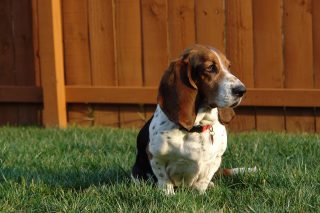
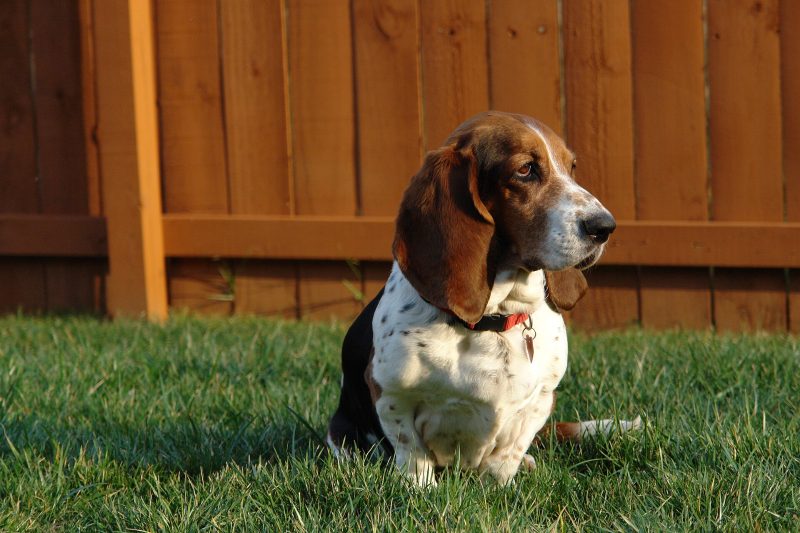
The body is long and deep, with a level back and a tail carried high in a gentle curve. The coat is short and dense, and comes in black and tan, liver and tan, or solid red, sometimes with a few white hairs on the chest and toes. A Basset Hound is low and heavy on short legs; a Black and Tan Coonhound is lighter, tighter-skinned and less wrinkled; a Redbone Coonhound is sleek and red without the loose skin.
Temperament & Personality
At home the Bloodhound is placid, affectionate and patient, more likely to be found draped over a sofa than guarding the door. It is friendly to strangers, easygoing with other dogs and usually gentle with children, though its size and tendency to lean and bump mean toddlers need supervision. It is not protective in any meaningful sense and makes a poor watchdog beyond a deep bay at the window.
The breed's personality changes when a nose hits the ground. Bloodhounds are independent, stubborn and extremely focused; once on a scent they ignore voices, traffic and fences. They wander if given the chance and are famous for going over, under or through barriers. They are vocal, with a loud, musical bay when excited, and most drool copiously. Adolescents chew heavily and can be clumsy and boisterous. Bloodhounds are sensitive underneath the stubbornness and do not respond to harsh treatment; they simply dig in. Many are shy as puppies and need careful socialization.
Exercise & Activity
A Bloodhound needs one to two hours of exercise a day, and what it wants most is to walk and sniff. Long leashed walks at a steady pace, with the dog allowed to follow its nose, satisfy the breed far better than fast running or fetch, which most Bloodhounds consider pointless. Tracking and trailing games, where the dog follows a family member's scent to a reward, are the ideal mental outlet and tap into exactly what the dog was bred to do.
Off-leash exercise is only safe inside a tall, secure fence. The breed's heavy build and thick skin make it intolerant of heat, so summer outings belong in the cool of the day with water on hand. Puppies grow fast and should not be jogged or taken on long walks before 18 months.
A bored Bloodhound chews, digs, bays and plans escapes.
No exercise for an hour before and after meals, to lower bloat risk.
Check the dog's feet and ear tips after long walks through rough cover.
Training
Bloodhounds are intelligent but were bred to work independently, far ahead of a handler, and that shows in training. They learn slowly in the formal sense, bore quickly and see little point in sitting on command when there are smells to investigate. Reward-based methods using food work best; the breed is food-motivated and surprisingly sensitive to tone, and harsh handling produces a dog that shuts down. Keep sessions short, expect to repeat lessons and celebrate small wins.
The priorities are loose-leash walking, because a 100-pound hound that pulls toward every scent is unmanageable, and a solid settle in the house. Recall should be taught and practiced but never trusted in open country. Socialize puppies thoroughly, since many Bloodhounds are reserved or timid without it. Adolescents go through a long, mouthy, destructive phase that calls for management and patience rather than punishment. Tracking and trailing classes are where this breed excels; many pet Bloodhounds go on to earn titles or volunteer with search and rescue.
Grooming & Care
The short coat is easy: a weekly rub with a hound glove or rubber curry lifts dead hair, and shedding is moderate year-round with a heavier turnover in spring and fall. Bathe every month or two, or when the characteristic hound odor becomes noticeable. Many owners keep a wipe-down routine, because Bloodhounds carry a distinct scent even when clean.
The real work is skin and ears. Wipe the facial wrinkles and the flews daily with a damp cloth and dry them, since moisture trapped in folds breeds infection. Check and clean the long ears at least weekly; they hang in food and water and get little airflow, and ear infections are the breed's most common nuisance. Keep nails short, brush teeth regularly and expect to carry a drool towel everywhere.
Lift the lower eyelids occasionally and look for redness or discharge.
Use a snood or clip the ears up at mealtimes to keep them out of the bowl.
A raised, narrow water bowl keeps ears drier.
Health
The Bloodhound's lifespan is shorter than many breeds its size, and bloat is the leading reason. Gastric dilatation-volvulus, in which the stomach fills with gas and twists, caused about a third of deaths in a British breed survey; it strikes suddenly and is fatal without emergency surgery, so every Bloodhound owner should know the signs of a swollen abdomen, unproductive retching and restlessness. Hip and elbow dysplasia are common, with a high proportion of radiographs showing abnormal hips. The drooping eyelids predispose to entropion, ectropion and cherry eye, and the folds and ears to chronic skin and ear infections. Hypothyroidism and cancer also appear in the breed.
The American Bloodhound Club asks breeders for OFA hip, elbow and cardiac evaluations, with eye and patella screening recommended. Typical lifespan is 10 to 12 years, though a UK Kennel Club health survey found a median age at death nearer 7 years. Ask your vet about preventive gastropexy, have eyelids checked early, and treat any ear discharge, head shaking or eye redness promptly rather than waiting for it to resolve.
Nutrition
Feed a Bloodhound puppy a large-breed growth formula that moderates calories and calcium, so the skeleton grows at a steady pace, and keep the puppy lean; rapid growth and extra weight on soft joints raise the risk of hip and elbow problems later. Adults are prone to gaining weight as they slow down, and their loose skin hides it, so judge condition by feeling for ribs and a waist rather than by eye.
Because bloat is the breed's main killer, how a Bloodhound eats matters as much as what it eats. Divide the daily ration into two or three meals, use a slow-feed bowl if the dog gulps, keep the dog quiet for an hour before and after eating and talk to your vet about whether a preventive gastropexy makes sense, especially if a close relative has bloated. Bloodhounds are legendary counter-surfers and garbage raiders, which is both a management problem and a health risk. Keep food locked away. Fresh water should always be available, ideally in a bowl the ears cannot soak in.
Living With This Breed
A Bloodhound needs a house with a yard and a fence at least six feet high, anchored at the bottom, because the breed climbs, digs and leans its way out of lesser enclosures. It is a poor fit for apartments: too large, too vocal and too prone to drooling on shared hallways. Indoors it is calm and takes up a great deal of sofa. Expect slobber on walls and ceilings, a houndy smell and ears that drag through every bowl.
The breed is good with children, other dogs and usually cats raised with it. It can be left alone for a workday if exercised first, though many bay when lonely.
Sitters must never let the dog off leash outside a fence; recall will fail on a scent.
Learn the signs of bloat and know the nearest emergency clinic.
Wipe wrinkles and check ears daily; keep the drool towel handy.
Daycare suits most Bloodhounds, but check that the fencing is serious.
Interesting Facts
Bloodhound trailing evidence has been accepted in some American courts, making it one of the few animals whose work can testify against a suspect.
Nick Carter, a Kentucky Bloodhound born in 1900, is credited with more than 650 finds, including a 1909 arson case in which he followed a trail more than 100 hours old.
The breed's wrinkles and long ears are thought to help its work, stirring scent up from the ground and holding it around the nose.
McGruff the Crime Dog and Trusty from Lady and the Tramp are both Bloodhounds.
Sir Edwin Landseer's 1839 painting Dignity and Impudence pairs a Bloodhound named Grafton with a small terrier.
The nickname Sleuth Hound dates from medieval Scotland, where the dogs tracked raiders across the border.
Breeds similar to the Bloodhound
What Bloodhound owners say
Real pets, photos, stories and tips from the SitterNation community — separate from the editorial guide above.
Log in to add your pet, photos, stories and tips.
Meet Bloodhounds on SitterNation
No Bloodhounds have joined yet. Owners can show their pet here from the pet's profile.
Bloodhound community photos
No Bloodhounds photos yet — be the first to share one.
Stories from Bloodhound owners
No stories yet. What is life with yours really like?
Tips from Bloodhound owners
No tips yet. One practical thing that works for you is enough.
Ask Bloodhound owners
No questions yet. Ask the people who live with the breed.