Typical tendencies
Energy level
Needs a real outlet most days.
Good with children
A famously patient playmate for kids.
Good with other dogs
Enjoys most canine company.
Trainability
Quick to learn and keen to please.
Shedding
Noticeable, with heavier seasonal blows.
Apartment friendly
Can manage in a flat with plenty of outings.
More traits
Exercise needs
Adaptability
Grooming needs
Drooling
Intelligence
Family friendly
Good with cats
Friendly with strangers
Sociability
Protectiveness
Prey drive
Overview
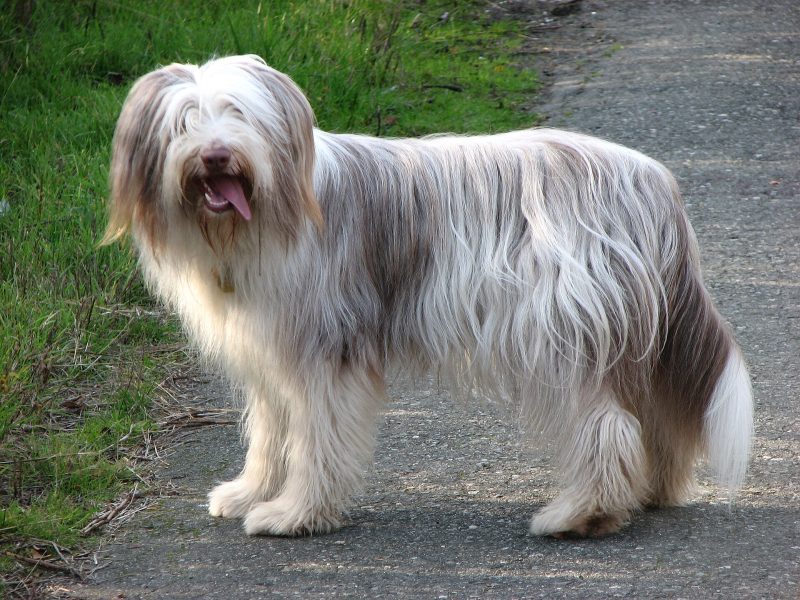
The Bearded Collie is a shaggy, medium-sized Scottish herding dog with a long coat, a hairy face and a personality that fanciers sum up in one word: bouncy. Beardies are outgoing, affectionate, funny and almost always pleased to see whoever walks in, which makes them wonderful family dogs and useless guards. They are good with children, generally friendly with other dogs and bright enough to learn anything, provided they decide it is worth doing.
The coat is the main commitment, needing a real brushing session several times a week to stay free of mats, and the energy is the other: a Beardie wants an hour or more of exercise and a share in family life. Lifespan is 12 to 14 years. This is a breed for active households that enjoy a dog with opinions and do not mind mud, hair and a wet beard on the knee. Treated as a member of the family, a Bearded Collie is a joy.
History & Origin
Shaggy herding dogs have worked the hills of Scotland for centuries under names like Highland Collie, Mountain Collie and Hairy Mou'ed Collie. A popular story traces them to 1514, when Polish Lowland Sheepdogs were said to have been traded to a Scottish shepherd for sheep; there is no record to prove it. What is certain is that by the 1700s and 1800s Beardie-type dogs were driving cattle and sheep from the Highlands to lowland markets in rain and cold, valued for independence and stamina rather than looks.
The modern breed owes its existence to an accident. In 1944 Mrs. G.O. Willison ordered a Shetland Sheepdog puppy and was sent a Bearded Collie instead; she named her Jeannie of Bothkennar, fell for the breed, found a mate and set about reviving it. A British club formed in 1955 and the Kennel Club granted championship status in 1959. The first American breeding stock arrived in the late 1960s, the Bearded Collie Club of America was founded in 1969 and the AKC admitted the breed in 1977, first to the Working Group and later to the Herding Group.
Appearance
Under the hair, a Bearded Collie is a lean, long-bodied, medium-sized dog built for all-day work. Males stand 21 to 22 inches at the shoulder, females 20 to 21, and both weigh roughly 45 to 55 pounds. The head is broad and flat with a moderate stop, the ears hang close to the head and the eyes, set wide apart, show a soft, inquiring expression beneath the fringe. The tail is long, carried low with an upward swish at the tip, and the gait is a long, effortless lope.
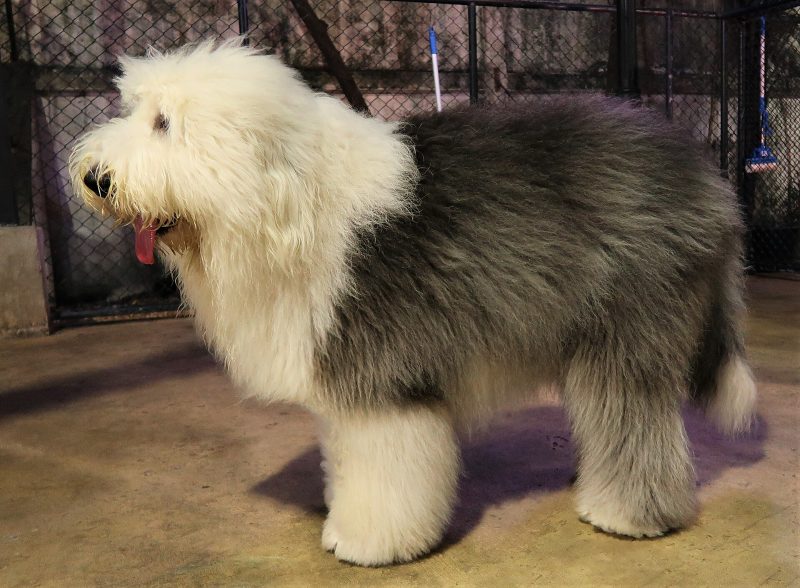
The coat is double: a harsh, flat, slightly wavy outer layer over a soft, furry undercoat, long enough to form a beard, eyebrows and a fringe over the eyes but never so heavy that it hides the outline. Puppies are born black, blue, brown or fawn and most carry a greying gene that lightens the coat through adolescence before it darkens somewhat again, often with white on the face, chest, legs and tail tip and sometimes tan points. An Old English Sheepdog is bigger, bob-tailed and more profuse; a Polish Lowland Sheepdog is smaller and squarer.
Temperament & Personality
The breed club calls the Beardie active, outgoing, bouncy and affectionate, and the first word owners add is clownish. Bearded Collies greet friends and strangers with equal enthusiasm, often with the vertical leap that is the breed's trademark, and they tend to stay upbeat through everything. They are gentle with children and happy to play for hours, though a bouncing adult can bowl over a toddler. With other dogs they are sociable; cats they have grown up with are usually accepted, while a strange cat may be herded.
Indoors a Beardie is lively and wants company; outdoors it is tireless. The breed was selected to think for itself on a Highland hillside, so it is independent and occasionally willful, and it notices everything. Beardies are sensitive to tone and sulk under harshness. They bark to announce visitors and when excited but have little guarding instinct. Left alone for long days, a Beardie becomes bored, vocal and inventive.
Exercise & Activity
A Bearded Collie needs at least an hour of exercise a day and is happiest with more. Long walks in any weather, hikes, running in a fenced field and games of fetch cover the basics, and the breed is a natural at agility, herding, rally and flyball, which add the mental work a smart dog needs. Beardies love rough weather; rain and mud are features, not problems, as long as you can live with what comes back through the door.
Heat is the main limit, because the coat holds warmth; in summer exercise early and late and offer shade and water. Puppies should have free play and short walks rather than forced running until their joints mature at around a year. Many Beardies keep working or competing well past ten.
Boredom shows up as barking, digging, chewing and herding the family.
A Beardie that misses its outing will bounce indoors instead.
Training
Beardies are clever and learn quickly, but they are easily distracted, have a sense of humor and were bred to make decisions without a shepherd standing over them. Reward-based training with food, play and warmth works; harshness produces a dog that disengages. Keep sessions short, lively and varied, since a Beardie that has done a thing three times is ready for the next thing, and ask for precision only once enthusiasm is secure.
The usual sticking points are jumping up, which the famous bounce makes a reflex, herding behaviors such as circling and nipping at running children, and selective hearing when something more interesting appears. Teach a sit for greetings early, redirect herding into games with rules and practice recall constantly with real rewards. Socialize the puppy widely so the breed's natural friendliness carries into adulthood. Grooming should be part of training from the first week, with the puppy learning to lie on its side and relax while being brushed. Beardies excel in herding trials, agility and obedience when it stays fun.
Grooming & Care
The coat is the Bearded Collie's defining feature and its defining chore. Plan on a thorough session of 30 to 60 minutes once a week, plus short daily or near-daily touch-ups during adolescence when the puppy coat changes and in any season when mats are forming. Mist the coat lightly with water or a conditioning spray before brushing, lay the dog on its side and work in layers from the skin outward with a pin brush, then a comb, paying special attention behind the ears, in the armpits, inside the thighs and under the collar. Shedding is moderate.
Bathe every month or two, or when needed, and dry thoroughly; a damp undercoat mats. Keep the beard clean after meals and check the hair around the eyes. Clean the hanging ears weekly, trim nails every few weeks and brush teeth regularly.
Many pet owners opt for a shorter clip, which reduces the work.
Trim the hair between the pads and around the feet for traction and cleanliness.
Health
Bearded Collies are generally healthy and live 12 to 14 years, but the breed has a well-documented tendency toward autoimmune disease. The most serious is Addison's disease, or hypoadrenocorticism, in which the adrenal glands fail; breed health surveys put its frequency at a few percent, far above the general dog population, with onset usually before age five and vague early signs such as vomiting, diarrhea, lethargy and intermittent weakness. Hypothyroidism, often from autoimmune thyroiditis, is the most commonly reported condition, and symmetrical lupoid onychodystrophy, a painful immune attack on the nails, also occurs. Allergies, hip dysplasia and eye conditions including cataracts and progressive retinal atrophy round out the list, and cancer is a leading cause of death in older dogs.
Responsible breeders use OFA hip evaluations, a full thyroid panel and an annual eye exam by a veterinary ophthalmologist, and many contribute to the Bearded Collie Foundation for Health's open registry. There is no screening test for Addison's; if your Beardie has repeated unexplained stomach upsets or collapses, ask your vet to consider it, since early diagnosis makes the condition manageable.
Nutrition
A Bearded Collie should be lean under all that hair, and the hair makes weight easy to miss, so feel for the ribs and a tucked waist every week rather than judging by eye. Feed a complete diet suited to age and activity, measure meals and adjust to condition. Two meals a day suits adults; puppies do better on three or four smaller ones until about six months. A working or competing Beardie needs more than a pet, and a senior often needs less.
Beardies with allergies, which the breed is prone to, sometimes do better on a diet chosen with a vet's help; do not change foods repeatedly on your own. Use part of the kibble ration as training treats, since a Beardie that trains daily can eat a surprising share of its calories as rewards. Keep fresh water available at all times, especially in warm weather. Wipe the beard after meals and drinks to keep it clean. Ask your vet before adding supplements of any kind.
Living With This Breed
A Bearded Collie does best in a house with a securely fenced yard and a family that is outside a lot, in all weathers. Apartment living is possible only with a committed walker. Cool, damp climates suit the breed perfectly; hot ones call for air conditioning and careful scheduling. Beardies are good with children and other dogs and usually fine with cats they know, but they will herd anything that runs. They bark when visitors arrive and when excited, and a bored Beardie may dig under a fence.
The breed wants company and does poorly with long days alone; a midday walk or daycare helps. For sitters and daycare staff, the things to know are the bounce, the mud, the beard that drips after every drink and the coat that must not be left to mat during a long stay.
Expect a leaping greeting and teach a sit if you can.
Towel the dog after rain before it gets on the sofa.
A brushing session is part of a multi-day stay.
Interesting Facts
The modern breed descends from a mix-up: in 1944 Mrs. G.O. Willison ordered a Shetland Sheepdog and received a Bearded Collie puppy named Jeannie instead.
Beardie puppies are born dark and most lighten dramatically during their first year, so a black puppy may become a silver-gray adult.
The breed's vertical jump, used to see over sheep in long grass, is known as the Beardie bounce and is deployed on guests without warning.
Scottish drovers relied on Beardie-type dogs to walk cattle hundreds of miles to market and find their own way home.
The AKC first placed the breed in the Working Group in 1977, since the Herding Group did not exist until 1983.
Two Beardies were benched at a show in Calgary, Alberta, in 1910, decades before any were bred in North America.
Breeds similar to the Bearded Collie
What Bearded Collie owners say
Real pets, photos, stories and tips from the SitterNation community — separate from the editorial guide above.
Log in to add your pet, photos, stories and tips.
Meet Bearded Collies on SitterNation
No Bearded Collies have joined yet. Owners can show their pet here from the pet's profile.
Bearded Collie community photos
No Bearded Collies photos yet — be the first to share one.
Stories from Bearded Collie owners
No stories yet. What is life with yours really like?
Tips from Bearded Collie owners
No tips yet. One practical thing that works for you is enough.
Ask Bearded Collie owners
No questions yet. Ask the people who live with the breed.