Typical tendencies
Energy level
Ready to go when you are, settles after.
Good with children
A famously patient playmate for kids.
Good with other dogs
Enjoys most canine company.
Trainability
Picks up cues with steady, short sessions.
Shedding
Noticeable, with heavier seasonal blows.
Apartment friendly
Can manage in a flat with plenty of outings.
More traits
Exercise needs
Adaptability
Grooming needs
Drooling
Intelligence
Family friendly
Good with cats
Friendly with strangers
Sociability
Protectiveness
Prey drive
Overview
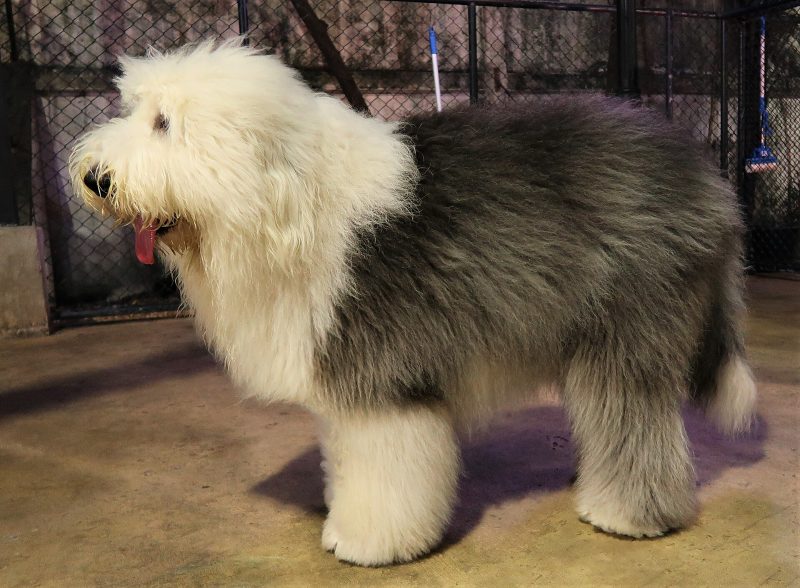
The Old English Sheepdog is the shaggy, bear-like drover of English farm country: a big, good-natured dog with a rolling gait, a famous clownish streak and a coat that hides its eyes and most of its outline. OES are gentle with children, easygoing with other dogs and friendly to visitors, which makes them wonderful family dogs for people with room, time and a tolerance for hair. They are not for the house-proud or the time-poor. The coat demands several hours of brushing a week or a regular clip, the dog needs daily exercise and company, and a bored 80-pound sheepdog is a large problem.
If you want a sociable, steady, occasionally silly companion that will herd the kids at the park and sprawl across the kitchen floor afterward, and you are willing to groom, the Old English Sheepdog pays you back with a decade or more of devotion.
History & Origin
The Old English Sheepdog developed in the west of England, probably in the late 1700s and early 1800s, as a drover's dog that walked sheep and cattle to market rather than a flock-tending shepherd's dog. Its ancestry is debated; the Bearded Collie is the most likely contributor, and some older writers credited Russian herding dogs. Drovers docked their dogs' tails, traditionally to mark them as working animals exempt from dog tax, and the stump gave the breed its nickname, the Bobtail. A Gainsborough painting of 1771 is often said to show an early example.
The breed first appeared at a dog show in Birmingham in 1873 and quickly became fashionable. Americans imported it in the 1880s, the AKC recognized it in 1888, and wealthy East Coast families were breeding and showing it by 1900; the Old English Sheepdog Club of America was founded in 1904. Film and television roles in the 1960s and 1970s made the shaggy dog a pop-culture fixture, and its numbers have slowly declined since.
Appearance
The Old English Sheepdog is a large, square, strongly built dog that stands lower at the shoulder than at the loin, which gives it a distinctive pear-shaped outline and a bear-like roll when it ambles. Males stand 22 to 24 inches at the shoulder and weigh 70 to 100 pounds; females are 21 to 23 inches and 60 to 85 pounds. The head is large and square with a well-defined stop, the ears lie flat and the eyes are brown, blue or one of each, usually hidden behind a fall of hair. Tails are traditionally docked where it remains legal, but natural tails are increasingly common.
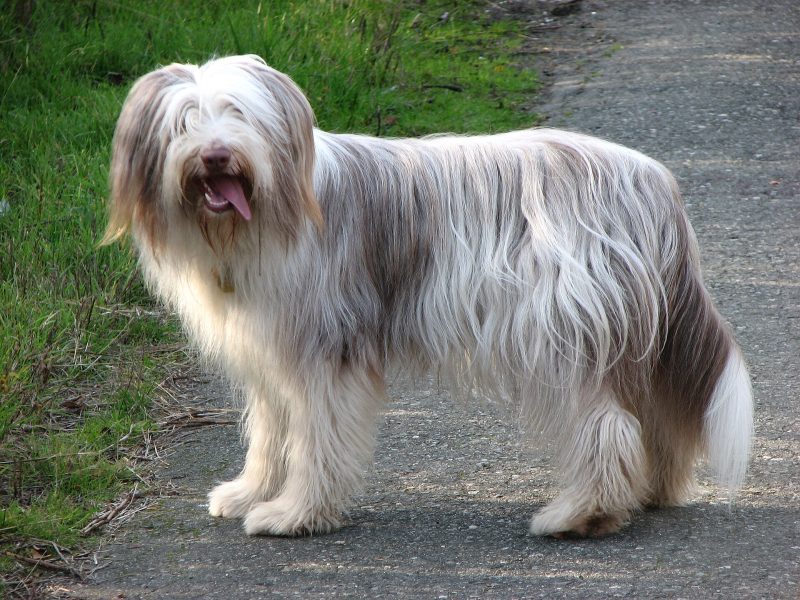
The coat is profuse, shaggy and harsh in texture rather than silky, with a waterproof undercoat. Colors are gray, grizzle, blue or blue merle, usually with white on the head, neck, chest and legs; puppies are born black and white and lighten with age. The Bearded Collie is leaner with a flatter coat and a long tail; the Polish Lowland Sheepdog is smaller.
Temperament & Personality
Old English Sheepdogs are affable, playful and even-tempered, with a sense of humor that keeps owners laughing. Indoors a mature OES is surprisingly calm, content to lie near the family and follow people from room to room; outdoors it bounds, bumps and herds, and young dogs stay boisterous for two or three years. They are devoted to their families and protective in a watchful, bark-at-the-door way rather than a guarding way. Most are friendly with strangers once introduced, and they get on well with other dogs and usually with cats they know.
With children they are famously patient and gentle, though their size and herding nudges can topple small ones, and some will try to gather running kids with a bump of the shoulder. They are intelligent and a little headstrong, happy to do what you ask if you ask nicely and keep it interesting. They dislike being left alone for long.
Exercise & Activity
An adult Old English Sheepdog needs around 60 minutes of exercise a day: a couple of good walks plus play, or a long hike, a run in a fenced field or a swim. They are working dogs under the fluff and enjoy herding trials, agility, rally and obedience, and many like retrieving. Mental exercise matters as much as distance; a sheepdog with nothing to think about becomes a shaggy demolition crew. Young dogs should avoid repetitive hard impact until their joints mature at around 18 months. The thick coat makes heat the main limit, so exercise in the cool parts of a summer day, provide shade and water, and consider a shorter clip in hot climates; cold and wet weather bother them not at all.
Two walks a day plus a game or a training session
Herding or dog sports for an outlet
Boredom shows as barking, chewing, digging and herding the family
Training
Old English Sheepdogs are smart and willing but have an independent, slightly comic streak, so training works best as a game with clear rewards and plenty of variety. Reward-based methods with food and play get the best results; harsh handling turns a sensitive dog stubborn. Start early, because an untrained adolescent OES is strong, bouncy and hard to steer. Priorities are loose-leash walking, a reliable recall, a solid settle and not jumping on people, which this breed does with enthusiasm. Herding behavior toward children and other pets should be redirected into toys and games rather than allowed to become a habit. Socialize puppies widely so their natural friendliness stays intact and they accept grooming, vet handling and strangers calmly. Teach the puppy to lie still for brushing from the first week; that habit will save you countless hours. Many OES go on to earn herding, obedience and therapy-dog titles.
Grooming & Care
This is one of the most demanding coats in the dog world. A full coat needs a thorough brush and comb to the skin every other day at least, with weekly sessions of two to three hours not unusual, working in layers with a pin brush, a slicker and a wide-toothed comb and checking the armpits, behind the ears, the belly and the hindquarters for mats. Hair over the eyes is often tied up or trimmed so the dog can see. Bathe every six to eight weeks after a complete brush-out, because bathing a matted coat sets the mats. Many pet owners keep the dog in a shorter clip every two to three months, which cuts brushing to twice a week. Keep the ears clean and dry, trim the hair between the pads and around the rear, trim nails regularly and brush teeth several times a week. Shedding is moderate and mostly comes out in the brush. A professional groomer is a worthwhile investment.
Health
Old English Sheepdogs typically live 10 to 12 years. Hip dysplasia is common enough that the parent club requires hip evaluation for its health registry, and exercise-induced collapse, a hereditary condition in which a dog loses hind-end control after intense exertion, now has a DNA test. Autoimmune thyroiditis, hereditary eye disease including cataracts and progressive retinal atrophy, hereditary cerebellar ataxia in young dogs, primary ciliary dyskinesia, congenital deafness and dilated cardiomyopathy are all recorded in the breed, and some OES carry the MDR1 gene mutation that makes certain common drugs dangerous. Like other large, deep-chested dogs they are at risk of bloat, and allergic skin disease and demodex mites are also reported.
The Old English Sheepdog Club of America asks breeders to complete OFA or PennHIP hip evaluation, an eye exam by a veterinary ophthalmologist, OFA thyroid testing and the EIC DNA test, with MDR1, cardiac, BAER and cerebellar degeneration tests recommended. Ask your vet about MDR1 testing before any parasite treatment or sedation.
Nutrition
Feed a complete, balanced large-breed diet matched to life stage, starting with a large-breed puppy formula for steady growth through the first 12 to 18 months. Puppies eat three meals a day; adults two. Because the coat hides the body, weight changes are easy to miss, so run your hands over the ribs and waist every week and adjust portions to activity; an overweight OES is a hip problem waiting to happen. Take bloat precautions as you would with any big, deep-chested dog: two or more meals rather than one, no heavy exercise around mealtimes and a slow feeder for fast eaters. Dogs with the MDR1 mutation need no special diet, but tell every vet and groomer about it. Ask your vet before adding supplements, and discuss diet if your dog has thyroid disease or itchy skin, since both can respond to adjustments.
Living With This Breed
An Old English Sheepdog does best in a house with a fenced yard and people around much of the day; apartments are possible only with a committed walker and a tolerant building. They love cold weather and snow and struggle in heat, so air conditioning and shade matter in summer. They are sociable and prone to loneliness, and an OES left alone all day will bark, chew and redecorate. They are superb with children, easy with other dogs and usually fine with cats. Expect mud, drool after drinking, hair on everything and a wet beard on your lap.
A sitter must brush as instructed and never let a mat go
Keep the dog cool and offer water often on warm days
Tell sitters about any MDR1 result and the signs of bloat
Herding nudges toward running kids are normal; redirect, do not punish
Interesting Facts
The breed has been the mascot of Dulux paint in Britain since 1961, and in some countries people call it the Dulux dog.
Drovers docked the dogs' tails, by tradition to prove they were working dogs exempt from tax, which is why the breed is still called the Bobtail.
Paul McCartney's song Martha My Dear is named for his Old English Sheepdog, Martha.
An OES named Slumber won Best in Show at Westminster in 1914, and the breed has placed in the finals there several times since.
Puppies are born black and white and turn gray as the adult coat comes in.
Behind the hair, OES eyes can be brown, blue or one of each.
Breeds similar to the Old English Sheepdog
What Old English Sheepdog owners say
Real pets, photos, stories and tips from the SitterNation community — separate from the editorial guide above.
Log in to add your pet, photos, stories and tips.
Meet Old English Sheepdogs on SitterNation
No Old English Sheepdogs have joined yet. Owners can show their pet here from the pet's profile.
Old English Sheepdog community photos
No Old English Sheepdogs photos yet — be the first to share one.
Stories from Old English Sheepdog owners
No stories yet. What is life with yours really like?
Tips from Old English Sheepdog owners
No tips yet. One practical thing that works for you is enough.
Ask Old English Sheepdog owners
No questions yet. Ask the people who live with the breed.