Typical tendencies
Energy level
Always on; boredom turns into mischief.
Good with children
Patient with kids when well supervised.
Good with other dogs
Gets along with known, polite dogs.
Trainability
Lives for the lesson; a trainer's dream.
Shedding
Keep the lint roller within reach.
Apartment friendly
Needs space and a garden to be happy.
More traits
Exercise needs
Adaptability
Grooming needs
Drooling
Intelligence
Family friendly
Good with cats
Friendly with strangers
Sociability
Protectiveness
Prey drive
Overview
The Belgian Malinois is a working dog first and a pet second, and it is only fair to say so up front. This lean, fawn-and-black herder from Belgium is the dog of choice for police, military and detection units because it is fast, fearless, endlessly trainable and happiest when it has a task. In a home that supplies two hours a day of real exercise, daily training and a clear structure, a Mal is a devoted, affectionate and surprisingly sensitive partner.
In a home that cannot, it becomes a problem: destructive, reactive, mouthy and miserable. It suits experienced, active owners who enjoy dog sports, protection or scent work and want a dog in their life rather than beside it. It does not suit first-time owners, busy households with small children or anyone who wants a German Shepherd in a lighter package.
History & Origin
Belgian farmers around the city of Mechelen, called Malines in French, had used short-coated fawn herding dogs for generations by the time anyone thought to write a standard. In 1891 Professor Adolphe Reul of the Cureghem veterinary school gathered more than a hundred shepherd dogs near Brussels to see whether a national type existed; he concluded it did, and the first Belgian Shepherd standard followed in 1892. The varieties took the names of the towns where each coat type predominated, and the Malinois became the short-haired variety with a black mask.
Belgian Shepherds served as messengers, ambulance dogs and cart pullers in the First World War. The first Malinois reached the United States in 1911, numbers dwindled through the Depression and the Second World War, and in 1959 the American Kennel Club split the Belgian varieties into separate breeds. The Malinois moved to the Herding Group in 1983 and has since become the leading police and military dog worldwide.
Appearance
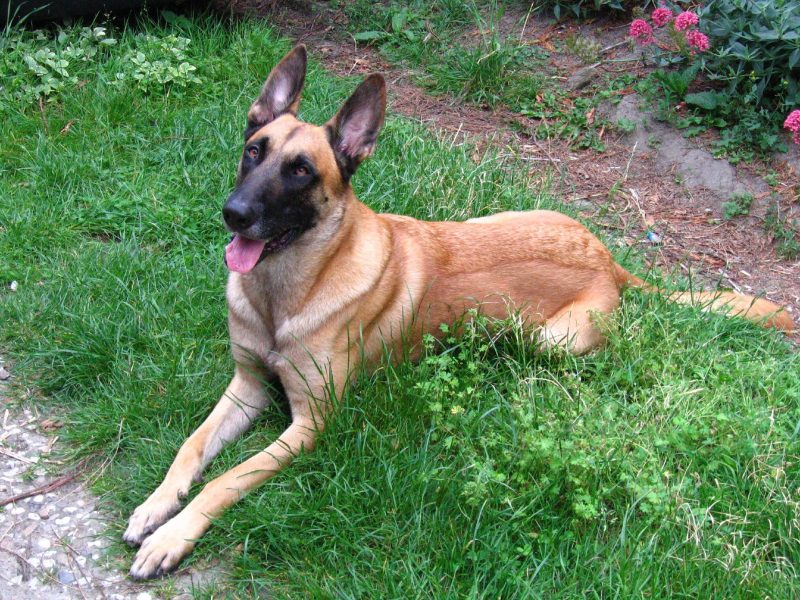
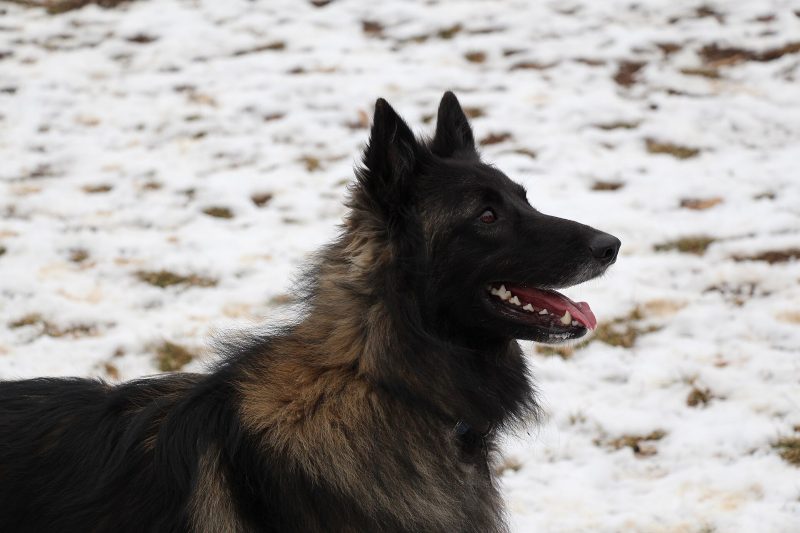
A Malinois is a square, elegant, medium-to-large herding dog built for speed and endurance rather than bulk. Males stand 24 to 26 inches and weigh 60 to 80 pounds; females are 22 to 24 inches and 40 to 60 pounds. The head is clean and chiseled with a flat skull, erect triangular ears and dark almond eyes that give the breed its intense, questioning expression. The body is level-backed and deep-chested, the legs are long and the gait is tireless and free.
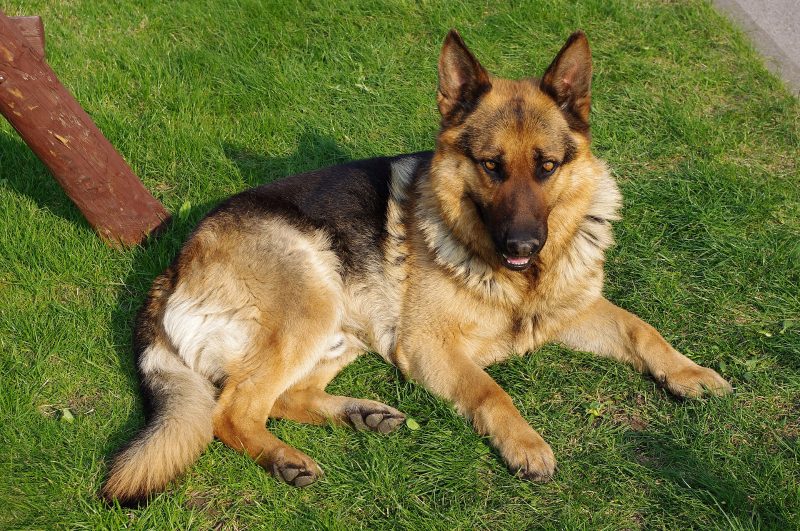
The coat is short, straight and weather-resistant with a dense undercoat, slightly longer around the neck and on the tail. Color runs from rich fawn to mahogany, each hair tipped with black, with a black mask and black ears. Compared with a German Shepherd, a Mal is lighter, squarer and stands higher on its legs with a level rather than sloping back; it is often mistaken for a shepherd mix by people who have not met one.
Temperament & Personality
The Malinois is intense, intelligent and bonded to its handler in a way few breeds match. It watches you constantly, anticipates routines and wants to be included in everything. Energy indoors is manageable only when energy outdoors has been spent; a well-exercised Mal can settle at your feet for an evening, while an under-exercised one paces, chews and barks.
The breed is naturally watchful and protective, reserved with strangers and quick to notice anything unusual. Herding instinct and a very high prey drive mean running children, cyclists, cats and small animals trigger chasing and sometimes nipping, so early, thorough socialization and management are essential. With its own family a Mal is affectionate and often clingy, and it does poorly left alone for long days. Most are fine with dogs they are raised with, but same-sex intolerance is not unusual, and cats are a gamble.
Exercise & Activity
Plan on a minimum of two hours of real activity every day, and understand that a leash walk around the block does not count as real activity for this breed. Running, biking, hiking, swimming, fetch on a long line and off-leash sprinting in a secure area all work. Just as important is mental work: obedience, scent detection, agility, herding, tracking, protection sport or any structured training that makes the dog think.
Malinois handle cold well and heat reasonably with water and shade, but their drive lets them push past sensible limits, so you manage the stopping point. Puppies need their exercise built up gradually to protect growing joints.
Boredom looks like shredded furniture, dug-up yards, fence climbing, spinning, tail chasing and barking.
Rotate activities; a Mal that does the same thing every day gets bored of that too.
Teach an off switch early with crate time and settle exercises.
Training
Few dogs learn faster than a Malinois, and that cuts both ways: it learns the behaviors you want in a handful of repetitions and the ones you do not want just as quickly. Training is not optional with this breed; it is the main way the dog gets the structure it needs. Reward-based methods using toys, tug and food produce brilliant results, and the breed's sensitivity means heavy-handed corrections backfire into anxiety or defensiveness.
Start in puppyhood and never really stop. Socialize deliberately and broadly, because a Mal that has not met the world tends to treat novelty as a threat. The common sticking points are mouthiness and nipping, which herding and biting instincts make persistent, over-arousal around movement, and reactivity toward strangers or other dogs. An experienced trainer who knows working breeds is worth finding. Many owners end up in a dog sport simply because the dog is so good at it.
Grooming & Care
Coat care is the easy part of owning a Malinois. The short, dense double coat needs a quick brush with a medium bristle brush or grooming glove once or twice a week to lift dead hair and spread skin oils. Twice a year, usually spring and fall, the undercoat drops heavily for two or three weeks; brush daily then, or you will find fawn tumbleweeds in every corner. Bathe only when dirty, every couple of months at most, with a gentle dog shampoo.
The rest is routine maintenance that active dogs need more often than couch dogs.
Check paws and nails after hard runs on rough ground; trim nails every three to four weeks.
Look in the ears weekly, especially after swimming.
Brush teeth several times a week.
Run your hands over the body after field work to find ticks, burrs and small cuts.
Health
The Malinois is a generally sound breed with a long working life, and its AKC lifespan of 14 to 16 years is high for its size; many references give 12 to 14. The main inherited concerns are orthopedic and ocular. Hip and elbow dysplasia occur, so breeding dogs should have OFA or PennHIP hip evaluations and OFA elbow evaluations. Progressive retinal atrophy and cataracts are the eye conditions to ask about, screened by an annual exam with a board-certified veterinary ophthalmologist. Epilepsy and hypothyroidism are reported in the breed; there is no screening test for epilepsy, so ask breeders about seizures in their lines.
Because these dogs work so hard, injuries are a bigger practical risk than disease: torn pads, cruciate ligament tears, dental fractures from hard toys and heat stress in summer. Keep lean, build fitness gradually and ask your vet about anything that changes the gait. Some working lines also carry heritable behavioral problems, which is one more reason to buy from a breeder who tests and tells the truth about temperament.
Nutrition
A Malinois burns calories at a rate that surprises people used to pet breeds, and its needs swing with its workload. Feed a complete diet appropriate to life stage, and adjust the amount to body condition rather than the bag: you should see a clear waist and the last ribs under a thin cover. Puppies do best on a large-breed growth food that supports steady rather than rapid growth; ask your vet when to switch to adult food, usually somewhere between 12 and 18 months.
Active adults may need more food during heavy training periods and less during rest, and working dogs sometimes do better on higher-fat diets, which is a conversation for your vet. The breed is deep-chested, so take the usual bloat precautions: two meals a day rather than one, no hard exercise for an hour either side of eating, and a slow-feeder bowl if the dog gulps. Keep water available during and after work.
Living With This Breed
A Malinois needs space, time and a job, and the home that can provide all three is uncommon. A house with a securely fenced yard is the realistic minimum; many Mals climb or jump six-foot fences, so height and supervision both matter. Apartment life is possible only for owners who treat exercise as a daily commitment. The breed copes with most climates and needs to live indoors with its people.
Long days alone go badly. Children should be older and dog-savvy, and visiting kids need management because of the chase instinct. Cats and small pets are often not safe. Expect alert barking and a dog that positions itself between you and the door.
Sitters should be experienced with high-drive dogs and briefed on triggers, equipment and the exercise plan.
Daycare suits some Mals and overwhelms others; a trial day tells you which.
Secure the crate, the yard and the car; this breed escapes.
Interesting Facts
Conan, a US Army Malinois, was injured in the 2019 raid on the leader of ISIS and was later honored at the White House.
Malinois serve with Navy SEAL teams and are trained to parachute strapped to their handlers; one reportedly took part in the 2011 Bin Laden raid.
Several Malinois have received the PDSA Dickin Medal, the animal equivalent of the Victoria Cross, including Diesel, a French police dog killed in Saint-Denis in 2015, and Mali, a British Army dog.
The breed is named for Mechelen, a Flemish city whose French name is Malines; the Dutch name for the dog is Mechelaar.
The AKC treats the Malinois as its own breed, but the FCI and most of the world consider it one of four varieties of a single Belgian Shepherd breed, alongside the Groenendael, Tervuren and Laekenois.
Malinois are famous climbers; police and military programs train them to scale walls, rappel from helicopters and parachute in tandem with their handlers.
Breeds similar to the Belgian Malinois
What Belgian Malinois owners say
Real pets, photos, stories and tips from the SitterNation community — separate from the editorial guide above.
Log in to add your pet, photos, stories and tips.
Meet Belgian Malinois on SitterNation
No Belgian Malinois have joined yet. Owners can show their pet here from the pet's profile.
Belgian Malinois community photos
No Belgian Malinois photos yet — be the first to share one.
Stories from Belgian Malinois owners
No stories yet. What is life with yours really like?
Tips from Belgian Malinois owners
No tips yet. One practical thing that works for you is enough.
Ask Belgian Malinois owners
No questions yet. Ask the people who live with the breed.