
Typical tendencies
Energy level
Needs a real outlet most days.
Good with children
Fine with calm, respectful older kids.
Good with other dogs
Gets along with known, polite dogs.
Trainability
Learns, but on its own schedule.
Shedding
A light scatter, easy to keep up with.
Apartment friendly
A natural fit for city living.
More traits
Exercise needs
Adaptability
Grooming needs
Drooling
Intelligence
Family friendly
Good with cats
Friendly with strangers
Sociability
Protectiveness
Prey drive
Overview
The Chiweenie is a cross between a Chihuahua and a Dachshund: a small, long-bodied dog with a big voice, a bigger opinion of itself, and a fierce devotion to one or two people. It is a hybrid with no registry standard, so each one is its own blend of the two parents, but most share the same recipe of loyalty, alertness and comic self-importance.
It suits apartment dwellers, singles, couples and seniors who want a compact companion that needs little exercise and much company. It is a good match for someone home most of the day and a poor one for a busy family with toddlers, because a ten-pound dog with a long back is easily injured by rough play and may answer with its teeth. Owners should expect barking, a stubborn streak in training, and a lifelong need to protect that spine. In return they get a warm, funny, long-lived shadow.
History & Origin
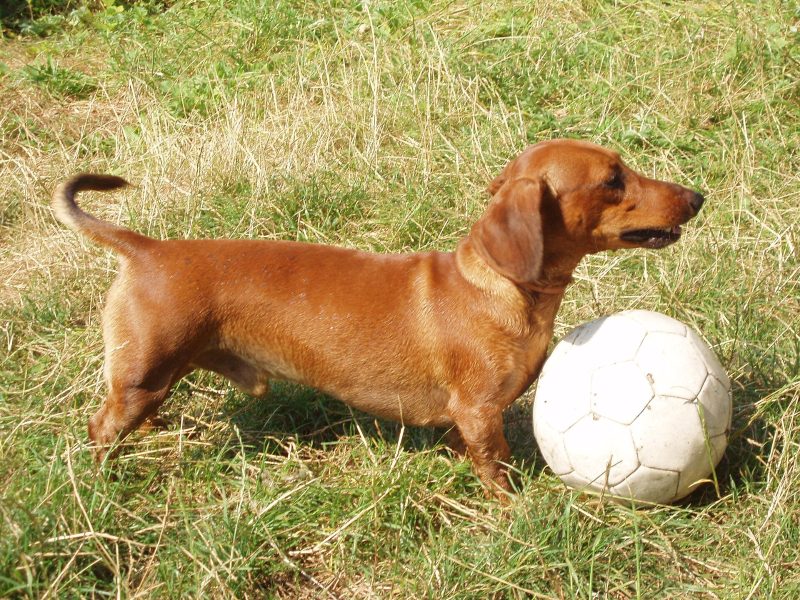
The Chihuahua descends from small companion dogs of ancient Mexico, often linked to the Techichi kept by pre-Columbian peoples, and took its name from the state where American visitors found it in the 1800s; the American Kennel Club registered its first in 1904. The Dachshund was developed in Germany several centuries ago as a badger hound, its name meaning exactly that, with a low body built to follow prey underground; it was among the earliest breeds the AKC recognized, in 1885.
The Chiweenie as a deliberate cross dates to the United States in the 1990s, when small designer mixes became fashionable, though accidental pairings of the two popular breeds surely happened long before. The aim was a tiny dog with a Dachshund's sturdier build and a Chihuahua's portability. Names such as Choxie, Doxihuahua and Chiwee have all been tried. No major kennel club recognizes the cross, there is no standard, and most Chiweenies come from casual breeders or arrive in shelters as surrendered pets.
Appearance
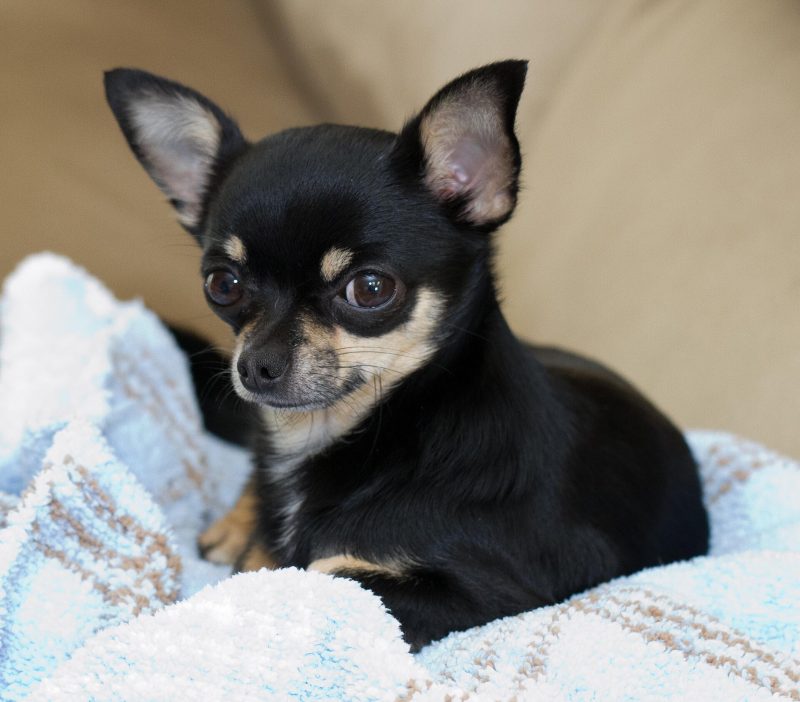
A Chiweenie is a little dog that is longer than it is tall, though rarely as low-slung as a purebred Dachshund. Most stand under ten inches and weigh between five and twelve pounds. The head may follow either parent: an apple-domed Chihuahua skull with large, upright ears, or a longer Dachshund muzzle with ears that drop. Many have one ear up and one down, and the eyes are large, dark and expressive. The chest is deep for the size, and the tail is long and often carried in a curve.
Coat length depends on the parents. Smooth-coated Chiweenies are the most common, but long-haired and even wiry-coated versions turn up when a long-haired Chihuahua or a long- or wire-haired Dachshund is involved. Colors cover the whole range of both breeds: tan, black and tan, red, chocolate, cream, brindle, dapple and merle. Merle or dapple patterns should never be doubled up in breeding because of deafness and eye defects.
Temperament & Personality
The Chiweenie is a one-person dog, or at most a one-family dog. It chooses its people and sticks to them like a burr, following from room to room and burrowing under blankets at night. With that bond comes a watchdog's suspicion of everyone else: strangers are announced loudly and inspected before being accepted, and some Chiweenies never quite warm to visitors. Early socialization makes a large difference.
Indoors it alternates between zooming and snoozing; outdoors the Dachshund hunting drive shows in digging, sniffing and chasing squirrels. It is playful, stubborn and funny. With gentle older children it does well; with toddlers it is at risk of being dropped or squeezed and may nip in self-defense. Other dogs are tolerated if introduced carefully, and cats it grows up with are usually fine, though small pets may trigger the chase instinct. Left alone for long stretches it can become anxious and vocal.
Exercise & Activity
Thirty to forty-five minutes a day is plenty for most adults: a couple of short walks and some play in the living room or yard. The Chiweenie has bursts of energy rather than stamina, and a brisk fifteen-minute sniff around the block satisfies it more than a long hike would. Scent games suit the Dachshund side; hiding treats around a room gives the nose a job and tires the dog nicely.
Protect the back. Avoid repeated jumping on and off furniture, long flights of stairs and agility-style obstacles; use ramps or steps for the sofa and bed. A harness is kinder than a collar for a small neck.
Heat: short walks only in summer; the small body overheats quickly
Cold: a sweater for smooth coats below about 45 degrees
Boredom shows as barking, digging in cushions and shredding paper
Good outlets: nose work, puzzle feeders, trick training
Training
Chiweenies are clever and quite capable of learning, but both parent breeds are famous for doing things their own way, so motivation matters more than method. Tiny, high-value treats, short sessions and a cheerful tone get results; nagging or force produces a dog that digs in. Many owners skip training because the dog is small, which is how the yappy, snappy stereotype gets made. Teach sit, come, leave it and a quiet cue as you would for a big dog.
House training is the usual sticking point. Small bladders, a dislike of cold or wet ground and a habit of sneaking behind furniture all work against you; take the puppy out often, reward on the spot and consider an indoor pad for bad weather. Barking at every sound is the second challenge, and it eases when the dog learns that calm earns rewards.
Socialize early and gently with calm adults, polite dogs and handling, so the natural wariness does not harden into fear.
Grooming & Care
Most Chiweenies are easy to keep. A smooth coat needs a quick weekly brush with a rubber mitt or soft bristle brush to lift loose hair, and a bath every month or so, or when the dog finds something to roll in. Shedding is light to moderate year-round with a heavier turnover in spring and fall. Long-haired Chiweenies need brushing two or three times a week, with attention to the feathering on the ears, legs and tail where tangles form, and an occasional trim around the feet.
The mouth is the real grooming job. Both parent breeds suffer from crowded teeth and early periodontal disease, so brush daily if possible and plan on professional cleanings when your vet recommends them.
Ears: check weekly, especially drop ears, for wax, odor or redness
Nails: trim every two to three weeks; they rarely wear down on short walks
Eyes: wipe discharge from large, prominent eyes
Skin: watch for dryness in winter and fleas in summer
Health
The Dachshund parent brings the biggest risk: intervertebral disc disease (IVDD), in which a disc in the long spine ruptures and presses on the spinal cord. The underlying trait, chondrodystrophy, is linked to a gene variant (CDDY) for which a DNA test exists, and a Chiweenie carrying it from either side can be affected. Signs range from reluctance to jump and a hunched back to sudden hind-leg weakness, which is an emergency. The Chihuahua side contributes patellar luxation, tracheal collapse, mitral valve disease, hydrocephalus and a molera, or soft spot on the skull. Both breeds share dental disease, hypoglycemia in tiny puppies, eye problems such as cataracts and dry eye, and a tendency to put on weight.
Breeders should be able to show patella and cardiac evaluations and eye exams for both parents, and ideally the CDDY result. A Chiweenie typically lives 12 to 16 years. Ask your vet about any limping, coughing or back pain promptly; with disc disease, hours matter.
Nutrition
Feed a small-breed puppy food in three or four meals a day while the dog is tiny, since very small puppies can run out of blood sugar between meals; most switch to adult food around twelve months on a vet's advice. Adults do well on two measured meals, with a third small one for dogs under six pounds or those prone to low blood sugar.
Weight control is the single most useful thing you can do for a Chiweenie's back and knees. Both parents gain easily, treats are proportionally huge for a seven-pound dog, and every extra pound loads the spine. Use a measuring cup, count training rewards in the daily total, and check for a visible waist from above each week.
Small kibble suits the small jaw and gives a little dental benefit. Keep fresh water available, avoid table scraps and fatty leftovers, and ask your vet before adding joint or other supplements.
Living With This Breed
A Chiweenie is an apartment dog by nature, happy in a small space as long as its person is in it. The catch is noise: it barks at footsteps in the hall, deliveries and neighbors, and that needs training from day one if you share walls. It tolerates most climates with help, a coat in winter and shade in summer.
It is not a dog to leave alone all day. A few hours is fine; longer brings barking and house-soiling, so plan a midday visit or a small-dog sitter. With children it needs a calm household and rules about picking it up. With other pets it is usually fine once introduced.
Escape habits: a digger and a squeezer through fence gaps
For sitters: use a harness, lift with both hands supporting the back, no sofa leaps, keep meals on time
Daycare: a quiet small-dog group only; rowdy rooms frighten it
Sleeping: expect it under the covers
Interesting Facts
Dachshund means badger dog in German, and the breed's low body was designed to follow badgers into their tunnels; the Chiweenie inherits the nose, if not the job.
The Chihuahua parent is the smallest recognized dog breed, while the Dachshund parent comes in standard and miniature sizes, which is one reason Chiweenies vary so much in size.
Choxie, Doxihuahua and Chiwee were all tried as names before Chiweenie stuck.
Like its Chihuahua parent, a Chiweenie may keep a molera, a soft spot on the skull, into adulthood.
Because the cross is unrecognized, puppies in one litter can have upright ears, drop ears or one of each.
Chiweenies are notorious blanket burrowers, a Dachshund trait from a breed built to go underground.
What Chiweenie owners say
Real pets, photos, stories and tips from the SitterNation community — separate from the editorial guide above.
Log in to add your pet, photos, stories and tips.
Meet Chiweenies on SitterNation
No Chiweenies have joined yet. Owners can show their pet here from the pet's profile.
Chiweenie community photos
No Chiweenies photos yet — be the first to share one.
Stories from Chiweenie owners
No stories yet. What is life with yours really like?
Tips from Chiweenie owners
No tips yet. One practical thing that works for you is enough.
Ask Chiweenie owners
No questions yet. Ask the people who live with the breed.