Typical tendencies
Energy level
Ready to go when you are, settles after.
Good with children
Fine with calm, respectful older kids.
Good with other dogs
Gets along with known, polite dogs.
Trainability
Picks up cues with steady, short sessions.
Shedding
Noticeable, with heavier seasonal blows.
Apartment friendly
A natural fit for city living.
More traits
Exercise needs
Adaptability
Grooming needs
Drooling
Intelligence
Family friendly
Good with cats
Friendly with strangers
Sociability
Protectiveness
Prey drive
Overview
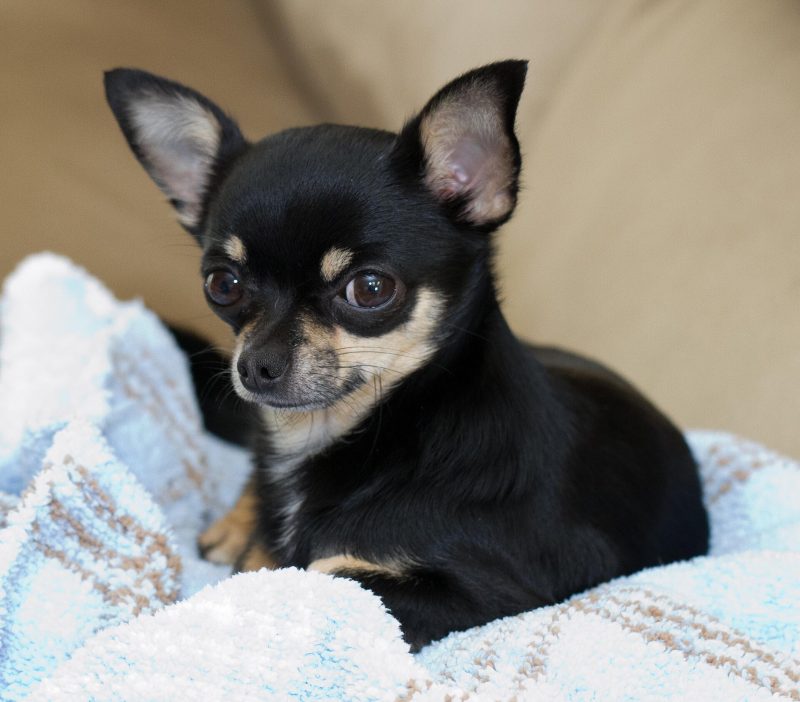
The Chihuahua is the smallest recognized dog breed and often a long-lived one, a 2-to-6-pound companion with the self-image of a much larger animal. It bonds intensely, often to one person, and will happily spend its 14 to 16 years in that person's lap, bag or bed. It suits apartment dwellers, singles, couples and seniors, people who travel with their dog and anyone who wants a big personality in a small, inexpensive-to-feed package.
It suits families with small children less well, because a toddler can injure a Chihuahua by accident and the dog may defend itself with its teeth. The breed also needs more training and socialization than its size suggests; an under-socialized Chihuahua becomes a yappy, snappy caricature. Treated as a real dog, with rules, walks and manners, it is clever, funny and devoted.
History & Origin
The Chihuahua's roots are in Mexico, where the Toltecs kept a small companion dog called the Techichi and the Aztecs who followed them gave such dogs a role in ritual and the afterlife. Modern DNA studies find only a small remnant of pre-colonial American dog ancestry in today's Chihuahua, so the breed as we know it was shaped mostly after European contact. The name comes from the Mexican state of Chihuahua, where American visitors in the 1850s and later bought tiny dogs from local traders and brought them home.
The American Kennel Club registered its first Chihuahua, Midget, in 1904, and the Chihuahua Club of America was founded in 1923. Bandleader Xavier Cugat made the breed famous in the 1940s and 1950s by performing with one in his arms. In 1952 the long and smooth coats became separate show varieties. The breed has been among America's most popular ever since, helped by a run of movie and advertising stars.
Appearance
A Chihuahua stands 5 to 8 inches tall and, by the standard, weighs no more than 6 pounds; pet Chihuahuas are often larger. The body is slightly longer than tall, compact and surprisingly sturdy, with a sickle tail carried up or over the back. The signature feature is the head: a rounded "apple dome" skull, a short, slightly pointed muzzle, large round expressive eyes and big ears held erect when alert and flared to the side at rest. The older "deer head" type, with a flatter skull and longer muzzle, is common in pets but faulted in the show ring.
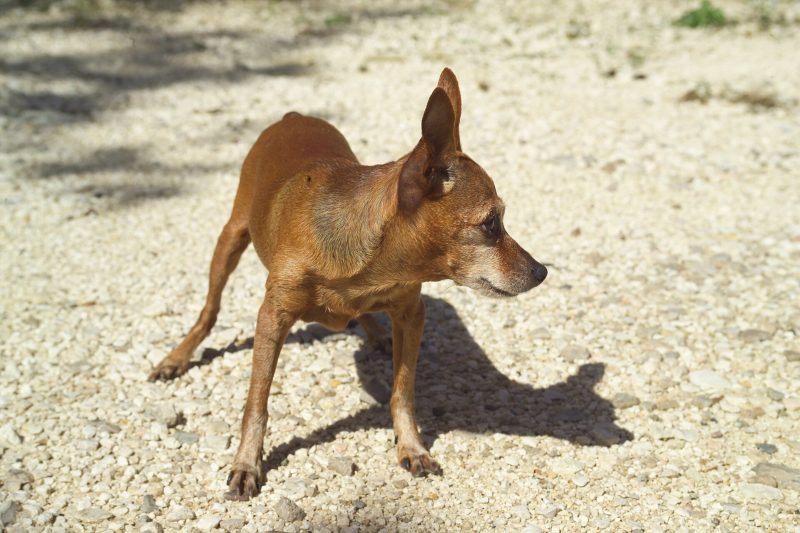
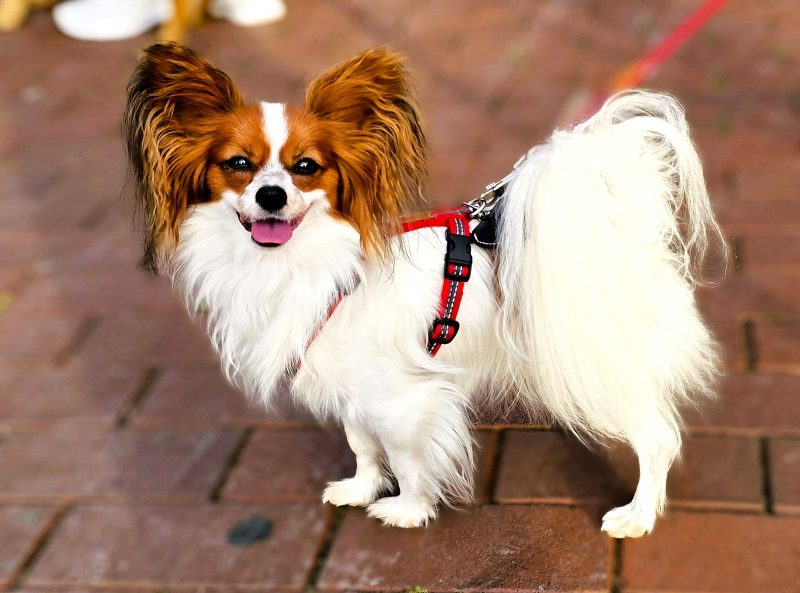
There are two coat varieties. The smooth coat is short, soft and close-lying; the long coat is soft and flat or slightly wavy with fringed ears, a plumed tail and feathering on the legs. Almost any color or pattern occurs. A Miniature Pinscher is squarer and taller; a Papillon has a finer muzzle and huge fringed ears.
Temperament & Personality
Chihuahuas are alert, bold and devoted, with a strong tendency to pick one favorite person and treat everyone else as acceptable or suspect. They are lively indoors, playful well into old age and happiest in physical contact with their human. Watchfulness is high; the breed makes a surprisingly effective doorbell and will take on a visitor or a Great Dane with equal confidence, which is charming until it gets the dog hurt.
With strangers many Chihuahuas are reserved or wary, and poorly socialized ones can be fearful and snappy. With children the breed is cautious; it tolerates gentle older kids and distrusts grabbing toddlers. Chihuahuas usually prefer the company of other Chihuahuas, get along with cats and may bully or provoke bigger dogs. Many shiver when cold, excited or anxious. Separation anxiety is common in dogs carried everywhere and never taught to be alone.
Exercise & Activity
A Chihuahua's exercise needs are small in distance but real: two short walks a day of 15 to 20 minutes, plus indoor play, keep the body fit and the mind settled. Walks matter for more than fitness; sniffing new ground and meeting people is the main way the breed stays socialized. Indoor fetch down a hallway, tug and trick training cover the rest, and a Chihuahua will happily run laps of an apartment.
The breed feels cold acutely, especially the smooth coat, so a sweater in winter is practical rather than decorative, and walks shorten in frost. Heat is tolerated better but still needs shade and water. Dog parks are risky unless there is a separate small-dog area.
Use a harness; a collar can damage the small trachea.
Watch for hawks and loose dogs when outdoors; a Chihuahua is prey-sized.
Boredom shows as barking, pacing and nipping at ankles.
Training
Chihuahuas are quick learners, and many of their reputation problems come from owners who never bothered to train a dog that weighs four pounds. Treat the puppy like a dog: teach sit, down, come, a settle on a mat and polite greetings, and reward with tiny treats and warm praise. Force and shouting make the breed defensive; patience and consistency make it eager.
House-training is the classic sticking point. Small bladders, dislike of cold and wet ground and owners who do not notice a tiny accident all slow it down. A fixed schedule, frequent trips out and, for apartment dwellers, a well-taught indoor potty option solve it. Socialize early and broadly, especially with calm larger dogs and gentle strangers, so confidence replaces defensiveness. Teach the dog to be alone for short periods from the start. Do not let it do things on a lap that you would not allow a Labrador to do on the floor.
Grooming & Care
Both coat varieties are low maintenance. Smooth coats need a weekly wipe with a soft brush or grooming mitt and shed modestly year-round. Long coats need brushing two or three times a week to prevent tangles behind the ears, under the legs and on the tail plume, with a monthly bath and an occasional trim around the feet and sanitary area; many owners use a groomer for tidying every couple of months. Neither variety needs clipping.
The mouth is the real grooming priority. Crowded teeth in a tiny jaw collect tartar fast, and dental disease is the breed's most common health problem, so brush daily if at all possible and ask your vet about professional cleanings.
Trim nails every two to three weeks; small dogs rarely wear them down.
Wipe eye corners as needed, especially on light-colored dogs.
Ears are upright and stay clean; check them monthly.
Health
Chihuahuas often live 14 to 16 years, but have a cluster of small-breed problems. UK veterinary records, which count many early deaths, put average life expectancy at birth nearer 8 years. Patellar luxation is the most common orthopedic issue, graded by palpation. Heart disease, especially degenerative mitral valve disease in older dogs and patent ductus arteriosus in puppies, is screened by a cardiologist's exam, and the Chihuahua Club of America's screening list is exactly those three: patella, cardiac and eye exams. Tracheal collapse causes a honking cough and is a reason to walk in a harness. Hydrocephalus and atlantoaxial instability are neurological risks linked to the breed's domed skull and tiny neck.
Many Chihuahuas have a molera, a soft spot on the skull that normally closes but can persist; it is not itself a disease. Dental disease is nearly universal without care. Puppies and very small adults are prone to hypoglycemia, and Legg-Calvé-Perthes disease of the hip occurs in young dogs. Females often need help whelping. Obesity shortens life even in a six-pound dog. Ask your vet about any cough, fainting or hind-leg skipping.
Nutrition
A Chihuahua eats very little, which makes it easy to overfeed by accident: one extra treat is a meaningful share of the day's calories, and table scraps add up fast. Feed a complete small- or toy-breed food with kibble sized for a tiny mouth, measure portions, and divide the day into two or three meals. Check body condition weekly; you should feel ribs easily and see a waist.
Puppies and dogs under about four pounds are prone to low blood sugar, so they should eat several small meals a day and never skip one; ask your vet how to recognize and handle a hypoglycemic episode. Tiny dogs also dehydrate quickly, so keep water available. Dental health benefits from kibble, dental chews sized for toy breeds and daily brushing. Avoid foods that are toxic to dogs; a dose that upsets a big dog can be dangerous to a Chihuahua.
Living With This Breed
Chihuahuas are ideal apartment dogs, provided neighbors can tolerate some barking and the owner commits to walks and training. They dislike cold and prefer warm homes, sunny windows and a pile of blankets to burrow in. They are portable and travel well, but they need to be taught to be alone and should not be carried constantly. Older, calm children are fine; toddlers and rough play are not.
The breed does best as the only pet or with other small dogs; big, boisterous dogs can hurt it in play. Watch for falls from furniture and arms, and keep feet in mind, because a Chihuahua underfoot is easy to step on.
Sitters: use the harness, keep the dog on leash outdoors, and do not let it meet unknown large dogs.
Note meal times precisely for very small dogs because of hypoglycemia.
Expect a slow warm-up to new people; let the dog approach first.
Interesting Facts
Gidget, the Taco Bell Chihuahua of the late 1990s, and Bruiser from Legally Blonde made the breed one of the most recognizable in America.
Milly, a Chihuahua from Puerto Rico, was recorded by Guinness in 2013 as the shortest living dog at under four inches tall.
The breed is named for Chihuahua, the largest state in Mexico.
Most Chihuahuas are born with a molera, a soft spot on the top of the skull, once wrongly thought to be a required breed trait.
Bandleader Xavier Cugat conducted with a Chihuahua tucked in one arm and did as much for the breed's popularity as any film.
Long- and smooth-coated puppies can appear in the same litter, since the long coat is carried as a recessive gene.
Breeds similar to the Chihuahua
Popular Chihuahua crosses


What Chihuahua owners say
Real pets, photos, stories and tips from the SitterNation community — separate from the editorial guide above.
Log in to add your pet, photos, stories and tips.
Meet Chihuahuas on SitterNation
No Chihuahuas have joined yet. Owners can show their pet here from the pet's profile.
Chihuahua community photos
No Chihuahuas photos yet — be the first to share one.
Stories from Chihuahua owners
No stories yet. What is life with yours really like?
Tips from Chihuahua owners
No tips yet. One practical thing that works for you is enough.
Ask Chihuahua owners
No questions yet. Ask the people who live with the breed.