Typical tendencies
Energy level
Needs a real outlet most days.
Good with children
Patient with kids when well supervised.
Good with other dogs
Enjoys most canine company.
Trainability
Lives for the lesson; a trainer's dream.
Shedding
Noticeable, with heavier seasonal blows.
Apartment friendly
A natural fit for city living.
More traits
Exercise needs
Adaptability
Grooming needs
Drooling
Intelligence
Family friendly
Good with cats
Friendly with strangers
Sociability
Protectiveness
Prey drive
Overview
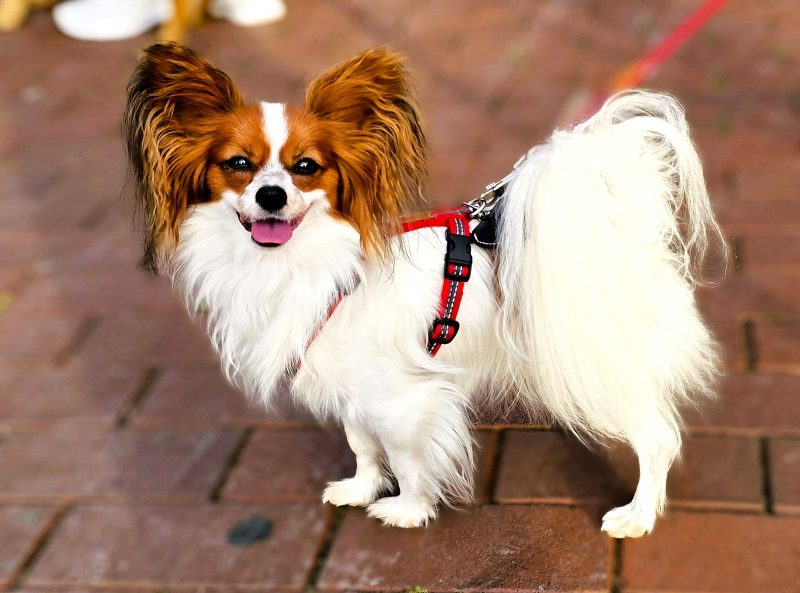
The Papillon is a toy dog with a sporting dog's engine. Named for the French word for butterfly because of its big, fringed, wing-shaped ears, it weighs 5 to 10 pounds, lives 14 to 16 years and routinely beats breeds ten times its size in agility and obedience rings. It is cheerful, alert, affectionate and far sturdier than its dainty looks suggest.
Papillons suit people who want a small dog they can actually do things with: trick training, long walks, dog sports, travel. They adapt well to apartments and to households with respectful older children, other dogs and cats. They are less suited to homes with rough toddlers, to people who want a quiet lap ornament, or to anyone who will be away all day, since they bond closely and can become barky and anxious when ignored. Give a Pap something to learn every day and you will have a delightful companion for a very long time.
History & Origin
Small spaniels with silky coats and feathered ears appear in European court paintings from the 1500s onward, in the work of Titian, Veronese, Rubens, Watteau and Fragonard, usually in the laps of noblewomen. These "dwarf spaniels" were bred down from larger sporting spaniels in Italy, Spain and France during the Renaissance, when miniature versions of favorite breeds were the fashion. Early dogs had dropped ears; the erect-eared type that gives the breed its name became popular in the 1800s. Today both are one breed, called Papillon with upright ears and Phalène, French for moth, with hanging ears.
Legend ties the breed to Madame de Pompadour and to Marie Antoinette, whose little spaniel is said to have waited outside her prison. The international standard, FCI No. 77, lists France and Belgium as the countries of origin. The AKC registered its first Papillon in 1915 and the Papillon Club of America was founded in 1935. In 1999 a Papillon named Kirby won Best in Show at Westminster, and in 2019 Dylan became the first of the breed to win Crufts.
Appearance
The Papillon is fine-boned and elegant, standing 8 to 11 inches at the shoulder and weighing 5 to 10 pounds, with a body slightly longer than it is tall. The head is small with a rounded skull, a fine muzzle, a dark nose and round, dark, expressive eyes. The ears are the signature: large, set toward the back of the skull and carried obliquely like open butterfly wings, with long silky fringes. In the Phalène variety the same ears hang down and the fringe frames the face like a spaniel's.
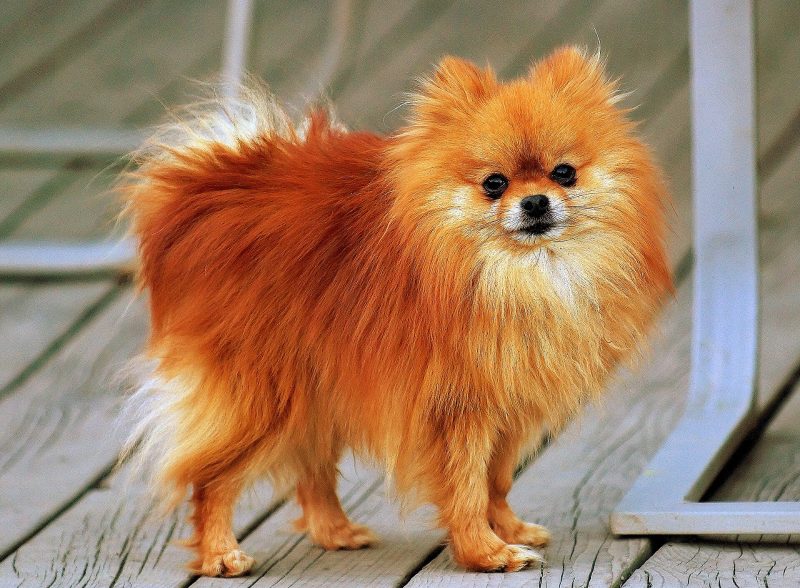
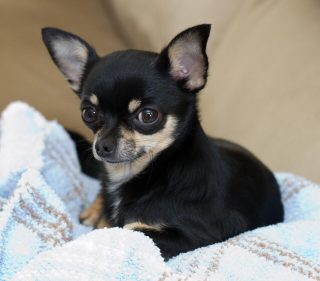
The coat is long, fine, straight and silky with no undercoat, lying flat on the body and forming a frill on the chest, feathering on the backs of the legs, breeches on the thighs and a long plume on the tail, which is carried arched over the back. The base color is always white with patches of any color: black, red, sable, lemon or tricolor, and a symmetrical white blaze is prized. A Pap is easy to tell from a Pomeranian by its flat coat and fine build, and from a Chihuahua by its ear fringes and plumed tail.
Temperament & Personality
Papillons are happy, confident and busy. They greet the world with their ears up and their tail going, want to be involved in whatever you are doing, and have an uncanny ability to read their people. They are affectionate without being clingy lapdogs; many prefer to sit beside you rather than on you, and all of them would rather play than nap. Energy indoors is moderate and outdoors it is high for a toy breed.
They make sharp little watchdogs and will bark at arrivals and odd noises, which needs managing in an apartment. Most are friendly with strangers once introduced and sociable with other dogs and cats, though they do not realize they are small and may try to boss a much bigger dog. They enjoy children who are gentle and are easily hurt by rough handling, so they are a better fit for older kids. Left alone too much they can become anxious, vocal and clingy.
Exercise & Activity
A Papillon needs more activity than its size implies: 30 to 45 minutes a day of walks and play, plus daily mental work. Indoor fetch down a hallway, hide-and-seek with treats and trick training go a long way, but the dog should also get outside every day to sniff, trot and see the world. Many Paps love longer hikes and will cheerfully cover several miles on a cool day. Dog sports are where the breed shines; agility, rally, obedience, freestyle and scent work suit the quick mind and tidy body.
They tolerate heat and cold reasonably well for a toy, though the single coat offers little insulation, so a sweater helps in freezing weather and shade and water matter in summer. Keep them on leash or in a fenced area; a Pap will chase a squirrel without a second thought.
A bored Papillon barks, spins, shreds paper and invents games you will not like.
Watch for jumps off furniture; the breed's fine legs can break.
Training
Papillons are among the easiest toy breeds to train and one of the most capable of any size. They learn new behaviors in a handful of repetitions, love to work for food and praise, and genuinely enjoy the process. Clicker and reward-based methods suit them perfectly; harsh handling is unnecessary and frightens them. Start with the basics, then keep adding tricks and skills throughout life, because an unchallenged Pap will find its own entertainment.
House training can take patience, as with most small dogs, and benefits from a strict schedule and an indoor option in bad weather. Early socialization with people, bigger dogs, traffic and handling builds the confident adult the breed is known for and heads off the timidity or yappiness seen in under-exposed dogs. Teach a reliable "quiet" cue early. Avoid carrying the dog everywhere and over-protecting it; Paps that are treated like ornaments can become nervous and snappy, while those that are allowed to be dogs are wonderfully stable.
Grooming & Care
For a long-coated breed the Papillon is refreshingly easy. There is no undercoat, so the hair sheds moderately and rarely mats badly. Comb and brush two or three times a week, paying attention to the ear fringes, behind the ears, the frill, the breeches and the feathering on the legs where tangles start. A bath every month or so, or when muddy, keeps the white coat bright; use a gentle shampoo and dry the fringes thoroughly. No trimming is needed beyond tidying the feet and keeping the hair between the pads short for traction.
Nails grow quickly and should be trimmed every two to three weeks; check the dewclaws, which can curl into the leg. Teeth are the real maintenance job, as small mouths crowd teeth and tartar builds fast, so brush daily and ask your vet about professional cleanings.
Check the ears weekly, especially on Phalènes with dropped ears.
Wipe tear staining under the eyes with a damp cloth.
Health
Papillons are long-lived, typically 14 to 16 years, and many stay spry well into their teens. The main inherited concerns are orthopedic, ocular and neurological. Patellar luxation, where the kneecap slips out of its groove, is common in toy breeds and is graded by a veterinary patella evaluation. Progressive retinal atrophy type 1 is caused by a known gene variant with a DNA test, and an annual eye exam by a veterinary ophthalmologist also screens for cataracts and other inherited eye disease. Neuroaxonal dystrophy, a fatal nervous system disorder of young puppies, is likewise identified by a DNA test that responsible breeders run on both parents. The parent club's recommended panel also includes a cardiac exam, since mitral valve disease appears in some older dogs.
Other issues include an open fontanel, or soft spot on the skull, collapsing trachea, dental disease, low blood sugar in tiny puppies, and fractures from falls. Ask your vet about dental care and about any coughing, limping or wobbliness.
Nutrition
A Papillon eats very little, which makes quality and portion control matter more than quantity. Feed a complete diet formulated for small or toy breeds, with kibble sized for a tiny mouth, in two measured meals a day for adults. Young puppies, especially under about five pounds, are prone to low blood sugar and should eat three or four small meals daily; ask your vet what to watch for and when to move to two meals.
Paps are generally not greedy, but table scraps and training treats add up fast on a 7-pound dog, and even a pound of extra weight stresses small knees. Use part of the daily ration as training rewards and keep treats tiny. Dental health is linked to diet, so ask your vet whether a dental diet or chews make sense for your dog. Seniors often do well on the same food with slightly smaller portions and more frequent weight checks.
Living With This Breed
The Papillon is one of the best apartment dogs in the toy group, provided it gets walks, play and training every day and its barking is managed. It adapts to town or country and to warm or cool climates, with a coat for freezing weather. It travels easily and is welcome almost everywhere, which suits owners who want to take their dog along. Long days alone are the breed's weak point; a midday visitor or a canine companion helps.
Paps live happily with gentle children, other dogs and cats, and often become the household organizer. Toddlers and big, boisterous dogs can injure them by accident, so supervise. Many are bold enough to pick fights above their weight class, which is another reason to keep introductions calm.
For sitters and daycare staff:
Group them with small or calm dogs, never in rough play with large breeds.
Use a harness; the trachea is delicate.
Watch stairs and furniture jumps, and lift carefully.
Expect a smart dog that will test the rules on day one.
Interesting Facts
The name is French for butterfly, after the ears; the drop-eared variety is called Phalène, which means moth.
Papillons appear in paintings by Titian, Rubens and Fragonard, usually sitting with the nobility of Renaissance Europe.
Kirby, formally Ch. Loteki Supernatural Being, won Best in Show at Westminster in 1999 after taking the World Dog Show in Helsinki the year before.
In 2019 Dylan became the first Papillon to win Best in Show at Crufts.
Papillons regularly rank among the brightest of all breeds in obedience and working intelligence, a distinction shared with very few toy dogs.
Legend says Marie Antoinette's little spaniel, Thisbe, waited outside her prison; the story is unproven but the breed's French court connection is real.
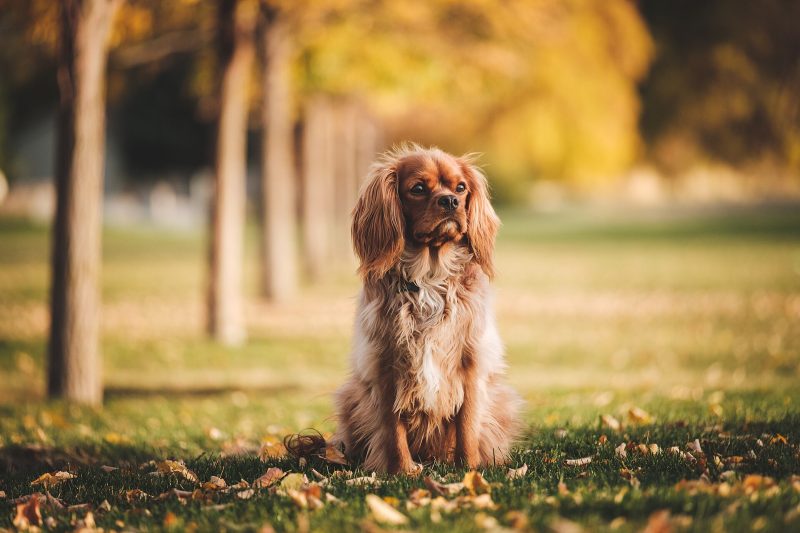
Breeds similar to the Papillon
What Papillon owners say
Real pets, photos, stories and tips from the SitterNation community — separate from the editorial guide above.
Log in to add your pet, photos, stories and tips.
Meet Papillons on SitterNation
No Papillons have joined yet. Owners can show their pet here from the pet's profile.
Papillon community photos
No Papillons photos yet — be the first to share one.
Stories from Papillon owners
No stories yet. What is life with yours really like?
Tips from Papillon owners
No tips yet. One practical thing that works for you is enough.
Ask Papillon owners
No questions yet. Ask the people who live with the breed.