Typical tendencies
Energy level
Ready to go when you are, settles after.
Good with children
Fine with calm, respectful older kids.
Good with other dogs
Gets along with known, polite dogs.
Trainability
Picks up cues with steady, short sessions.
Shedding
Keep the lint roller within reach.
Apartment friendly
A natural fit for city living.
More traits
Exercise needs
Adaptability
Grooming needs
Drooling
Intelligence
Family friendly
Good with cats
Friendly with strangers
Sociability
Protectiveness
Prey drive
Overview
The Pomeranian is a three-to-seven-pound spitz with a lion's confidence and a coat that puffs up to twice the size of the dog underneath. Descended from much larger sled and herding spitz of northern Europe and made fashionable by Queen Victoria, it is bold, curious, alert and endlessly entertaining. Poms are devoted to their people, quick to learn tricks and perfectly happy in an apartment, which makes them excellent companions for singles, couples and seniors. They need less exercise than most breeds but more grooming, and their tiny frame is easily hurt by rough handling, so they are better with older children than toddlers. They bark readily, and their big-dog attitude needs management around actual big dogs. Choose a Pom if you want a portable, lively, affectionate dog with real personality and you are willing to brush and to train the barking early.
History & Origin
The Pomeranian is the smallest member of the German Spitz family, a group of thick-coated, prick-eared dogs that worked as herders, sled dogs and farm watchdogs across northern Europe for centuries. The breed takes its name from Pomerania, a region on the Baltic coast now split between Germany and Poland, where a mid-sized spitz of 20 to 30 pounds was common. These dogs reached England in the 1700s; Queen Charlotte brought white ones to court in 1761. The decisive change came with Queen Victoria, who fell for small specimens on a visit to Italy in 1888 and brought home a 12-pound red sable named Marco. Her enthusiasm for ever-smaller Poms drove breeders to halve the size within a few decades. The AKC began registering the breed in 1888, and by the early 1900s American breeders had established the toy-sized, profusely coated dog recognized today. The FCI still classifies it as the Zwergspitz, the smallest German Spitz variety.
Appearance
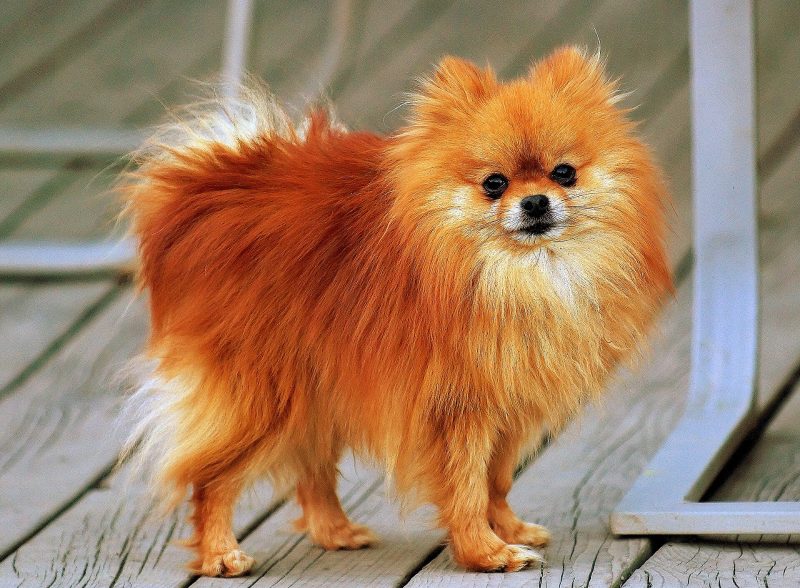
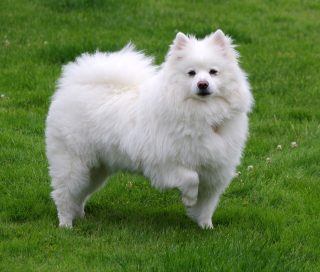
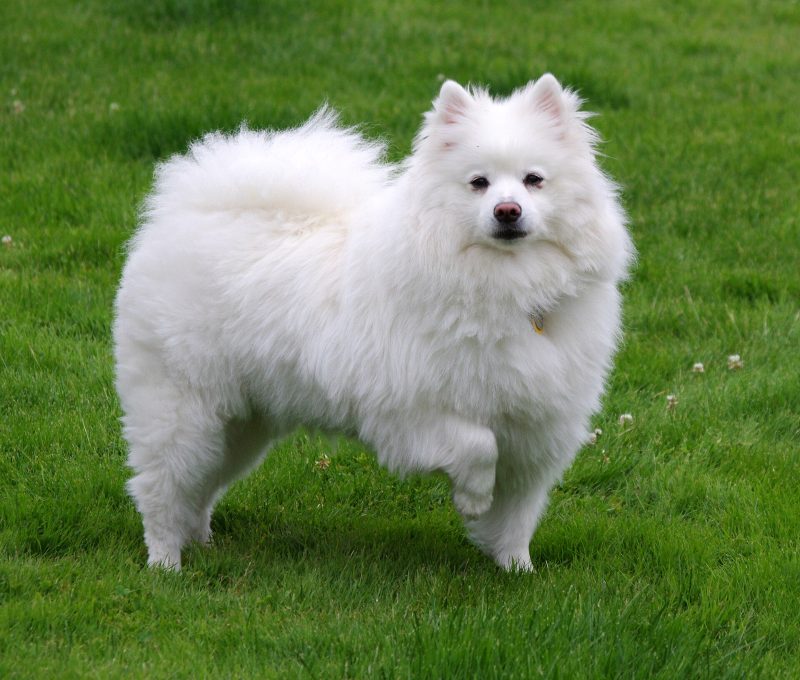
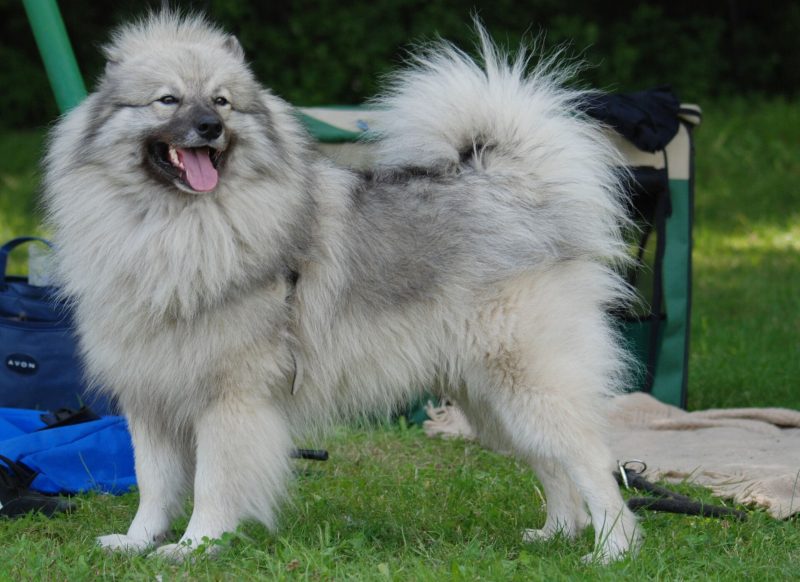
A Pomeranian is a tiny, square, cobby dog standing 6 to 7 inches at the shoulder and weighing 3 to 7 pounds, carried proudly with a plumed tail laid flat over the back. The head is wedge-shaped and foxy, with small erect ears, dark almond eyes and an alert, bright expression. The defining feature is the coat: a soft, dense undercoat supporting a long, straight, harsh outer coat that stands off the body, with a heavy ruff around the neck and shoulders and feathering on the legs and tail. Orange is the classic color, but Poms come in red, cream, sable, black, blue, chocolate, white, brindle, merle and parti-color, among others. Compared with the Japanese Spitz and American Eskimo Dog, the Pom is far smaller; compared with a Papillon it has a much thicker coat and smaller ears. Puppies go through an awkward stage at four to eight months when the puppy coat drops.
Temperament & Personality
Pomeranians are extroverts: bold, inquisitive, animated and convinced they are large. They bond intensely with their owners, enjoy being carried but also love to trot and explore, and have more energy than their size suggests. Indoors they are busy and playful; a short outdoor outing satisfies them. They are alert watchdogs that announce every sound and visitor, which is charming until it is not. With strangers many are reserved at first and warm up quickly; some are suspicious if under-socialized. With children they do best in homes with older kids who understand that a three-pound dog breaks. They are usually fine with other pets but may bully bigger dogs, a habit that can end badly. Intelligent and a little willful, they also have a soft side and dislike being ignored. Separation anxiety and nuisance barking are the common problems.
Exercise & Activity
A Pomeranian needs about 30 minutes of activity a day, which can be two short walks around the block plus indoor play. They enjoy walks for the sniffing and the attention, and a game of fetch down a hallway burns a surprising amount of Pom energy. Mental exercise matters more than mileage: trick training, puzzle toys and short training games keep that quick brain busy and reduce barking. Use a harness, never a collar, to protect the windpipe. In hot weather keep walks short and early; the heavy coat makes heat a real risk. In cold weather a small body loses heat fast despite the fluff, so keep outings brief and dry the dog afterward. Poms are at risk from hawks, owls and loose dogs when outdoors, so never leave one unattended in a yard.
Two short walks and indoor play daily
Harness only; no collar pressure on the neck
Supervise outdoors; watch for heat and predators
Training
Pomeranians are clever and learn tricks quickly, which makes training fun, but they can be headstrong and are often under-trained because they are small enough to pick up. Treat a Pom like a dog: teach sit, down, come, leave it and a quiet cue with short reward-based sessions. Barking is the number one issue; reward silence early, manage window access and teach an off switch before the habit sets. Housetraining is notoriously slow in toy breeds, so use a strict schedule, a crate or pen and generous praise, and expect accidents in bad weather; some owners add an indoor option. Socialize puppies carefully with calm larger dogs and gentle people so confidence does not turn into yapping aggression. Poms excel in agility, rally, obedience and trick titles. Handle feet, mouth and coat daily to prepare for grooming. Never use harsh corrections; a frightened Pom becomes a snapping Pom.
Grooming & Care
The Pom's double coat needs brushing two or three times a week with a pin brush and comb, working in sections down to the skin, with daily sessions during the heavy spring and fall sheds. Pay attention to the ruff, behind the ears, the pants and under the tail. Most owners use a professional groomer every four to six weeks for a bath, nail trim, sanitary trim and tidy of the feet and ears. Never shave a Pomeranian: the coat may not grow back properly and the skin is left exposed. Bathe every three to six weeks. Dental care is critical because tiny mouths crowd teeth; brush daily and expect professional cleanings. Check the erect ears weekly, trim nails every two to three weeks and wipe any tear staining.
Brush 2 to 3 times weekly, daily when shedding
Groomer every 4 to 6 weeks; never shave
Daily tooth brushing, nails every 2 to 3 weeks
Health
Pomeranians are long-lived, typically 12 to 16 years, but their size and conformation bring specific problems. Patellar luxation, in which the kneecap slips out of its groove, is very common and ranges from a harmless skip to a lameness needing surgery. Tracheal collapse causes a honking cough and breathing difficulty and is a reason to use a harness and keep the dog lean. Alopecia X, a hair-loss condition sometimes called black skin disease, is strongly associated with the breed and is cosmetic but should be distinguished from thyroid or adrenal disease. Dental disease is nearly universal without daily care. Puppies and very small adults can develop hypoglycemia. Other concerns include hypothyroidism, Legg-Calvé-Perthes disease of the hip, heart murmurs, hereditary cataracts and distichiasis, and fractures of the forearm from jumping off furniture. Responsible breeders screen patellas, hearts, eyes and thyroid. Ask your vet about regular dental cleanings and see them for coughing, limping or hair loss.
Nutrition
Pomeranians have fast metabolisms and tiny stomachs. Feed a complete small- or toy-breed formula with kibble sized for a small mouth, in two or three meals a day; puppies under six months need three or four meals to prevent low blood sugar, and owners should know the signs: weakness, wobbling, glassy eyes. A few extra treats are a large share of a three-pound dog's calories, so measure food, count treats and keep the dog lean, both to protect the knees and trachea and because obesity hides under the coat. Dental health benefits from kibble, dental chews sized for toys and daily brushing. Avoid grapes, onions, xylitol and rich table food, which cause disproportionate harm at this size. Dogs with heart, thyroid or kidney conditions need vet-directed diets. Sitters should feed on schedule and never skip a meal.
Living With This Breed
A Pomeranian fits anywhere from a studio apartment to a country house, as long as it lives indoors with its people. It tolerates a workday alone better than many companion breeds if it has toys and a routine, but it will bark at hallway noise, which apartment neighbors may not love. Climate is manageable with care: heat needs air conditioning and short walks, cold needs short walks and a dry coat. Poms are best with adults and older children. They live well with cats and other small dogs; large or boisterous dogs are a risk simply because of size. Keep the Pom off high furniture or provide steps to prevent fractures, and watch doors, since a Pom can slip through a gap.
Sitters: harness only, no off-leash time, lift carefully with support under the chest and rear
Watch for coughing or limping and report it
Follow the feeding schedule exactly
Interesting Facts
Queen Victoria owned dozens of Pomeranians and asked for her favorite, Turi, to be brought to her bedside in her final hours.
Two Pomeranians were among the three dogs known to have survived the sinking of the Titanic.
Isaac Newton, Mozart and Michelangelo are all said to have kept Pomeranians, though theirs would have been far larger than today's toy.
Early Poms weighed 20 to 30 pounds; the modern breed was bred down to a fraction of that in little more than a generation.
A Pomeranian named Boo gained more than 16 million social-media followers and was marketed as the world's cutest dog.
Breeds similar to the Pomeranian
Popular Pomeranian crosses
What Pomeranian owners say
Real pets, photos, stories and tips from the SitterNation community — separate from the editorial guide above.
Log in to add your pet, photos, stories and tips.
Meet Pomeranians on SitterNation
No Pomeranians have joined yet. Owners can show their pet here from the pet's profile.
Pomeranian community photos
No Pomeranians photos yet — be the first to share one.
Stories from Pomeranian owners
No stories yet. What is life with yours really like?
Tips from Pomeranian owners
No tips yet. One practical thing that works for you is enough.
Ask Pomeranian owners
No questions yet. Ask the people who live with the breed.