Typical tendencies
Energy level
Needs a real outlet most days.
Good with children
Gentle and tolerant around children.
Good with other dogs
Gets along with known, polite dogs.
Trainability
Lives for the lesson; a trainer's dream.
Shedding
Keep the lint roller within reach.
Apartment friendly
Settles well into smaller homes.
More traits
Exercise needs
Adaptability
Grooming needs
Drooling
Intelligence
Family friendly
Good with cats
Friendly with strangers
Sociability
Protectiveness
Prey drive
Overview
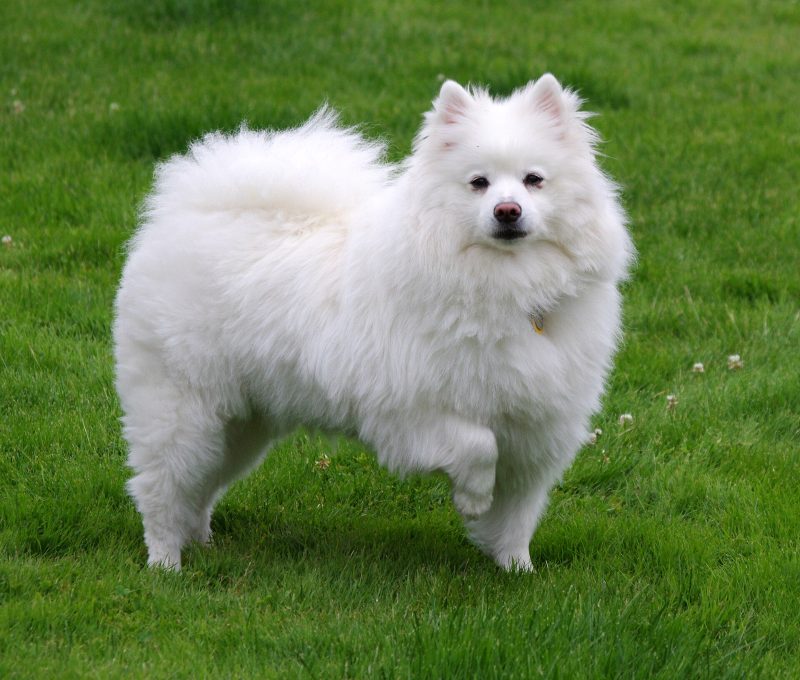
The American Eskimo Dog, or Eskie, is a brilliant white spitz that comes in three sizes and one personality: clever, alert, quick to learn and devoted to its people. Descended from German farm and watchdogs and polished by decades as a circus performer, it is a dog that wants to be in on everything, learns tricks for fun and tells you when anything changes outside the window.
It suits active households that enjoy training and will give it daily exercise, company and mental work. The toy and miniature sizes fit apartments well, the standard likes a bit more room, and all three shed a great deal and bark readily. Eskies are generally good with children and other pets they know, but reserved with strangers and sometimes selective about unfamiliar dogs. If you want a bright, engaged, affectionate companion and can live with white hair on the furniture, this is a rewarding breed.
History & Origin
Despite the name, the Eskie has nothing to do with the Arctic. It descends from the white German Spitz, an all-purpose farm dog and watchdog that German immigrants brought to the American Midwest in the 1800s. Those small white spitz became common family dogs, and because they were agile, eager and striking under lights, they found a second career in traveling circuses in the early twentieth century, walking tightropes and performing tricks; many of today's dogs trace back to circus stock, and the shows sold puppies after performances.
Anti-German feeling during the First World War pushed owners to drop the "German Spitz" label, and the dogs became the American Spitz and then the American Eskimo. The United Kennel Club first registered the breed in 1913 as the American Spitz, renamed it the American Eskimo around 1917, and published the first written breed history in 1958. A national club formed in 1970, the American Eskimo Dog Club of America in 1985, and after years of gathering pedigrees the American Kennel Club recognized the breed in 1995, placing it in the Non-Sporting Group.
Appearance
The Eskie is a classic Nordic spitz in miniature: a compact, slightly longer-than-tall body, a wedge-shaped head with erect triangular ears, dark almond eyes with black rims and a black nose and lips, and a plumed tail curled over the back. The expression is bright and keen. It comes in three varieties by height at the shoulder: toy (9 to 12 inches), miniature (over 12 to 15 inches) and standard (over 15 to 19 inches), with weights ranging from about 6 pounds to 35 pounds across the sizes. Whichever size, proportions and type should look the same.
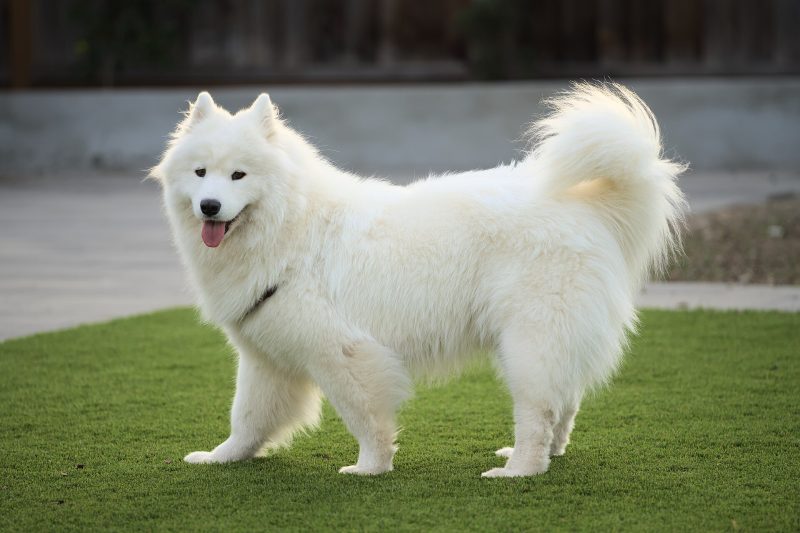
The double coat is dense and stand-off, with a short, thick undercoat and a longer, straight outer coat that forms a lion-like ruff around the neck and shoulders, more pronounced in males, plus feathering on the back of the legs. Color is pure white or white with biscuit cream; any other color is a disqualification. The Samoyed is larger with a different head and the famous smile, the Japanese Spitz is nearly identical but is a separate breed, and the Pomeranian is smaller with a shorter muzzle.
Temperament & Personality
Eskies are lively, affectionate and intensely people-focused. They bond closely to their family, follow their person around the house and want to join every activity. With strangers they are watchful and reserved rather than friendly, and they take their job as household alarm seriously, which means barking at the mail carrier, the neighbor's cat and sounds you cannot hear. They are not aggressive, but without socialization that reserve can harden into suspicion.
Indoors they are busy but settle well once exercised; outdoors they are quick, athletic and playful. Most are patient with children who treat them kindly, and they usually live well with cats and dogs they were raised with, though some are bossy with unfamiliar dogs. Intelligence is the defining trait: they figure out latches, routines and games fast, and a bored Eskie will invent entertainment. They are sensitive and do not take well to harsh handling, and many struggle when left alone for long stretches.
Exercise & Activity
An Eskie needs more activity than its fluffy looks suggest: aim for 45 to 60 minutes a day of walks, play and training, with the standard size at the upper end and the toy able to meet part of its quota indoors. Fetch, agility, flyball, trick training and scent games suit them perfectly, because they combine movement with the problem-solving this breed craves. A fenced yard is useful for zoomies but is no substitute for walks and interaction.
The thick white coat handles cold and snow beautifully; Eskies love winter. Heat is the opposite story, so in summer walk early and late, provide shade and water and never shave the coat, which protects against sunburn and heat. Signs of a bored or under-exercised Eskie are unmistakable: nonstop barking, digging, chewing and spinning.
45 to 60 minutes daily, mixing walks with play and brain work
Loves cold weather; limit exertion in heat
Agility, tricks and scent games are ideal outlets
Training
This is one of the most trainable breeds in the Non-Sporting Group, with a circus résumé to prove it. Eskies learn commands in a few repetitions, enjoy performing and love praise, food and games as rewards. Keep sessions short, upbeat and varied; they bore quickly with repetition and can get creative or stubborn if drilled. Harsh corrections backfire with this sensitive breed and can produce a dog that barks more and trusts less.
The two priorities are socialization and barking. Introduce puppies to many people, dogs, sounds and places before 16 weeks so that natural wariness stays polite, and teach a "speak" and "quiet" pair early so you can switch the alarm off. Housetraining is usually straightforward with a schedule and a crate. Recall is reliable in most Eskies but still deserves regular practice. Many go on to excel at obedience, rally, agility and trick titles, and the breed makes a satisfying partner for anyone who enjoys teaching.
Grooming & Care
Expect hair. The Eskie's double coat sheds moderately all year and heavily in spring and fall, when the undercoat comes out in handfuls. Brush thoroughly two or three times a week with a slicker and a long-pinned brush or undercoat rake, working in layers down to the skin, and daily during the seasonal blow-outs. Pay attention behind the ears, the ruff, the trousers and under the tail, where mats start. The coat is naturally dirt-shedding, so bathing every two or three months is plenty; frequent washing strips the oils that keep it white and weather-resistant. Never clip or shave it, which can damage regrowth and removes protection from sun and heat.
Wipe the eyes daily to prevent tear staining on the white face, check and clean the ears every couple of weeks, trim nails monthly and brush the teeth several times a week. Professional grooming is optional, though many owners use a groomer for seasonal deshedding baths with high-velocity drying.
Brush 2 to 3 times a week, daily in shedding seasons
Bathe every 2 to 3 months; never shave
Daily eye wipe to limit tear stains
Health
Eskies are generally hardy and live about 13 to 15 years, with the smaller sizes often reaching the top of that range. The condition the breed is best known for is progressive retinal atrophy, specifically the prcd form, an inherited retinal degeneration that begins with night blindness and progresses to total vision loss; a DNA test identifies carriers, and responsible breeders use it. Hip dysplasia and luxating patellas both occur, the latter especially in the toy and miniature sizes. Epilepsy is seen more often than in many breeds, and dental disease is common, as in most small dogs. Some Eskies develop allergies, and the breed can be prone to weight gain hidden under the coat.
The parent club recommends that breeding dogs have an OFA hip evaluation, an eye exam by a veterinary ophthalmologist and the PRA-prcd DNA test, with patella, cardiac, elbow and thyroid checks as useful extras. For your own dog, schedule annual exams, mention any night-time hesitancy, limping, skipping gait or seizures to your vet promptly, and keep up with dental care; small dogs lose teeth early without it.
Nutrition
Feed a complete and balanced food matched to life stage and size: a small-breed or all-life-stages puppy formula until about 12 months, then an adult diet. Toy Eskie puppies are small enough to risk low blood sugar if they skip meals, so feed them three or four times a day; adults do well on two measured meals. Because the stand-off coat disguises body shape, check condition by feel every few weeks: ribs should be easy to find under a thin cover. Eskies tend to run slightly heavy when under-exercised, and extra weight worsens knee and hip problems.
Keep treats to about a tenth of daily calories and use kibble from the daily ration for training, which this breed does a lot of. Dental-focused diets or chews can help with tartar. Fresh water should always be available. Most dogs need no supplements on a complete diet; if skin, coat or joint issues appear, ask your vet before adding omega-3s or joint products.
Living With This Breed
The toy and miniature Eskie settle happily into apartments, and even the standard copes in a smaller home if exercised well. The real question for neighbors is barking: this breed is an enthusiastic watchdog, so training a quiet cue and preventing boredom matter in close quarters. All sizes love cold weather and snow and struggle in heat, so air conditioning and shade are important in warm climates. White hair on dark clothes and furniture is a fact of life.
Eskies are good family dogs for households with kind children and are usually fine with other pets they know, though introductions to new dogs should be managed. They dislike long days alone and can develop separation anxiety or nuisance barking. For a pet sitter or daycare, the key points are: let the dog warm up to you rather than crowding it, expect alert barking, keep walks short in heat, brush if the dog is in a shedding season, and keep training games in the routine; a busy Eskie is a quiet Eskie.
Apartment-suitable in the smaller sizes if barking is managed
Cold-loving; protect from heat
Needs company and mental work
Interesting Facts
Eskies were famous circus performers in the 1920s and 1930s; a dog called Pierre is said to have walked a tightrope with the Barnum and Bailey circus, and shows sold Eskie puppies to the audience.
The breed has no connection to Inuit or Arctic peoples; the name was a patriotic rebranding of the German Spitz during the First World War.
It is one of very few breeds that comes in three official sizes, from a 6-pound toy to a 35-pound standard, all judged to the same standard.
The American Eskimo Dog Club of America gathered pedigrees from around 1,750 dogs to build the stud book the AKC accepted in 1995.
White Eskies have black "points," and a pink or brown nose is considered a sign of careless breeding.
The United Kennel Club registered the breed decades before the AKC did, and still does.
Breeds similar to the American Eskimo Dog
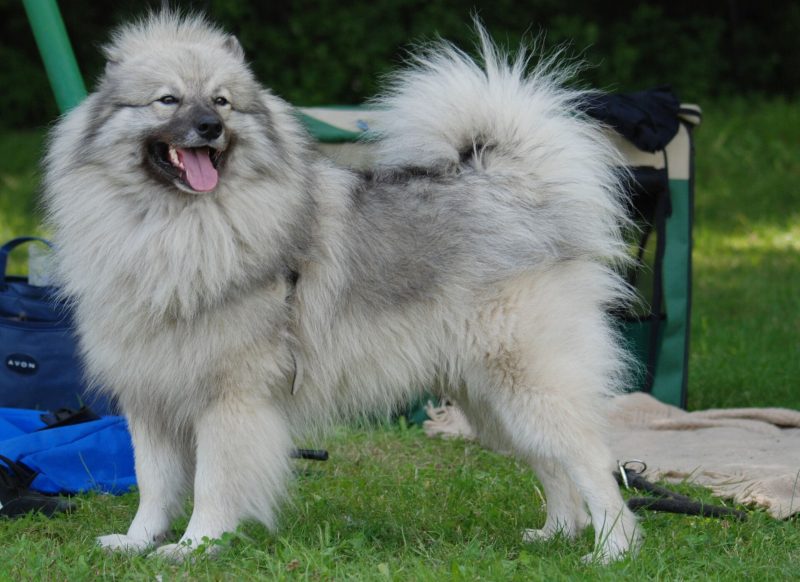
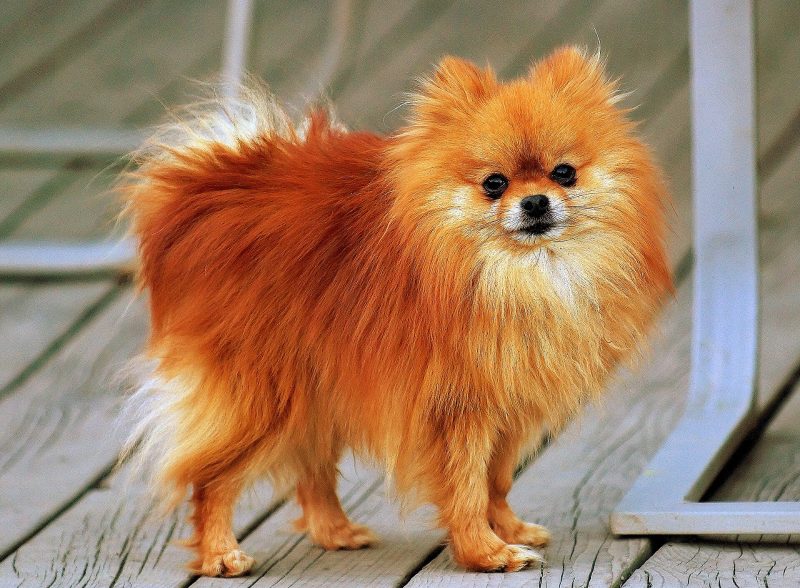
What American Eskimo Dog owners say
Real pets, photos, stories and tips from the SitterNation community — separate from the editorial guide above.
Log in to add your pet, photos, stories and tips.
Meet American Eskimo Dogs on SitterNation
No American Eskimo Dogs have joined yet. Owners can show their pet here from the pet's profile.
American Eskimo Dog community photos
No American Eskimo Dogs photos yet — be the first to share one.
Stories from American Eskimo Dog owners
No stories yet. What is life with yours really like?
Tips from American Eskimo Dog owners
No tips yet. One practical thing that works for you is enough.
Ask American Eskimo Dog owners
No questions yet. Ask the people who live with the breed.