Typical tendencies
Energy level
Needs a real outlet most days.
Good with children
A famously patient playmate for kids.
Good with other dogs
Enjoys most canine company.
Trainability
Picks up cues with steady, short sessions.
Shedding
Fur on everything, all year round.
Apartment friendly
Can manage in a flat with plenty of outings.
More traits
Exercise needs
Adaptability
Grooming needs
Drooling
Intelligence
Family friendly
Good with cats
Friendly with strangers
Sociability
Protectiveness
Prey drive
Overview
The Samoyed is the smiling white dog of the Arctic, bred by the reindeer-herding peoples of Siberia to pull sleds, guard the herd and sleep in the tent with the family on nights that fell to 60 below. That history produced a dog that is strikingly beautiful, tireless in cold weather and, above all, people-oriented to its core. Sammies are gentle, playful and friendly with nearly everyone, which makes them wonderful family dogs and useless guard dogs.
They suit active households that can offer daily exercise, plenty of company and serious grooming time, ideally in a cool climate. They do well with children and other dogs and adapt to most homes with a yard. They are a poor fit for people who are out all day, who want a quiet dog, or who cannot face white hair on everything they own. Give a Samoyed its people, its brush and a job to do, and it will repay you with that famous grin for 12 to 14 years.
History & Origin
The Samoyed takes its name from the Samoyedic peoples of northwestern Siberia, today's Nenets and their relatives, who kept white and parti-colored spitz dogs for thousands of years. The dogs herded and guarded reindeer, hauled sleds across the tundra and slept among the family, where their warmth and closeness built the breed's famous attachment to people. Genetic studies place the Samoyed among the ancient breeds whose lineage predates the kennel-club era, and dogs from the region are still recognizable ancestors of today's Sammies.
The breed left Siberia with polar explorers. Nansen bought dozens of Nenets dogs for his 1893 Fram expedition, Borchgrevink, Scott and Shackleton used them in the Antarctic, and Amundsen's teams included them. In 1889 the English engineer Ernest Kilburn-Scott brought a puppy home from Arkhangelsk, and with his wife Clara he founded the breed in Britain, where Queen Alexandra became a patron and the first standard was written in 1909. In America a dog named Moustan of Argenteau was the first registered by the AKC in 1906, and the Samoyed Club of America was founded in 1923.
Appearance
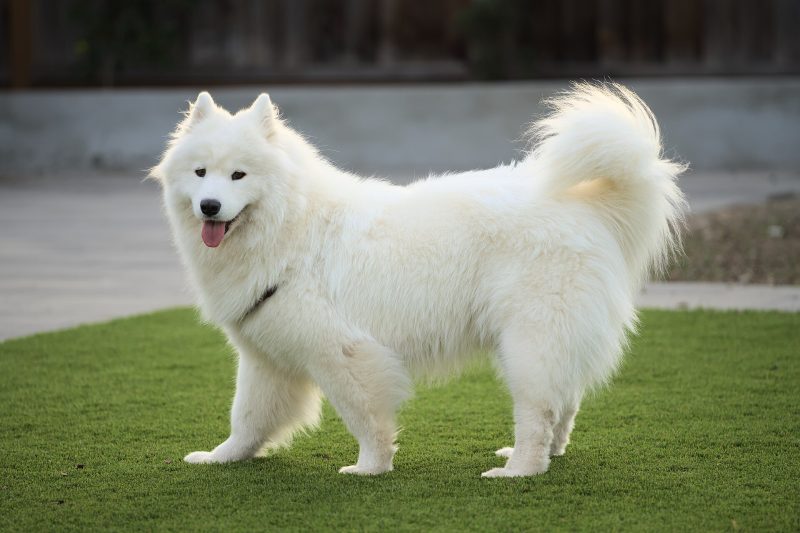
The Samoyed is a medium-large spitz, strongly built but never heavy, with a body a little longer than tall. Males stand 21 to 23.5 inches and weigh 45 to 65 pounds; females are 19 to 21 inches and 35 to 50 pounds. The head is wedge-shaped with a broad skull, a muzzle that tapers to a black or brown nose, thick erect triangular ears and dark, almond-shaped, slightly slanted eyes with black rims. The lips are black and curve up at the corners, producing the "Sammy smile". The tail is long, heavily plumed and carried over the back or to one side, dropping when the dog relaxes.
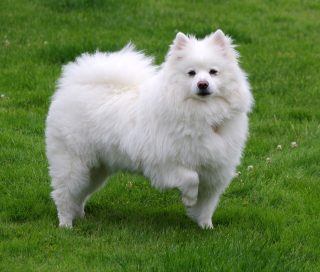
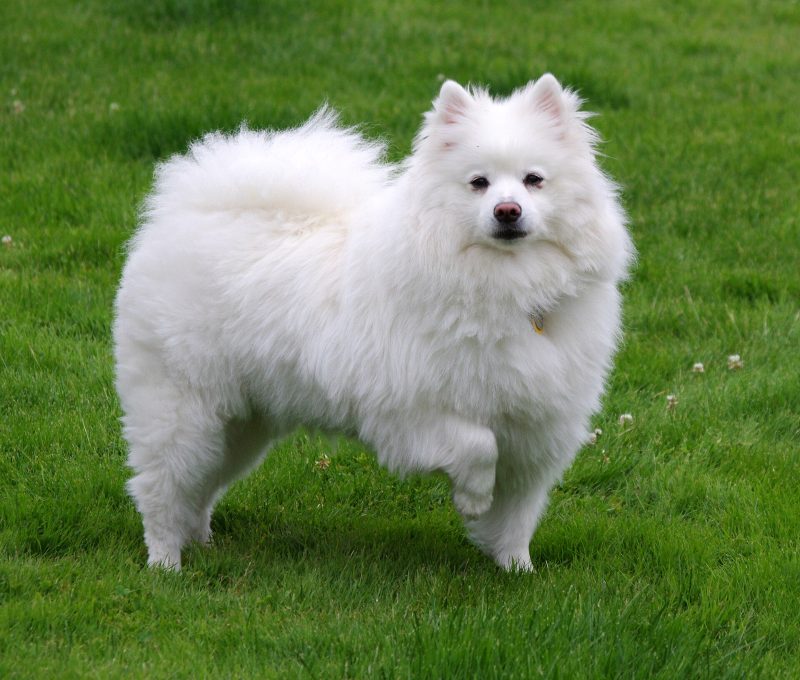
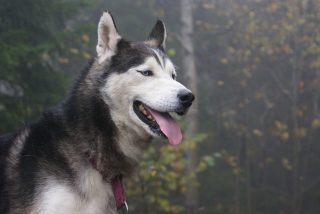
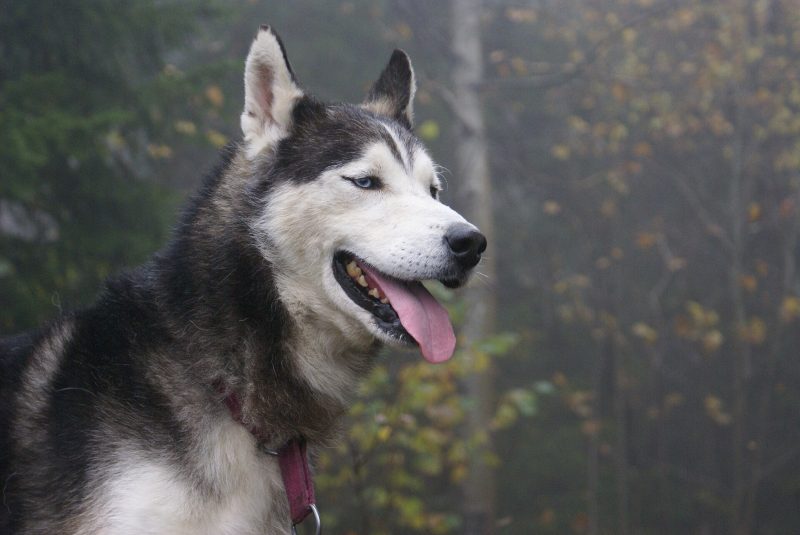
The coat is the breed's glory: a thick, soft, woolly undercoat under a straight, harsh outer coat that stands off the body and forms a ruff around the neck and shoulders, heavier on males. Colors are pure white, cream, biscuit or white and biscuit, with a silver sheen on the tips. The Samoyed is larger and more profusely coated than an American Eskimo Dog, and unlike a white Siberian Husky it has only dark eyes and a smiling, upturned mouth.
Temperament & Personality
Samoyeds are affectionate, gentle and socially greedy. They were bred to live inside the tent, and they still want to be in the middle of the family, touching someone if possible. They greet strangers as future friends, which rules them out as guard dogs, though they will bark, often at length, to announce anything new. Playfulness lasts well into old age and many keep a puppyish sense of mischief.
They are patient and kind with children and usually good with other dogs; their herding past can show as a tendency to round up kids and pets. Cats and small animals are generally fine when raised together, with supervision. Independence and intelligence come with the package, so a Sammy obeys when it sees the point and improvises when it does not. The most important thing to understand is that a Samoyed left alone for long hours becomes a miserable, noisy, destructive dog; this breed needs company more than most.
Exercise & Activity
Samoyeds need an hour or more of exercise every day and thrive on having a job. Long walks, hikes, jogging in cool weather and vigorous play in a fenced yard cover the basics, and the breed's working heritage makes it a natural at sledding, skijoring, weight pull, carting and bikejoring, as well as agility, herding trials and obedience. Mental work matters as much as mileage; nose games, puzzle toys and trick training settle a restless Sammy.
Cold is their element and heat is their limit. In warm weather walk early and late, provide shade, water and a cool floor, and never leave the dog in a car. Do not shave the coat; it insulates against heat as well as cold. Puppies should build up gradually and avoid pulling work until mature.
Boredom produces digging, howling, chewing and fence escapes.
Many Samoyeds will roam for miles if loose; a secure fence is essential.
Training
Samoyeds are smart, cooperative and eager for interaction, but they are not pushovers. They learn quickly with food, play and praise, lose interest in drills, and will test a handler who is inconsistent or harsh. Short, cheerful sessions with a clear purpose work best; corrections make them stubborn or sulky. Start early, because an untrained 60-pound dog that pulls like a sled dog and wants to greet every person on the street is exhausting.
Priorities are loose-leash walking, a reliable recall practiced on a long line, a solid "quiet" cue to manage barking and howling, and calm greetings. Socialization is easy because the breed loves everyone, but exposure to traffic, handling and grooming tools pays off for life. Teach the dog to settle alone for short periods from puppyhood to prevent separation distress. Sammies excel in rally, agility, herding, sledding sports and therapy work, and they genuinely enjoy learning tricks for an audience.
Grooming & Care
Grooming is the price of admission. Brush thoroughly two or three times a week with a pin brush and a long-toothed comb, working in layers down to the skin, and expect daily sessions during the heavy coat blow in spring and often again in fall, when the undercoat comes out in handfuls for several weeks. Shedding never fully stops. Pay special attention behind the ears, the ruff, the breeches and under the tail where mats form. A professional groomer with a high-velocity dryer can shorten the blow dramatically.
The coat sheds dirt once dry and has little odor, so bathing every couple of months is plenty; drying takes hours. Never shave a Samoyed except for medical reasons. Trim nails every few weeks, check the ears weekly and brush the teeth.
Keep the hair between the paw pads trimmed for traction and to limit ice balls.
Save the combed-out undercoat; spinners turn it into warm yarn.
Health
Samoyeds generally live 12 to 14 years and are reasonably sound, with several inherited conditions that responsible breeders screen for. Hip dysplasia occurs, and the parent club asks that all breeding stock have OFA or PennHIP hip evaluations. An eye exam by a veterinary ophthalmologist and a cardiac exam are also recommended, the latter because pulmonic stenosis and other congenital heart defects turn up more often in the breed. DNA tests exist for two eye diseases, X-linked progressive retinal atrophy and retinal dysplasia with oculoskeletal dysplasia, and for Samoyed hereditary glomerulopathy, an X-linked kidney disease that is fatal in young males and milder in carrier females.
Other conditions include diabetes mellitus, which the breed develops more often than most, hypothyroidism, sebaceous adenitis and other skin disease, cataracts and glaucoma. Ask the breeder for results of the parents' hip, eye, heart and DNA tests. Ask your vet about increased thirst, weight change or any limp, and schedule regular eye checks as the dog ages.
Nutrition
Feed a complete diet matched to age and workload in two measured meals a day. Samoyeds are moderately efficient eaters and many stay naturally lean, but some gain weight easily and the thick coat hides it well; check body condition by hand, feeling for ribs and a waist under the fur, rather than by eye. Working dogs that pull or run in winter need noticeably more calories than the same dog in summer, so adjust portions by season and activity.
Puppies should grow slowly on a large-breed or all-life-stages food to protect developing hips. Because the breed has a higher than average rate of diabetes, keep weight controlled and mention any increase in thirst, appetite or urination to your vet promptly. Skin and coat quality are good indicators of nutrition; a dull coat, flaky skin or persistent itching is worth a diet conversation. Treats add up quickly for a dog that trains for food.
Living With This Breed
A Samoyed needs a home where people are around much of the day and a securely fenced yard it cannot dig under or climb out of. A house in a cool climate is ideal; apartments work only with substantial daily exercise and neighbors who tolerate barking. In hot regions plan for air conditioning and dawn-and-dusk walks. White hair will be everywhere, permanently.
Sammies are excellent with children and other dogs and usually fine with family cats. They are vocal: barking, howling and a range of talking noises are normal. They greet burglars as warmly as guests. Escaping to go visiting is a breed hobby.
For sitters and daycare staff:
Expect an enthusiastic, mouthy-with-joy greeting and a dog that leans on you.
Keep it cool: shade, water and no midday walks in warm weather.
Double-check gates and fences; this breed roams.
Brush if you are staying more than a couple of days, and never clip the coat.
Interesting Facts
The famous Sammy smile is functional: upturned lip corners keep the dog from drooling, so ice does not form on its face in Arctic cold.
Samoyeds went to both poles with Nansen, Scott, Shackleton and Amundsen, hauling supplies at up to one and a half times their own weight.
The first Samoyed registered by the AKC, in 1906, was Moustan of Argenteau, said to have come from the kennels of a Russian grand duke.
The breed's combed-out undercoat is spun into yarn that knitters compare to angora.
Queen Alexandra of Britain championed the breed in the early 1900s, and many English and American lines trace back to her kennel.
Despite the "hypoallergenic" reputation, Samoyeds shed heavily; allergy sufferers should spend time with one before committing.
Breeds similar to the Samoyed
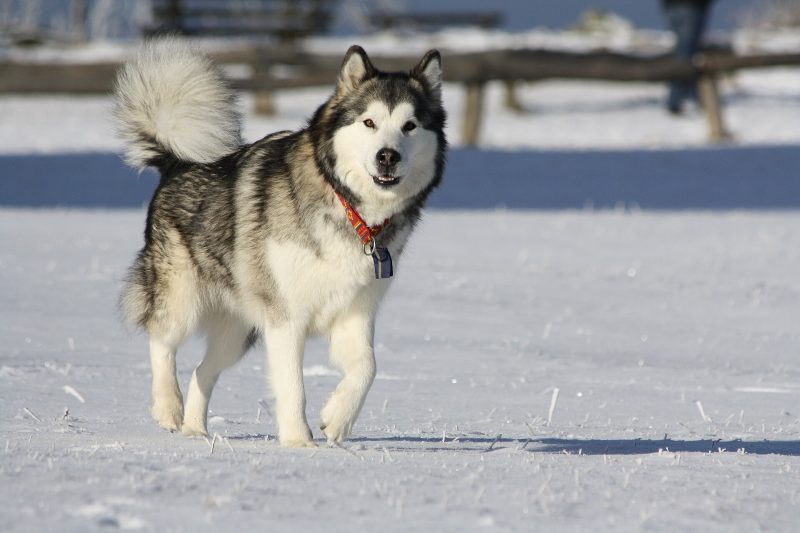
What Samoyed owners say
Real pets, photos, stories and tips from the SitterNation community — separate from the editorial guide above.
Log in to add your pet, photos, stories and tips.
Meet Samoyeds on SitterNation
No Samoyeds have joined yet. Owners can show their pet here from the pet's profile.
Samoyed community photos
No Samoyeds photos yet — be the first to share one.
Stories from Samoyed owners
No stories yet. What is life with yours really like?
Tips from Samoyed owners
No tips yet. One practical thing that works for you is enough.
Ask Samoyed owners
No questions yet. Ask the people who live with the breed.