Typical tendencies
Energy level
Always on; boredom turns into mischief.
Good with children
Gentle and tolerant around children.
Good with other dogs
Loves every dog at the park.
Trainability
Learns, but on its own schedule.
Shedding
Fur on everything, all year round.
Apartment friendly
Needs space and a garden to be happy.
More traits
Exercise needs
Adaptability
Grooming needs
Drooling
Intelligence
Family friendly
Good with cats
Friendly with strangers
Sociability
Protectiveness
Prey drive
Overview
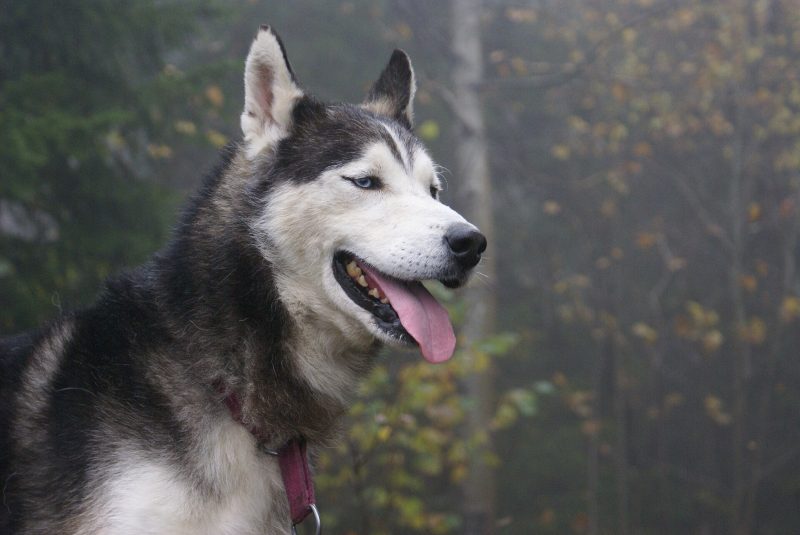
The Siberian Husky is a medium-sized sled dog with a wolfish face, a friendly heart and an engine built to run all day in the cold. It is affectionate with everyone, including burglars, gets on famously with other dogs and loves children, and it is also one of the most demanding breeds to live with: it needs hours of exercise, sheds spectacularly, howls rather than barks, digs, and will escape from any yard that is not built like a fortress. Prey drive makes cats and small pets risky. Huskies suit active owners in cooler climates who want a running, hiking or skijoring partner and can tolerate a dog that cheerfully ignores recall. They do not suit apartments, hot climates, first-time owners who want obedience, or anyone who needs a watchdog. Meet their needs and they are joyful, funny companions; fail to and they will redecorate your home.
History & Origin
The Siberian Husky was developed over many centuries by the Chukchi people of northeastern Siberia, who needed dogs that could haul light loads over long distances on little food and live closely with families. The result was a small, efficient sled dog with a gentle disposition, and DNA studies place it among the oldest breeds in existence. Siberians reached Alaska in 1909, when a fur trader entered a team in the 408-mile All Alaska Sweepstakes; the next year a Scottish sportsman imported about 70 dogs, and his teams dominated the race and made the breed's reputation. In 1925 relay teams of sled dogs, including Leonhard Seppala's Siberians led by Togo, carried diphtheria serum more than 600 miles to Nome; the lead dog on the final leg, Balto, became a national celebrity. Seppala's touring team seeded New England breeding programs, the AKC recognized the breed in 1930 and the Siberian Husky Club of America formed in 1938. Siberians also served in Army search-and-rescue units during the Second World War.
Appearance
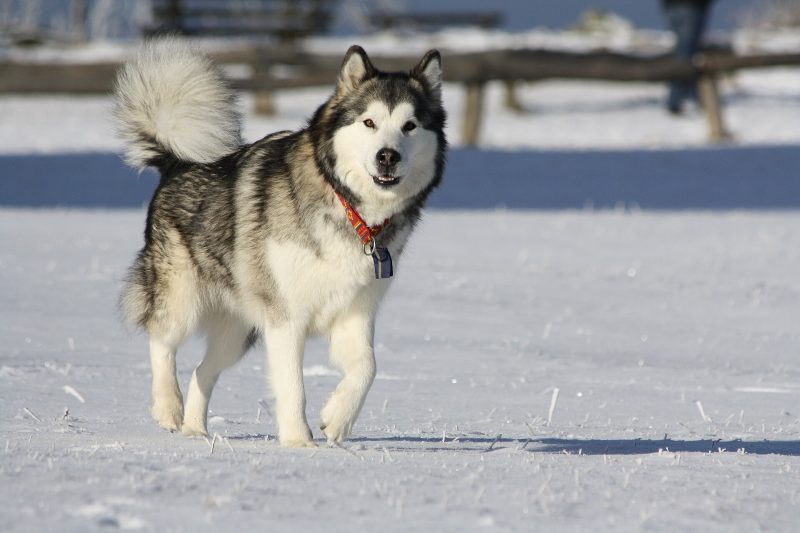
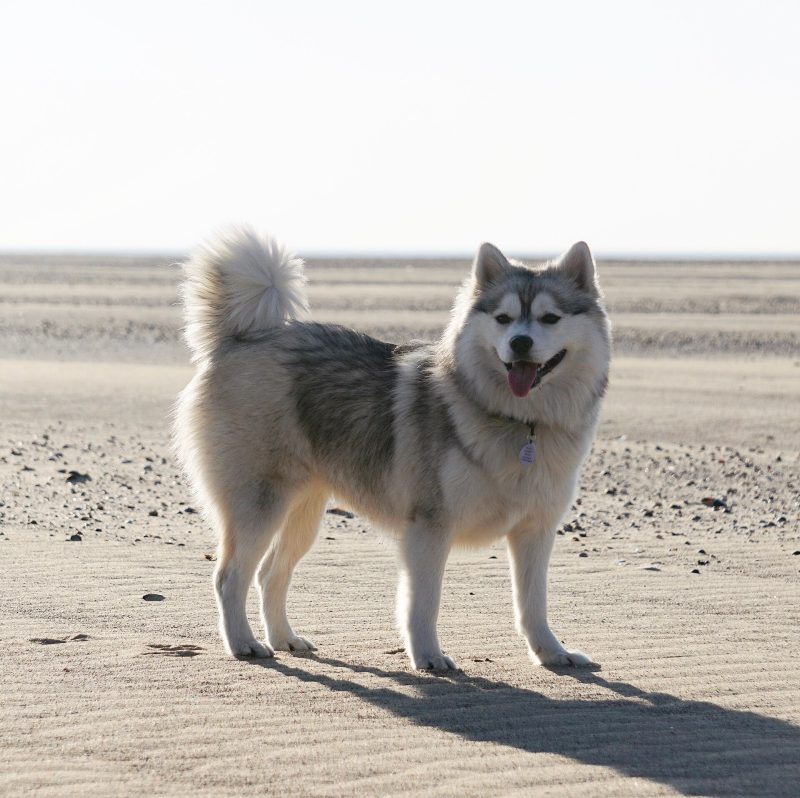
The Siberian is a moderately sized, moderately built dog, and moderation is the point: it should look like an athlete, not a wolf or a Malamute. Males stand 21 to 23.5 inches and weigh 45 to 60 pounds; females are 20 to 22 inches and 35 to 50 pounds. The head is medium with a fox-like muzzle, erect triangular ears and almond-shaped eyes that may be brown, blue, one of each or even split within one eye. The tail is a well-furred brush carried in a sickle curve when alert and trailing when relaxed. The double coat is medium length, straight and dense but never long or shaggy. Colors run from black, gray and agouti through red and sable to pure white, usually with white markings and often striking facial masks. Compared with the Alaskan Malamute, the Siberian is much smaller and lighter with a less heavy head and a tail that does not curl tightly over the back.
Temperament & Personality
Huskies are gregarious, playful and mischievous, with no interest in guarding anything. They welcome strangers, adore other dogs and are typically gentle with children, treating the whole household as their pack. They are not one-person dogs and do not fawn; affection is given freely but on their terms. Energy indoors is higher than in most breeds unless they are well exercised, and outdoors it is nearly limitless. They are independent thinkers bred to make decisions on the trail, which reads as stubbornness in the living room. Prey drive is strong and fast: cats, rabbits, chickens and small dogs they did not grow up with are at risk. Huskies rarely bark but howl, yodel and talk back. Left alone and bored they dig craters, chew drywall and escape. Separation distress is common in dogs kept as only pets.
Exercise & Activity
A Siberian Husky needs at least 90 minutes to two hours of vigorous exercise every day, and more is better. Walks are a start, not a solution; running, biking, hiking, skijoring, bikejoring, canicross or pulling a cart or scooter are what the breed was made for. Puppies should build up gradually, with no sustained running until the skeleton matures. Mental work matters too: scent games, puzzle feeders and training sessions take the edge off. Exercise must happen on leash or in secure fencing, because recall around wildlife is unreliable even in well-trained dogs. Cold is their element; heat is a danger, so in warm climates exercise at dawn and dusk, provide shade and a cool floor, and never shave the coat. An under-exercised Husky is the most destructive dog you will ever meet.
90 minutes to 2 hours daily, including real running or pulling
On leash or inside a 6-foot fence with a dig barrier, always
Reduce exertion sharply in heat
Training
Huskies are intelligent and learn fast; the challenge is that they see no reason to comply unless the deal is good. Use rewards, keep sessions short and varied, and accept that reliability will be lower than with a retriever. Recall is the breed's famous gap: train it anyway, every day, with a long line and high-value rewards, and still do not trust it off leash in open spaces. Loose-leash walking is the second priority, because a Husky that pulls is a Husky doing its job. Crate training helps with housetraining and prevents destruction when you cannot supervise. Socialization is usually easy with people and dogs; focus instead on teaching impulse control around small animals. Dog sports such as sledding, skijoring, agility and scent work give them a legal outlet. Harsh methods damage trust and achieve nothing. Sitters should be briefed on escape habits and use the owner's secure harness.
Grooming & Care
The Husky coat is self-cleaning and nearly odorless, and the dog stays surprisingly tidy. Weekly brushing with a slicker and undercoat rake is enough most of the year, but twice a year the undercoat blows out in astonishing quantities over two to three weeks, and daily raking plus a high-velocity dryer or a trip to the groomer saves your furniture. Baths are needed only a few times a year. Never shave a Husky; the coat insulates against heat as well as cold, and shaving ruins it and exposes the skin to sunburn. Check ears weekly, trim nails every few weeks since even active dogs need it, and brush teeth several times a week. Check paws after winter walks for ice balls and salt, and between the toes for grass seeds in summer.
Weekly brushing, daily during the spring and fall coat blow
Bath only a few times a year; no shaving
Nails, ears and teeth on a regular schedule
Health
Siberian Huskies are generally a hardy breed with a lifespan of 12 to 14 years. The main inherited concerns are in the eyes and hips. Hereditary cataracts, corneal dystrophy and progressive retinal atrophy all occur, which is why the parent club asks for an annual eye examination by a veterinary ophthalmologist from twelve months of age, with results registered. Hip dysplasia is less common than in many working breeds but is still screened through OFA or PennHIP. Two neurological conditions now have DNA tests: Siberian Husky polyneuropathy type 1, which causes weakness and exercise intolerance, and shaking puppy syndrome type 1, a myelin disorder of young puppies; breeders test parents so that two carriers are never mated. Hypothyroidism and a zinc-responsive skin condition seen in Arctic breeds also turn up. Huskies gain weight when under-exercised and are prone to heat-related illness in warm climates. Ask your vet about eye checks at annual visits and see them for cloudy eyes, lameness or unexplained weakness.
Nutrition
Huskies were bred to work hard on remarkably little food, and modern dogs keep that efficient metabolism. Many adults eat less than owners expect for their size, and overfeeding leads to weight gain that is easy to miss under the coat; feel for ribs regularly. Feed a complete diet matched to life stage, in two meals a day, and adjust portions to the season and workload: a dog running trails in winter may need far more than the same dog in a hot summer. Working dogs in harness often do well on higher-fat, higher-protein diets; ask your vet before switching. Some Huskies are picky or skip meals after a lazy day, which is normal if the dog is otherwise well. Avoid feeding right before hard exercise. Puppies need a medium- or large-breed growth food and should stay lean. Fresh water is essential, especially in heat.
Living With This Breed
The ideal Husky home is a house in a cool climate with a tall, dig-proof fence, an active owner and preferably another dog. Apartments rarely work; the exercise and company required are simply too much. Hot climates mean air conditioning and limited outdoor time. Huskies should not be left alone for long days; boredom becomes howling and demolition. They are wonderful with children and other dogs, risky with cats and unsafe with pocket pets and poultry. Expect fur everywhere, vocal commentary and a dog that opens gates, slips collars and goes over or under fences. Microchip and ID tags are essential.
Sitters and walkers: double-check every door and gate, use a secure harness, no off-leash time
Daycare with a good play group is often ideal
Report any escape attempt and never assume the dog will come back when called
Interesting Facts
Togo, the lead dog on the longest and most dangerous leg of the 1925 serum run, covered about 260 miles; Balto, who ran the final stretch, got the statue in New York's Central Park.
Huskies show two different eye colors in one dog more often than almost any other breed, and the trait is normal rather than a defect.
A Husky sleeping in snow curls up and covers its nose with its tail, a position fans call the Siberian swirl.
The breed's ability to run for hours by burning fat without exhausting its muscle energy stores is still studied by sports physiologists.
The Iditarod commemorates the 1925 serum relay route, though most racing teams today are mixed Alaskan huskies rather than purebred Siberians.
Breeds similar to the Siberian Husky
Popular Siberian Husky crosses
What Siberian Husky owners say
Real pets, photos, stories and tips from the SitterNation community — separate from the editorial guide above.
Log in to add your pet, photos, stories and tips.
Meet Siberian Huskys on SitterNation
No Siberian Huskys have joined yet. Owners can show their pet here from the pet's profile.
Siberian Husky community photos
No Siberian Huskys photos yet — be the first to share one.
Stories from Siberian Husky owners
No stories yet. What is life with yours really like?
Tips from Siberian Husky owners
No tips yet. One practical thing that works for you is enough.
Ask Siberian Husky owners
No questions yet. Ask the people who live with the breed.