Typical tendencies
Energy level
Ready to go when you are, settles after.
Good with children
A famously patient playmate for kids.
Good with other dogs
Enjoys most canine company.
Trainability
Quick to learn and keen to please.
Shedding
Keep the lint roller within reach.
Apartment friendly
Fine in a flat if exercise is kept up.
More traits
Exercise needs
Adaptability
Grooming needs
Drooling
Intelligence
Family friendly
Good with cats
Friendly with strangers
Sociability
Protectiveness
Prey drive
Overview
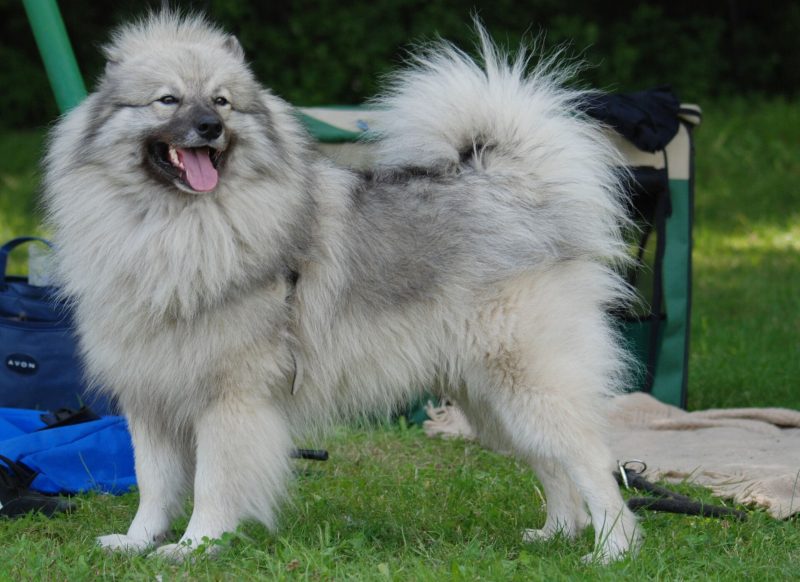
The Keeshond (pronounced kayz-hond, plural Keeshonden) is a medium-sized Dutch spitz with a plush silver-and-black coat, a fox-like face and dark "spectacle" markings that make it look permanently delighted to see you. It was bred as a companion and watchdog on canal barges rather than as a hunter, and it shows: the Kees is people-oriented, playful, good with children and happy to make friends with the neighbors' dog. It barks to announce visitors but has no real guarding edge.
At 35 to 45 pounds it fits a house or a larger apartment, and its exercise needs are moderate. The trade-offs are a coat that sheds in dramatic seasonal waves, a voice it enjoys using and a strong dislike of being left alone. Lifespan is a healthy 12 to 15 years. If you want a cheerful, affectionate family dog that wants in on everything and can live with the hair, the Keeshond is a good match.
History & Origin
The Keeshond is the Dutch form of the wolf-gray spitz that has lived across northern Europe for centuries; in Germany the same dog is the Wolfsspitz, and the FCI still classes it as a variety of the German Spitz. In the Netherlands of the 1600s and 1700s it rode on the river barges and watched over farms and small boats, earning the English nickname Dutch Barge Dog. In the 1780s it became the emblem of the Patriot faction opposing the House of Orange; the party's leader, Cornelis de Gyselaer, was nicknamed Kees, and his dog gave the breed its name. When the Orangists prevailed, the Patriot's dog fell out of fashion and the breed dwindled.
Revival came in the early 1900s. Mrs. Wingfield-Digby brought barge dogs from Holland to England before World War I, Baroness van Hardenbroek founded the Dutch club in 1924 and an English club followed in 1926. Carl Hinderer brought German-bred Wolfsspitz to the United States in 1923 and persuaded the AKC to register the breed in 1930; the Keeshond Club of America formed in 1935. The Kees is today regarded as the national dog of the Netherlands.
Appearance
A Keeshond is a compact, square spitz with a fox-like head, small pointed ears and a plumed tail that curls tightly over the back. Males stand 17 to 19 inches at the shoulder, females 16 to 18, and both weigh 35 to 45 pounds. The expression is the breed's trademark: dark almond eyes framed by a fine black line running from the outer corner toward the ear, with lighter shading around it, which fanciers call spectacles. Without them the face looks wrong to a breed judge.
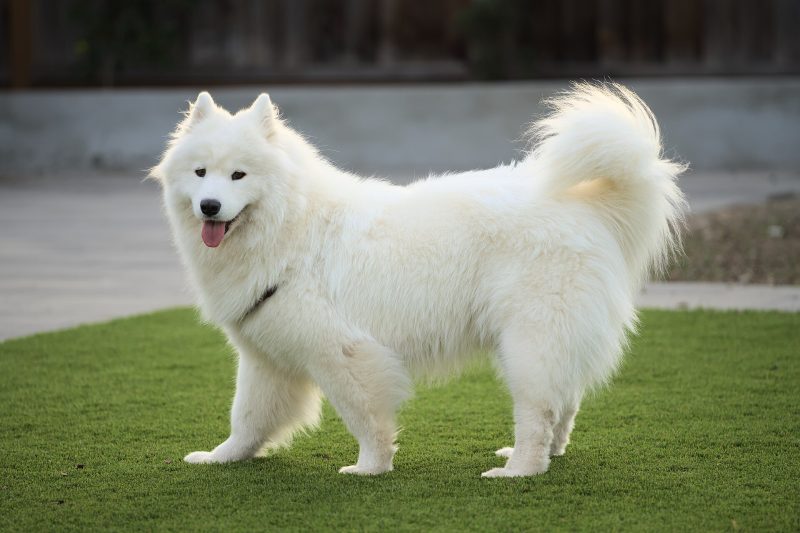
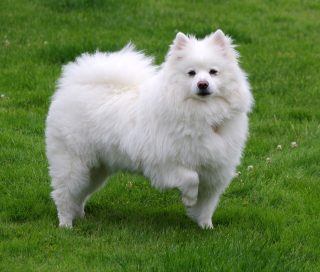
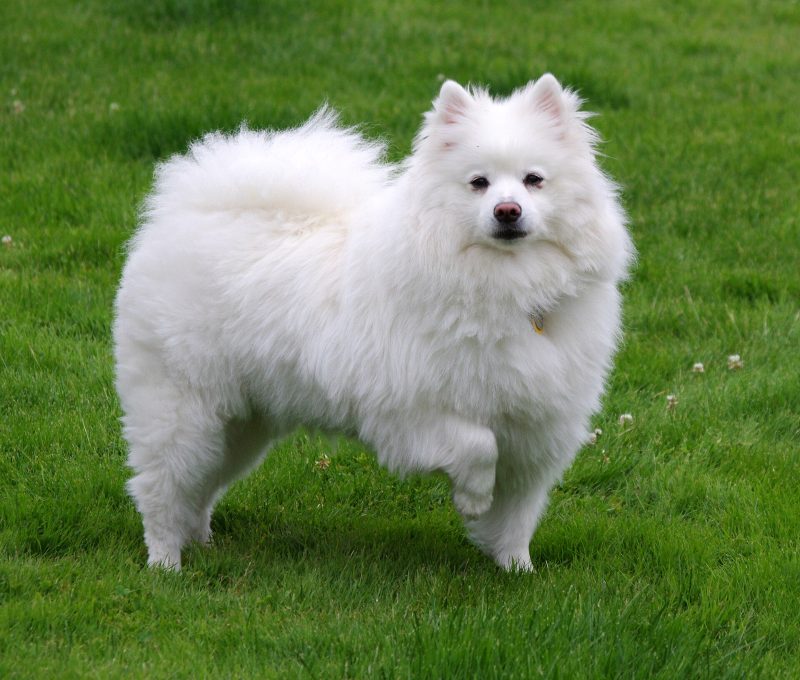
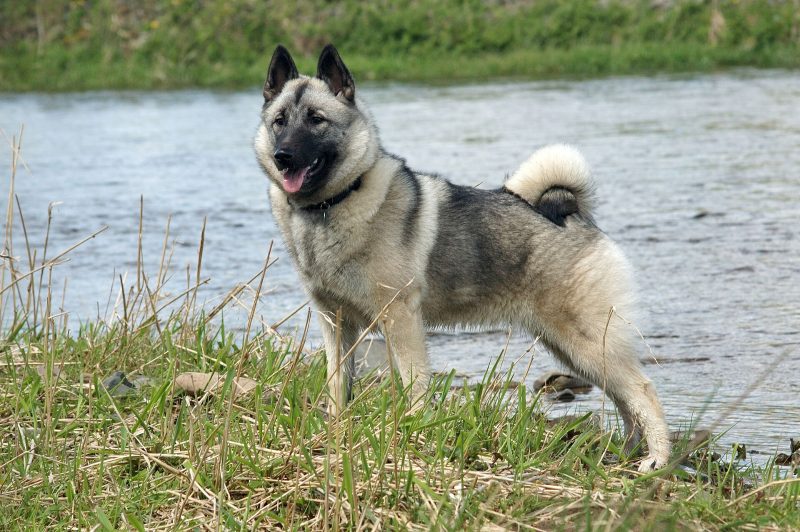
The double coat stands off the body over a thick, pale undercoat, with a dense ruff around the neck that is heavier on males, feathering on the legs and a richly plumed tail. The color is a shaded mixture of gray, black and cream with black-tipped guard hairs, a dark mask and lighter legs and feet. Look-alikes include the larger, pale Samoyed, the white American Eskimo Dog and the Norwegian Elkhound, which is gray but has a shorter coat and no spectacles. A German Spitz Mittel is simply a smaller version of the same type.
Temperament & Personality
Keeshonden were bred to live with families on cramped boats, and they are among the most companionable of the spitz breeds. A Kees wants to be in the room where the people are, follows you from kitchen to couch and greets friends with a whole-body wiggle and a wide grin. The breed is gentle and patient with children, usually friendly with other dogs and fine with cats it has grown up with. Strangers get an announcement bark and then, once introduced, a welcome.
Indoors a Keeshond is lively but not frantic; outdoors it is bouncy and curious. The watchfulness is real: a Kees hears everything and reports it, which makes a good alarm and a poor fit for thin-walled apartments unless barking is managed early. The breed is sensitive and reads moods well, which is why it has done so well as a therapy dog. Left alone for long days it becomes vocal and unhappy. A Kees is less independent than most northern breeds and generally easy to live with.
Exercise & Activity
A Keeshond needs around 45 to 60 minutes of activity a day, which can be a brisk walk or two, a game of fetch in the yard and a bit of training. The breed is agile and enjoys agility, rally and scent games as much as running, and mental work takes the edge off a day as well as mileage does. Most Keeshonden like other dogs and do well at dog parks, though they will chat the whole time.
The heavy coat makes heat the main limit. In summer, walk early or late, provide shade and water and watch for heavy panting; a Kees would rather lie on a cool floor than hike at noon. Cold is no problem and snow is a delight. Puppies should have free play rather than forced running until they are grown.
Boredom shows up as barking, digging and redecorating the garbage.
A short training session or a food puzzle at home counts toward the daily total.
Training
Keeshonden are bright, eager and quick to catch on, which makes them a pleasure to train as long as you keep it fun. They work for food, for toys and for your attention, and they shut down under harsh correction. Short, upbeat sessions with plenty of variety suit them; repetition bores them and a bored Kees starts inventing its own games. Early puppy classes, which the breed club recommends from about nine weeks, pay off in a confident, sociable adult.
The common sticking points are barking and jumping. Teach a quiet cue and reward silence early, since the alarm instinct is strong, and ask for a sit before greetings so visitors are not showered with fluff. Recall is usually good because a Kees does not like to lose sight of its people, but practice it anyway. House-training goes smoothly. Many Keeshonden go on to obedience, rally, agility and therapy work, and the breed has a long record as a therapy dog for children.
Grooming & Care
The Keeshond coat looks like far more work than it is, as long as you keep up with it. Brush once or twice a week with a pin brush and a slicker, lifting the hair in sections and brushing from the skin outward so the undercoat gets attention, not just the top. Pay extra attention behind the ears, under the ruff and in the pants, where mats form. Twice a year the undercoat drops in an impressive seasonal shed, and brushing becomes a daily job for a few weeks; a groomer's blow-out helps enormously.
Bathe every month or two, or when needed, and dry thoroughly. Never shave a Keeshond; the coat insulates against heat and the regrowth can be patchy. Trim the hair between the pads, tidy the feet and clip the nails every few weeks.
Clean the ears and check the eyes weekly.
Brush teeth several times a week; small and medium dogs are prone to tartar.
Keep a lint roller by the door in shedding season.
Health
Keeshonden are generally robust and live 12 to 15 years, but the breed has a few inherited conditions worth knowing about. The best known is primary hyperparathyroidism, an overactive parathyroid gland that raises blood calcium in middle-aged and older dogs; early signs are increased thirst and urination, and a DNA test identifies dogs that carry the mutation, so ask breeders for results. Hip and elbow dysplasia and luxating patellas occur, as they do in many breeds. Eye disease, including progressive retinal atrophy and cataracts, is screened by annual eye exams. Epilepsy occurs in the breed and has been the subject of genetic research, and congenital heart defects such as tetralogy of Fallot, diabetes mellitus and hypothyroidism are also reported.
The Keeshond Club of America's screening list for breeding stock is an OFA hip evaluation, an elbow evaluation, a patella check and an eye exam by a veterinary ophthalmologist, with the hyperparathyroidism DNA test, thyroid and cardiac testing as additional checks. The thick coat hides weight gain, so feel for the ribs regularly. If your Kees drinks and urinates more than usual, limps, or has a seizure, see your vet.
Nutrition
A Keeshond is an easy keeper, which is a polite way of saying it gains weight readily. Feed a complete, balanced food suited to the dog's life stage, measure every meal and adjust the amount to body condition rather than appetite; the coat makes a plump Kees look merely fluffy, so run your hands along the ribs every week. Two meals a day suits adults, and puppies do better on three or four smaller ones until about six months.
Treats are the usual culprit in weight creep, so count them in the daily total and use part of the kibble ration for training. Food puzzles slow a fast eater and double as entertainment. Seniors often need fewer calories and may benefit from a diet formulated for older dogs. Fresh water should always be available, especially in warm weather. If your Keeshond has a history of urinary or calcium problems in the family, ask your vet whether the diet needs adjusting.
Living With This Breed
A Keeshond adapts well to most homes. It is content in a house with a yard or in a larger apartment as long as it gets its daily walks and its people, and it does not need acreage. It copes with cold weather easily and struggles in heat, so air conditioning or a cool floor in summer matters. Keeshonden are excellent with children, generally good with other dogs and fine with cats they know. The watchdog bark is the main consideration in close quarters; teach a quiet cue early.
Time alone is the breed's weak spot. A Kees left for a full day becomes vocal and anxious, so a midday walk or daycare helps. Escape attempts are rare because the dog wants to be with you, not away from you. For sitters and daycare staff, the main things to know are the alarm barking, the shedding season and the heat sensitivity.
Expect a dog that wants to join every activity.
Keep summer walks short and bring water.
Brushing counts as bonding time.
Interesting Facts
The name comes from Kees, the nickname of Dutch Patriot leader Cornelis de Gyselaer, whose dog became the symbol of his party in the 1780s.
Dutch is tricky here: one dog is a Keeshond, two are Keeshonden, and the word is pronounced kayz-hond.
The dark lines and shading around the eyes are called spectacles, and a Keeshond without them is considered a serious fault in the show ring.
In most of the world the same dog is registered as the Wolfsspitz, a variety of the German Spitz.
Keeshonden have become well-known therapy dogs, including with children on the autism spectrum.
Nicknamed the Smiling Dutchman, the breed has an upturned mouth and a habit of grinning that owners swear is deliberate.
Breeds similar to the Keeshond
What Keeshond owners say
Real pets, photos, stories and tips from the SitterNation community — separate from the editorial guide above.
Log in to add your pet, photos, stories and tips.
Meet Keeshonds on SitterNation
No Keeshonds have joined yet. Owners can show their pet here from the pet's profile.
Keeshond community photos
No Keeshonds photos yet — be the first to share one.
Stories from Keeshond owners
No stories yet. What is life with yours really like?
Tips from Keeshond owners
No tips yet. One practical thing that works for you is enough.
Ask Keeshond owners
No questions yet. Ask the people who live with the breed.