Typical tendencies
Energy level
Always on; boredom turns into mischief.
Good with children
Fine with calm, respectful older kids.
Good with other dogs
Gets along with known, polite dogs.
Trainability
Picks up cues with steady, short sessions.
Shedding
A light scatter, easy to keep up with.
Apartment friendly
Settles well into smaller homes.
More traits
Exercise needs
Adaptability
Grooming needs
Drooling
Intelligence
Family friendly
Good with cats
Friendly with strangers
Sociability
Protectiveness
Prey drive
Overview
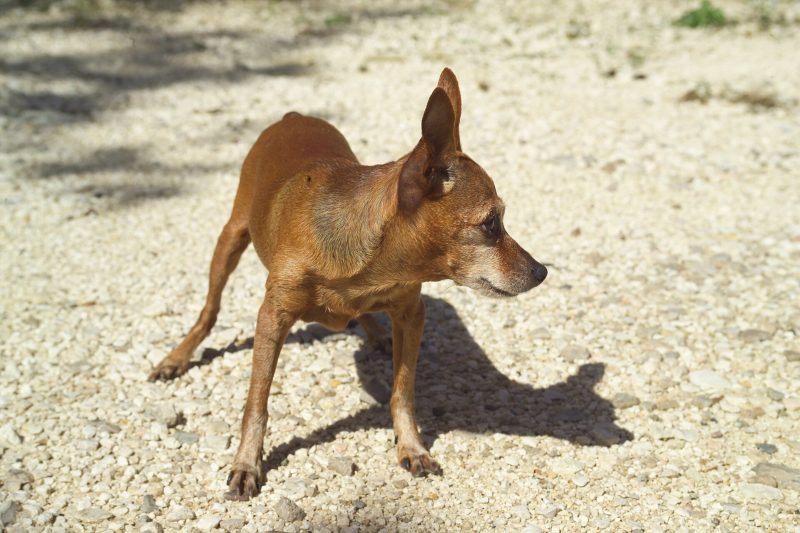
The Miniature Pinscher is a tiny dog with an oversized opinion of itself: a fearless, high-stepping German ratter that struts through life as if it owned every room. Min Pins weigh 8 to 10 pounds yet carry the confidence of a guard dog, which makes them entertaining, loyal and very watchful companions for owners who enjoy a clever, busy little dog and do not want a lap ornament. They suit apartments and houses alike as long as they get daily play and walks, and they bond closely with their people.
They are less suited to households with toddlers, who can hurt them or get nipped, to people who want a calm, easy beginner dog, or to anyone without a secure fence and doors that latch, because escape is a Min Pin specialty. Expect spirit, speed, barking and a long lifespan of 12 to 16 years.
History & Origin
Despite the nickname mini Doberman, the Miniature Pinscher is the older breed, and the two are at most distant cousins through Germany's old smooth-coated pinschers. The Min Pin was developed in Germany in the 1800s as a barnyard ratter, probably by crossing small German pinschers with the Dachshund and the Italian Greyhound, which explains its lean build and lively gait. Early fanciers called it the Reh Pinscher because its red coat and fine bones recalled the small roe deer of German forests. The German Pinscher-Schnauzer Club, formed in 1895, set the first standard, and the breed was exhibited at Stuttgart in 1900.
The first Min Pins arrived in the United States around 1919. The AKC registered the breed in 1925 as the Pinscher (Toy), the Miniature Pinscher Club of America formed in 1929, and the dog moved from the Terrier Group to the Toy Group in 1930. The name Miniature Pinscher became official in 1972, while the FCI lists it as the Zwergpinscher.
Appearance
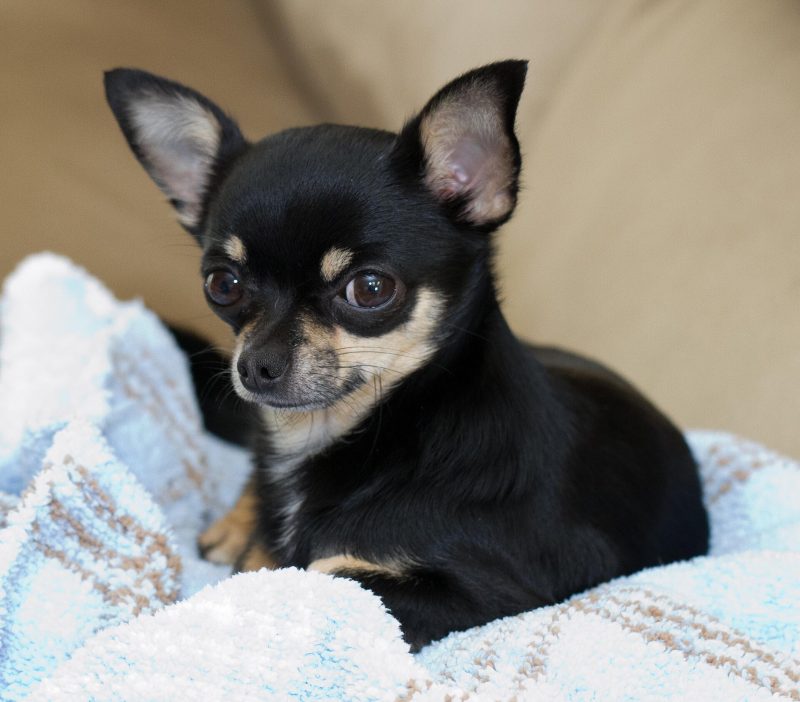
The Min Pin is a compact, square, smoothly muscled dog standing 10 to 12.5 inches at the shoulder and weighing 8 to 10 pounds. Its most distinctive feature is the hackney gait: in the trot the forelegs lift high and reach forward like a carriage horse, giving the breed its proud, prancing walk. The head is narrow and tapering with dark, slightly oval eyes and alert ears that may be cropped or left natural, in which case they stand erect or fold at the tip. The tail is often docked in the United States but is left full in most of Europe.
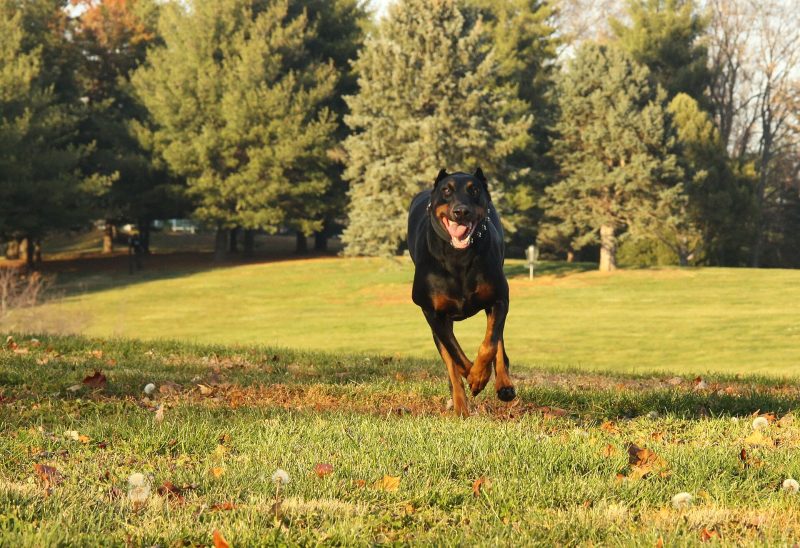
The coat is short, hard and close-lying with no undercoat, so it gleams when the dog is healthy. Colors are solid red, stag red (red with black-tipped hairs), black with rust markings and chocolate with rust. Next to a Doberman it is a toy, not a miniature; a Manchester Terrier is similar in color but has a longer head and lacks the hackney action.
Temperament & Personality
Min Pins are curious, fearless and perpetually busy. Indoors they investigate everything, race from window to window and burrow under blankets when they finally stop; outdoors they patrol, chase and announce every passerby. They are deeply attached to their people and can be affectionate cuddlers on their own terms, but many are one-person or one-family dogs that are suspicious of strangers and quick to bark. The watchdog streak is real, and so is a willingness to take on dogs ten times their size, which can get them hurt.
With children they do best in homes with older kids who understand that a 9-pound dog is not a toy; rough handling may earn a snap. They can live with other dogs and cats when raised together, though a strong prey drive makes rodents, birds and other small pets risky housemates. Independent thinking and a short attention span mean they need engaged owners.
Exercise & Activity
A Min Pin needs around 30 to 45 minutes of activity a day, but it burns energy in bursts, so several short play sessions plus a walk or two suit it better than one long hike. Fetch down a hallway, tug, hide-and-seek with treats and a fenced yard to sprint in all work well. Trick training and food puzzles matter because this is a clever, easily bored dog, and the breed does surprisingly well in agility, rally and barn hunt. The thin single coat gives almost no insulation, so Min Pins shiver in cold weather and need a sweater and shorter outings in winter; they also dislike rain. Supervise every moment outdoors. They dig under fences, squeeze through gaps and bolt through open doors after squirrels.
Two walks plus indoor play most days
Harness and leash always; recall is unreliable around prey
Boredom shows as barking, shredding and relentless door-dashing
Training
Min Pins learn quickly but lose interest just as quickly, so keep sessions short, upbeat and rewarding. Food works, play works, and a bored or nagged Min Pin simply walks off. Housetraining is the breed's best-known sticking point: tiny bladders, dislike of cold wet grass and plain stubbornness combine to make accidents common well into the first year, so stick to a tight schedule, reward outdoor success and consider an indoor option for bad weather. Barking is the second challenge; teach a quiet cue early and reward calm behavior at windows. Socialize puppies thoroughly with people, dogs and handling, because their natural suspicion grows without it. Resist the temptation to carry the dog everywhere or excuse bad manners because it is small; a Min Pin that learns to guard laps and snap will do so for 15 years. A reliable recall and a solid crate habit make life safer for an escape artist.
Grooming & Care
This is one of the easiest coats in dogdom. A quick going-over with a soft brush or grooming mitt once a week lifts dead hair and keeps the coat shiny, and shedding is light year-round with a slight uptick in spring and fall. Baths are rarely needed; a wipe with a damp cloth handles most dirt, and frequent bathing dries the skin. Beyond the coat, pay attention to the parts people forget. Trim nails every two to three weeks, since they grow fast and click on floors. Check ears weekly and clean them gently when dirty. Toy breeds are prone to dental disease, so brush teeth several times a week and ask your vet about professional cleanings. In winter a coat or sweater is part of the grooming kit, because this thin-skinned dog gets cold fast. No professional grooming is required.
Health
Min Pins are generally sturdy and typically live 12 to 16 years, among the longest spans of any breed. The parent club lists patellar luxation, Legg-Calve-Perthes disease of the hip, cervical disc disease and other intervertebral disc problems, epilepsy, thyroid disease, heart defects and inherited eye conditions, including progressive retinal atrophy and cataracts, as its current concerns. A rare metabolic disorder, mucopolysaccharidosis VI, has a DNA test. Because the breed is tiny, puppies can suffer low blood sugar if they go too long without eating, and dental disease is common in adults.
The breed club's recommended screening for breeding dogs is an OFA patella evaluation; many breeders add eye exams by a veterinary ophthalmologist, cardiac exams and the MPS VI test. Ask your vet to check the knees at each visit, and seek help promptly for limping, neck pain, seizures or sudden vision changes.
Nutrition
A Min Pin eats only a small amount, so quality matters and so does measuring. Choose a complete, balanced food appropriate for the dog's life stage; small-breed formulas have kibble sized for tiny mouths and a calorie density that suits a fast metabolism. Feed puppies three or four small meals a day to keep blood sugar steady, and adults two measured meals rather than free-feeding. A couple of extra treats a day is a significant share of calories at this size, so count them, and keep an eye on weight, since a plump Min Pin loses its elegant outline and puts strain on its knees. Watch for food-guarding, which is common in confident small dogs, and feed separately from other pets. Ask your vet about dental-friendly diets if tartar builds quickly, and before giving any supplement.
Living With This Breed
Min Pins are superb apartment dogs in terms of size and exercise, with one caveat: they bark. Thin walls and a watchful dog are a poor mix without training. They adore warmth, pile into blankets and beds and dislike cold, wet climates. They can manage a few hours alone but become noisy or destructive if left all day, and they are happiest in the thick of family life. Older children are fine companions; toddlers are not. Multi-pet homes work when the Min Pin is raised with the others and no small prey animals are involved.
Doors and gates must latch; a sitter should never leave one ajar
Use a harness, and keep the dog leashed outside the fence
Provide a sweater and a warm bed in winter
Tell a sitter or daycare that the dog may bluster at big dogs and needs protecting from itself
Interesting Facts
Fanciers call the breed the King of Toys, a title it earns by acting like royalty.
The Min Pin is not a shrunken Doberman; it predates the Doberman, which Louis Dobermann developed around 1890.
The high-stepping hackney gait is named after the Hackney carriage horse, bred for the same showy trot.
The breed's early German name, Reh Pinscher, compared it to the small roe deer of European forests.
Only a couple of dozen Min Pins were registered in the United States in 1941; by the late 1990s the AKC was registering more than 20,000 a year.
Min Pins are champion burrowers and will tunnel under any blanket, towel or laundry pile they can find.
Breeds similar to the Miniature Pinscher
What Miniature Pinscher owners say
Real pets, photos, stories and tips from the SitterNation community — separate from the editorial guide above.
Log in to add your pet, photos, stories and tips.
Meet Miniature Pinschers on SitterNation
No Miniature Pinschers have joined yet. Owners can show their pet here from the pet's profile.
Miniature Pinscher community photos
No Miniature Pinschers photos yet — be the first to share one.
Stories from Miniature Pinscher owners
No stories yet. What is life with yours really like?
Tips from Miniature Pinscher owners
No tips yet. One practical thing that works for you is enough.
Ask Miniature Pinscher owners
No questions yet. Ask the people who live with the breed.