Typical tendencies
Energy level
Always on; boredom turns into mischief.
Good with children
Patient with kids when well supervised.
Good with other dogs
Gets along with known, polite dogs.
Trainability
Lives for the lesson; a trainer's dream.
Shedding
Noticeable, with heavier seasonal blows.
Apartment friendly
Can manage in a flat with plenty of outings.
More traits
Exercise needs
Adaptability
Grooming needs
Drooling
Intelligence
Family friendly
Good with cats
Friendly with strangers
Sociability
Protectiveness
Prey drive
Overview
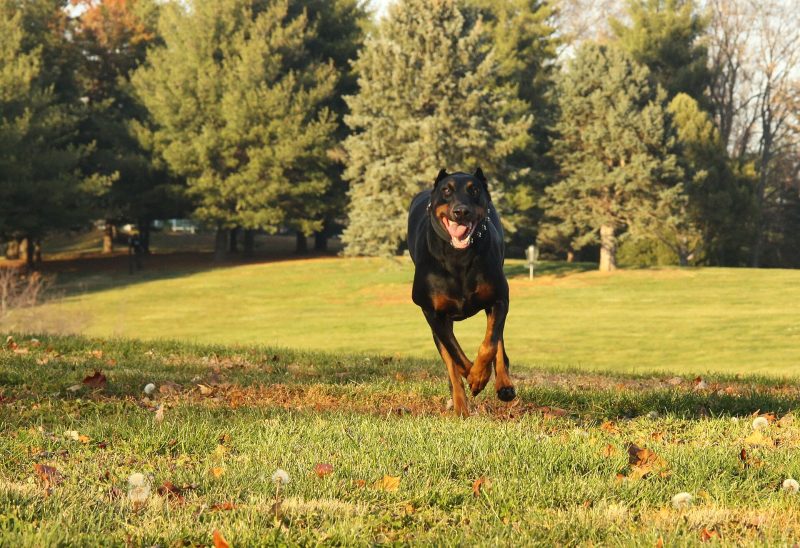
The Doberman Pinscher is a sleek, powerful working dog with a brilliant mind and a deep need to be near its people. Created in Germany in the 1890s as a personal protection dog, the modern Doberman is far softer than its reputation: affectionate, sensitive, playful and so attached to its family that owners call it a velcro dog.
It suits experienced, active owners who enjoy training, can provide an hour or two of exercise a day and want a dog that is both companion and deterrent. It is not a good choice for first-time owners who want a casual pet, for homes where the dog will be alone all day or for anyone unwilling to invest in cardiac screening, because heart disease is a serious problem in the breed. Raised well, a Doberman is loyal, obedient and surprisingly gentle.
History & Origin
The breed takes its name from Karl Friedrich Louis Dobermann of Apolda, in the German state of Thuringia, who collected taxes, ran the local dog pound and worked as a night watchman in the 1880s and early 1890s. He wanted a medium-large dog that was fearless, alert and intimidating enough to accompany him on his rounds, and he assembled it from the dogs available to him. The exact recipe is lost, but the German Pinscher, Rottweiler, Weimaraner and later the Manchester Terrier and Greyhound are usually credited.
Dobermann died in 1894; Otto Goeller refined the breed, founded the first club in 1899 and helped write the standard. The AKC registered its first Doberman in 1908 and the Doberman Pinscher Club of America formed in 1921. In the Second World War the US Marine Corps adopted the breed as its war dog, and a memorial on Guam honors the Dobermans killed there. In 1949 Germany dropped Pinscher from the name, so the FCI calls the breed simply the Dobermann.
Appearance
The Doberman is a square, elegant, compactly muscled dog that looks like an athlete in a tailored suit. Males stand 26 to 28 inches and weigh 75 to 100 pounds; females 24 to 26 inches and 60 to 90 pounds. The head is a long blunt wedge with a flat skull, almond eyes and a determined expression. Ears are cropped and carried erect in the United States where legal, and natural ears hang neatly along the cheek; tails are docked short or left long and whip-like.
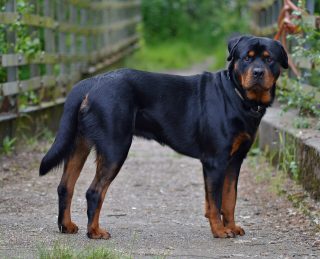
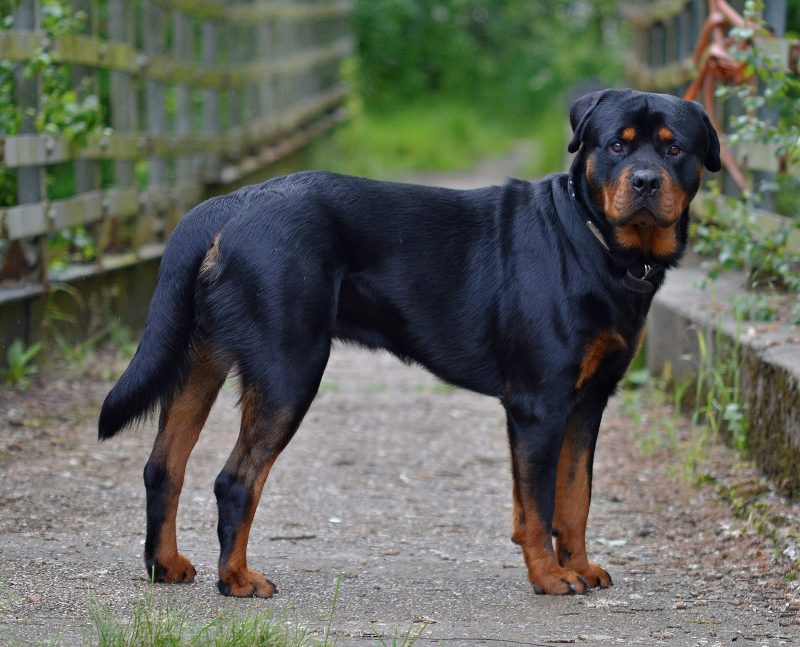
The neck is arched, the chest deep and the tuck-up pronounced, and the gait is a long, free trot. The coat is short, smooth and close, in black, red, blue or fawn, each with sharply defined rust markings above the eyes, on the muzzle, throat, chest, legs and under the tail. The Rottweiler is heavier and broader with a different head; the German Pinscher is a smaller, lighter version; the Beauceron is a French herding breed with double dewclaws.
Temperament & Personality
A well-bred Doberman is confident, alert, intelligent and deeply bonded to its family. It wants to be in the same room, preferably touching, and often leans against the people it loves. With strangers it is watchful and reserved rather than hostile, assessing before accepting, and it will place itself between its owner and anything it considers a threat without needing to be taught. Protection is instinctive; aggression is a fault.
Dobermans are playful and silly at home, sensitive to mood and tone, and prone to anxiety if left alone or treated harshly. They are usually good with children in their own family when raised with them, though their size and energy call for supervision with small kids. Same-sex dog aggression occurs in some lines, and cats and small animals may trigger chase. Energy stays high into middle age. Poorly socialized or poorly bred dogs can be fearful or sharp, which is why breeder choice and early socialization matter so much.
Exercise & Activity
Dobermans need one to two hours of exercise a day, and they need it to include both speed and thought. Long walks are the baseline; add running, hiking, fetch, swimming or bike rides, plus daily training or a dog sport such as obedience, agility, protection sport, nose work or tracking. A tired Doberman is calm and affectionate; an under-exercised one paces, chews, barks and may develop obsessive habits like flank sucking.
Puppies should grow up on free play and short walks rather than forced running to protect their joints. The thin coat and lean body make the breed sensitive to cold, so provide a coat below freezing and never expect a Doberman to live outdoors; heat is tolerated moderately with water and shade. Secure fencing is essential, both because the breed can jump and because loose Dobermans alarm people.
1 to 2 hours daily including running and training
A dog sport or job suits the breed
Coat in winter; indoors always
Training
Dobermans rank among the most trainable dogs in the world and were bred to work closely with a handler, so they learn fast, retain well and enjoy the process. They are also sensitive and quick to notice inconsistency, which means they respond beautifully to clear, reward-based training and poorly to intimidation. Start the day the puppy comes home with manners, crate training and gentle handling.
Socialization is critical and must be broad and positive, because the breed's natural suspicion needs to be balanced by confidence in ordinary people and places. Teach impulse control early; an adult Doberman that jumps up, pulls or rushes doors is dangerous simply through size. Recall and a reliable down are essential. Avoid protection training unless you are working with an experienced trainer in a sport context; the instinct is already there. Many Dobermans excel in obedience, agility, rally, tracking and as service and therapy dogs.
Grooming & Care
The Doberman's short coat is about as low maintenance as dogs get. A weekly going-over with a rubber grooming mitt removes loose hair and leaves the coat gleaming, and a bath every couple of months or when dirty is enough. Shedding is moderate and year round; the short hairs are noticeable on light furniture. Blue and fawn dogs sometimes develop color dilution alopecia, a thinning coat with flaky skin, which your vet can help manage.
Natural ears should be checked weekly and cleaned if waxy; cropped ears need posting care during healing, which the breeder or vet will explain. Nails grow fast and click on floors within a couple of weeks, so trim or grind regularly. Brush teeth several times a week. Wipe the face and check between the toes after muddy walks. Dobermans are naturally clean dogs with little odor.
Weekly mitt, occasional bath
Frequent nail trims
Watch skin on blues and fawns
Health
Health screening is the most important factor in choosing a Doberman. Dilated cardiomyopathy, a weakening of the heart muscle that can cause sudden death or heart failure, affects a large share of the breed, usually in middle age; two gene variants are associated with it and DNA tests exist, but the standard of care is an annual echocardiogram and 24-hour Holter monitor from around two years, since early disease has no outward signs. Von Willebrand disease, an inherited bleeding disorder, is common and identified by DNA test, which matters before any surgery.
Hypothyroidism, hip dysplasia and inherited eye disease are covered by the parent club's recommended thyroid, hip and eye evaluations. Wobbler syndrome, a compression of the spinal cord in the neck, causes an unsteady gait in middle-aged dogs. The breed also sees chronic active hepatitis, bloat, a congenital deafness and balance disorder called DINGS, and cancers. Lifespan averages 10 to 12 years. Ask your vet about cardiac screening even in a healthy-looking dog.
Nutrition
Dobermans are lean, deep-chested athletes and should be fed as such. Puppies grow quickly and belong on a large-breed growth formula that keeps calcium balanced and growth steady, fed three times a day until about six months; rapid growth can worsen joint problems. Adults do well on two measured meals of a complete food matched to their workload, and you should always be able to see the outline of the last ribs and a clear waist.
Bloat is a risk in this body type, so avoid heavy exercise an hour before and after meals, discourage gulping and ask your vet whether a preventive gastropexy is worthwhile. Dogs with heart disease, liver disease or hypothyroidism will need specific diets or supplements as part of their treatment; follow your vet's plan rather than online advice. Picky eating is common in the breed and usually improves with routine. Keep fresh water available after exercise.
Living With This Breed
A Doberman needs a home where it can live indoors as part of the family, with a securely fenced yard for daily sprints and owners who are home a good deal. Apartments can work for dedicated runners, but the breed's size, voice and need for company make a house easier. It is a thin-coated dog that must sleep inside. Dobermans are excellent with their own children when raised with them and can live with cats they know, but introductions to new animals need care.
Time alone should be built up gradually and kept to a few hours; this is a breed prone to separation distress. Some landlords and insurers restrict the breed. A sitter should be confident with large dogs, know the house rules the dog expects, provide a real run, understand any heart medication schedule and never leave gates open; a Doberman will guard a sitter's car as readily as its own home.
Indoor family dog with secure fencing
Check rental and insurance rules
Confident handler, consistent routine
Interesting Facts
Louis Dobermann ran the Apolda dog pound, which gave him access to a wide range of dogs to build his ideal guardian.
Marine Corps Dobermans served as scouts and messengers in the Pacific in the Second World War, and the Always Faithful memorial on Guam lists the 25 dogs who died liberating the island.
A Doberman named Ch. Rancho Dobe's Storm won Best in Show at Westminster in both 1952 and 1953.
The breed topped US popularity charts in the late 1970s, reaching second place in AKC registrations in 1977.
Dobermans have played film and television heavies for decades, from the bank-robbing dogs of The Doberman Gang onward, which did little for their reputation as family dogs.
In most of Europe ear cropping and tail docking are banned, so the Dobermann you see there has folded ears and a long, whippy tail.
Breeds similar to the Doberman Pinscher
What Doberman Pinscher owners say
Real pets, photos, stories and tips from the SitterNation community — separate from the editorial guide above.
Log in to add your pet, photos, stories and tips.
Meet Doberman Pinschers on SitterNation
No Doberman Pinschers have joined yet. Owners can show their pet here from the pet's profile.
Doberman Pinscher community photos
No Doberman Pinschers photos yet — be the first to share one.
Stories from Doberman Pinscher owners
No stories yet. What is life with yours really like?
Tips from Doberman Pinscher owners
No tips yet. One practical thing that works for you is enough.
Ask Doberman Pinscher owners
No questions yet. Ask the people who live with the breed.