Typical tendencies
Energy level
Needs a real outlet most days.
Good with children
A famously patient playmate for kids.
Good with other dogs
Loves every dog at the park.
Trainability
Lives for the lesson; a trainer's dream.
Shedding
A light scatter, easy to keep up with.
Apartment friendly
A natural fit for city living.
More traits
Exercise needs
Adaptability
Grooming needs
Drooling
Intelligence
Family friendly
Good with cats
Friendly with strangers
Sociability
Protectiveness
Prey drive
Overview
The Cockapoo is a Cocker Spaniel crossed with a Poodle, usually a Miniature or Toy, and it has been around long enough to be the grandparent of the designer-dog trend. It is not a recognized breed and has no standard that breeders must follow, so size, coat and character vary, but the typical Cockapoo is a small, cheerful, cuddly dog that adores people, learns quickly and fits into almost any home. Its coat sheds lightly but needs regular grooming, and it is not a guaranteed answer for allergy sufferers.
The cross suits first-time owners, families, apartment dwellers and seniors who can give it a couple of walks a day and plenty of company. It is less suited to people out for long hours, because it bonds tightly and can fret alone, and to anyone unwilling to budget for a groomer. As with any cross, choosing a breeder who health-tests both parents, or a rescue that knows its dogs, matters more than the label.
History & Origin
Cocker Spaniels and Poodles were two of America's most popular dogs in the middle of the twentieth century, so crosses between them were inevitable. The first were probably accidents, but by the 1960s American breeders were pairing the two on purpose, aiming for a small companion with the spaniel's affectionate nature and the Poodle's low-shedding coat and sharp mind. The name Cockapoo was in use by then, decades before "doodle" entered the language, and the cross built a loyal following among people who found it an easy, lovable pet.
Unlike most designer crosses, the Cockapoo has had organized clubs for a generation: the Cockapoo Club of America formed in the late 1990s and the American Cockapoo Club in the 2000s, each publishing its own guidelines, and some breeders have worked toward multigenerational lines bred only Cockapoo to Cockapoo. In Britain the Cockapoo became one of the most popular dogs of the 2010s and 2020s. No major kennel club recognizes it, and the Cockapoo remains a cross rather than a breed.
Appearance
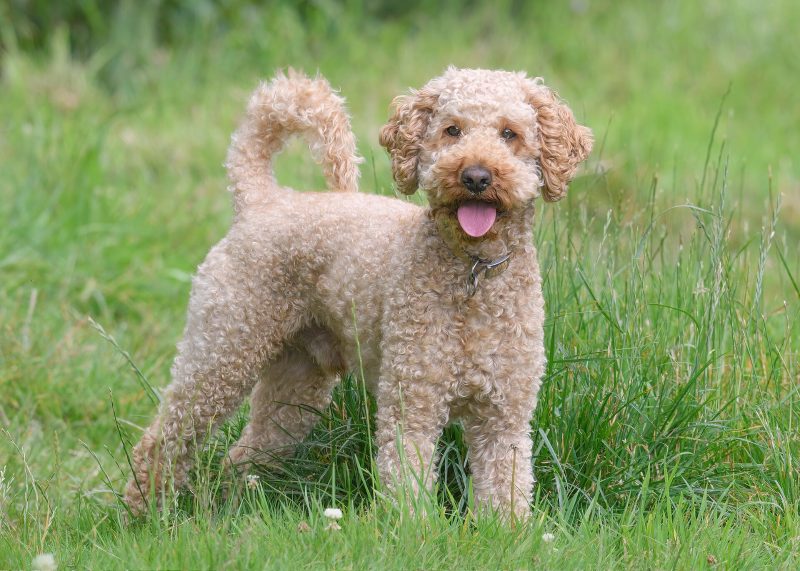
There is no standard, and size depends mostly on the Poodle parent. Most Cockapoos, from a Miniature Poodle, stand 11 to 14 inches and weigh 12 to 18 pounds; toys from a Toy Poodle are about 10 inches and 8 to 12 pounds, and maxis from a Standard Poodle 15 inches or more and 19 to 30 pounds. The build is compact and slightly longer than tall, with a rounded head, a moderately short muzzle, large dark eyes framed by soft eyebrows, and long, low-set, feathered ears from the spaniel side. The tail is usually left natural and carried gaily.
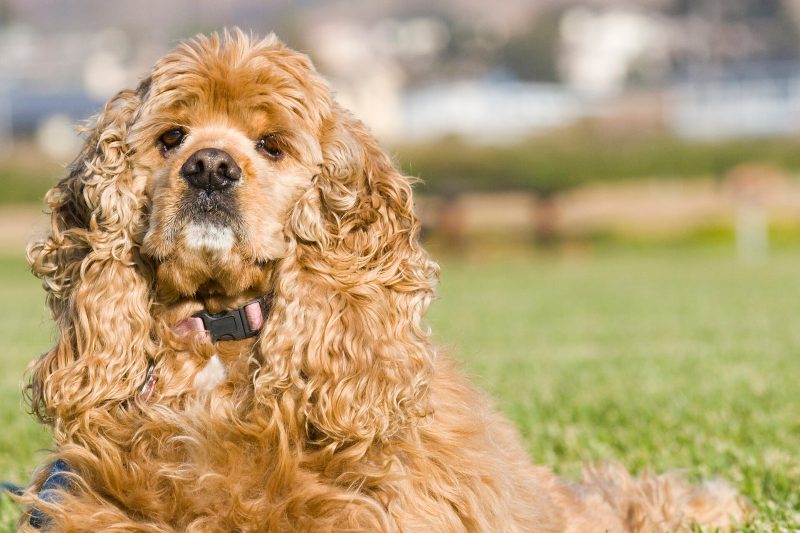
The coat ranges from loose, silky waves to tight curls, usually soft and medium-length, and lighter and silkier than a Poodle's. First crosses are commonly wavy; backcrosses to Poodle curl more; a minority inherit a straighter spaniel coat that sheds more. Colors include buff, apricot, red, cream, chocolate, black, sable and parti, often lightening with age. A Cavapoo is similar but has a shorter muzzle and rounder head from the Cavalier; a purebred Cocker has a flatter, silkier coat and a longer, more sculpted head.
Temperament & Personality
Cockapoos are sunny, affectionate dogs that assume everyone is a friend. The Cocker Spaniel contributes a soft, people-pleasing, slightly clingy nature and a love of lap time; the Poodle adds brightness, playfulness and a comic streak. The result is a dog that greets visitors with a wagging whole body, plays happily with children and other pets and follows its person from room to room. Energy is moderate: lively outdoors, calm indoors once exercised.
Variability shows up here as it does in coat. Some Cockapoos inherit the spaniel's sensitivity and can be anxious or reactive without early socialization, and a few are barkers. Separation anxiety is the most common behavior problem, because the cross is so attached. Prey drive is mild; a Cockapoo will chase a squirrel but usually come back. Watchdog ability is limited to an alert bark. With cats and other dogs they are generally easygoing, especially when raised together.
Exercise & Activity
A Cockapoo needs a moderate 30 to 60 minutes of exercise a day, scaled to its size and age: two walks plus a game of fetch in the yard or hallway covers most dogs, and a bigger Cockapoo from a Standard Poodle will want more. Both parent breeds are retrievers at heart, so fetch, hide-and-seek with toys and swimming are natural favorites. Short training sessions, puzzle feeders and scent games supply the mental work the Poodle side needs, and many Cockapoos enjoy agility and rally at the small-dog level.
They cope with most weather but should be kept out of midday heat in summer, since a curly coat holds warmth. A bored Cockapoo gets vocal, chews and may shadow you more anxiously; a tired one is a cuddly one.
30 to 60 minutes a day of walks and play
Fetch, swimming and scent games suit the cross
Daily short training for mental exercise
Training
Cockapoos are easy to train. They are food-motivated, eager to please and quick to understand, and they shine with reward-based methods, short sessions and lots of praise. Harsh corrections upset them and achieve nothing. Puppy classes are ideal for first-time owners and provide the socialization that keeps a Cockapoo confident around new people, dogs and sounds; make a point of handling paws, ears and face so grooming becomes routine.
The sticking points are typical of small, affectionate dogs. Housetraining takes consistency, because small bladders and a willingness to sneak off behind the sofa slow progress; a crate and a schedule help. Barking at the door and at passing dogs responds to a trained "quiet" cue. Teach the puppy to settle alone for short, gradually longer periods from the first week to head off separation anxiety. Recall is usually good but still deserves regular practice around distractions. Many Cockapoos go on to trick titles, therapy visits and agility.
Grooming & Care
Low-shedding does not mean low-maintenance. The Cockapoo's soft, wavy or curly coat tangles easily and mats close to the skin, especially behind the ears, under the collar and in the armpits. Brush thoroughly two or three times a week with a slicker and follow with a steel comb to the skin; daily is better during the adolescent coat change around 8 to 12 months. Most owners have the coat clipped by a professional groomer every 6 to 8 weeks, which keeps brushing manageable and the dog comfortable. Keep the hair around the eyes trimmed and wipe any tear staining daily.
The spaniel ears are the weak point: long, heavy and lined with hair, they trap moisture and wax and are prone to infection. Check them weekly, clean them when needed and dry them after baths or swims. Bathe about monthly, trim nails every three to four weeks and brush teeth daily; small dogs lose teeth early without it.
Brush and comb 2 to 3 times a week; clip every 6 to 8 weeks
Weekly ear checks; keep them dry
Daily tooth brushing
Health
Cockapoos are usually hardy and live about 13 to 16 years, but they inherit the vulnerabilities of both parents, and recent research found doodle-type crosses no healthier overall than purebreds, with more ear infections than their spaniel parents. Eyes are the main shared concern: progressive retinal atrophy, cataracts and glaucoma occur in both Cockers and Poodles, and a DNA test for the prcd form of PRA exists for both. Luxating patellas and hip dysplasia occur, as does Legg-Calve-Perthes disease in the smallest dogs. From the Cocker side come allergic skin disease, chronic ear infections, hypothyroidism and immune-mediated blood disorders; from the Poodle side come Addison's disease, sebaceous adenitis and epilepsy. Dental disease is common in all small dogs.
Ask a breeder for hip and patella evaluations, an ophthalmologist eye exam and DNA results for PRA-prcd on both parents, plus a cardiac check. For your own dog, keep it lean, keep the ears clean and dry, and ask your vet about any head-shaking, scratching, squinting, limping or skipping gait.
Nutrition
Feed a complete and balanced small-breed food for the right life stage: a puppy formula until about 12 months, then adult food in two measured meals, with toy-sized puppies fed three or four times a day to keep blood sugar steady. Both parent breeds love food, and Cocker Spaniels in particular gain weight easily, so weigh portions, go easy on treats and judge condition by feeling for ribs under the fluff rather than by eye. Obesity worsens knee problems and shortens lives in small dogs.
Treats should stay under a tenth of daily calories, and training rewards can come out of the daily ration. Some Cockapoos have food sensitivities that show as itchy skin or recurring ear trouble; if you suspect that, ask your vet before experimenting with diets or supplements. Smaller kibble suits small mouths, and dental chews or diets can help with tartar. Fresh water should always be available.
Living With This Breed
The Cockapoo is one of the most adaptable small dogs: equally at home in a city apartment, a suburban house or a farm, as long as it gets its walks and its people. It is friendly with children, other dogs and cats, generally quiet apart from alert barking, and small enough to travel easily. Its needs are company, grooming and moderate exercise; a Cockapoo left alone all day will be unhappy and may become noisy or destructive.
It handles most climates, with shade and water in heat and a coat kept at a sensible length. For a pet sitter or daycare, the essentials are: this dog wants to be with you, so expect a shadow; give two proper walks and some play; keep the ears dry after any water; do not skip brushing on a longer stay; and watch for anxiety signs such as pacing or whining if the owner is away, which a calm routine usually settles.
Apartment-friendly; adapts to almost any home
Needs company and moderate daily exercise
Plan for grooming every 6 to 8 weeks
Interesting Facts
The Cockapoo predates the Labradoodle by about thirty years and was being bred on purpose in the United States in the 1960s.
It has been one of Britain's most popular dogs for a decade, and in 2022 it was among the most expensive puppies sold there.
Breeders describe litters by generation: F1 is Cocker times Poodle, F1b is an F1 bred back to a Poodle, and F2 or multigen means Cockapoo to Cockapoo; none guarantees a particular coat.
A Cockapoo bred from an English Cocker Spaniel rather than an American one is sometimes called an English Cockapoo; in Australia the cross is a Spoodle.
No kennel club recognizes the Cockapoo, though two American clubs have written their own standards and a few breeders pursue multigenerational lines.
Studies measuring dog allergen in homes have found no evidence that Poodle crosses produce less of it, so meeting the actual puppy is the only allergy test that counts.

What Cockapoo owners say
Real pets, photos, stories and tips from the SitterNation community — separate from the editorial guide above.
Log in to add your pet, photos, stories and tips.
Meet Cockapoos on SitterNation
No Cockapoos have joined yet. Owners can show their pet here from the pet's profile.
Cockapoo community photos
No Cockapoos photos yet — be the first to share one.
Stories from Cockapoo owners
No stories yet. What is life with yours really like?
Tips from Cockapoo owners
No tips yet. One practical thing that works for you is enough.
Ask Cockapoo owners
No questions yet. Ask the people who live with the breed.