Typical tendencies
Energy level
Needs a real outlet most days.
Good with children
A famously patient playmate for kids.
Good with other dogs
Loves every dog at the park.
Trainability
Lives for the lesson; a trainer's dream.
Shedding
A light scatter, easy to keep up with.
Apartment friendly
Can manage in a flat with plenty of outings.
More traits
Exercise needs
Adaptability
Grooming needs
Drooling
Intelligence
Family friendly
Good with cats
Friendly with strangers
Sociability
Protectiveness
Prey drive
Overview
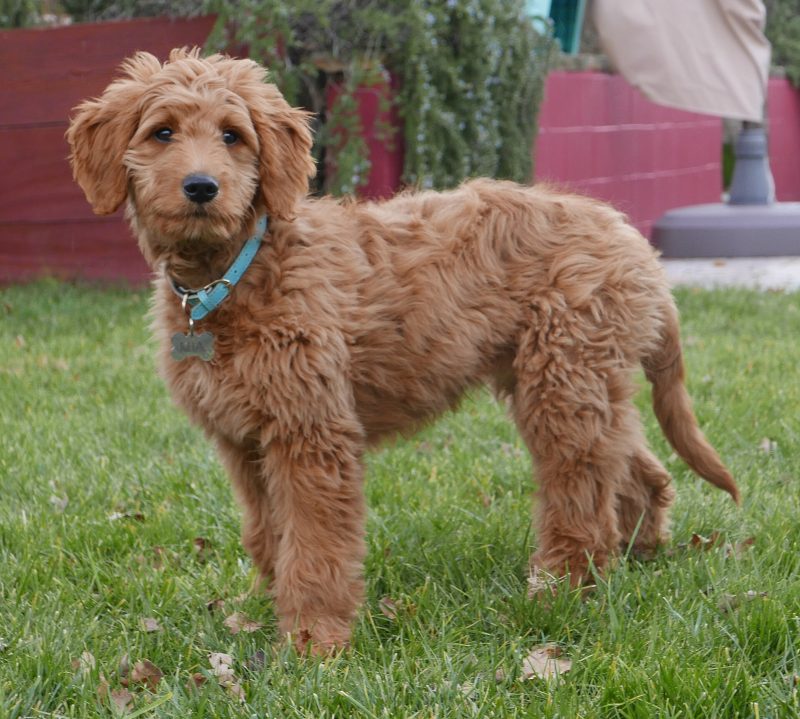
The Goldendoodle is a cross between a Golden Retriever and a Poodle, not a breed. It has no written standard that breeders must meet and no recognition from the AKC or any major kennel club, which is why two Goldendoodles can look like different dogs: one shaggy and straight-coated, the other tightly curled; one 25 pounds, the other 85. What most share is the outgoing, people-loving nature of both parents, a quick mind, a love of water and a coat that sheds less than a Golden's but needs far more work.
The cross suits active families and first-time owners who want a friendly, trainable, sociable dog and can commit to daily exercise and regular professional grooming. It is not a guaranteed allergy solution, not a low-maintenance dog and not a cheap one. Choosing a breeder who health-tests both parents, or adopting through a doodle rescue, matters more here than with almost any purebred, because nothing but the breeder's care guarantees what you get.
History & Origin
Golden Retrievers and Poodles were almost certainly crossed by accident and on purpose long before anyone named the result; the writer Monica Dickens is credited with a deliberate litter in 1969. The modern Goldendoodle, though, is a product of the 1990s. After the Labradoodle drew attention as a possible low-shedding guide dog, breeders in the United States and Australia began pairing Golden Retrievers with Standard Poodles in the same spirit, hoping to combine the Golden's gentle, biddable character with the Poodle's coat and intelligence. The name simply swapped "golden" into "Labradoodle," and the "doodle" suffix went on to name a whole family of Poodle crosses.
The cross spread quickly through the 2000s, helped by its appeal as a family and therapy dog, and smaller versions followed as breeders used Miniature Poodles. Breeder groups formed, notably the Goldendoodle Association of North America in the United States, which publishes its own guidelines and health-testing tiers. No major kennel club recognizes the Goldendoodle as a breed, and there is no closed stud book, so its history is still being written litter by litter.
Appearance
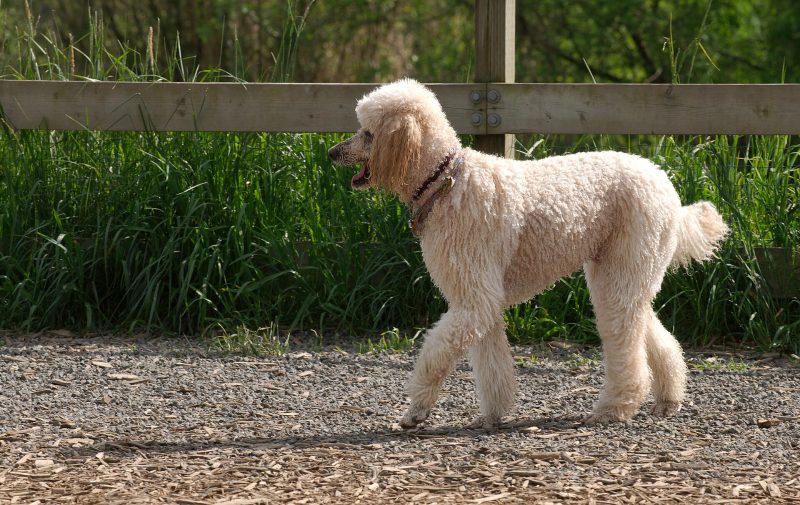
There is no standard, so expect a range. The Goldendoodle Association of North America sorts them by height at the withers: a standard stands over 21 inches and typically weighs 51 pounds or more, a medium 17 to 21 inches and 36 to 50 pounds, a mini 14 to 17 inches and 26 to 35 pounds, and a petite mini under 14 inches and 25 pounds or less. The build is usually athletic and moderately long-legged, somewhere between the solid Golden and the elegant Poodle, with a broad head, dark eyes, a dark or liver nose and drop ears. The expression is soft and friendly.
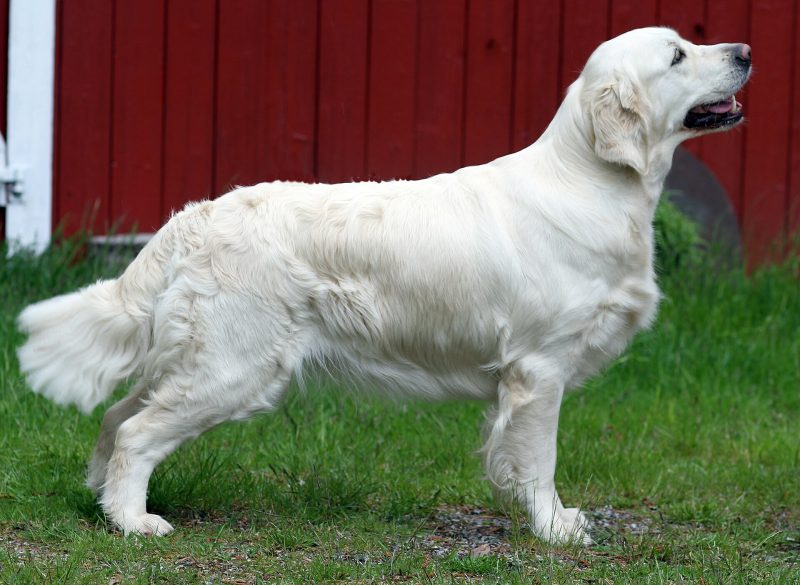
The coat is the real variable. First-generation dogs are usually wavy or shaggy; backcrosses to Poodle are curlier; a minority inherit the Golden's flat, shedding coat without the beard and eyebrows, which breeders call an "improper" or unfurnished coat. Colors run through cream, apricot, gold and red to chocolate, black and parti-color, often lightening with age. Compared with a Labradoodle, a Goldendoodle tends to have a softer, longer coat and warmer coloring; next to a purebred Golden it is leggier, curlier and bearded.
Temperament & Personality
Both parent breeds are friendly, people-oriented working dogs, and most Goldendoodles follow suit: affectionate, outgoing, eager to join in and happy to meet strangers, children and other animals. They are rarely good guard dogs beyond a welcoming bark. The Golden contributes a soft, patient, tolerant streak; the Poodle adds alertness, playfulness and a quick, sometimes mischievous intelligence. Energy is moderate to high, with a bouncy, goofy adolescence that can last two years.
Temperament does vary. Some dogs lean to the Poodle's sensitivity and can be more reactive or anxious with poor socialization, and a recent survey found doodles were not calmer than their parent breeds on average. Many Goldendoodles are strongly attached and dislike being alone, which shows up as whining, chewing or barking. Retrieving instincts run deep, so expect a dog that carries shoes and greets you with a toy. With other pets they are usually easygoing, though a cat-chasing streak occurs in some lines.
Exercise & Activity
A standard Goldendoodle needs a solid 60 minutes or more of activity a day, and a bored one will tell you. Mix brisk walks with running, fetch, swimming and hiking; both parent breeds are water dogs, and most Goldendoodles are delighted by a lake, a pool or a muddy puddle. Dog sports suit them: agility, dock diving, rally, scent work and obedience all channel their energy and their need to work with a person. Mini and medium doodles need somewhat less but are still active dogs.
Puppies should get free play and short walks rather than forced running until their joints mature, since both parents carry hip and elbow dysplasia. In heat, a thick coat and enthusiasm are a risky combination, so exercise in cooler hours and offer water. Under-exercised Goldendoodles chew, dig, counter-surf and bounce off visitors.
60 or more minutes a day for standards; moderate for minis
Swimming and fetch are natural outlets
Mental work (training, puzzles, scent games) every day
Training
Goldendoodles are among the easiest dogs to train, combining the Golden's wish to please with the Poodle's quick learning. They respond to food, toys and praise, pick up basic manners in weeks and often go on to therapy, service and assistance work. Positive methods are the only sensible route; both parent breeds are sensitive, and harsh handling produces a worried, shut-down dog. Keep sessions short, fun and varied, because a Poodle brain gets bored with repetition.
The usual sticking points are jumping up, mouthing in puppyhood, pulling on leash when excited and a recall that evaporates near water or other dogs. Teach an "off," a settle on a mat and a solid recall early, and practice calm greetings. Socialize puppies widely before 16 weeks, especially to handling and grooming, because this dog will spend a lot of its life on a grooming table. Build alone time gradually to prevent separation anxiety. Training classes are a good investment for first-time owners.
Grooming & Care
This is the chore people underestimate. A Goldendoodle's coat may shed less than a Golden's, but it mats easily, especially the soft wavy and curly types, and mats form close to the skin where they hurt. Brush thoroughly every two or three days with a slicker brush and finish with a steel comb to the skin, concentrating on the ears, armpits, collar area, belly and tail. The adolescent coat change at around 8 to 12 months is the danger period when puppy fluff felts overnight. Plan on professional grooming every 6 to 8 weeks for a trim and a thorough bath and blow-dry; a badly matted dog will have to be shaved short, which is not a failing of the groomer.
Check and clean the drop ears weekly, because hair and moisture inside them invite infection. Trim nails monthly, brush teeth several times a week and keep the hair around the eyes trimmed so the dog can see.
Brush and comb to the skin 2 to 3 times a week
Professional groom every 6 to 8 weeks
Weekly ear checks; eyes kept clear of hair
Health
A cross inherits the risks of both parents, not just their strengths, and research on doodles has not found them healthier than purebreds overall. Lifespan is typically 10 to 15 years, longer for smaller dogs. From the Golden side come hip and elbow dysplasia, subaortic stenosis, eye conditions such as progressive retinal atrophy and pigmentary uveitis, ichthyosis, hypothyroidism and the breed's well-known cancer burden. From the Poodle side come hip dysplasia, Addison's disease, sebaceous adenitis, von Willebrand disease, PRA and, in minis, luxating patellas. Standard-sized doodles are deep-chested and can bloat. Ear infections and allergic skin disease are common in the cross itself.
Ask a breeder for OFA or PennHIP hips, OFA elbows, a cardiologist heart exam, an ophthalmologist eye exam and DNA panels covering PRA, ichthyosis and von Willebrand disease on both parents; the Goldendoodle Association of North America grades its breeders by exactly these tests. For your own dog, keep it lean, know the signs of bloat and ask your vet about any limping, lethargy, skin trouble or vision change.
Nutrition
Feed according to expected adult size. A standard Goldendoodle puppy belongs on a large-breed puppy formula until roughly 12 to 15 months so that bones grow at a measured pace; medium and mini puppies do fine on a regular puppy food. Adults need a complete, balanced diet in two measured meals a day; both parent breeds are enthusiastic eaters, and a fluffy coat hides weight gain, so check body condition by feel every few weeks. Treats should stay under a tenth of daily calories, and training rewards can come out of the daily ration.
For larger, deep-chested doodles, take bloat precautions: split meals, use a slow feeder, avoid hard exercise around mealtimes. Some Goldendoodles have sensitive stomachs or food-related skin and ear problems; if you suspect that, ask your vet before switching foods or adding supplements rather than cycling through brands yourself. Fresh water should always be available, and the beard will need a wipe after drinking.
Living With This Breed
A standard Goldendoodle does best in a house with a fenced yard and an active family; the smaller versions adapt well to apartments with enough daily exercise. The cross is sociable, generally quiet and good-natured with children, other dogs and visitors, which has made it a favorite family and therapy dog. The trade-offs are grooming time, grooming cost and the need for company; this is a dog that wants to be with its people and can become anxious when left for long workdays.
It copes with most climates, needing shade and water in heat and enjoying snow. Expect muddy paws, a wet beard and a dog that greets everyone with a toy. For a pet sitter or daycare, note that most doodles are friendly and easy, but confirm the individual's comfort with other dogs, give a real walk or play session, keep ears dry after swimming, and never let a coat go unbrushed for a long stay.
House and yard ideal for standards; minis suit apartments
Sociable and gentle; struggles with long days alone
Budget for grooming every 6 to 8 weeks
Interesting Facts
The name is a mash-up of Golden Retriever and Labradoodle, and the "doodle" suffix now labels dozens of Poodle crosses.
Breeders describe dogs by generation: F1 is Golden times Poodle, F1b is an F1 bred back to a Poodle, and multigen means doodle to doodle. The letters predict coat type only loosely.
No kennel club recognizes the Goldendoodle, so there is no breed standard and no closed registry; the cross can be as varied as its breeders choose.
Goldendoodles have worked as guide dogs, therapy dogs and even detection dogs sniffing out peanut traces for allergic children.
Studies measuring the main dog allergen in homes found no evidence that doodles or Poodles produce less of it than other dogs.
During the pandemic puppy boom, Goldendoodle prices in Australia reportedly climbed to several times their earlier level.
What Goldendoodle owners say
Real pets, photos, stories and tips from the SitterNation community — separate from the editorial guide above.
Log in to add your pet, photos, stories and tips.
Meet Goldendoodles on SitterNation
No Goldendoodles have joined yet. Owners can show their pet here from the pet's profile.
Goldendoodle community photos
No Goldendoodles photos yet — be the first to share one.
Stories from Goldendoodle owners
No stories yet. What is life with yours really like?
Tips from Goldendoodle owners
No tips yet. One practical thing that works for you is enough.
Ask Goldendoodle owners
No questions yet. Ask the people who live with the breed.