Typical tendencies
Energy level
Always on; boredom turns into mischief.
Good with children
A famously patient playmate for kids.
Good with other dogs
Loves every dog at the park.
Trainability
Lives for the lesson; a trainer's dream.
Shedding
A light scatter, easy to keep up with.
Apartment friendly
Can manage in a flat with plenty of outings.
More traits
Exercise needs
Adaptability
Grooming needs
Drooling
Intelligence
Family friendly
Good with cats
Friendly with strangers
Sociability
Protectiveness
Prey drive
Overview
The Labradoodle is the cross that started the doodle phenomenon: a Labrador Retriever bred to a Poodle, first tried in Australia as a guide-dog experiment and now one of the most popular companion dogs in the world. It is not a recognized breed, has no enforceable standard, and varies a great deal from litter to litter in size, coat and temperament. What a good one offers is a friendly, energetic, clever dog that loves water, people and games and sheds less than a Lab.
It suits active households that can give it an hour or more of exercise a day, enjoy training and will pay for regular grooming. It is not a hypoallergenic dog, not a low-energy dog and not a dog for people who are out all day. Because there is no breed club policing quality, the breeder or rescue you choose is the single biggest factor in the dog you get; health testing on both parents is essential.
History & Origin
The Labradoodle has a precise origin story. In the late 1980s Wally Conron, breeding manager for the Royal Guide Dogs Association of Australia in Victoria, was asked to produce a guide dog for a blind woman in Hawaii whose husband was allergic to dogs. After trying Poodles without success, he bred a Labrador to a Standard Poodle in 1989; of the three puppies, one, named Sultan, had a coat the family tolerated and the temperament for guide work, and went on to serve for a decade. Conron coined the name to make the puppies easier to place, and the idea spread far beyond guide-dog programs. He later said he regretted opening the door to careless breeding.
Through the 1990s Australian breeders, notably the Tegan Park and Rutland Manor kennels, worked toward a consistent multigenerational type, adding Cocker Spaniel and Irish Water Spaniel blood; their dogs became the Australian Labradoodle, which has its own associations and guidelines but still no kennel-club recognition. In North America the simpler Lab-to-Poodle cross took off in the 2000s and remains the common form.
Appearance
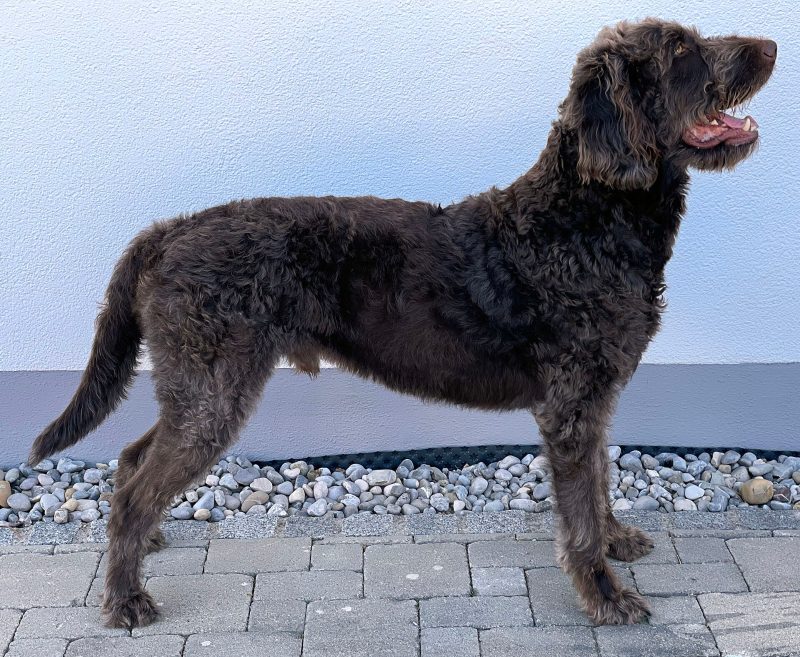
Without a standard, size and look follow the parents. A standard Labradoodle from a Standard Poodle typically stands 21 to 24 inches and weighs 45 to 75 pounds, with males larger; mediums from smaller Poodles are typically 17 to 20 inches and 30 to 45 pounds, and miniatures 14 to 16 inches and 15 to 30 pounds. The build is usually athletic and a little rangy, with a moderately broad head, dark expressive eyes, a long muzzle and drop ears. The Lab contributes substance and an otter-ish tail; the Poodle adds leg and a lighter frame.
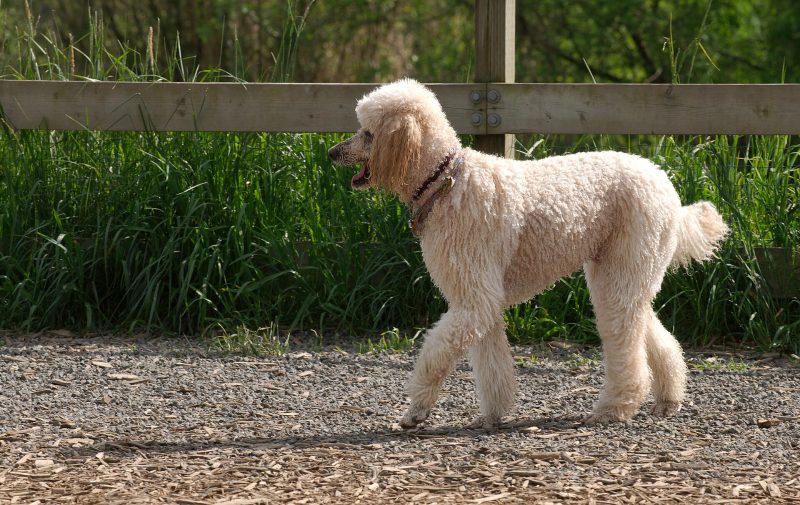
Coats come in three rough types: hair, which is straight or slightly wavy, closest to a Lab and the most likely to shed; fleece, soft and wavy to loosely curled; and wool, tightly curled like a Poodle. First crosses are usually hair or fleece; backcrosses and multigens are more often fleece or wool. Colors include cream, gold, apricot, red, chocolate, café, black and parti. A Goldendoodle usually has a softer, longer, lighter-colored coat; a purebred Lab is heavier, smooth-coated and sheds year-round.
Temperament & Personality
Both parent breeds are friendly, biddable and energetic, and most Labradoodles are outgoing, playful and enthusiastic about everyone they meet, from the mail carrier to the neighbor's cat. The Lab brings a bombproof, food-driven good nature and a love of retrieving; the Poodle brings quickness, sensitivity and a mischievous sense of humor. Energy is high, especially in the first two or three years, and many Labradoodles stay puppyish well into adulthood.
Variability applies here too. Some dogs inherit more of the Poodle's sensitivity and can be reactive or anxious without good socialization, and surveys of doodle owners report more unwanted behaviors, not fewer, than in the parent breeds. Separation anxiety is common because the cross bonds strongly. They are generally excellent with children and other dogs and manageable with cats they know. Watchdog ability is limited to an alert bark followed by a wagging tail.
Exercise & Activity
Plan on at least 60 minutes of real exercise a day for a standard Labradoodle, and more for young adults: brisk walks are a start, but what they really want is running, fetch, swimming and hiking. Both parents are water retrievers, so a Labradoodle in a lake is a Labradoodle at its happiest. Dog sports, including agility, dock diving, flyball, rally and scent work, give the cross the purposeful work it craves, and many excel as therapy and assistance dogs. Minis need less mileage but the same daily commitment.
Protect growing joints: no forced running or jumping before 12 to 18 months. In hot weather exercise early and late and offer water; a thick fleece or wool coat traps heat. A bored Labradoodle is destructive, mouthy and loud, and most behavior problems in the cross trace back to too little exercise and mental work.
60 or more minutes a day, with swimming and fetch where possible
Daily mental work: training, puzzles, scent games
No hard running on young joints
Training
Labradoodles are quick, willing students that respond to food, toys and praise, and they can learn a huge repertoire of cues. The Lab's food motivation makes reward training easy; the Poodle's sensitivity means harsh corrections backfire. Keep sessions short and upbeat, vary the exercises and end on a success. First-time owners do well with a good puppy class, which also covers the all-important socialization window before 16 weeks.
Common sticking points are mouthing and chewing in puppyhood, jumping on visitors, pulling toward other dogs and a recall that fails around water or play. Teach a settle on a mat, an "off" and a rock-solid recall early, and practice calm greetings. Because grooming will be a lifelong routine, condition puppies to brushing, nail trims and the sound of clippers from the start. Build alone time gradually. Labradoodles continue to serve as guide, hearing and therapy dogs, which says a lot about how trainable a well-bred one can be.
Grooming & Care
Whatever the coat type, a Labradoodle needs more grooming than a Lab. Hair coats shed moderately and want a weekly brush; fleece and wool coats shed little but mat readily and need a thorough brush and comb to the skin every two or three days, with extra care around the ears, neck, armpits and hindquarters. The coat change at 8 to 12 months is when puppy fluff felts into the adult coat, and many first-time owners meet a groomer's clippers that way. Plan on professional grooming every 6 to 8 weeks for a trim, bath and blow-dry, and keep the hair around the eyes short.
The drop ears are infection-prone, especially in a dog that swims, so check and clean them weekly and dry them after water. Trim nails monthly and brush teeth several times a week. Bathe between groomer visits only when the dog is dirty.
Brush and comb to the skin every 2 to 3 days for fleece and wool coats
Professional groom every 6 to 8 weeks
Dry and check ears after swimming
Health
Labradoodles typically live 12 to 15 years and inherit the risks of both parents; research on doodles has not shown them to be healthier than purebreds, and they get more ear infections than Labs do. From the Labrador come hip and elbow dysplasia, exercise-induced collapse, progressive retinal atrophy, centronuclear myopathy and a strong tendency to obesity. From the Poodle come hip dysplasia, Addison's disease, sebaceous adenitis, von Willebrand disease, PRA, epilepsy and, in smaller dogs, luxating patellas. The Australian Labradoodle Association also notes hip and elbow dysplasia as common in its lines, and UK surveys have found multifocal retinal dysplasia in a small percentage of Labradoodles. Large, deep-chested dogs can bloat.
Ask a breeder for OFA or PennHIP hips, OFA elbows, an ophthalmologist eye exam and DNA results for PRA-prcd, EIC, CNM and von Willebrand disease on both parents, plus a cardiac exam. For your own dog, keep it lean, learn the signs of bloat and ask your vet about any collapse after exercise, limping, head-shaking or vision change.
Nutrition
Feed by expected adult size: a large-breed puppy formula for standard Labradoodles until 12 to 15 months, a regular puppy food for minis, then a complete adult diet in two measured meals a day. The Labrador parent passes on a famous appetite, and a gene variant linked to overeating in Labs can show up in the cross, so measure every meal, weigh the dog regularly and feel for ribs under the coat. Obesity shortens lives and worsens joint disease in this cross more than almost anything else.
Keep treats under a tenth of daily calories and use kibble for training. For larger dogs, take bloat precautions: split meals, use a slow feeder and avoid hard exercise around mealtimes. If skin, ear or stomach problems recur, ask your vet about diet before changing foods on your own. Fresh water should always be available, and a swimmer's water bowl will need refilling often.
Living With This Breed
A standard Labradoodle is happiest in a house with a secure yard and an active family; a medium or mini can live in an apartment if exercised properly. The cross is sociable and generally gentle with children and other dogs, and it is a popular family and therapy dog, but it needs company and does poorly when left alone for long days. Expect a wet, muddy dog after every walk near water and an enthusiastic greeter at the door.
It tolerates cold well and heat moderately. Fencing should be secure, since a bored Labradoodle will explore. For a pet sitter or daycare, confirm the individual's history with other dogs and whether it has any separation issues, give a proper walk or play session rather than a quick potty trip, keep ears dry after swimming, brush a fleece or wool coat during any stay longer than a few days, and watch the food bowl closely; this dog will eat whatever it can reach.
House and yard for standards; minis suit apartments
Needs company and daily exercise
Grooming every 6 to 8 weeks is part of the cost
Interesting Facts
The first Labradoodle litter, bred in 1989 for Australia's guide-dog program, produced Sultan, who worked as a guide dog in Hawaii for ten years.
Wally Conron, who bred that litter, has called the Labradoodle his life's regret because of the poorly bred dogs that followed.
The Australian Labradoodle is a separate multigenerational line that includes Cocker Spaniel and Irish Water Spaniel ancestry; it still has no kennel-club recognition.
Breeders describe coats as hair, fleece or wool and dogs as F1, F1b or multigen, but neither term reliably predicts how much a puppy will shed.
A 2012 study measuring the main dog allergen in homes found Labradoodle households were no lower than others, undermining the hypoallergenic label.
The word "doodle" grew out of this cross's name and now labels dozens of Poodle mixes from Bernedoodles to Sheepadoodles.
What Labradoodle owners say
Real pets, photos, stories and tips from the SitterNation community — separate from the editorial guide above.
Log in to add your pet, photos, stories and tips.
Meet Labradoodles on SitterNation
No Labradoodles have joined yet. Owners can show their pet here from the pet's profile.
Labradoodle community photos
No Labradoodles photos yet — be the first to share one.
Stories from Labradoodle owners
No stories yet. What is life with yours really like?
Tips from Labradoodle owners
No tips yet. One practical thing that works for you is enough.
Ask Labradoodle owners
No questions yet. Ask the people who live with the breed.