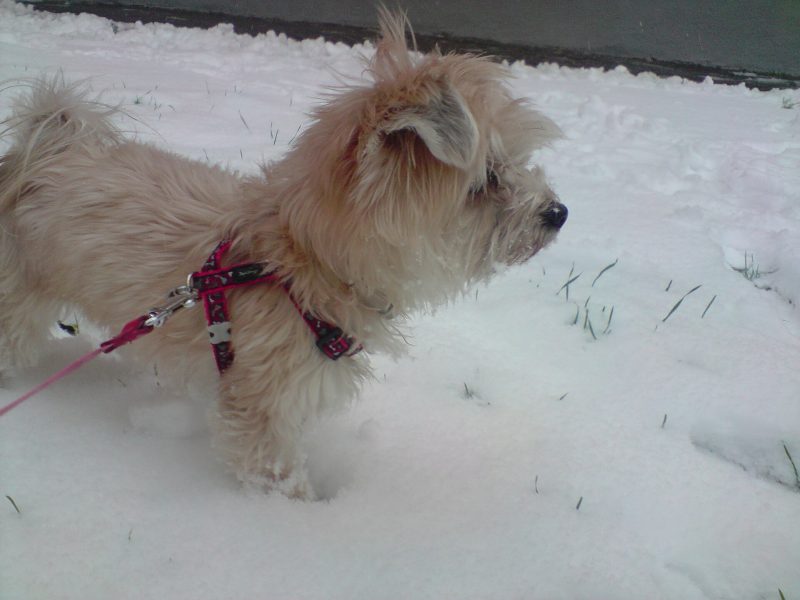
Typical tendencies
Energy level
Needs a real outlet most days.
Good with children
Fine with calm, respectful older kids.
Good with other dogs
Gets along with known, polite dogs.
Trainability
Picks up cues with steady, short sessions.
Shedding
Barely a hair on the sofa.
Apartment friendly
A natural fit for city living.
More traits
Exercise needs
Adaptability
Grooming needs
Drooling
Intelligence
Family friendly
Good with cats
Friendly with strangers
Sociability
Protectiveness
Prey drive
Overview
The Morkie is a cross between a Maltese and a Yorkshire Terrier: a toy-sized dog with a long, silky coat, a bright face and a personality several sizes too big for its body. It is a hybrid, not a recognized breed, and no two look quite alike. What they share is a love of laps, a need to be near their people, and enough terrier spark to keep life interesting.
It suits apartment dwellers, singles, couples, retirees and anyone who wants a portable companion that travels well and costs little to feed. It is less suited to families with toddlers, because a four-pound dog is easily hurt and may defend itself, and to households where the dog would spend long days alone. Owners should budget for daily brushing or regular trims and for the dental care every toy dog needs. Get those right, and a Morkie is an affectionate, funny, long-lived little friend.
History & Origin
The Maltese is among the oldest companion breeds, a white lapdog associated with the island of Malta and described by writers in classical Greece and Rome; it has been registered in the United States since the 1880s. The Yorkshire Terrier is a Victorian creation from the mills and mines of northern England, where weavers' small terriers were bred to catch rats before the breed shrank into a fashionable lapdog. A dog named Huddersfield Ben, born in 1865, is credited as the father of the breed, which the American Kennel Club recognized in 1885.
Crossing the two became fashionable in the United States in the 1990s, alongside other small designer mixes, with the aim of combining the Maltese's soft temperament and white coat with the Yorkie's color and confidence. The result was named the Morkie, also sold as the Morkshire Terrier, Yorktese or Malkie. No major kennel club recognizes it, there is no breed standard, and it can be registered only with hybrid or designer registries. Most Morkies today come from small breeders or from rescue.
Appearance
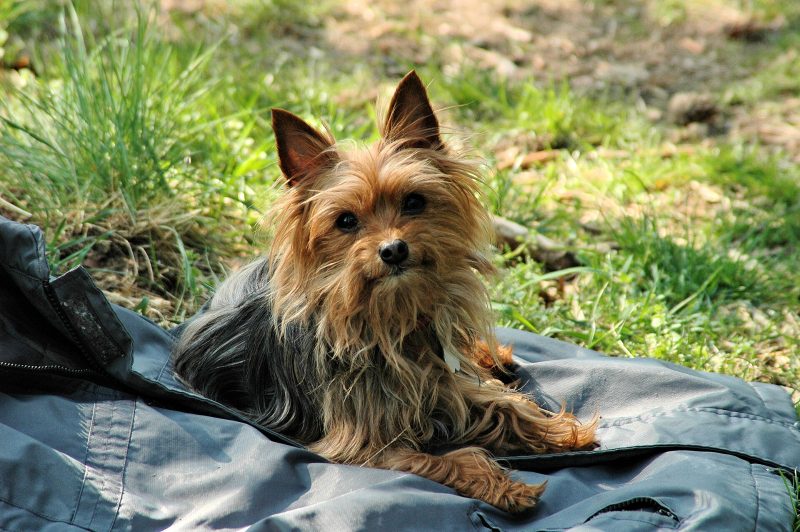
A Morkie is a tiny dog with a long, fine, single coat that feels more like hair than fur. Most stand under ten inches and weigh between four and ten pounds. The head is small and rounded with a short muzzle, dark round eyes and ears that may stand up like a Yorkie's, fold over like a Maltese's, or do one of each. The tail is carried high and plumed.
Color is the great variable. First-generation puppies range from Yorkie black-and-tan through gold and cream to Maltese white, and many are parti-colored with patches. Black puppies often lighten to silver or tan as the coat matures, so the adult color can surprise you. The coat is straight to slightly wavy and grows continuously; left long it falls to the floor, while most pets wear a short puppy clip. Look-alikes include the Yorkie-Poo, which has a curlier coat, and the Maltipoo, which is usually solid-colored and wavier.
Temperament & Personality
Morkies are affectionate, playful and endlessly curious, with a terrier's confidence wrapped in a lapdog's need for contact. They bond tightly to one or two people and follow them from room to room, happiest tucked under an arm. Indoors they have bursts of energy, racing laps around the sofa, then sleep for hours. Outdoors they are bold to the point of foolishness and may square up to dogs ten times their size.
They make excellent alarm dogs, announcing every delivery, and left untrained they can become persistent barkers. With strangers they are usually friendly after a cautious first look. With gentle older children they thrive; with toddlers the risk of injury runs both ways. They tolerate other small dogs and cats they are raised with, though the Yorkie prey drive can show up around hamsters and birds. Their biggest weakness is separation: long days alone can produce anxiety, barking and house-soiling.
Exercise & Activity
A Morkie's exercise needs are modest in distance and high in frequency. Two short walks a day of fifteen to twenty minutes, plus indoor play, keep most of them fit and content. Because the dog is so small, a walk around the block is a real outing, and a game of fetch down a hallway counts as a run. Mental work matters just as much: a food puzzle or a few minutes of trick training settles a Morkie better than an extra mile.
Use a harness rather than a collar, since toy breeds are prone to tracheal collapse and pressure on the throat makes it worse. Keep sessions gentle for puppies, and discourage leaps from sofas and beds, which strain small knees.
Heat and cold: short coat clips mean a sweater in winter; avoid hot pavement in summer
Boredom shows as barking, chewing shoes, shredding paper and demanding attention
Good outlets: indoor agility, scent games, short sniffing walks
Training
Morkies are bright and quick to pick up tricks, but they combine Maltese sensitivity with terrier stubbornness, so the tone of training matters. Short, cheerful sessions with tiny food rewards work; harsh corrections produce a dog that shuts down or snaps. Because they are so easy to carry, many owners never teach basic manners, and the result is the yappy, nippy caricature of a toy dog. Treat yours as a real dog with rules.
House training is the classic sticking point. Small bladders, dislike of wet grass and owners who miss subtle signals all conspire against you. Take the puppy out often, reward success immediately, and consider an indoor pad as a backup for bad weather. Barking at noises is the other, and it responds to teaching a quiet cue and rewarding calm.
Socialize early with people, gentle dogs and handling of paws, ears and mouth, since brushing and tooth cleaning will be lifelong routines. Teach children to let the dog come to them.
Grooming & Care
Grooming is daily business. The single coat does not shed much, but it tangles easily and mats form behind the ears, under the collar and in the armpits. A pin brush followed by a metal comb every day keeps a long coat tidy; a short clip every six to eight weeks cuts the home work to a few minutes but still needs a weekly brush. Bathe every two to four weeks and dry fully.
The face needs attention of its own. Hair around the eyes should be trimmed or tied up, and light-colored Morkies show tear staining that a daily wipe keeps in check. Because the coat sheds so little it is often sold as hypoallergenic; no dog is, though some allergy sufferers do tolerate the cross.
Teeth: brush daily if you can, several times a week at least; toy breeds lose teeth early
Ears: check weekly for wax and pluck or trim excess hair as your groomer advises
Nails: trim every two to three weeks
Sanitary trim: keep the rear end short
Health
Both parent breeds share several problems, so a Morkie can inherit them from either side. Patellar luxation, a kneecap that slips out of its groove, is common in both; a vet can grade it by palpation, and OFA patella certification is the screen breeders use. Dental disease is almost universal in toy dogs, with crowded teeth and early tooth loss. Tracheal collapse, which shows as a honking cough, is a Yorkie trait; portosystemic shunt, an abnormal vessel that lets blood bypass the liver, affects both breeds and is usually detected young with a bile acid test. Patent ductus arteriosus, a heart defect, is more frequent in the Maltese, and hypoglycemia is a danger for tiny puppies that skip meals.
Later in life, mitral valve disease, cataracts and Legg-Calve-Perthes disease of the hip appear in the parent breeds. Ask a breeder for patella, cardiac and eye results on both parents. A healthy Morkie commonly lives 12 to 15 years. Coughing, limping, wobbliness after meals or sudden lethargy in a puppy all call for a prompt vet visit.
Nutrition
Feed a toy-breed puppy food in three or four small meals a day until at least six months; very small puppies can develop low blood sugar if they go too long without eating, so keep meals regular and watch for weakness or trembling. Adults do best on two meals, and tiny kibble sized for small mouths encourages chewing rather than gulping.
Morkies gain weight easily because every treat is large relative to a five-pound dog. Measure meals, count training rewards toward the daily ration, and feel for the waist weekly; extra pounds load the knees and the airway. Avoid table scraps, and ask your vet before adding supplements.
Dental health is tied to diet. Dry food and vet-approved chews help a little, but they are no substitute for brushing. Fresh water should always be available, and a bowl at floor level is fine; there is no bloat concern in a dog this size.
Living With This Breed
A Morkie is a natural apartment dog. It needs little space, is easy to carry, and is content with short walks and a warm lap. It copes with most climates as long as it is clipped sensibly and kept out of extremes; a sweater is not vanity in January.
It does less well with time alone. A few hours is fine; a full workday is lonely and often noisy for the neighbors, so arrange a midday visit, a sitter or daycare for small dogs. With children, insist on sitting-down cuddles and no carrying. With other pets it is usually fine, but a big boisterous dog can injure it in play.
Escape habits: low, but it can slip through fence gaps and under gates
Noise: a committed alarm barker unless taught otherwise
For sitters: use a harness, keep meals on schedule, brush daily, and expect a shadow
Daycare: choose a small-dog group; it will not enjoy a rowdy big-dog room
Interesting Facts
The Yorkshire Terrier's founding sire, Huddersfield Ben, lived only six years but is said to appear in the pedigree of nearly every Yorkie alive.
Maltese dogs were prized by Roman matrons and appear in Greek art; Aristotle mentioned small dogs from Malta more than two thousand years ago.
Morkie, Morkshire Terrier, Yorktese and Malkie are all names for the same cross; the one that stuck was the shortest.
Many black-and-tan Morkie puppies fade to silver or blond by their second birthday, so the adult color is a surprise.
Both parent breeds have a single coat with no undercoat, which is why the cross sheds so little and chills so quickly.
A Morkie's whole body can weigh less than a large house cat, yet owners regularly report it trying to pick fights with German Shepherds.


What Morkie owners say
Real pets, photos, stories and tips from the SitterNation community — separate from the editorial guide above.
Log in to add your pet, photos, stories and tips.
Meet Morkies on SitterNation
No Morkies have joined yet. Owners can show their pet here from the pet's profile.
Morkie community photos
No Morkies photos yet — be the first to share one.
Stories from Morkie owners
No stories yet. What is life with yours really like?
Tips from Morkie owners
No tips yet. One practical thing that works for you is enough.
Ask Morkie owners
No questions yet. Ask the people who live with the breed.