Typical tendencies
Energy level
Ready to go when you are, settles after.
Good with children
Fine with calm, respectful older kids.
Good with other dogs
Gets along with known, polite dogs.
Trainability
Picks up cues with steady, short sessions.
Shedding
Barely a hair on the sofa.
Apartment friendly
A natural fit for city living.
More traits
Exercise needs
Adaptability
Grooming needs
Drooling
Intelligence
Family friendly
Good with cats
Friendly with strangers
Sociability
Protectiveness
Prey drive
Overview
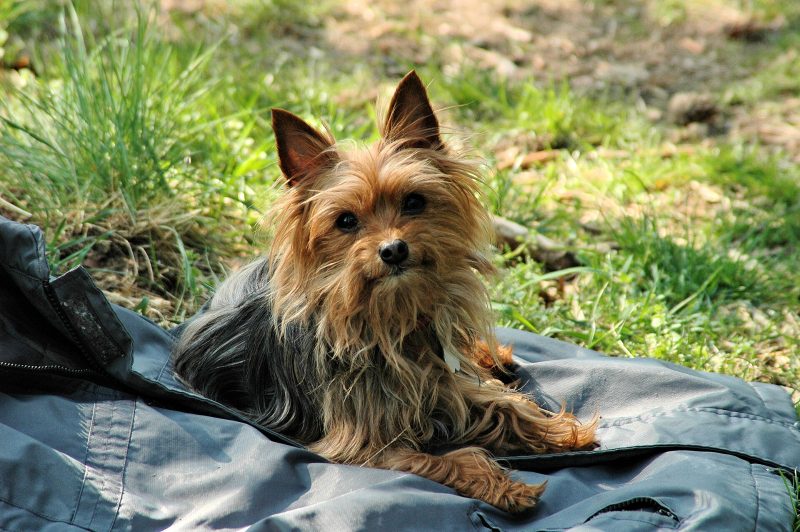
The Yorkshire Terrier is a toy dog with a terrier's heart. Weighing no more than seven pounds and wearing a silky steel-blue and tan coat that can sweep the floor, the Yorkie looks like a lapdog and often behaves like a bodyguard. It was bred to kill rats in Victorian mills, and the boldness, curiosity and voice that job required are all still there.
Yorkies suit apartment dwellers, seniors, singles and couples who want a portable, devoted companion that enjoys walks but does not need miles, and who are willing to spend time on coat care or pay a groomer. They are less ideal for families with toddlers, because they are fragile and do not tolerate rough handling, and for anyone who cannot abide barking. Expect a confident, affectionate and slightly self-important small dog that believes it is in charge.
History & Origin
The Yorkshire Terrier came out of the mills and mines of northern England in the mid-1800s. Scottish weavers moving south for work brought small terriers with them, including the now-extinct Paisley and Clydesdale types, and these were crossed with local Waterside and other English terriers to produce a compact ratter that could work in cramped spaces. Within a generation the dogs had shrunk and their coats had lengthened, and fashionable Victorian ladies adopted them as lapdogs.
A stud dog called Huddersfield Ben, born in 1865, won dozens of show prizes before his death in 1871 and appears behind nearly every Yorkie alive today. The breed was shown as the Broken-Haired Scotch Terrier until 1870, when a reporter suggested the name Yorkshire Terrier. Yorkies reached the United States in the 1870s and the AKC recognized the breed in 1885. Popularity rose sharply from the 1970s, and the Yorkie has sat near the top of the AKC's rankings for decades.
Appearance
A Yorkshire Terrier is a compact, well-proportioned toy standing 7 to 8 inches at the shoulder and weighing between 4 and 7 pounds under the breed standard, though some pets are larger. The head is small and flat on top, with a medium muzzle, dark sparkling eyes and small V-shaped ears carried erect. The body is short and level backed, and the carriage is upright and important.
The coat is the signature: a single layer of fine, straight, glossy hair with no undercoat, parted down the spine, traditionally grown to floor length for the show ring and topped with a bow. Puppies are born black and tan, and the body coat lightens to a dark steel blue by about two years while the head, chest and legs turn a rich golden tan. Most pet Yorkies wear a short puppy clip. The Silky Terrier is slightly larger with a wedge-shaped head; the Biewer Terrier is a tricolor offshoot with white.
Temperament & Personality
Yorkies are lively, inquisitive and brave to the point of recklessness. They are devoted to their people, often choosing a favorite, and like to be carried, cuddled and included. Strangers are announced with sharp barking and then inspected; some Yorkies warm up quickly, while others stay aloof without good early socialization.
The terrier background shows in a willingness to challenge much bigger dogs, a strong interest in chasing anything small and a tendency to guard toys or laps. Most live happily with other dogs and cats when raised with them, but careful introductions matter, both because the Yorkie may start trouble and because a large dog could hurt it by accident. With children they do best in homes with calm older kids. Indoors they are busy and playful; outdoors they trot confidently and want to investigate everything. Expect a dog with a big personality, plenty of opinions and a soft spot for the people it trusts.
Exercise & Activity
A Yorkie needs about 30 minutes of activity a day, which can be split between a couple of short walks and indoor play. Walks give the breed the sniffing and socializing it enjoys and help prevent the nervous, yappy behavior that comes from a dog that never leaves the apartment. Use a harness rather than a collar to protect the trachea. Indoor games such as fetch down a hallway, tug with a small toy, hide-and-seek and food puzzles provide mental exercise and are enough on bad-weather days.
Yorkies feel cold acutely because they lack an undercoat and have little body fat, so a sweater is practical in winter, and they also overheat quickly in hot sun. Watch for signs of boredom: barking at windows, shredding paper and pacing. Toy puppies are easy to overexercise; keep sessions short.
2 short walks a day on a harness
Indoor games and puzzles
Sweater in cold weather
Training
Yorkies are quick learners that enjoy training when it is fun and short, and they are motivated by tiny treats, toys and attention. They are also quick to learn that barking gets results and that being picked up ends anything unpleasant, so decide early what you will allow. Housetraining is the breed's most common problem: a small bladder, a dislike of cold or wet ground and owners who do not notice accidents from a tiny dog all work against you. Take the puppy out on a strict schedule, reward outdoors immediately and consider an indoor option for severe weather.
Teach a quiet cue and reward calm behavior at the window and door. Socialize carefully with gentle dogs and a range of people so that confidence does not tip into aggression. Do not let the dog's size excuse behavior you would not accept from a large dog. Yorkies do well in rally, agility and trick training.
Grooming & Care
The Yorkie's coat is hair rather than fur: it grows continuously, sheds very little and tangles easily. A dog in full coat needs daily brushing with a pin brush and comb, regular baths with conditioner, and the hair over the eyes tied up or trimmed to avoid eye irritation. Most pet owners choose a short puppy cut from a professional groomer every four to six weeks, which reduces home care to a brush two or three times a week.
Either way, clean around the eyes daily, since tear staining is common, and wipe the beard after meals. Keep the hair around the rear trimmed for hygiene. Dental care is critical: Yorkies are prone to periodontal disease and retained baby teeth, so brush several times a week and ask your vet about professional cleaning. Trim nails every two to three weeks and check ears weekly.
Daily brushing in long coat; 2 to 3 times a week in a puppy cut
Groomer every 4 to 6 weeks
Daily eye care and frequent tooth brushing
Health
Yorkshire Terriers typically live 11 to 15 years and most are sturdy for their size, but the breed has a well-known list of predispositions. Collapsing trachea causes a honking cough and is the main reason to walk a Yorkie on a harness. Luxating patellas, or slipping kneecaps, and Legg-Calvé-Perthes disease of the hip cause intermittent hind-leg lameness in young dogs; the parent club recommends a patella evaluation and an eye exam for breeding stock.
Portosystemic shunt, a liver blood-vessel defect, is more common in Yorkies than in most breeds and may show as poor growth, odd behavior after meals or seizures; your vet can screen with a bile-acid blood test. Tiny puppies are prone to hypoglycemia and need frequent meals. Dental disease arrives early. Dry eye, retained puppy teeth, pancreatitis and a protein-losing bowel disease also occur. Ask your vet about any cough, limp or change in appetite, and never skip dental checks.
Nutrition
Feeding a Yorkie is a matter of small amounts of good food on a regular schedule. Puppies have little energy reserve and can develop dangerous low blood sugar if they miss meals, so feed a small-breed puppy food four times a day until about four months, then three times, and keep a schedule rather than free-feeding. Adults do well on two or three small meals of a complete food formulated for small breeds, with kibble sized for a tiny mouth.
Portions are measured in tablespoons, so a few extra treats or table scraps quickly add up to obesity, which worsens tracheal and knee problems. Many Yorkies are picky; avoid rewarding fussiness by rotating foods endlessly. Dogs with a diagnosed liver shunt or pancreatitis need prescription or restricted diets, which your vet will design. Dental health benefits from crunchy food and regular brushing. Fresh water should always be available.
Living With This Breed
Yorkies are made for apartments and small homes and travel well, which makes them popular with city dwellers and retirees. They are indoor dogs that need warmth, a soft bed and company; left alone too long they bark and become anxious. They suit households with adults and older children, and can live with other pets when supervised. Large dogs, even friendly ones, can injure a Yorkie in play, so introductions and daycare groups should be size-matched.
They are quick to slip through gates and under fences, and birds of prey are a real risk in some areas. A sitter should know to use a harness, feed on schedule, keep the dog off high furniture, brush the coat and expect barking at the door. Yorkies make excellent companions for people who are home a lot and treat them as dogs rather than ornaments.
Harness, warmth and a regular feeding schedule
Size-matched playmates only
Watch for escape routes and overhead predators
Interesting Facts
Smoky, a four-pound Yorkie found in a New Guinea foxhole in 1944, flew combat missions with her soldier, ran telegraph wire through a pipe under an airfield and later visited hospitals as one of the first recorded therapy dogs.
Huddersfield Ben, the breed's foundation sire, was also a champion ratter and died after being hit by a carriage at the age of six.
Yorkie coats are often described as hypoallergenic, but no dog is truly allergen-free; the breed simply sheds very little.
A Yorkie named Sylvia, who weighed about 4 ounces and stood 2.5 inches tall, is often cited as the smallest dog ever recorded.
The breed's blue and tan coloring is unusual among terriers and develops slowly, so puppies look nothing like show adults.
Audrey Hepburn's Yorkie, Mr. Famous, appeared alongside her in the film Funny Face.
Breeds similar to the Yorkshire Terrier
Popular Yorkshire Terrier crosses
What Yorkshire Terrier owners say
Real pets, photos, stories and tips from the SitterNation community — separate from the editorial guide above.
Log in to add your pet, photos, stories and tips.
Meet Yorkshire Terriers on SitterNation
No Yorkshire Terriers have joined yet. Owners can show their pet here from the pet's profile.
Yorkshire Terrier community photos
No Yorkshire Terriers photos yet — be the first to share one.
Stories from Yorkshire Terrier owners
No stories yet. What is life with yours really like?
Tips from Yorkshire Terrier owners
No tips yet. One practical thing that works for you is enough.
Ask Yorkshire Terrier owners
No questions yet. Ask the people who live with the breed.