
Typical tendencies
Energy level
Ready to go when you are, settles after.
Good with children
Fine with calm, respectful older kids.
Good with other dogs
Gets along with known, polite dogs.
Trainability
Picks up cues with steady, short sessions.
Shedding
Barely a hair on the sofa.
Apartment friendly
A natural fit for city living.
More traits
Exercise needs
Adaptability
Grooming needs
Drooling
Intelligence
Family friendly
Good with cats
Friendly with strangers
Sociability
Protectiveness
Prey drive
Overview
The Maltese is one of the oldest of all lap dogs, a 4-to-7-pound companion in a mantle of straight white silk that has been charming Mediterranean households since antiquity. It is playful, fearless for its size and devoted to whoever is holding it, and it asks for little more than company, a daily walk and a great deal of brushing.
The breed suits apartment dwellers, seniors, singles and couples, people with mild allergies who want a low-shedding dog, and anyone who enjoys grooming or is willing to pay a groomer. It is a poorer match for families with toddlers, because the dog is easily injured, and for households that are empty all day, because Maltese attach hard and can become anxious and noisy alone. Kept in a sensible pet trim and treated as a dog rather than a toy, it is a cheerful, long-lived friend.
History & Origin
Small white lap dogs were prized across the ancient Mediterranean, and the island of Malta, a trading crossroads for Phoenicians, Greeks and Romans, lent them its name. Greek pottery from the 400s BC shows the type, Aristotle praised its proportions, and Roman writers made it a symbol of luxury and loyalty; the poet Martial wrote an elegy for a lap dog called Issa that is often read as a portrait of an early Maltese. Whether the dog truly came from Malta or from an Adriatic island of a similar name has been debated for centuries.
The breed survived the fall of Rome in the hands of Asian and European breeders and was a favorite of Renaissance and Tudor courts. Victorian fanciers refined the long coat and pure white color into the modern dog. A Maltese Lion Dog appeared at the first Westminster show in 1877, the American Kennel Club recognized the Maltese in 1888, and the American Maltese Association formed in 1961. Once a fixture of the AKC top twenty, the breed now ranks in the high thirties.
Appearance
The Maltese is a toy dog of 7 to 9 inches and 4 to 7 pounds, compact and slightly longer than tall, carried with the head up and the plumed tail curved over the back. The head is slightly rounded with a medium-length muzzle, a black nose and dark, round eyes with black rims that give the breed its sweet, alert expression. The drop ears are set low and so heavily feathered that they blend into the coat.
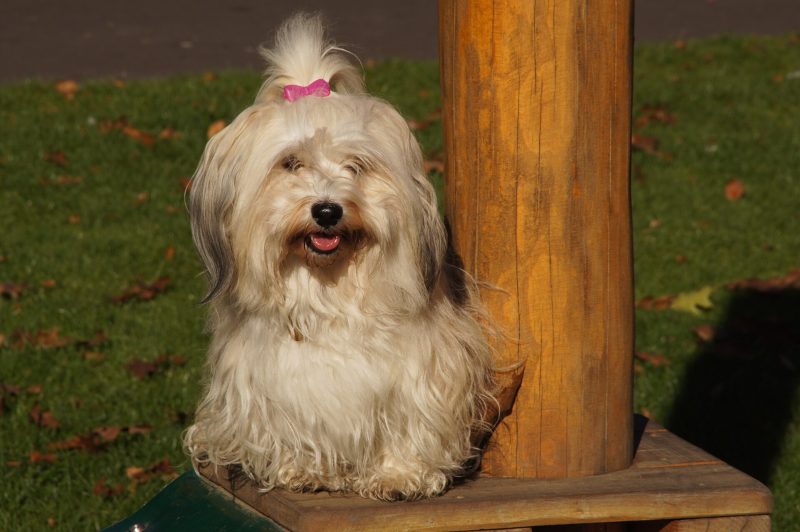
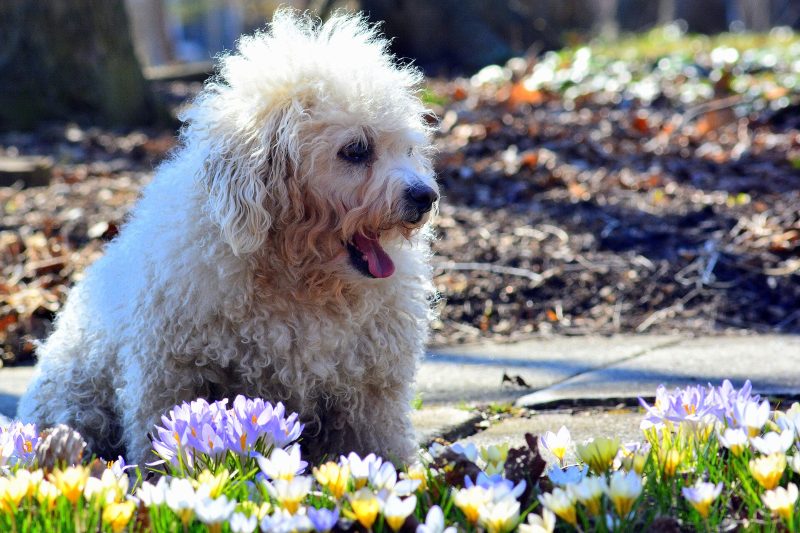
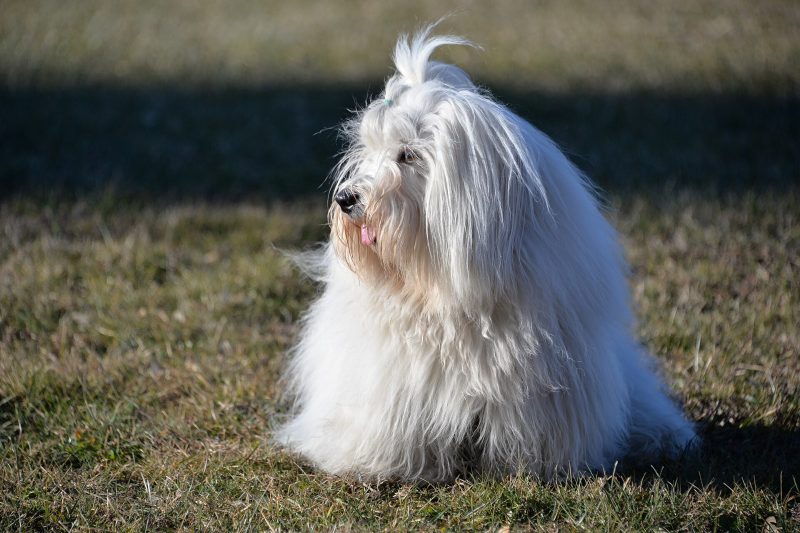
That coat is the signature: a single layer of long, straight, silky white hair with no undercoat, hanging to the floor on a show dog and parted along the spine. Pale lemon or tan shading on the ears is tolerated but not preferred. Most pets wear a shorter puppy cut that shows the dog's neat body underneath. A Bichon Frise is curly and powder-puff shaped; a Havanese is larger with a wavy coat in many colors; a Coton de Tulear is bigger with a cottony coat.
Temperament & Personality
Maltese are affectionate, lively and surprisingly bold. They adore their people, prefer a lap to a dog bed and will follow you from room to room, but they are also playful, curious and ready to investigate anything new. Energy indoors is moderate, with bursts of racing and bouncing; outdoors they trot along happily on a walk and then want to be carried past a puddle.
They are alert watchdogs and bark readily at sounds and visitors, which neighbors in thin-walled buildings may notice. With strangers most are friendly after a cautious first minute, though poorly socialized dogs can be yappy and nervous. The breed gets along with cats and other small dogs and often challenges larger ones, which needs managing. Gentle older children are fine; toddlers are not, because a dropped or squeezed Maltese is easily hurt. Separation anxiety is common in dogs never taught to be alone.
Exercise & Activity
A Maltese needs only modest exercise: a walk or two of 15 to 20 minutes a day plus indoor play covers the physical side, and the walk is as much about sniffing, socializing and mental stimulation as about fitness. Fetch down a hallway, hide-and-seek with treats, puzzle toys and short trick sessions keep the mind busy. Many Maltese enjoy agility on small-dog equipment and do well in rally.
The single coat offers little insulation, so the breed feels cold quickly; a sweater is practical in winter and walks shorten in rain and frost. Heat is tolerated moderately with shade and water.
Use a harness; the trachea is small and a collar can damage it.
Skip busy dog parks unless there is a separate small-dog area.
Boredom shows as barking, attention-seeking and chewing.
Training
Maltese are clever, attentive and keen to engage, and they learn tricks and household rules quickly when training is upbeat and rewards are generous. Tiny treats, play and praise all work; harsh handling frightens a dog this small and sensitive and gets you nothing. Keep sessions short and frequent, and start young.
House-training is the breed's classic challenge. A small bladder, a dislike of cold and wet ground, and owners who miss tiny accidents all slow progress. A strict schedule, frequent trips outside, crate training and plenty of praise solve it in time, and apartment dogs can reliably learn an indoor potty option. Barking needs a quiet cue taught early. Socialize puppies widely to people, calm dogs and new environments so boldness does not become yappiness. Teach the dog to settle alone for short spells from the start to head off separation anxiety.
Grooming & Care
The Maltese coat does not shed much, but what it does instead is tangle. A dog in full coat needs gentle brushing and combing every day, working in sections down to the skin with a pin brush and a fine comb, paying special attention behind the ears, in the armpits and around the collar. Most pet owners choose a short puppy cut from a professional groomer every four to six weeks, which cuts daily brushing to a few minutes.
Bathe every one to two weeks with a whitening or gentle shampoo, rinse thoroughly and dry completely. Wipe the eyes daily to limit the reddish tear staining that shows on white hair, and keep the hair out of the eyes with a trim or topknot.
Check and clean the heavily feathered ears weekly; pluck or trim ear hair only if your vet or groomer advises.
Brush teeth daily; dental disease is the breed's biggest health issue.
Trim nails every two to three weeks and keep the sanitary area clipped.
Health
Maltese are generally healthy and often live 12 to 15 years, but share a set of toy-breed concerns worth knowing. Patellar luxation is the most common orthopedic problem, and OFA patella certification is on the American Maltese Association's screening list; breeders also commonly have hearts and eyes examined. Congenital heart defects such as patent ductus arteriosus and later-life mitral valve disease are checked by a cardiologist's exam. Portosystemic liver shunts are more frequent than in most breeds and are screened in puppies with a bile acid blood test.
Dental disease is nearly universal without daily care, and tracheal collapse causes a honking cough in some adults. Puppies and very small adults can develop hypoglycemia. A generalized tremor condition known as white shaker syndrome is seen in the breed and usually responds to treatment. Tear staining is cosmetic but heavy discharge can signal an eye problem. Ask your vet about any cough, fainting, tremor or stunted growth in a puppy.
Nutrition
A Maltese eats a cup of food a day or less, so small treats and table scraps make up a large share of its calories and the breed slides into overweight easily. Feed a complete toy- or small-breed food with small kibble, measure every meal and split the ration into two or three feedings. Check body condition weekly; you should feel ribs under a thin cover and see a waist.
Puppies and adults under about four pounds are prone to low blood sugar and should eat several small meals a day without skipping; ask your vet how to spot and handle an episode. Small kibble, dental chews sized for toy breeds and daily brushing all help the crowded teeth. Some owners find diet affects tear staining, and some Maltese have sensitive stomachs; raise persistent problems with your vet rather than switching foods repeatedly. Keep fresh water available, especially in a dog with any tendency to urinary stones.
Living With This Breed
The Maltese is a natural apartment dog: small, low-shedding, happy to exercise indoors and content in a warm, quiet home. It needs to live inside, dislikes cold and wet weather and should never be an outdoor dog. It thrives with seniors, singles and families with older children, and it does well with cats and other small dogs. Large, boisterous dogs can injure it in play.
Long days alone are hard on the breed and often produce barking and anxiety; a companion animal, a midday visit or doggy daycare for small dogs helps. Watch for falls from furniture and arms.
Sitters should know the grooming routine, use the harness and keep the dog on leash.
Note meal times exactly for very small dogs because of hypoglycemia.
Expect alert barking at new sounds in a new place.
Interesting Facts
The Roman poet Martial wrote that Issa, a lap dog of the Maltese type, was more playful than a sparrow and purer than a dove's kiss.
Legend says a Maltese hid in the skirts of Mary, Queen of Scots, at her execution in 1587.
Edwin Landseer painted a Maltese named Quiz for Queen Victoria, and the breed was a Victorian status symbol.
The first Maltese shown in America was entered at the 1877 Westminster show as a Maltese Lion Dog, eleven years before the AKC recognized the breed.
The coat is a single layer with no undercoat, which is why the breed sheds so little and tangles so much.
Aristotle described the Melitaie dog as perfectly proportioned more than two thousand years ago, making this one of the longest-documented companion breeds.
Breeds similar to the Maltese


Popular Maltese crosses

What Maltese owners say
Real pets, photos, stories and tips from the SitterNation community — separate from the editorial guide above.
Log in to add your pet, photos, stories and tips.
Meet Malteses on SitterNation
No Malteses have joined yet. Owners can show their pet here from the pet's profile.
Maltese community photos
No Malteses photos yet — be the first to share one.
Stories from Maltese owners
No stories yet. What is life with yours really like?
Tips from Maltese owners
No tips yet. One practical thing that works for you is enough.
Ask Maltese owners
No questions yet. Ask the people who live with the breed.