Typical tendencies
Energy level
Ready to go when you are, settles after.
Good with children
Gentle and tolerant around children.
Good with other dogs
Enjoys most canine company.
Trainability
Quick to learn and keen to please.
Shedding
Barely a hair on the sofa.
Apartment friendly
A natural fit for city living.
More traits
Exercise needs
Adaptability
Grooming needs
Drooling
Intelligence
Family friendly
Good with cats
Friendly with strangers
Sociability
Protectiveness
Prey drive
Overview
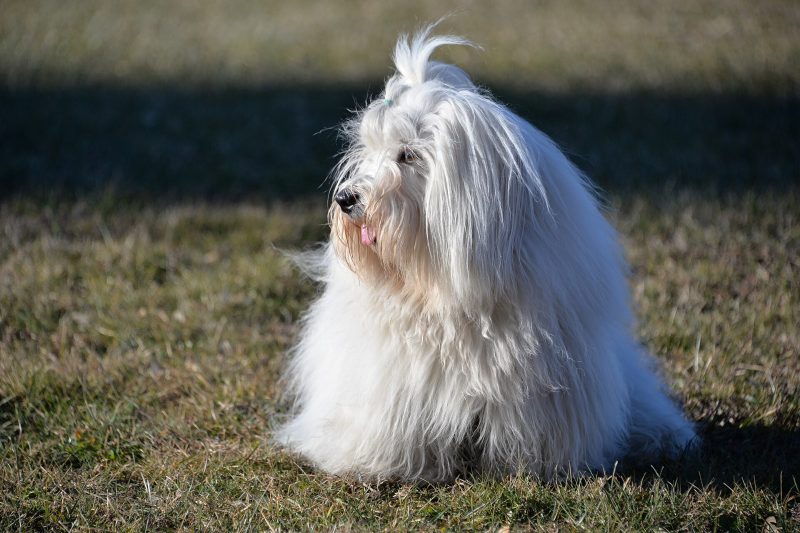
The Coton de Tulear is a small white companion dog from Madagascar whose cottony coat and sunny, clownish personality have won it a devoted following. Cotons are affectionate, playful and sociable, with a soft voice they use to chat and grumble at their people, and they bond so tightly that being left behind is their biggest sorrow. They suit families, couples and single owners who are home a good deal, apartment or house dwellers alike, allergy-conscious homes and first-time owners willing to learn grooming.
They are a poor fit for households gone all day, for people who dislike regular brushing, or for anyone wanting a tough, independent dog. Weighing 8 to 15 pounds and often living 15 to 19 years, a Coton is a long and cheerful companionship, more adaptable than it looks and sturdier than its fluff suggests.
History & Origin
The Coton de Tulear is named for the port of Tulear, now Toliara, on the southwest coast of Madagascar, and for its cotton-like coat. Its early history is legend as much as record: small white dogs of the Bichon family are said to have arrived with traders or pirates in the 1600s, perhaps surviving a shipwreck, and a French governor of the island wrote about small dogs there in the seventeenth century. Over the following centuries the dogs became companions of the Merina nobility who ruled the island, which earned the breed its nickname, the Royal Dog of Madagascar.
The Coton stayed on the island until the twentieth century. French breeders took it up, the French kennel club recognized it in 1970 and the FCI published a standard in 1972. The first Cotons reached the United States in the 1970s, where several breed clubs with different standards grew up. The AKC admitted the breed to its Foundation Stock Service in 1996 and gave full recognition in the Non-Sporting Group in 2014.
Appearance
The Coton is a small, slightly long-bodied dog with short legs, a sturdy frame and a head that looks triangular from above, with dark round eyes, a prominent black nose and drop ears covered in long hair. Males stand 10 to 11 inches at the shoulder and weigh 9 to 15 pounds; females are 9 to 10 inches and 8 to 13 pounds. The tail is carried up and curled over the back when the dog is moving and hangs low at rest. The gait is free and easy with a happy bounce.
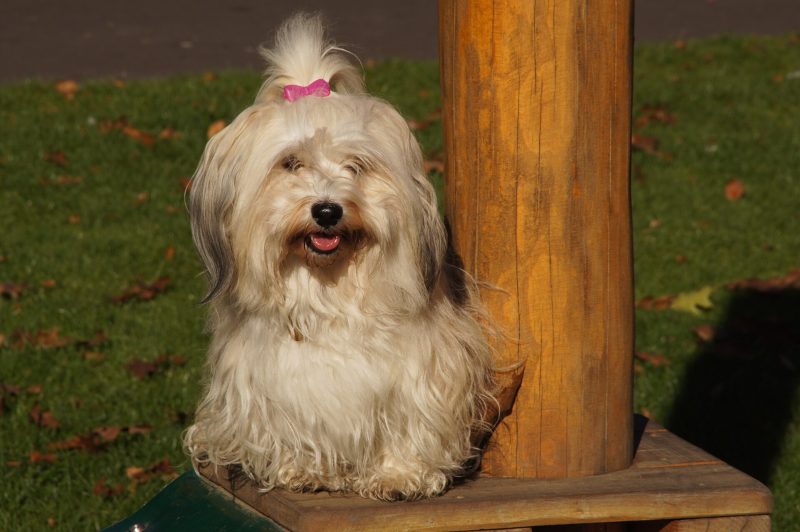
The coat is the point of the breed: soft, dense, cottony hair that is slightly wavy, never silky or curly, about 3 to 4 inches long in adults. The color is white, often with light gray or champagne shading on the ears that may fade with age; puppies are often born with more color. The Bichon Frise has a curlier, rounder coat, the Maltese is smaller with a silky, straight coat, and the Havanese comes in many colors.
Temperament & Personality
Cotons are cheerful, gentle, people-loving dogs with a comedian's instinct. Indoors they are lively without being hyperactive, happy to bounce after a toy and then curl up against you; outdoors they are curious and friendly. Their most charming trait is their voice: a repertoire of grunts, murmurs and little barks they use to comment on life, plus the habit of standing on their hind legs or walking on them to make a point. They are devoted to the whole family and want to be included in everything, which makes them intolerant of being left alone for long.
Strangers are greeted warmly after a brief alert bark, and children, other dogs and cats are usually welcomed, with supervision for very young children because the dog is small. Cotons are sensitive and read tone of voice easily, so they wilt under scolding and flourish with gentle, upbeat handling.
Exercise & Activity
A Coton needs about 30 to 45 minutes of activity a day, which can be a couple of leisurely walks plus games at home. They love fetch, tug, hide-and-seek and chasing each other in a fenced yard, and they enjoy learning tricks, which doubles as mental exercise. Many are athletic enough for agility, rally and obedience, and some enjoy swimming in warm water. They adapt their pace to yours: a Coton will happily hike for an hour and just as happily nap through a rainy afternoon. The coat insulates against mild cold but soaks up water and mud, so a raincoat and a towel are practical. In hot weather walk early or late and watch for heavy panting; the white coat reflects sun but the dense hair holds heat.
Daily walks plus indoor play and a few tricks
Puzzle toys for the clever ones
Boredom shows as barking, shadowing you and chewing
Training
Cotons are intelligent, eager to please and quick to learn, which makes them one of the easier small breeds to train. They respond to praise, play and small treats and learn tricks almost by accident; they do not respond to rigid drilling or harsh words, which make them anxious. Keep sessions short and fun and finish on a success. Housetraining takes patience, as with most small breeds, so use a consistent schedule and reward every outdoor result. Teach a quiet cue early, because Cotons like to announce visitors and odd noises. Practice calm comings and goings and gradually longer alone-time from puppyhood to head off separation anxiety, the breed's main behavior problem. Socialize widely with people, dogs and places; the Coton's natural friendliness grows with exposure. Introduce the brush, comb and bath as pleasant routines early. Cotons shine in trick titles, rally, agility and therapy-dog work, where their soft manner is an asset.
Grooming & Care
The cottony coat does not shed much, but it mats readily and needs real upkeep. Brush and comb to the skin three or four times a week, daily during the coat change between about 7 and 15 months, using a pin brush, a steel comb and a light spray of conditioner to prevent breakage; concentrate behind the ears, in the armpits, on the legs and around the collar area. Bathe every three to four weeks with a gentle shampoo and conditioner and dry thoroughly, since damp undercoat mats. Many pet owners keep the coat in a shorter puppy cut every six to eight weeks, which reduces brushing to a couple of times a week. Wipe the eyes daily and keep the hair there trimmed to limit tear staining. Check and clean the ears weekly, plucking inner ear hair if your vet recommends it. Trim nails every few weeks and brush teeth often.
Health
Cotons are a healthy, long-lived breed; the United States of America Coton de Tulear Club puts typical lifespan at 15 to 19 years. Known concerns include patellar luxation, hip dysplasia, inherited eye disease such as progressive retinal atrophy and cataracts, and degenerative myelopathy, a slowly progressive spinal cord disease of older dogs. Several rare recessive disorders have DNA tests: Bandera's neonatal ataxia, a fatal coordination disorder of young puppies; von Willebrand disease, a bleeding disorder; hyperuricosuria, which predisposes to urate bladder stones; and primary hyperoxaluria, a kidney condition. Dental disease is common in small breeds, and heart murmurs are occasionally found.
The parent club recommends that breeding stock have OFA hip and patella evaluations, an eye exam by a veterinary ophthalmologist and a cardiac exam, with DNA tests for the recessive disorders strongly encouraged. Ask your vet to check the knees and teeth at each visit and to investigate any hind-leg weakness in an older dog.
Nutrition
Feed a complete, balanced small-breed food appropriate to life stage: three or four meals a day for puppies and two measured meals for adults. Cotons are small and easily overfed, especially when they sit up and beg so charmingly, so measure portions, count treats and keep a visible waist; extra weight is hard on patellas and the long back. The coat reflects diet, and a food with adequate quality protein and fatty acids helps keep it soft and white, though ask your vet before adding fish oil or other supplements. Dogs that develop urate stones from hyperuricosuria are managed on special diets prescribed by a vet, so never change a stone-former's food on your own. Tear staining is sometimes diet-related; clean water and a change of food may help. Fresh water should always be available, and wipe the beard after meals to keep it white.
Living With This Breed
A Coton is content in an apartment or a house as long as it is with its people. It tolerates most climates with a coat for cold and shade for heat, and it is quiet enough for close neighbors once alert barking is managed. The breed's great weakness is being alone; a Coton left for a full workday every day is prone to anxiety, barking and destructive chewing, so plan for a dog walker, daycare, a work-from-home arrangement or a second dog. It is wonderful with gentle children and sociable with other pets, and it travels well and enjoys visiting.
A sitter should know the dog is velcro and may follow them everywhere
Explain the brushing routine; a skipped week means mats
Keep the dog leashed; it is friendly enough to approach anyone
Expect chatter: grunts and murmurs are conversation, not distress
Interesting Facts
Legend says the breed's ancestors survived a shipwreck off Madagascar, their coats keeping them afloat as they swam to shore.
Madagascar issued a postage stamp honoring the Coton de Tulear in 1974.
The Coton was the companion of the Merina nobility, and commoners were once forbidden to own one, hence the title Royal Dog of Madagascar.
Cotons are famous for standing and walking on their hind legs, a trick many learn without being taught.
The breed's name is pure description: coton is French for cotton, and Tulear is the port where the dogs were first known.
The Coton reached full AKC recognition only in 2014, making it one of the newer breeds in the Non-Sporting Group.
Breeds similar to the Coton de Tulear

What Coton de Tulear owners say
Real pets, photos, stories and tips from the SitterNation community — separate from the editorial guide above.
Log in to add your pet, photos, stories and tips.
Meet Coton de Tulears on SitterNation
No Coton de Tulears have joined yet. Owners can show their pet here from the pet's profile.
Coton de Tulear community photos
No Coton de Tulears photos yet — be the first to share one.
Stories from Coton de Tulear owners
No stories yet. What is life with yours really like?
Tips from Coton de Tulear owners
No tips yet. One practical thing that works for you is enough.
Ask Coton de Tulear owners
No questions yet. Ask the people who live with the breed.