Typical tendencies
Energy level
Ready to go when you are, settles after.
Good with children
Gentle and tolerant around children.
Good with other dogs
Loves every dog at the park.
Trainability
Quick to learn and keen to please.
Shedding
Barely a hair on the sofa.
Apartment friendly
A natural fit for city living.
More traits
Exercise needs
Adaptability
Grooming needs
Drooling
Intelligence
Family friendly
Good with cats
Friendly with strangers
Sociability
Protectiveness
Prey drive
Overview
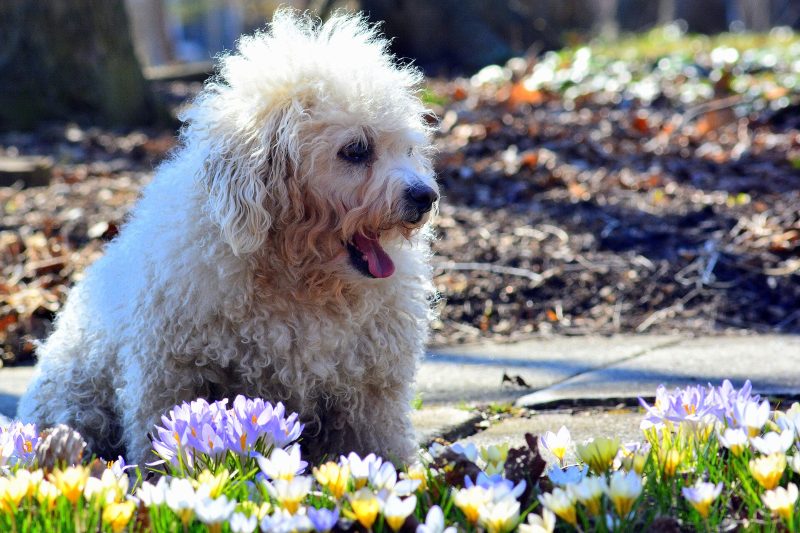
The Bichon Frise is a small white companion dog with a powder-puff coat, dark button eyes and a personality built entirely around people. It was bred to charm, first in Mediterranean courts and later on the streets as a performing dog, and the modern Bichon still treats every visitor as an audience. It is playful, gentle and adaptable, equally at home in a studio apartment or a busy family house.
Bichons suit first-time owners, seniors, families with considerate children and anyone who wants a cheerful, sociable dog that sheds very little. The costs are grooming and company: the curly coat needs brushing every other day and a professional trim every month or so, and a Bichon left alone for long days can become anxious and vocal. Housetraining takes patience. In return you get a merry, affectionate companion that typically lives 14 to 15 years.
History & Origin
The Bichon belongs to the old family of small white Mediterranean dogs, the bichons, which share ancestry with the Maltese and probably descend from the water-dog type behind the Barbet. Sailors carried them around the Mediterranean and out to the Canary Islands, where the type that became the Bichon Frise was long known as the Tenerife dog. Italian traders brought it back to the mainland in the 1300s, and it moved into the courts of Spain, Italy and France. Francis I and Henry III of France were devoted owners, and Goya painted one at the feet of the Duchess of Alba.
The French Revolution ended the court life, and the breed survived as a street performer and circus dog, doing tricks for coins. French breeders adopted an official standard in 1933 under the name Bichon a poil frise. The first dogs reached the United States in 1956, the Bichon Frise Club of America formed in 1964, and the American Kennel Club admitted the breed to its Stud Book in 1972, with Non-Sporting Group status in 1973. France and Belgium share recognition as the countries of origin.
Appearance
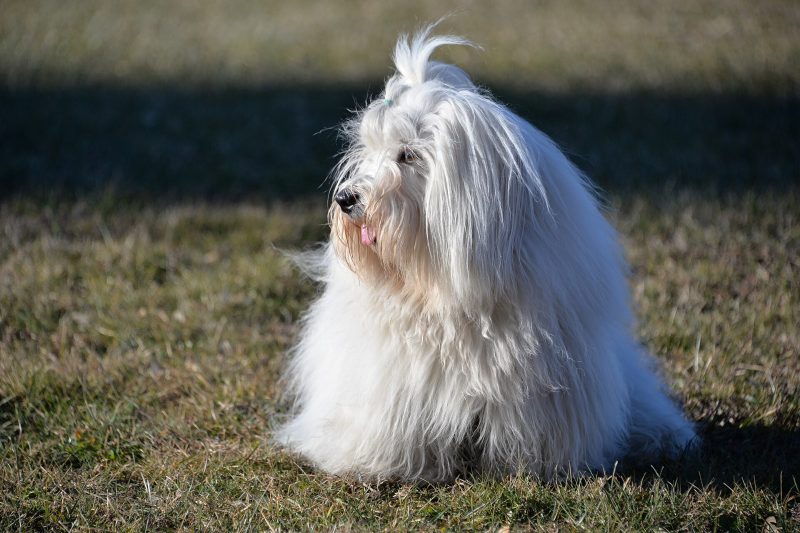
A Bichon is a small, sturdy dog that looks like a powder puff with a plumed tail. Both sexes stand 9.5 to 11.5 inches at the shoulder and weigh 12 to 18 pounds. Under the coat the body is slightly longer than tall, with a level back, a well-sprung chest and a tail carried gracefully over the back. The head is rounded, with a short muzzle, a black nose, drop ears hidden in the coat and round, dark eyes rimmed in black that give the breed its soft, inquisitive expression.
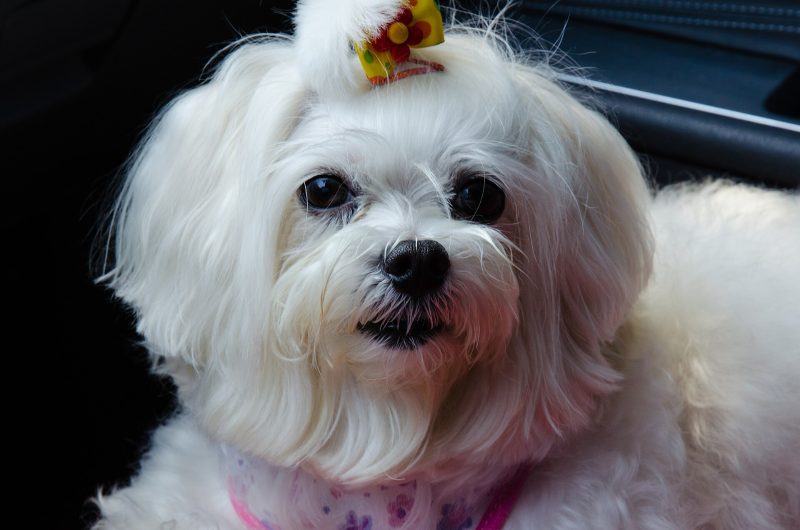
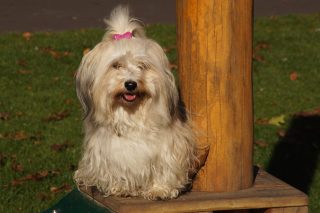
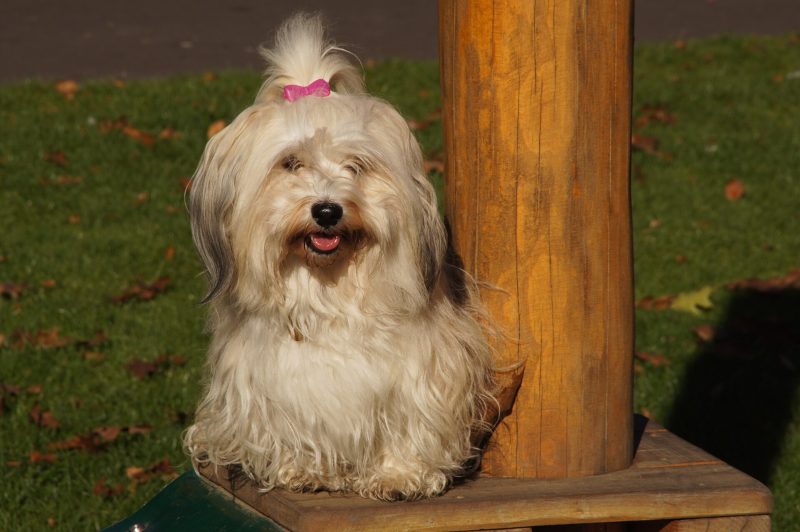
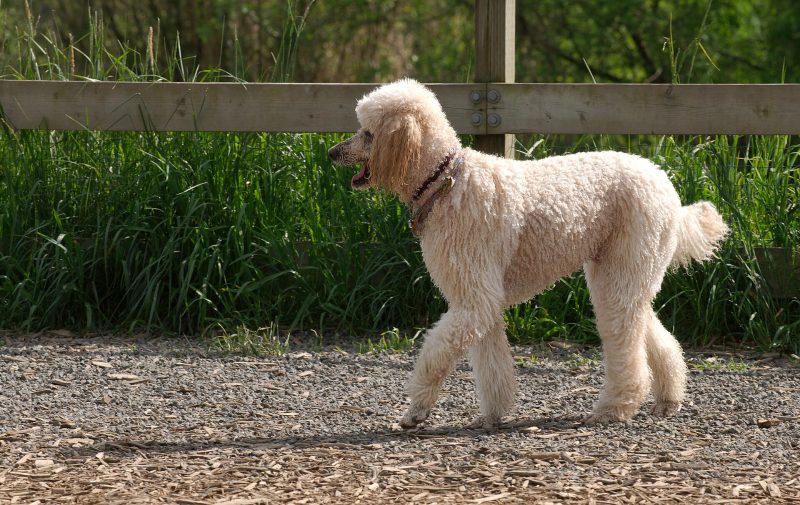
The coat is double, with a soft, dense undercoat and a coarser, curly outer coat that springs back when patted. It is white, though puppies and some adults show cream or apricot shading around the ears and body. The traditional trim follows the dog's outline, with the head scissored into a round shape. A Maltese has long, straight, silky hair; a Havanese is longer-bodied and comes in many colors; a Coton de Tulear has a cottony, straighter coat; a small white Poodle is squarer with a longer muzzle.
Temperament & Personality
Bichons are merry, gentle and relentlessly sociable. They love their own people, are delighted by visitors and tend to assume that every stranger, dog and cat is a friend they have not met yet. They are playful well into old age and famous for the "Bichon blitz," a sudden burst of high-speed laps around the house or yard that ends as abruptly as it began. Indoors they are affectionate lapdogs; outdoors they are curious and confident without being pushy.
The breed is sensitive and reads the household mood closely. It is good with children who handle it kindly and patient with other pets, with very little prey drive. The flip side of all that sociability is a dependence on company; Bichons can develop separation anxiety and bark or howl when left for long periods. They are alert and will announce arrivals, but they are not guard dogs and are rarely aggressive. A Bichon that is snappy or fearful is the exception and usually the product of poor breeding or rough handling.
Exercise & Activity
A Bichon's exercise needs are modest but real. Two walks a day totaling 30 to 45 minutes, plus a lively game of fetch or tug indoors or in the yard, keep most adults fit and content. They enjoy longer outings and can hike surprisingly far for their size, and many take to agility, rally and trick training, where their showmanship shines. Several short play sessions suit the breed better than one long slog.
The curly coat gives some protection from cold, but Bichons are small and chill quickly in wet weather, and they should not be pushed in heat. Off-leash play is reasonably safe in enclosed areas because prey drive is low and most Bichons stay close, but a leash is still wise near traffic.
Mental work matters: trick training and food puzzles tire a Bichon as well as a walk.
A bored or lonely Bichon barks, chews and may have accidents indoors.
Many Bichons can be trained to an indoor potty area for bad-weather days.
Training
Bichons are eager, clever and love applause, which makes them delightful to train with rewards, games and praise. They pick up tricks quickly and were, after all, bred to perform. The famous sticking point is housetraining. Small bladders, a dislike of wet grass and a history of owners who forgive accidents make it slow; a strict schedule, crate training, frequent trips outside and generous rewards for success are the answer, and it may take months rather than weeks.
Socialize puppies early so their natural friendliness is matched by confidence around noise, traffic and bigger dogs. Teach the puppy to spend short periods alone from the start, gradually extending the time, to head off separation anxiety. Address barking early with a quiet cue and rewards for silence. Harsh methods are counterproductive; a Bichon that is scolded shuts down and loses trust. Keep sessions short and fun, finish on a success and expect the dog to invent its own flourishes.
Grooming & Care
The Bichon coat is the breed's main upkeep. It sheds very little, which is why it is often recommended to allergy sufferers, but the loose hair stays in the coat and mats unless it is removed. Brush thoroughly with a slicker brush and then comb to the skin every other day, paying attention to the armpits, behind the ears, the collar line and the inside of the legs. Most owners have the dog professionally bathed and scissored every four to six weeks, either in the rounded show outline or a shorter pet trim.
Wipe the face daily to limit tear staining, which shows on white hair, and keep hair trimmed away from the eyes. Clean the ears weekly and pluck or trim hair in the canal if your groomer or vet advises it. Nails need trimming every few weeks. Teeth are a priority: small breeds lose teeth early, so brush daily if you can and schedule professional cleanings.
A matted Bichon often has to be shaved down; frequent combing prevents that.
Bathing more often than every couple of weeks dries the skin.
Health
Bichons are generally healthy and long-lived, but the parent club's health surveys point to a consistent set of problems. Skin allergies top the list, causing itching, ear infections and chewed feet. Bladder stones and urinary infections are the second most common issue; struvite and calcium oxalate stones both occur and can block the urethra. Luxating patellas and Legg-Calve-Perthes disease are the main orthopedic concerns. Inherited cataracts affect a meaningful share of the breed and can appear anywhere from six months to seven years of age. Dental disease is nearly universal without care. Less common but notable are Cushing's disease, diabetes, immune-mediated hemolytic anemia and gallbladder disease.
The Bichon Frise Club of America asks breeders for OFA hip evaluations, annual patella checks and annual eye examinations by a veterinary ophthalmologist, with cardiac and other tests encouraged. Typical lifespan is 14 to 15 years. Bring a urine sample to annual checkups, and ask your vet about any straining to urinate, cloudiness in the eyes or persistent scratching.
Nutrition
Bichons do well on a complete and balanced small-breed food, fed as two or three measured meals a day. Puppies need a small-breed growth formula until about a year old. Most Bichons hold a healthy weight, but the coat hides a thickening waistline, so check condition by hand every week and adjust portions when you can no longer feel the ribs easily. Treats count, and for a 14-pound dog a few extra biscuits a day add up quickly.
Two breed tendencies shape feeding advice. Dogs that have had bladder stones usually need a specific diet that manages urine pH and mineral content, which your vet will prescribe and monitor. Dogs with suspected food allergies may need a supervised elimination diet trial lasting several weeks. Encourage drinking, since dilute urine helps prevent stones; some owners add water to meals. Keep fresh water available at all times and avoid frequent diet changes in a dog with a sensitive stomach. Dental chews help but do not replace brushing.
Living With This Breed
A Bichon is one of the easiest breeds to house. It thrives in apartments, is quiet enough for close neighbors if its barking is managed, sheds very little and travels well. It is not a dog for people who are out all day; Bichons want company and may become anxious, noisy or destructive when left for long stretches. A dog walker, daycare or a second pet helps.
The breed is excellent with gentle children, other dogs and cats, and welcoming to visitors. It is sensitive to cold and wet and appreciates a coat in winter.
Sitters should keep to the grooming routine; a few missed days of combing create mats.
Follow the housetraining schedule exactly; Bichons regress with lapses.
Note any urinary diet or allergy medication, which are common in the breed.
Daycare is usually a hit; most Bichons love a crowd.
Watch footing around bigger dogs; a Bichon plays fearlessly.
Interesting Facts
The name comes from the French bichon, a small dog, and frise, curly; the breed was known for centuries as the Tenerife dog.
King Henry III of France was said to carry his Bichons in a basket hung from ribbons around his neck.
After the French Revolution the breed earned its keep as a circus and organ-grinder's dog, performing tricks for coins.
Bichons have won Best in Show at Westminster twice: J.R. in 2001 and Flynn in 2018.
The "Bichon blitz," a sudden sprint in circles around the house, is so characteristic that breeders mention it in their puppy packets.
Goya's 1795 portrait of the Duchess of Alba shows a Bichon at her feet, complete with a ribbon in its hair.
Breeds similar to the Bichon Frise
What Bichon Frise owners say
Real pets, photos, stories and tips from the SitterNation community — separate from the editorial guide above.
Log in to add your pet, photos, stories and tips.
Meet Bichon Frises on SitterNation
No Bichon Frises have joined yet. Owners can show their pet here from the pet's profile.
Bichon Frise community photos
No Bichon Frises photos yet — be the first to share one.
Stories from Bichon Frise owners
No stories yet. What is life with yours really like?
Tips from Bichon Frise owners
No tips yet. One practical thing that works for you is enough.
Ask Bichon Frise owners
No questions yet. Ask the people who live with the breed.