Typical tendencies
Energy level
Needs a real outlet most days.
Good with children
Patient with kids when well supervised.
Good with other dogs
Enjoys most canine company.
Trainability
Quick to learn and keen to please.
Shedding
Barely a hair on the sofa.
Apartment friendly
A natural fit for city living.
More traits
Exercise needs
Adaptability
Grooming needs
Drooling
Intelligence
Family friendly
Good with cats
Friendly with strangers
Sociability
Protectiveness
Prey drive
Overview
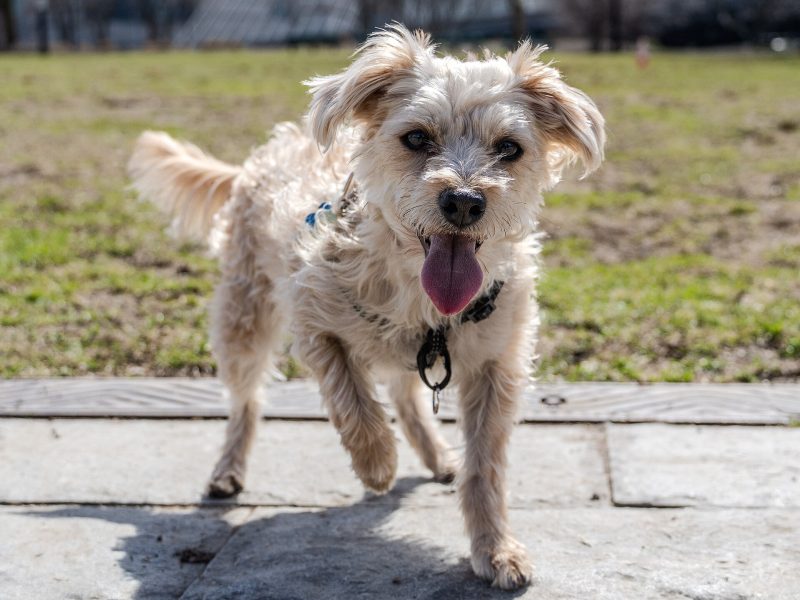
The Yorkipoo crosses a Yorkshire Terrier with a Toy or Miniature Poodle to make a tiny, lively, low-shedding companion that weighs anywhere from 3 to 14 pounds. It suits apartment dwellers, singles, couples and older owners who want a bright, affectionate little dog that enjoys walks, games and tricks but is happy on a lap afterward. Most are quick learners and good watchdogs for their size, announcing visitors with enthusiasm.
This is a cross, not a breed, with no standard and no kennel-club recognition, and the mix of a terrier with a Poodle produces real variety in size, coat and personality. Expect a coat that needs regular brushing and clipping, a tendency to bark, a fragile frame that makes rough play with small children risky, and a dog that dislikes being left alone for long. Choose a breeder who health-tests both parents, or look for one of the many Yorkipoos in rescue.
History & Origin
The Yorkipoo belongs to the second wave of American designer dogs that followed the Labradoodle's fame. Yorkshire Terrier and Poodle crosses were deliberately bred in the United States from about the 1990s, with the aim of combining the Yorkie's bold, affectionate personality and portable size with the Poodle's intelligence and curly, low-shedding coat. Like most small doodles, it has no founding breeder on record and no documented first litter, and the spelling still wanders between Yorkipoo, Yorkiepoo, Yorkie Poo and Yorkiedoodle.
No kennel club recognizes the Yorkipoo; the American Kennel Club registers the Yorkshire Terrier and the Poodle as separate breeds, and the cross cannot compete in conformation. Designer-dog registries will record litters for a fee, which says nothing about health or quality. Most Yorkipoos are first-generation crosses, though some breeders produce F1b dogs bred back to a Poodle for a curlier, more reliably low-shedding coat.
Appearance
A Yorkipoo is a small, fine-boned dog with a lot of personality packed into 7 to 15 inches of height and 3 to 14 pounds of weight. Toy Poodle crosses sit at the small end, Miniature Poodle crosses at the large end, and size within a litter varies more than in a purebred. The head is small with a short to medium muzzle, dark round eyes and ears that may stand up like a Yorkie's or fold like a Poodle's.
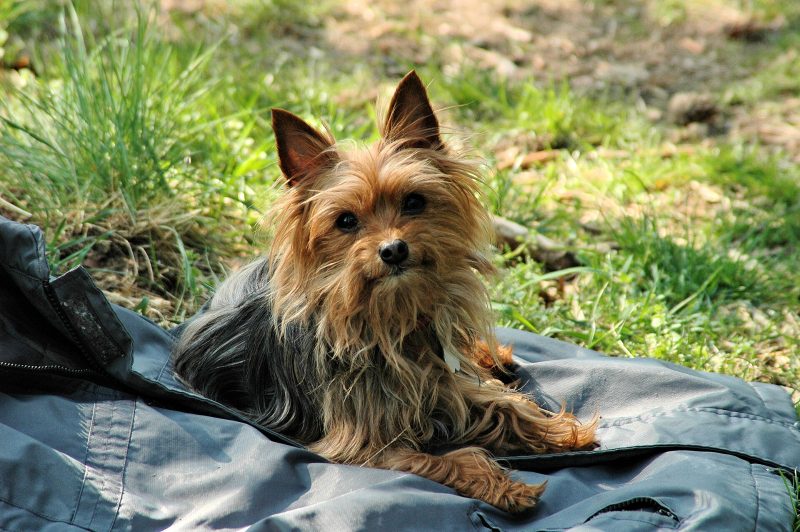
The coat is the lottery. It can be silky and nearly straight like a Yorkshire Terrier's, wavy, or tightly curled like a Poodle's, and is usually medium length unless clipped. Black and tan is the classic Yorkie color, but cream, apricot, silver, black and parti coats all occur, and many puppies lighten with age. Beside a Yorkshire Terrier, a Yorkipoo is often curlier and less strictly colored; beside a Toy Poodle it is more terrier-faced and scruffier.
Temperament & Personality
Yorkipoos are affectionate, confident and busy. The Yorkshire Terrier side brings a bold, big-dog attitude in a tiny body, a watchful eye on the door and a love of being the center of attention; the Poodle side brings intelligence, playfulness and sensitivity to its owner's mood. Indoors they alternate between zooming after toys and curling up on a lap; outdoors they are curious, energetic walkers for their size.
They bond closely with their people and often pick a favorite. Strangers get a burst of barking and then, usually, a friendly greeting. Most get along with other dogs and cats, especially when raised with them, though terrier genes can produce some chasing of squirrels and the occasional squabble with a bigger dog that fails to impress them. They do best with older, gentle children. Left alone for long hours, many Yorkipoos become anxious and vocal, and temperament varies by puppy, so meet the parents.
Exercise & Activity
A Yorkipoo needs about 30 minutes of activity a day, which can be a couple of short walks plus play indoors. Despite its size it is a lively dog that enjoys a longer stroll or a sniff around the park, and it tires its mind faster than its legs, so a few minutes of trick training or a food puzzle count toward the total.
Heat is the main limit for a small, thick-coated dog, so walk early and late in summer. In cold or rain, a sweater helps and a game of fetch down the hallway can stand in for a walk. Boredom shows up as barking, chewing and shadowing you from room to room.
Use a harness rather than a neck collar; the small windpipe is easily damaged.
Discourage jumping off furniture and down stairs in puppies to protect small joints.
Carry the dog through crowds or around large, unfamiliar dogs.
Training
Yorkipoos are clever and eager, and most pick up basic cues and tricks fast with reward-based training. Small treats, praise and games work; harsh corrections make the Poodle side shut down and the terrier side dig in. Keep sessions short and fun.
House-training is the usual challenge, as with most toy dogs: small bladders and a dislike of wet grass stretch the process, so use a strict schedule, a pen or crate and generous rewards outdoors. Barking is the other one; teach a quiet cue early and avoid rewarding alarm barking with attention. Terrier stubbornness can appear in adolescence, and some dogs guard laps or toys, so practice trading and handling from puppyhood. Build independence with short, calm absences so the dog learns to be alone. Socialize puppies to people, larger dogs, grooming and travel between 8 and 16 weeks. Many Yorkipoos enjoy agility, rally and trick titles as adults.
Grooming & Care
The Yorkipoo coat sheds little, which means loose hair stays in the coat and mats unless you brush it out. Brush every day or two with a slicker brush and finish with a metal comb to the skin, especially behind the ears, under the collar and in the armpits. Silkier coats tangle less than curly ones but still need combing. Most owners keep a short clip and see a professional groomer every four to eight weeks.
Bathe every three to four weeks with a mild dog shampoo. Keep hair trimmed around the eyes, and wipe tear stains on light-colored faces daily. Small mouths crowd teeth and the Yorkie side is prone to early dental disease, so brush teeth daily if possible.
Trim nails every three to four weeks.
Check ears weekly, especially folded ones that trap moisture.
Start handling, brushing and dryer sessions in puppyhood to make grooming easy.
Health
A Yorkipoo can inherit conditions from either parent, and crossing does not erase them. From the Yorkshire Terrier come collapsing trachea, congenital portosystemic liver shunts, patellar luxation, Legg-Calve-Perthes disease of the hip, dental disease, retained baby teeth and, in tiny puppies, low blood sugar. From the Toy and Miniature Poodle come progressive retinal atrophy (prcd-PRA), patellar luxation, Legg-Calve-Perthes disease, epilepsy and dental problems. Both parents can have sensitive stomachs.
Ask a breeder for veterinary patellar evaluations and recent ACVO eye exams on both parents, a prcd-PRA DNA result for the Poodle, a cardiac evaluation and either a bile-acid test or a clear family history for liver shunts. Certificates, not assurances, are what you want to see. A lifespan of 12 to 15 years is typical. See your vet promptly for a honking cough, a skipping hind leg, poor growth or strange behavior after meals, which can signal a shunt.
Nutrition
Yorkipoos are small enough that every meal counts. Feed a small-breed puppy food in three or four small meals a day until about six months, because tiny puppies have few reserves and can become hypoglycemic if they go too long without eating; most adults do well on two meals a day. Ask your vet when to move to adult food, usually between 9 and 12 months.
Measure portions and keep treats to a tenth of daily calories; a few extra ounces on a 6-pound dog is a lot, and excess weight strains small knees and the windpipe. Small kibble suits crowded mouths, and dental chews or crunchy food help between cleanings. Table scraps encourage begging and can upset a delicate stomach. Because the Yorkie side is prone to liver shunts, tell your vet about any stunted growth or unusual drowsiness after meals, as diet may become part of management. Fresh water should always be available.
Living With This Breed
A Yorkipoo is a natural apartment and city dog, happy in a small home as long as it gets out daily and barking is managed. It adapts to travel and new places easily and tolerates most climates when shielded from heat and dressed for deep cold. What it needs most is company; it does best with people who are home a lot or who use sitters and daycare.
Homes with gentle older children, small dogs and cats suit it well. Supervise play with large dogs, because a few pounds of terrier will not back down and can be injured. Fences need no great height but no gaps either.
For sitters: stick to the feeding schedule, use the harness and brush daily during a stay.
Keep the dog off high furniture and never leave it near a pool unsupervised.
Note the family's quiet cue and which doors the dog likes to guard.
Interesting Facts
Both parent breeds began as working dogs: Yorkshire Terriers hunted rats in Victorian mills and mines, and Poodles retrieved waterfowl.
Yorkipoo spellings include Yorkiepoo, Yorkie Poo and Yorkiedoodle; none is official because no registry recognizes the cross.
Adult weight can range from 3 to 14 pounds, a wider spread than almost any purebred toy dog.
Many Yorkipoo puppies are born dark and lighten to silver, cream or apricot by adulthood.
Yorkipoos often inherit the terrier habit of standing up to much larger dogs, which is why owners keep them on a leash and close.
Because both parents rank among the most intelligent small breeds, Yorkipoos are regulars in trick-title and agility rings.
What Yorkipoo owners say
Real pets, photos, stories and tips from the SitterNation community — separate from the editorial guide above.
Log in to add your pet, photos, stories and tips.
Meet Yorkipoos on SitterNation
No Yorkipoos have joined yet. Owners can show their pet here from the pet's profile.
Yorkipoo community photos
No Yorkipoos photos yet — be the first to share one.
Stories from Yorkipoo owners
No stories yet. What is life with yours really like?
Tips from Yorkipoo owners
No tips yet. One practical thing that works for you is enough.
Ask Yorkipoo owners
No questions yet. Ask the people who live with the breed.