Typical tendencies
Energy level
Always on; boredom turns into mischief.
Good with children
Patient with kids when well supervised.
Good with other dogs
Gets along with known, polite dogs.
Trainability
Picks up cues with steady, short sessions.
Shedding
Noticeable, with heavier seasonal blows.
Apartment friendly
Can manage in a flat with plenty of outings.
More traits
Exercise needs
Adaptability
Grooming needs
Drooling
Intelligence
Family friendly
Good with cats
Friendly with strangers
Sociability
Protectiveness
Prey drive
Overview
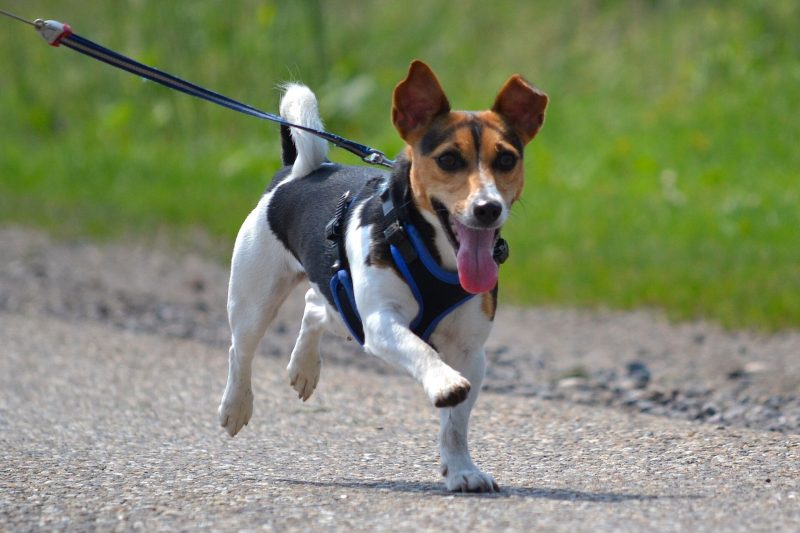
The Russell Terrier is the dog most people picture when they hear Jack Russell: a small, mostly white, mostly fearless terrier that stands 10 to 12 inches, weighs 9 to 15 pounds and behaves as if it were three times that size. Under the AKC's naming it is the shorter-legged, slightly longer-bodied relative of the Parson Russell Terrier, and in much of the world it is registered simply as the Jack Russell Terrier. Whatever the name, the dog is quick, clever, affectionate with its people and absolutely certain that the squirrel needs chasing.
This is a working terrier in a pet-sized package, with the energy, prey drive, digging habit and voice that implies. It suits active owners who enjoy training a smart, cheeky dog and can give it 90 minutes or more of exercise a day, and it does poorly with cats, pocket pets and people who want a lapdog. Lifespan is 12 to 14 years, and most of those years are lived at full speed.
History & Origin
The Reverend John Russell, a Devon parson who hunted foxes for most of his long life in the 1800s, bought a white terrier bitch named Trump from a milkman while a student at Oxford and built a strain of small, mostly white terriers that could keep up with hounds and then bolt a fox from its earth. White coats kept the hounds from mistaking the terrier for the quarry. After his death in 1883 the type spread through hunt kennels without a registry, and two sizes developed: a taller, squarer dog for following horses and a shorter-legged, longer-bodied dog that was easier to carry and better suited to small earths.
The short-legged type was standardized in Australia, which is why the FCI lists England as the country of origin and Australia as the country of development. Australia's kennel council recognized the Jack Russell Terrier in 1991 and the FCI followed, provisionally in 2000 and fully in 2003. The AKC admitted the breed to its Foundation Stock Service, moved it to the Miscellaneous class in 2010 and granted full recognition in the Terrier Group in 2012 under the name Russell Terrier, as its 175th breed.
Appearance
A Russell Terrier is small, rectangular and sturdy, built to go to ground and come back out. Height is 10 to 12 inches at the shoulder for both sexes, weight 9 to 15 pounds, and the body is slightly longer than tall with a chest small and flexible enough to be spanned by a hunter's hands behind the shoulders, a point breeders still check. The head is moderately broad with a strong muzzle, dark almond eyes and small V-shaped ears that fold forward. The tail is set high and carried up.
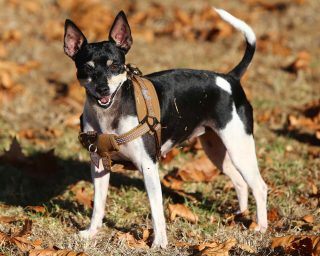
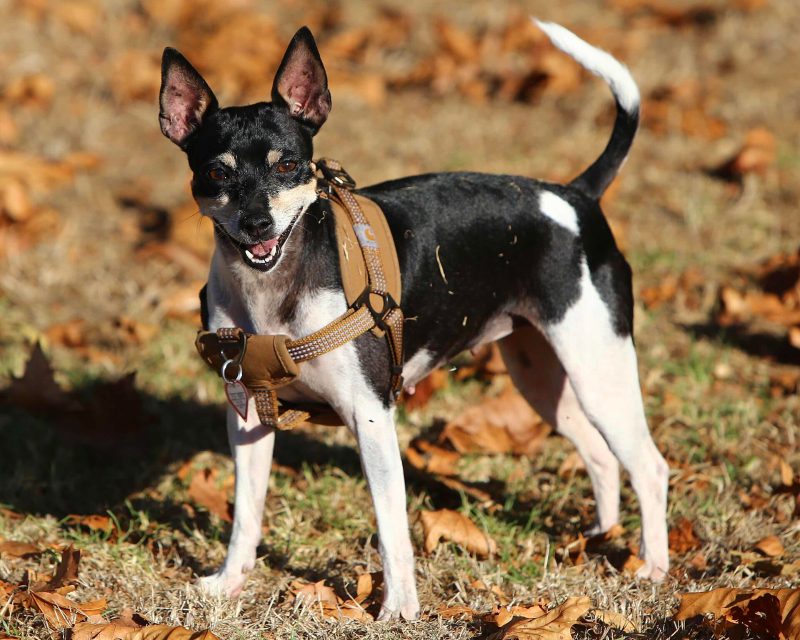
The coat comes in three types, all weatherproof double coats: smooth, which lies flat; rough, which is longer and harsh; and broken, which is in between with longer hair on the face and body. Color is predominantly white with black, tan or tricolor markings, usually on the head and at the tail root. The Parson Russell Terrier is taller at 12 to 14 inches and square in outline; the Rat Terrier is leggier and comes in more colors; the Smooth Fox Terrier is larger with a narrower head. A Russell is the compact, low one.
Temperament & Personality
A Russell Terrier is bold, inquisitive, affectionate and tireless, with the confidence of a much larger dog and the stubbornness of a terrier bred to argue with foxes underground. With its family it is loving and playful and wants to be part of everything; it will happily share a couch but is rarely still for long. Strangers are met with a quick assessment and usually accepted. With children the breed is good when the children are old enough to be respectful; it is not a dog that tolerates ear-pulling.
Prey drive is the defining trait. Squirrels, rats, rabbits and most cats are quarry, and a Russell on a scent will dig, climb and squeeze through gaps to follow it. With other dogs most are sociable, though they can be scrappy with dogs their own size and reckless with big ones. The breed is vocal and will announce visitors, birds and the mail. Indoors an exercised Russell is a cheerful companion; an under-exercised one is a demolition crew.
Exercise & Activity
Russell Terriers need far more exercise than their size suggests: plan on 90 minutes or more of real activity a day, spread across walks, play and training. Fetch, tug, flirt-pole games, hiking and agility all suit the breed, and scent games, earthdog trials and barn hunt let it use the nose and the digging instinct it was bred for. Puzzle toys and trick training count toward the daily total and tire the brain, which matters as much as tiring the legs.
Off-leash exercise belongs inside a secure fence, since a Russell will follow a scent across a road without looking. The breed tolerates heat and cold moderately well; in summer exercise early and late, and in winter a short coat may appreciate a sweater. Puppies should play rather than run on hard surfaces until they mature.
A bored Russell barks, digs craters, chews and escapes.
Many Russells remain athletic and demanding well into double digits.
Training
Russell Terriers are highly intelligent and learn tricks in minutes, which makes them stars in film and sport and tests the patience of anyone who expects a terrier to obey for its own sake. They train best with food, toys and short, fast, fun sessions, and they lose interest quickly in drills. Rules need to be consistent from day one, because a Russell that finds a loophole will use it for life. Harsh handling produces defiance rather than compliance.
The sticking points are recall, which competes with prey drive and must be practiced constantly with high-value rewards; barking, which needs a quiet cue early; and digging, which is best given a sanctioned spot. Socialize the puppy widely with people, dogs and noises so terrier confidence does not tip into reactivity, and teach a solid leave-it before the first squirrel. Many Russells excel at agility, flyball, earthdog, barn hunt and trick titles, and a sport is the easiest way to channel the engine.
Grooming & Care
Grooming depends on coat type, and none of the three is hard work. A smooth coat needs a weekly rubdown with a hound glove or soft brush to lift dead hair and keep the skin healthy. Broken and rough coats need a weekly brushing and combing and, to stay tidy and weatherproof, hand-stripping two or three times a year to pull out the dead outer coat; a groomer can do it, and clipping is an alternative for pets that softens the texture. All three coats shed, the smooth noticeably so on dark clothes.
Bathe only when dirty, every couple of months or so, since frequent washing strips the coat's natural waterproofing. Check the folded ears weekly, trim nails every few weeks and brush teeth several times a week, because small dogs are prone to dental disease.
White coats show dirt; a damp cloth handles most of it between baths.
Check the belly and feet for ticks and burrs after a day outdoors.
Health
Russell Terriers are hardy and typically live 12 to 14 years, but several inherited conditions call for screening. Primary lens luxation, in which the lens of the eye slips out of place and can cause glaucoma and blindness, is the breed's best-known problem; a DNA test identifies clear, carrier and affected dogs. Two inherited ataxias, spinocerebellar ataxia and late-onset ataxia, cause progressive loss of coordination in young dogs and also have DNA tests. Congenital deafness occurs, as in many predominantly white breeds, and is detected with a BAER hearing test. Luxating patellas and Legg-Calve-Perthes disease, a hip problem of small breeds, are seen, and dental disease is common.
The AKC's parent club recommends a patella evaluation, an eye exam by a veterinary ophthalmologist, BAER testing and the primary lens luxation DNA test for breeding stock, and many breeders add the ataxia tests. If your Russell's eye turns red, cloudy or painful, treat it as urgent and see your vet the same day. A skipping gait, a wobble or a puppy that does not respond to sound also warrant a visit.
Nutrition
A Russell Terrier burns a lot of calories for its size, and most stay naturally lean, but a less active pet can get round quickly on a few too many treats. Feed a complete diet suited to age and activity, measure meals and adjust to body condition; you should feel the ribs easily and see a waist. Two meals a day suits adults, and puppies do better on three or four small ones until about six months. A small dog's daily ration is small, so treats are a large share of it; use part of the kibble for training.
Small breeds are prone to dental trouble, so a diet and chew routine that supports clean teeth is worth discussing with your vet. Avoid feeding from the table, both for weight and because a Russell that learns to beg will perfect it. Keep fresh water available, particularly after hard play. Seniors often need fewer calories and may benefit from a diet for older dogs; ask your vet before making changes or adding supplements.
Living With This Breed
A Russell Terrier can live almost anywhere its exercise needs are met, from a farm to a city apartment, but the apartment version requires a committed owner and barking management. The breed is fine in most climates with sensible precautions. It is good with respectful older children and most dogs, and a poor choice for homes with cats, rabbits, hamsters or birds. A secure fence is essential and should be checked for gaps and dig-outs, because a Russell treats a yard as a starting point.
Time alone is tolerated for a few hours after exercise, but boredom turns quickly into noise and damage. For sitters and daycare staff, the key points are the prey drive, the escape talent, the fast reflexes on a leash and the energy.
Never let a Russell off leash outside a fence.
Check doors and gates; this dog bolts through gaps.
Pack a flirt pole or ball; a tired Russell is a good Russell.
Interesting Facts
Three names, two breeds: the AKC calls the short-legged dog the Russell Terrier and the taller one the Parson Russell Terrier, while the FCI registers the short-legged dog as the Jack Russell Terrier.
The Jack Russell Terrier Club of America keeps its own registry and has long opposed kennel-club recognition, arguing it would harm the working dog.
Eddie on the sitcom Frasier, Wishbone, Milo in The Mask and Uggie in The Artist were all Russell-type terriers, which says something about trainability.
The Reverend John Russell's foundation bitch, Trump, was bought from a milkman in Oxford in 1819.
A hunter should be able to span a Russell's chest with two hands behind the shoulders, a test from fox-hunting days that judges still use.
Though the breed comes from Devon, its standard was written in Australia, which the FCI lists as the country of development.
Breeds similar to the Russell Terrier
What Russell Terrier owners say
Real pets, photos, stories and tips from the SitterNation community — separate from the editorial guide above.
Log in to add your pet, photos, stories and tips.
Meet Russell Terriers on SitterNation
No Russell Terriers have joined yet. Owners can show their pet here from the pet's profile.
Russell Terrier community photos
No Russell Terriers photos yet — be the first to share one.
Stories from Russell Terrier owners
No stories yet. What is life with yours really like?
Tips from Russell Terrier owners
No tips yet. One practical thing that works for you is enough.
Ask Russell Terrier owners
No questions yet. Ask the people who live with the breed.