Typical tendencies
Energy level
Needs a real outlet most days.
Good with children
Gentle and tolerant around children.
Good with other dogs
Enjoys most canine company.
Trainability
Quick to learn and keen to please.
Shedding
Noticeable, with heavier seasonal blows.
Apartment friendly
Fine in a flat if exercise is kept up.
More traits
Exercise needs
Adaptability
Grooming needs
Drooling
Intelligence
Family friendly
Good with cats
Friendly with strangers
Sociability
Protectiveness
Prey drive
Overview
The Rat Terrier is an all-American farm dog: lean, quick, pied in white with black, tan, chocolate or other colors, and a good deal more easygoing than the word terrier suggests. It comes in two sizes, a miniature of 10 to 13 inches and a standard of 13 to 18 inches, with weights from 10 to 25 pounds, and it is famously long-lived at 12 to 18 years. Ratties are smart, trainable, playful and devoted to their family, and they want to be part of everything you do. They suit active households, first-time owners who will commit to training, families with respectful children and people who enjoy dog sports. They are a poor choice for homes with pet rodents or rabbits, for yards with weak fences and for anyone who is gone all day, because a lonely, under-worked Rattie digs, barks and escapes.
History & Origin
The Rat Terrier descends from the small, hard-working terriers that British immigrants brought to America in the late 1800s. Smooth Fox Terriers and Manchester Terriers were the core, and farmers added whatever worked, including Whippet and Italian Greyhound for speed and Beagle for nose and sociability. The result was a cheap, tough farm dog that cleared barns of rats, hunted squirrels and rabbits for the pot and watched the yard. By the 1910s and 1920s these dogs were everywhere in the rural Midwest and South, and Theodore Roosevelt is often credited with the name, though historians still argue about it. After the 1950s, farm pesticides took over the ratting job and numbers fell. For most of its history the Rat Terrier was treated as a type rather than a closed breed, which kept it hardy. The Rat Terrier Club of America formed in 1993, the United Kennel Club recognized the breed on January 1, 1999, the AKC opened its Foundation Stock Service to it in 2004, and full AKC recognition in the Terrier Group came in 2013.
Appearance
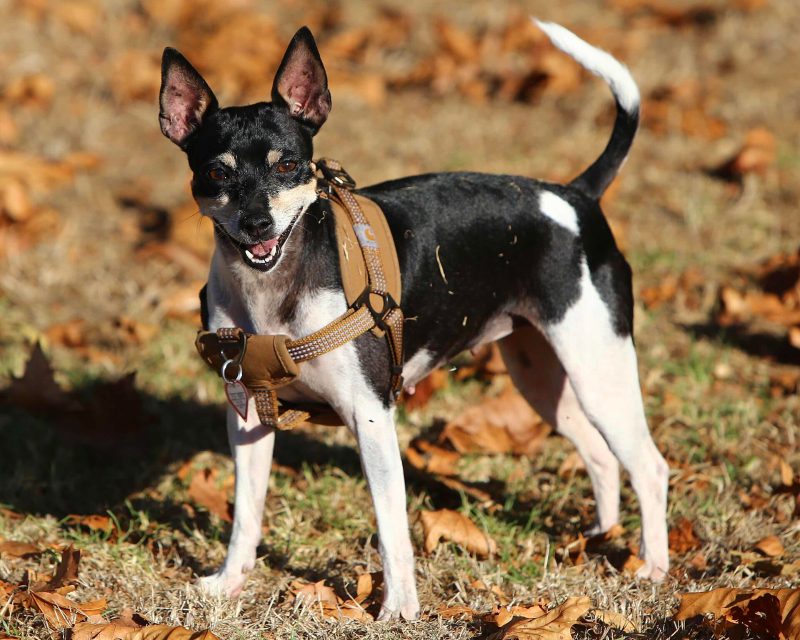
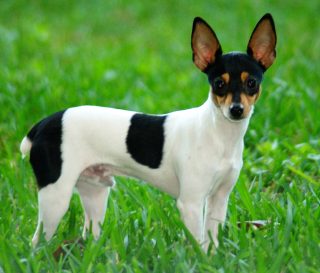
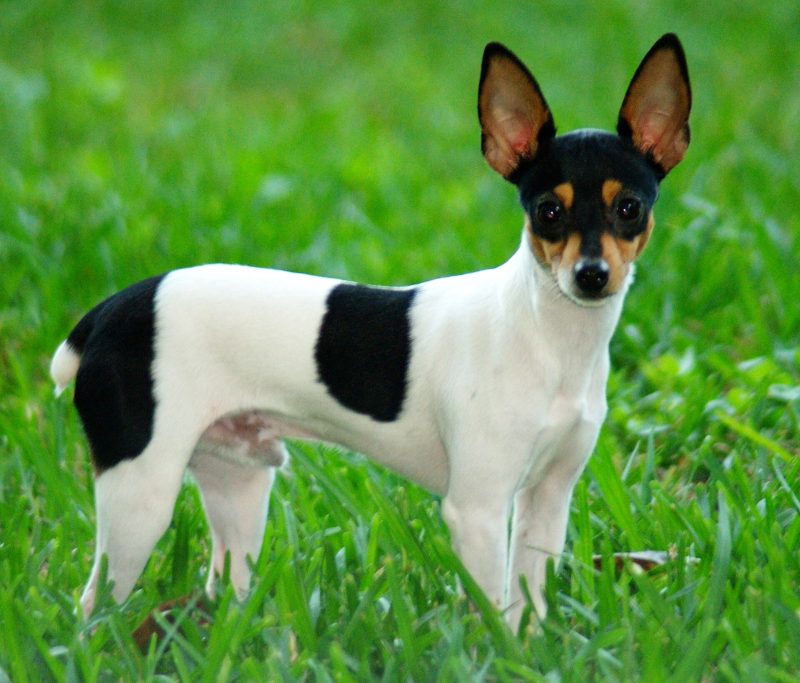
A Rat Terrier is a compact, smoothly muscled dog built for speed as much as digging, longer than it is tall by a little and never bulky. The head is a smooth wedge with a strong muzzle, dark expressive eyes and ears that stand erect, tip forward or fold as a button; all three ear sets occur. The tail is often a natural bobtail or has been docked, though full tails are increasingly common and accepted. The coat is short, dense and smooth. Rat Terriers are always pied, meaning white with patches of black, tan, chocolate, blue, apricot or lemon, and many are tricolored with tan points over black or chocolate. A standard Rattie stands 13 to 18 inches and a miniature 10 to 13. Next to a Smooth Fox Terrier the Rattie has a less exaggerated head and a lower-set, more relaxed outline, and unlike a Toy Fox Terrier it comes in a wide range of sizes and patterns.
Temperament & Personality
Ratties are bright, cheerful and very people-oriented. They love their family, are usually gentle and patient with children they know, and want to be in the middle of every activity, from gardening to watching television. Indoors a well-exercised Rat Terrier is calm and cuddly; outside it is all business, nose down and ears up. Prey drive is strong, so hamsters, gerbils and pet birds are at real risk, and squirrels will be chased with enthusiasm; cats are usually fine if the dog grows up with them. Most Ratties get along with other dogs, though some are scrappy with strange dogs. With strangers they are reserved at first and make alert watchdogs without being yappy, unless boredom turns them into barkers. They are persistent problem solvers who dig and climb, and they do not cope well with long hours alone.
Exercise & Activity
A Rat Terrier needs 45 to 60 minutes of exercise a day, and the busier the day the calmer the evening. Brisk walks, fetch, flirt-pole games, hiking and swimming all suit the breed, and it excels in agility, flyball, barn hunt, earthdog trials, scent work, rally and obedience. Ratties enjoy running with a jogger once they are grown. Mental work matters as much as mileage, so mix in training games and food puzzles. The thin coat offers little protection, so provide a sweater in cold weather and avoid the midday heat of summer.
Exercise on leash or inside a secure fence; recall around prey is unreliable
Yards need buried or reinforced fencing because Ratties dig and climb
A bored Rat Terrier barks, excavates the lawn and escapes
Training
Rat Terriers are among the most trainable terriers: eager, quick and motivated by food, toys and praise. They respond beautifully to short, upbeat, reward-based sessions and poorly to harsh handling, which makes them shut down or push back. Begin socialization the week the puppy arrives, with calm people, friendly dogs, car rides, surfaces and sounds, since a Rattie that meets the world late can grow suspicious. Crate training early helps with housetraining and with the separation worries that are common in the breed. The sticking points are recall around prey, barking when bored and digging, so teach a strong come, a quiet cue and a sanctioned digging spot. Because they are clever, Ratties learn tricks and dog sports fast and benefit from a job. Sitters should keep training cues consistent and avoid off-leash walks.
Grooming & Care
Grooming a Rat Terrier is quick work. The short coat sheds lightly year-round and more heavily in spring and fall, so a weekly once-over with a rubber mitt or soft bristle brush keeps loose hair off the furniture. Bathe only when needed, roughly monthly at most, and keep shampoo out of the eyes and ears. Check and clean the ears every week or two, especially on button-eared dogs. Nails grow fast and should be trimmed weekly or every other week; the breed often resists this, so start handling paws early. Brush teeth several times a week and plan for professional dental cleanings, because small dogs collect tartar quickly. Watch the skin for the redness, bumps and hair loss that go with allergies.
Weekly brushing, occasional bath, no professional grooming required
Nails every one to two weeks, ears weekly
Expect a seasonal shed in spring and fall
Health
Rat Terriers are hardy dogs that often live 12 to 18 years, helped by generations of outcrossing. The parent club recommends that breeding stock have a patella evaluation, a hip evaluation, a cardiac exam and a DNA test for primary lens luxation, an inherited eye condition in which the lens slips out of place and can cause painful glaucoma and blindness if not caught early. Legg-Calve-Perthes disease, a degeneration of the hip joint in young small dogs, also occurs and is diagnosed by X-ray. Other concerns are luxating kneecaps, hip dysplasia, allergic skin and ear disease, dental disease and age-related heart problems, which may show as a murmur, coughing or tiring easily. Very small puppies can suffer from low blood sugar. Obesity is the most preventable problem and makes joint and heart issues worse. Ask your vet promptly about a red or squinting eye, limping, skipping steps or persistent itching, and ask breeders for OFA results.
Nutrition
Feed a complete and balanced food suited to the dog's life stage and size, in two measured meals a day for adults and three or four for puppies. Miniature Ratties do well on small-bite kibble, and tiny puppies need frequent small meals to avoid low blood sugar. The breed is an easy keeper that gains weight readily, so measure portions, limit treats to a tenth of daily calories and adjust for activity; you should see a waist from above and feel ribs easily. Because allergies are common, your vet may suggest a diet trial if itching or ear infections persist, and some owners find skin benefits from diets rich in omega-3 fatty acids. Avoid free feeding. Puzzle feeders and snuffle mats turn mealtime into the mental work this breed enjoys. Sitters should stick to the owner's portions and keep an eye on counters and trash, since a hungry Rattie is an accomplished thief.
Living With This Breed
A Rat Terrier can live in an apartment if it gets out for real exercise every day and has company, though a house with a secure yard is easier. It needs to live indoors with its people and does best in homes where someone is around much of the day; long, lonely workdays lead to barking, digging and separation anxiety. Ratties are generally good with children who treat them kindly, fine with cats they grow up with and sociable with most dogs, but no pet rodents or birds should share the home. Fences need to be checked for gaps and dig spots. The breed is adaptable to climate but needs a coat in winter and shade in summer.
Sitters: leash on at all times outside, check gates before letting the dog out
Daycare suits most well-socialized Ratties; supervise play with much larger dogs
Provide chew toys and a puzzle feeder to fill quiet hours
Interesting Facts
Theodore Roosevelt is widely credited with naming the breed, and a separate shorter-legged relative is now registered as the Teddy Roosevelt Terrier.
One Rat Terrier is reported to have killed 2,501 rats in seven hours while clearing an infested Kansas barn, roughly one every ten seconds.
Rat Terriers were a fixture on American family farms in the 1920s and 1930s, hunting rats, squirrels and rabbits before pesticides took over.
The American Hairless Terrier descends from a hairless Rat Terrier puppy born in Louisiana in 1972.
The breed was recognized by the United Kennel Club on New Year's Day 1999 and did not enter the AKC Terrier Group until 2013.
Ratties are sometimes called the jack-of-all-trades of terriers because the same dog can compete in agility, barn hunt, obedience and earthdog trials.
Breeds similar to the Rat Terrier

What Rat Terrier owners say
Real pets, photos, stories and tips from the SitterNation community — separate from the editorial guide above.
Log in to add your pet, photos, stories and tips.
Meet Rat Terriers on SitterNation
No Rat Terriers have joined yet. Owners can show their pet here from the pet's profile.
Rat Terrier community photos
No Rat Terriers photos yet — be the first to share one.
Stories from Rat Terrier owners
No stories yet. What is life with yours really like?
Tips from Rat Terrier owners
No tips yet. One practical thing that works for you is enough.
Ask Rat Terrier owners
No questions yet. Ask the people who live with the breed.