Typical tendencies
Energy level
Needs a real outlet most days.
Good with children
Gentle and tolerant around children.
Good with other dogs
Enjoys most canine company.
Trainability
Quick to learn and keen to please.
Shedding
Barely a hair on the sofa.
Apartment friendly
Settles well into smaller homes.
More traits
Exercise needs
Adaptability
Grooming needs
Drooling
Intelligence
Family friendly
Good with cats
Friendly with strangers
Sociability
Protectiveness
Prey drive
Overview
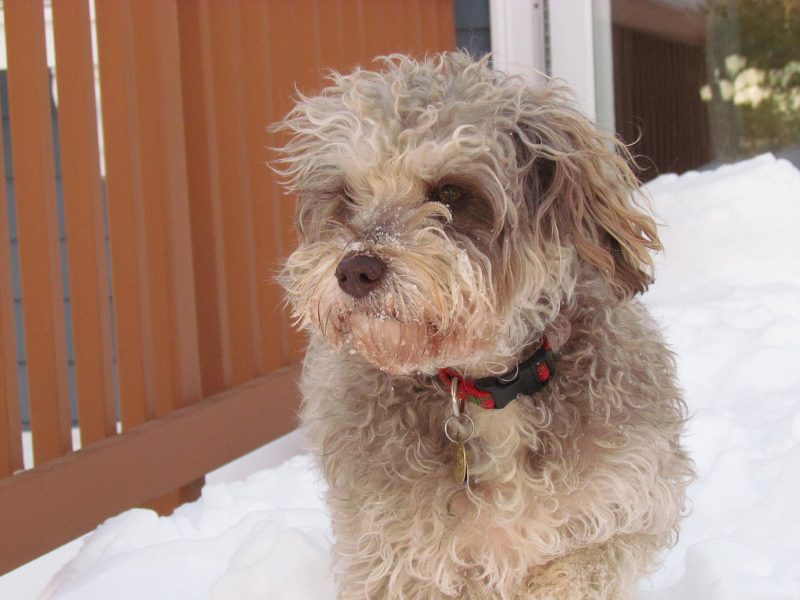
A Schnoodle is a Schnauzer crossed with a Poodle, most often a Miniature Schnauzer with a Miniature or Toy Poodle, producing a small, alert, low-shedding companion with a wiry-to-curly coat, a bearded face and a watchful streak. It suits active households, first-time owners who will commit to training, and people with mild allergies who understand that no dog is truly hypoallergenic. Most Schnoodles are clever, playful and devoted to their family, and they make good little watchdogs.
This is a cross, not a breed; there is no standard, no kennel-club recognition, and a Schnoodle can be anything from a 10-pound lap dog to a 70-pound Giant Schnauzer cross. Expect a coat that needs regular brushing and clipping, a tendency to bark at passers-by, a terrier-like opinion about squirrels and some reserve with strangers that early socialization keeps from tipping into suspicion.
History & Origin
The Schnoodle emerged in the United States in the 1980s, among the earliest of the Poodle crosses that followed the Cockapoo. Breeders paired Miniature Schnauzers with Miniature and Toy Poodles to combine the Schnauzer's sturdy build, loyalty and watchfulness with the Poodle's trainability and curly, low-shedding coat; the hope of a dog more tolerable for allergy sufferers was part of the pitch from the start. Later breeders added Standard and Giant Schnauzers crossed with Standard Poodles, so the name now covers dogs of very different sizes.
No kennel club recognizes the Schnoodle. The American Kennel Club registers the three Schnauzer breeds and the Poodle separately, and there is no written standard for the cross. Designer-dog registries will record litters for a fee, but that is not recognition. Most Schnoodles are first-generation crosses; multigenerational lines exist but have not converged on a consistent type.
Appearance
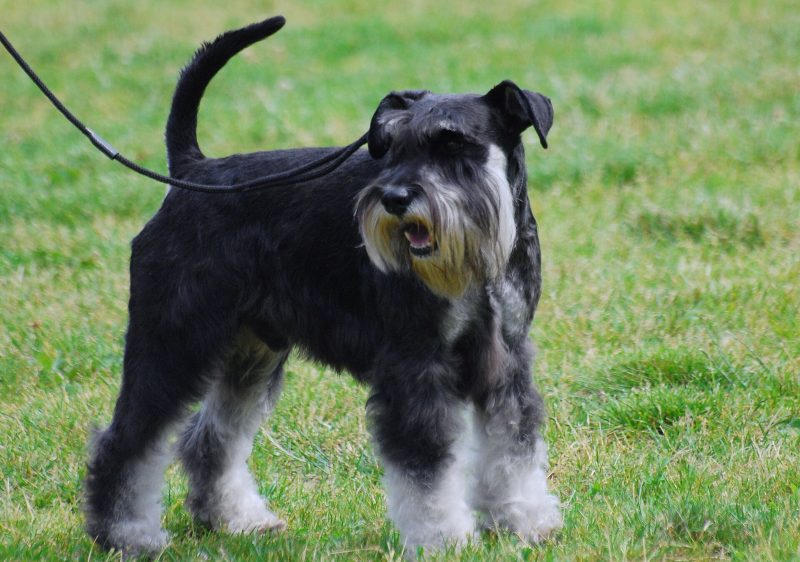
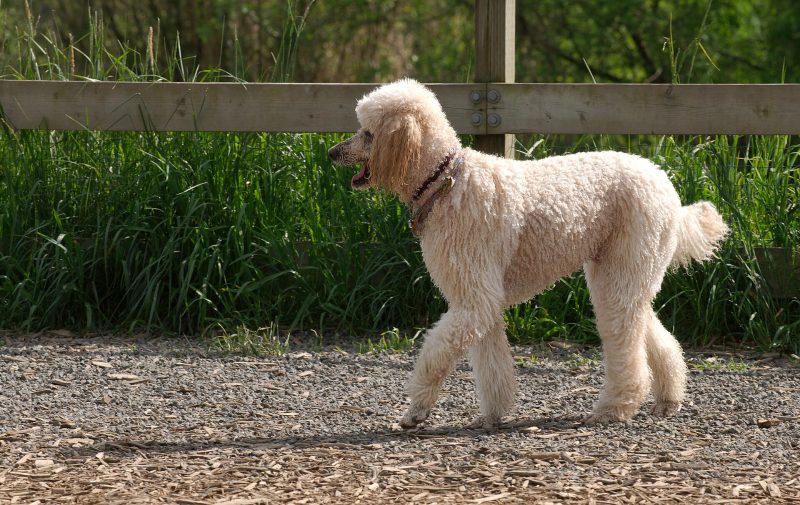
The common Schnoodle, from a Miniature Schnauzer and a Miniature or Toy Poodle, stands 10 to 16 inches and weighs 13 to 25 pounds for males and 10 to 20 for females. Standard and giant versions bred from larger parents can be two or three times heavier, so always ask what the parents weighed. The body is compact and squarish, the head rectangular with a beard and eyebrows inherited from the Schnauzer, the eyes dark and the ears folded.
The coat is the variable part: it may be wiry like a Schnauzer's, soft and wavy, or tightly curled like a Poodle's, and littermates often differ. It is usually medium length unless clipped. Black, grey, silver, apricot, white, sable and parti coats all occur; salt-and-pepper from the Schnauzer side is common. Beside a Miniature Schnauzer, a Schnoodle is softer and curlier; beside a Miniature Poodle it is squarer, bearded and bushier-browed.
Temperament & Personality
Schnoodles are bright, affectionate and alert. The Schnauzer side brings loyalty, a protective eye on the household and a terrier-like readiness to chase; the Poodle side brings playfulness, sensitivity and a quick mind. Indoors a well-exercised Schnoodle is a cheerful companion that likes to sit close and keep an eye on the window; outdoors it is energetic and curious, with a sharp bark for anything new.
Most are devoted to their family and good with children who are old enough to respect a small dog. They are usually fine with other dogs and can live with cats they are raised with, though small pets may trigger chasing. With strangers they tend to be reserved at first and friendly once introduced, which makes them good watchdogs but means early socialization matters. Temperament varies within litters; Schnauzer-leaning puppies are more independent and vocal, Poodle-leaning ones more sensitive and eager.
Exercise & Activity
Plan on 45 to 60 minutes of activity a day for a miniature Schnoodle, more for a standard or giant. A couple of brisk walks plus fetch, tug or a game in the yard suit them well, and the Poodle side often enjoys swimming. They cope with cold better than heat; in summer walk early and late and keep the coat trimmed.
Mental exercise is essential for a dog this intelligent. Trick training, scent games and puzzle feeders tire a Schnoodle faster than distance does. Without it, boredom shows up as barking at the window, digging, shredding and bossing the household.
Keep puppies to short, frequent play rather than long walks until they are grown.
Use a harness for small Schnoodles to protect the windpipe.
On rainy days substitute an indoor training session or a hide-and-seek game.
Training
Schnoodles learn fast and enjoy working with their people, which makes basic training rewarding. Positive, reward-based methods with food, play and praise work best; both parent breeds are sensitive to harsh handling and the Schnauzer side can become stubborn if pushed. Keep sessions short, varied and upbeat, because a bored Schnoodle invents its own entertainment.
The common sticking points are barking, which needs a quiet cue taught early and no attention paid to alarm barking; house-training in the smaller dogs, which responds to a tight schedule and a crate; and a terrier-style chase instinct that calls for a solid leave-it and recall practiced on a long line. Some Schnoodles are wary of strangers, so socialize puppies deliberately to visitors, children, other dogs and busy places between 8 and 16 weeks. Many go on to excel at agility, rally, obedience and scent work, and the calmer ones make good therapy dogs.
Grooming & Care
A Schnoodle coat sheds very little, so dead hair stays in the coat and mats unless it is brushed out. Brush two or three times a week with a slicker and finish with a metal comb to the skin, paying attention to the beard, behind the ears, the armpits and the legs. Wiry Schnauzer-type coats tangle less than curly Poodle-type coats but still need combing. Most owners clip the body short every six to eight weeks, at home or with a professional groomer.
The beard collects food and water, so wipe it after meals and dry it to prevent odor and skin irritation. Bathe every four to six weeks. Check folded ears weekly and keep the hair in the canal trimmed if your groomer recommends it.
Trim nails every three to four weeks.
Brush teeth several times a week; small mouths crowd teeth.
Introduce clippers and dryers in puppyhood so grooming stays stress-free.
Health
A Schnoodle can inherit conditions from either parent, and crossing does not cancel them. From the Miniature Schnauzer come a strong tendency to high blood fats, which raises the risk of pancreatitis, plus calcium oxalate bladder stones, diabetes, cataracts, progressive retinal atrophy and the inherited conditions myotonia congenita, von Willebrand disease and persistent Mullerian duct syndrome. From the Miniature and Toy Poodle come prcd-PRA, patellar luxation, Legg-Calve-Perthes disease, epilepsy and Addison's disease; the larger Poodles add hip dysplasia, sebaceous adenitis and bloat.
Ask a breeder for ACVO eye exams and veterinary patellar evaluations on both parents, hip results on larger parents, DNA tests for prcd-PRA on the Poodle and for myotonia congenita, PRA and von Willebrand disease on the Schnauzer, and a cardiac evaluation. Certificates matter more than reassurance. Lifespan is typically 12 to 15 years. See your vet promptly for vomiting and belly pain, straining to urinate, cloudy eyes, a skipping hind leg or unusual stiffness.
Nutrition
The Miniature Schnauzer's tendency toward high blood triglycerides shapes how a Schnoodle should eat. Feed measured meals of a quality diet twice a day, keep the dog lean, and avoid fatty table scraps, rich treats and anything from the barbecue; sudden fatty meals are a classic trigger for pancreatitis in Schnauzer-type dogs. Your vet may suggest a lower-fat diet for dogs with a history of high blood fats or pancreatitis, and periodic blood tests for adults.
Puppies can eat a small-breed or standard puppy food in three meals a day until about six months, with large-breed puppy food for giant Schnoodles; ask your vet when to switch to adult food. Weigh the dog monthly and adjust portions to body condition. Because the Schnauzer side is prone to bladder stones, make sure fresh water is always available and encourage drinking; a diet change may be part of prevention if stones have occurred. Crunchy food or dental chews help crowded small mouths between cleanings.
Living With This Breed
A miniature Schnoodle does well in an apartment or a house as long as it gets daily exercise and the barking is managed; standard and giant Schnoodles need more room and more activity. They adapt to most climates when protected from heat. Schnoodles bond closely and would rather not be left for long days; a bored one barks, and neighbors hear it.
Families with older children, other dogs and cats raised alongside the dog are a good fit. Small pets are a risk. Fences should be secure, because a chasing instinct and a good nose can lead a Schnoodle out of the yard.
For sitters: brush during the stay, wipe the beard after meals and keep walks on leash.
Follow the feeding plan exactly and give no fatty treats.
Note the family's quiet cue and the dog's usual reaction to visitors.
Interesting Facts
Schnoodle is one of the oldest Poodle-cross names, in use in the United States since the 1980s, before the doodle boom of the 2000s.
Depending on the parents, a Schnoodle can be a toy, miniature, standard or giant, from about 10 pounds to 70 or more.
Both parent breeds have German roots: Schnauzers were ratting and carting dogs, and the Poodle's name comes from the German word for splashing in water.
The Schnauzer's beard and eyebrows usually survive the cross, giving many Schnoodles a wise, slightly disapproving expression.
Miniature Schnauzers are a classic high-blood-fat breed, which is why Schnoodle owners are warned off fatty treats.
Schnoodles frequently show up in agility and trick-title results, a sign of two very trainable parents.
What Schnoodle owners say
Real pets, photos, stories and tips from the SitterNation community — separate from the editorial guide above.
Log in to add your pet, photos, stories and tips.
Meet Schnoodles on SitterNation
No Schnoodles have joined yet. Owners can show their pet here from the pet's profile.
Schnoodle community photos
No Schnoodles photos yet — be the first to share one.
Stories from Schnoodle owners
No stories yet. What is life with yours really like?
Tips from Schnoodle owners
No tips yet. One practical thing that works for you is enough.
Ask Schnoodle owners
No questions yet. Ask the people who live with the breed.