Typical tendencies
Energy level
Needs a real outlet most days.
Good with children
A famously patient playmate for kids.
Good with other pets
Friends with everything that lives at home.
Shedding
A light scatter, easy to keep up with.
Vocalization
Speaks up only when something matters.
Sociability
Hates being left out of anything.
More traits
Exercise needs
Adaptability
Grooming needs
Trainability
Intelligence
Family friendly
Friendly with strangers
Apartment friendly
Overview
The American Curl is the cat with ears that sweep backward in a smooth arc, and the personality behind them is just as distinctive: curious, gentle and stubbornly kitten-like well into adulthood. Males weigh 7 to 10 pounds, females 5 to 8, and a healthy Curl often lives 12 to 16 years. It suits families with considerate children, people who want a cat that follows them from room to room without yelling about it, and multi-pet homes, because Curls tend to accept dogs and other cats with little drama. The coat, short or long, is silky and low on undercoat, so grooming is light. This is not the breed for someone who wants an independent cat that keeps to itself, and the ears need gentle handling that a sitter should be told about. For most households, though, the Curl is an easy, affectionate companion with a built-in conversation starter.
History & Origin
The breed began in Lakewood, California, in 1981, when Joe and Grace Ruga took in a stray longhaired black female with oddly curled ears and named her Shulamith. Her first litter, born later that year, included kittens with the same ears, which showed the trait was inherited. Selective breeding started in 1983, pairing curled cats with ordinary domestic shorthairs and longhairs to keep the gene pool broad, and the first Curls were shown at a CFA show in Palm Springs that same year. British geneticist Roy Robinson analyzed 81 litters and 383 kittens and reported that the curl is an autosomal dominant trait with no linked deformities. TICA granted championship status in 1987, CFA accepted the breed for registration in 1986 and advanced it to championship in 1993, and FIFe recognizes it as well. Outcrossing to non-pedigreed domestic cats remained permitted in CFA for litters born before 2015, which is unusual and left the breed with healthy diversity.
Appearance
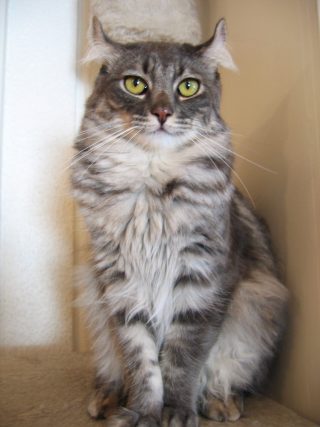
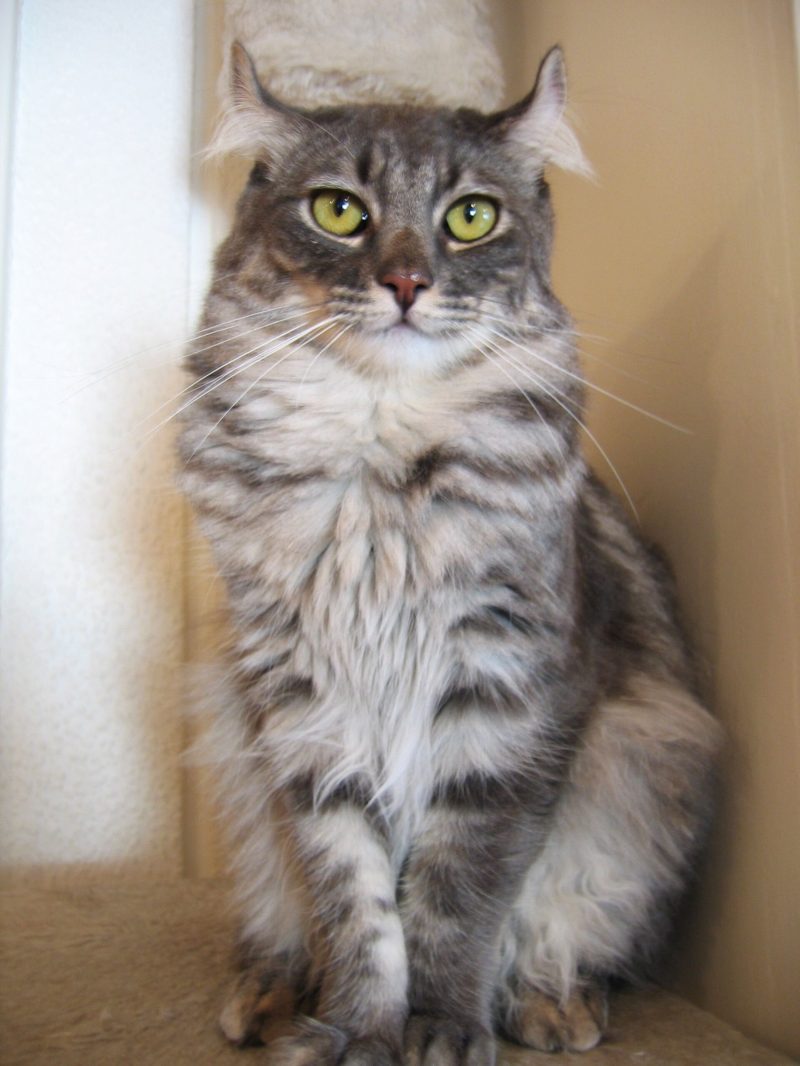
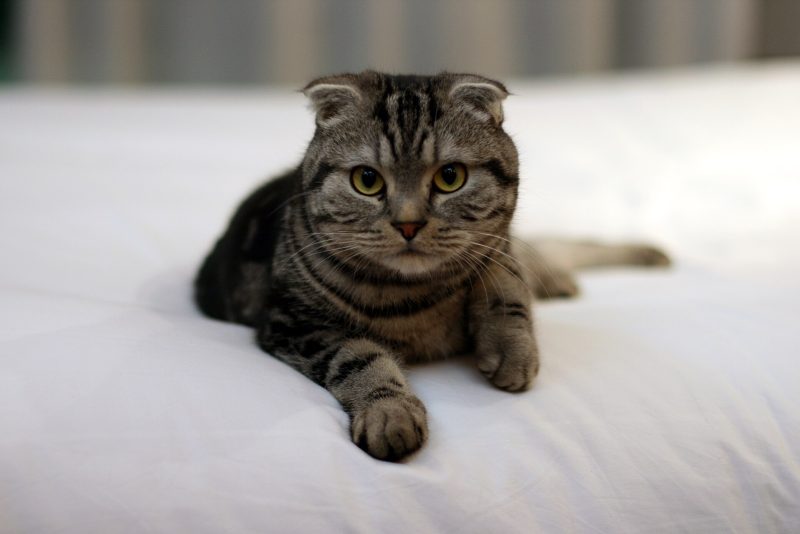
Everything starts with the ears. Curl kittens are born with straight ears that begin to roll back at three to five days old, change shape through kittenhood, and settle into their final curve by about sixteen weeks. Show cats carry an arc of 90 to 180 degrees; pet-quality cats may curl less. The ears are firm at the base, with soft tips and often wisps of fur inside. The rest of the cat is moderate: a medium, rectangular body about one and a half times as long as it is tall, a modified wedge head, large walnut-shaped eyes in any color, and a plumed or slender tail about the length of the body. Coats come in two divisions, a semi-long silky coat with a feathery tail and a short, soft coat, both with little undercoat, in every color and pattern. The Scottish Fold is the breed people confuse it with, but a Fold's ears bend forward and down rather than back.
Temperament & Personality
Breeders call the Curl the Peter Pan of cats, and the description holds. Adults keep a kitten's interest in whatever you are doing, trail you around the house, and often perch on a shoulder to supervise. They are affectionate without being clingy, happy to sit beside you or on you, and many owners report nose bumps and head butts first thing in the morning. The voice is quiet; Curls chirp and trill more than they meow. Energy is moderate: they play with real commitment, then nap. With strangers they are usually curious rather than shy, with children they are patient as long as the children are gentle, and with other cats and dogs they adapt quickly after a proper introduction. Intelligence shows up as problem solving, including opening cabinets and drawers, so childproof latches are a sensible precaution in a Curl household.
Exercise & Activity
Plan on two play sessions of 10 to 15 minutes a day, built around chasing and pouncing. Wand toys, tossed springs and crinkle balls get the best response, and many Curls learn to fetch. Climbing is important to them, so a tall cat tree or a set of wall shelves gives the vertical outlet they would otherwise find on your bookcase. Food puzzles and rotating toys keep the busy brain occupied when you are out. A bored Curl is not usually destructive, but it will invent games with things you did not intend to be toys, like faucet drips or the contents of a drawer. Indoor living is safest; a secure catio or harness walks give fresh air without risk. The silky, low-undercoat coat offers only moderate insulation, so keep a warm bed available in cold rooms.
Two short interactive sessions daily plus solo toys
Vertical space is a must
Boredom looks like drawer raids and shoulder-riding demands
Training
Curls are quick, food-motivated learners. Litter habits are typically reliable from the day a kitten comes home; keep one box per cat plus one, scooped daily, and treat any lapse as a reason to call the vet before assuming a behavior problem. Provide both a tall sisal post and a horizontal cardboard scratcher, placed near the spots where the cat already stretches, and reward use with a treat. Clicker training suits the breed: sit, high five, come when called and following a target are usually mastered within a couple of weeks of short sessions. Leave the carrier out as a bed so trips are not a struggle. Many Curls accept a harness readily if it is introduced indoors with treats before any outing. Handle the ears gently from kittenhood so cleaning and vet examinations become routine, and socialize kittens to visitors, children and other animals early so their natural confidence has something to build on.
Grooming & Care
The coat is easy. Comb or brush once a week with a steel comb or soft slicker, moving to two or three times a week during spring and fall when the modest undercoat drops. Longhairs may need a little attention behind the ears and in the britches, where fine hair can tangle; shorthairs rarely mat at all. Baths are seldom needed. The ears deserve a careful routine: the curled shape and reduced airflow can let wax build up, so check them weekly and wipe the visible part with a vet-approved cleaner on a cotton pad, never pushing into the canal and never bending the ear cartilage, which is firm but can be damaged if forced. Trim nails every two to three weeks, brush teeth several times a week and check eyes for discharge.
Weekly comb, more often in shedding seasons
Weekly ear check, gentle handling of the cartilage
Nails every two to three weeks, routine dental care
Health
The American Curl is regarded as a healthy breed with no disorder tied to the ear mutation; Robinson's study found no linked skeletal or neurological problems, which sets it apart from the Scottish Fold. The main practical issue is the ears themselves: the curled pinna can trap wax and debris, so ear infections and mites show up sooner, and the cartilage can be injured by rough handling. Beyond that, Curls face the same conditions as any cat: dental disease, obesity, hypertrophic cardiomyopathy and kidney disease in later life. Because the breed was built on random-bred outcrosses, responsible breeders screen their cats with the general feline DNA panels and heart ultrasounds rather than a breed-specific test. Lifespan is usually 12 to 16 years. Ask your vet about an annual exam that includes an ear check and dental assessment, and see them promptly for head shaking, ear odor or persistent scratching at the ears.
Nutrition
Feed a complete and balanced food that carries a nutritional adequacy statement for the cat's life stage: kitten formula until about twelve months, then adult, with a senior review from about ten years. Curls are moderately active and not especially prone to weight gain, but they are persuasive beggars, so measure meals and offer two or three a day rather than filling a bowl. Treats should stay under a tenth of daily calories. Longhaired Curls benefit from wet food or extra water for hairball support during shedding seasons, and some owners add a fiber-rich food on their vet's advice. Check body condition monthly by feeling for the ribs under a thin layer of flesh and looking for a waist from above. Sitters should follow the measured portions the owner leaves and resist the chirping request for more. Any change in appetite or thirst is worth a call to the vet.
Living With This Breed
A Curl fits an apartment as easily as a house, provided it has climbing space and company. It tolerates a normal workday alone, especially with a second pet or a window perch, but it is a social breed that does less well with long, lonely stretches. Children who are taught to stroke rather than grab the ears will find a tolerant playmate. Dogs and other cats are generally welcomed. The breed is not a yowler, so neighbors are unlikely to notice it. Keep it indoors; it is trusting with strangers and not street-smart.
Sitters: expect a shadow that wants to be where you are
Never pull, fold or clean deep into the ears; wipe the visible surface only
Check drawers and cabinets, since Curls open them
A calm, confident cat at vet visits if handled gently from kittenhood
Interesting Facts
Every American Curl traces back to one stray, Shulamith, found in Lakewood, California, in 1981.
Kittens are born with straight ears; the curl appears within the first week and keeps changing until about four months old.
The ear gene is dominant, so a single copy produces the curl, and litters often contain both curled and straight-eared kittens.
The breed earned the nicknames Peter Pan of cats for staying kitten-like and feline flying nun for the look of the ears.
Despite being an American breed, it has a stronger following in Japan, Russia, France and Spain than in much of the United States.
Show-ring ears must arc between 90 and 180 degrees; an ear whose tip touches the skull is disqualified.
Breeds similar to the American Curl
What American Curl owners say
Real pets, photos, stories and tips from the SitterNation community — separate from the editorial guide above.
Log in to add your pet, photos, stories and tips.
Meet American Curls on SitterNation
No American Curls have joined yet. Owners can show their pet here from the pet's profile.
American Curl community photos
No American Curls photos yet — be the first to share one.
Stories from American Curl owners
No stories yet. What is life with yours really like?
Tips from American Curl owners
No tips yet. One practical thing that works for you is enough.
Ask American Curl owners
No questions yet. Ask the people who live with the breed.