Typical tendencies
Energy level
Calm at home with short bursts of play.
Good with children
Gentle and tolerant around children.
Good with other pets
Easygoing with most household animals.
Shedding
Noticeable, with heavier seasonal blows.
Vocalization
Nearly silent; you may forget it is there.
Sociability
Follows the household from room to room.
More traits
Exercise needs
Adaptability
Grooming needs
Trainability
Intelligence
Family friendly
Friendly with strangers
Apartment friendly
Overview
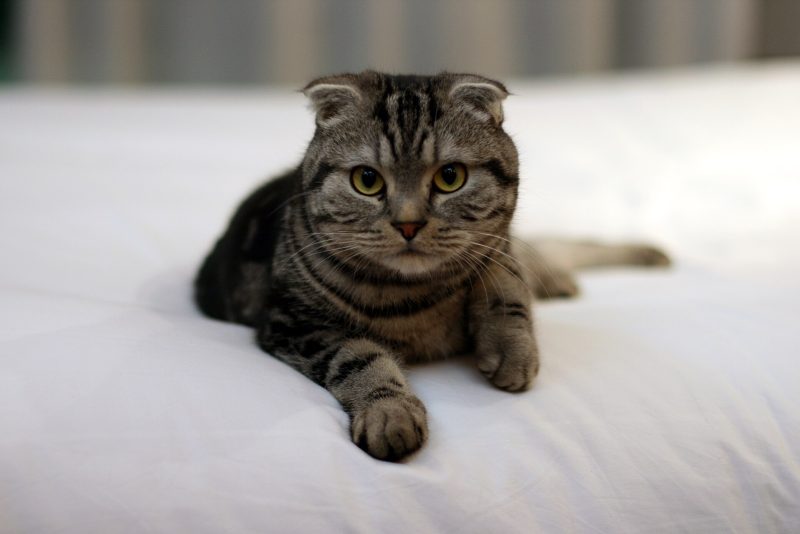
The Scottish Fold is a round, sweet-faced cat whose forward-folded ears give it an owlish look that has made it a social-media celebrity. Males weigh 9 to 13 pounds and females 6 to 9, and the breed lives 11 to 15 years. Folds are gentle, quiet, adaptable cats that suit apartments, families and first-time owners who want a placid companion. There is, however, a serious welfare issue that any prospective owner needs to understand: the same gene that folds the ears affects cartilage and bone throughout the body, so every folded-ear cat has some degree of a painful joint condition, and several major registries refuse to recognize the breed for that reason. If you already have a Fold, or are set on one, this guide explains how to care for it well; if you are still choosing a breed, read the health section first.
History & Origin
In 1961 a shepherd named William Ross noticed a white barn cat with folded ears, called Susie, on a farm near Coupar Angus in Perthshire, Scotland. He obtained one of her kittens, Snooks, and with his wife Mary and the geneticist Pat Turner began breeding the trait, first to British Shorthairs and farm cats. The GCCF registered the cats in 1966 but closed registration in 1971 after reports of deafness, ear mites and, more seriously, skeletal deformities in the kittens; a study by the geneticist Oliphant Jackson in the 1970s showed that the fold gene caused bone and cartilage lesions, especially when two folded cats were mated. Breeding moved to the United States, where outcrosses to American and British Shorthairs continued. CFA accepted the breed for registration in 1973 and granted championship status in 1978; a longhair division followed in 1992, and straight-eared cats were admitted to the show ring in 2022. TICA also recognizes the breed. The GCCF and FIFe do not, on welfare grounds, and several countries now restrict or discourage breeding.
Appearance
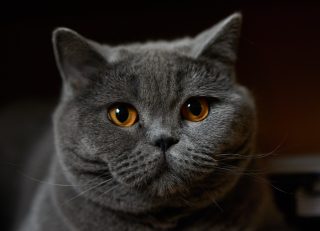
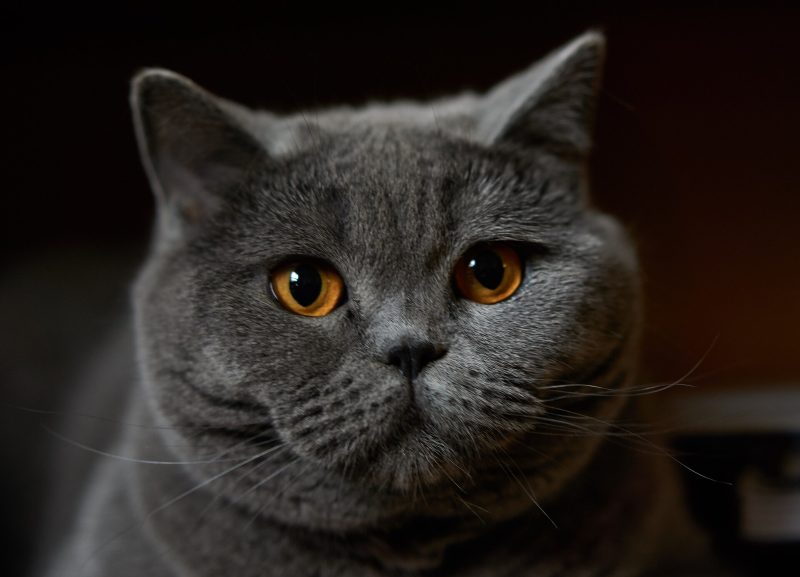
Roundness defines the Fold. The head is round with full cheeks, a short nose with a gentle curve, a firm chin and large, round, widely spaced eyes in a color that matches the coat. The ears are small, folded forward and downward and set so that the fold caps the skull, giving the owl or teddy-bear expression; a single fold is loose, while double and triple folds lie flatter. All kittens are born with straight ears, and the fold begins to show at about three to four weeks; roughly half the kittens in a litter keep straight ears and are called Scottish Straights. The body is medium, well padded and rounded, on sturdy legs, with a medium to long, flexible tail. The coat is short, dense and resilient in the Shorthair; the Longhair, sometimes called the Highland Fold, has a medium-long coat with britches and a plumed tail. CFA accepts every color and pattern, including pointed. The British Shorthair is the closest look-alike with straight ears.
Temperament & Personality
Scottish Folds are calm, soft-spoken and companionable. They enjoy being near their people, often lying in a loaf beside you or sitting upright on their haunches in the pose fans call the Buddha sit, but they are not demanding and are content to watch. The voice is small and seldom used. Folds adapt easily to new homes, cope with children who handle them gently, and usually accept dogs and other cats, though other cats sometimes misread the folded ears. With strangers they are reserved but not fearful. Play is moderate and often involves a favorite toy carried around; many enjoy fetch. They dislike being left alone for long periods and do better with a companion. A Fold that becomes withdrawn, stops jumping or snaps when touched is very likely in pain from its joints rather than moody, and that change should prompt a vet visit rather than a behavior plan.
Exercise & Activity
Folds are moderately active and need two short play sessions of about 10 minutes a day to stay trim, with wand toys, rolling balls and gentle fetch. Because the breed's joints are vulnerable, design play to avoid high jumps and hard landings: low, wide cat furniture with ramps or steps, soft landing surfaces and toys that run along the floor are better than tall trees. Puzzle feeders and treat hunts provide mental work without strain. Keeping weight down is the single most effective way to protect the joints, so play before meals and count treats. Watch for stiffness after play, reluctance to jump onto the sofa, or a stiff, short-stepped gait, which are early signs of joint disease and worth a vet visit.
Two gentle sessions daily, floor-level games
Ramps and low furniture instead of tall trees
Stop and note any limping or reluctance to move
Training
Folds are even-tempered and learn steadily when food and calm praise are involved. Clicker training for come, sit and target works well in short sessions and is a good way to keep an indoor cat engaged. Litter habits are usually reliable, but a cat with sore joints may struggle with high-sided boxes, so use a large, low-entry tray and keep it on the main living floor; a sudden change in litter habits in this breed is a pain signal. Provide a horizontal scratcher and a stable post, since stretching helps stiff joints. Carrier training is important because Folds should see the vet regularly: leave the carrier out as a bed and feed treats in it. Handle the tail and legs gently from kittenhood so your vet can examine them; a Fold with a stiff tail should never be pulled or bent. Harness walks suit some cats, but keep them short.
Grooming & Care
The Shorthair's dense coat needs a weekly comb with a steel comb or rubber brush, more often in spring and fall when the undercoat drops. The Longhair needs combing two or three times a week to prevent mats in the britches, ruff and armpits. Baths are rarely needed. The folded ears trap wax and debris, so check them weekly and clean gently with a vet-approved solution when needed; never force the fold open or probe deeply. Trim nails every two to three weeks. Brush teeth several times a week. Cats with joint disease groom less, so you may need to comb the hindquarters and the base of the tail they can no longer reach, and watch for greasy fur or dandruff there as a sign that the cat is struggling.
Weekly comb for Shorthairs, two or three times for Longhairs
Ears checked weekly, gently
Help with grooming when joints are stiff
Health
The defining health issue of the Scottish Fold is osteochondrodysplasia, a disorder of cartilage and bone development caused by the dominant ear-folding gene, identified in 2016 as a TRPV4 mutation. Abnormal cartilage produces a thick, stiff tail, short wide limbs, bony growths around the ankles and wrists and progressive, painful arthritis. Cats with two copies of the gene are severely affected from kittenhood; cats with one copy, which is every folded-ear cat from a Fold-to-Straight mating, are affected to varying degrees, often later and more mildly, but no folded-ear cat is free of it. There is no cure; management means weight control, pain relief and joint support with your vet. Because of this, the GCCF and FIFe do not recognize the breed, International Cat Care and Cats Protection consider breeding unethical, and some jurisdictions restrict it; CFA and TICA recognize the breed with a rule against Fold-to-Fold matings. Polycystic kidney disease and hypertrophic cardiomyopathy are also reported and can be screened by DNA test or ultrasound. Ask your vet about any stiffness, reluctance to jump or change in litter habits.
Nutrition
Feed a complete and balanced food for the cat's life stage, with kitten food for the first year and adult maintenance afterward. Weight control is the heart of Fold nutrition, because every extra ounce loads joints that are already compromised; feed measured meals two or three times a day, count treats in the total, and have your vet set a calorie target that you adjust by body condition. Wet food adds moisture and helps a cat feel full. Some vets suggest diets or supplements with omega-3 fatty acids, glucosamine and chondroitin for joint support, but discuss this with your vet rather than buying over the counter. Place food and water bowls at floor level on a non-slip mat, raised only slightly if your vet recommends it, so a stiff cat does not have to jump or crouch awkwardly. Hairballs are moderate in Shorthairs and more frequent in Longhairs, where a hairball formula can help. Give sitters exact portions and a note about any joint medication schedule.
Living With This Breed
A Scottish Fold is an easy housemate: quiet, adaptable and happy in an apartment. It should live indoors, with a catio or harness for fresh air. The home needs to be arranged for a cat whose joints may stiffen with age: steps or ramps to favorite perches, soft beds, low-entry litter boxes and food on the floor. Carpeted or non-slip surfaces help. Children must learn never to pull the tail or press the ears. Dogs and other cats are usually fine, and company matters because Folds dislike solitude. Keep the cat lean. Budget for regular vet checks and possibly long-term pain management.
Sitters: expect a calm cat that may sit upright like a meerkat; do not lift it by the chest or handle the tail
Watch for limping, reluctance to jump or litter box changes and report them
Keep to the medication schedule if one is in place
Interesting Facts
Every Scottish Fold descends from Susie, a white barn cat found in Perthshire in 1961, and her daughter Snooks.
Kittens are born with straight ears; the fold appears at three to four weeks, and about half of each litter stays straight-eared.
Folds are famous for the Buddha sit, resting upright on their haunches with legs out in front, and for sleeping flat on their backs.
Taylor Swift's cats Meredith Grey and Olivia Benson are Scottish Folds with millions of social media followers, which drove a surge in demand for the breed.
Maru, the box-loving Japanese internet cat, is a Scottish Fold with straight ears.
The Fold is not recognized by the GCCF in its home country, and Scotland's cat-breeding licence rules now make breeding Folds difficult, so the breed is rarer in Britain than in the United States or Asia.
Breeds similar to the Scottish Fold
What Scottish Fold owners say
Real pets, photos, stories and tips from the SitterNation community — separate from the editorial guide above.
Log in to add your pet, photos, stories and tips.
Meet Scottish Folds on SitterNation
No Scottish Folds have joined yet. Owners can show their pet here from the pet's profile.
Scottish Fold community photos
No Scottish Folds photos yet — be the first to share one.
Stories from Scottish Fold owners
No stories yet. What is life with yours really like?
Tips from Scottish Fold owners
No tips yet. One practical thing that works for you is enough.
Ask Scottish Fold owners
No questions yet. Ask the people who live with the breed.