Typical tendencies
Energy level
Ready to go when you are, settles after.
Good with children
A famously patient playmate for kids.
Good with other pets
Friends with everything that lives at home.
Shedding
Noticeable, with heavier seasonal blows.
Vocalization
Speaks up only when something matters.
Sociability
Follows the household from room to room.
More traits
Exercise needs
Adaptability
Grooming needs
Trainability
Intelligence
Family friendly
Friendly with strangers
Apartment friendly
Overview
The American Shorthair is the pedigreed version of the classic all-American house cat: sturdy, even-tempered, quietly affectionate and built to last. Males weigh 11 to 15 pounds and females 8 to 12, and a well-kept cat commonly lives 15 to 20 years. It suits first-time cat owners, families with children, multi-pet homes and anyone who wants a companion that enjoys play and company but can also entertain itself while the house is empty. The dense, hard coat needs little work, the voice is soft, and the temperament is forgiving. The breed is not a good match for someone who wants a lap-limpet that follows every step, a highly vocal cat or an exotic look. Its appeal is reliability: a cat that is happy to join in, happy to wait, and rarely a problem for a sitter.
History & Origin
Working cats crossed the Atlantic with the earliest European settlers, kept aboard ship to protect food stores from rats and then put to work in barns, shops and homes along the new coast. Over three centuries of natural selection in a demanding climate, these cats became a recognizable type: muscular, thick-coated and hardy. They were exhibited at the first American cat show at Madison Square Garden in 1895, and when the Cat Fanciers' Association formed in 1906 they were among its first five recognized breeds, registered then as Shorthairs and later as Domestic Shorthairs. For decades breeders worked to preserve the type against the growing popularity of imported Persians and Siamese, and crosses with those breeds were discouraged. In the mid-1960s the CFA renamed the breed the American Shorthair to distinguish pedigreed cats from random-bred domestics and to recognize its national character. It remains a consistent top-twenty breed in CFA registrations and is popular in Japan and other parts of Asia as well as North America.
Appearance
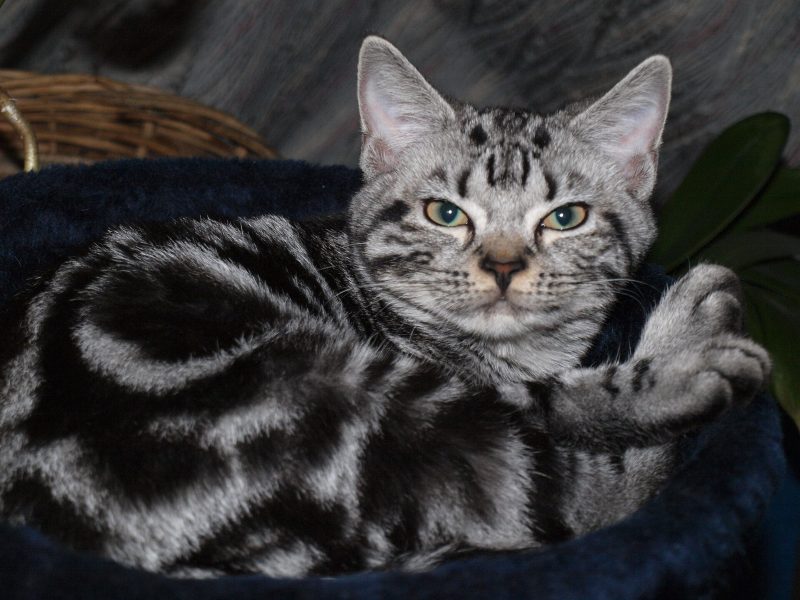
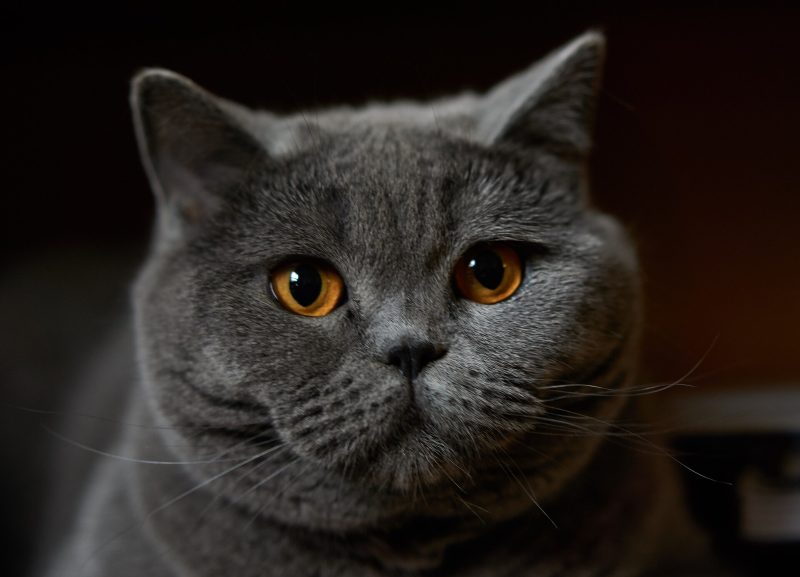
An American Shorthair looks like a strong, well-fed working cat, medium to large and slightly longer than it is tall, with a broad chest, well-developed shoulders and a medium-length tail that is heavy at the base. The head is oval and a little longer than wide, with full cheeks, a squarish muzzle, a strong jaw and medium ears with rounded tips. The eyes are large and wide-set, with an upper lid shaped like half an almond and a rounded lower lid, which gives the breed its open, alert expression. The coat is short, dense and hard to the touch, built to shed rain and cold rather than to feel plush. More than eighty colors and patterns are accepted; the silver classic tabby, with black swirls on a pale silver ground, is the breed's signature, followed by brown tabby, solid colors, tortoiseshell and bicolors. Compared with a British Shorthair it is less round and less cobby, and next to a random-bred domestic shorthair it is heavier-boned and more uniform in type.
Temperament & Personality
Easygoing is the word breeders use most. An American Shorthair is affectionate without being demanding, enjoys sitting near you more than on you, and is content to nap in a sunny spot when the household is busy. It is playful well into middle age, especially with games that mimic hunting, and many retain the mousing instincts of their ancestors. The breed is tolerant of children, dogs and other cats when introductions are sensible, and most are friendly or politely curious with visitors rather than shy. Vocalization is minimal; many owners describe a silent meow, an open mouth with no sound. They are moderately active, with short bursts of energy between long rests, and they do not usually suffer when left alone for a workday as long as they have toys and a window. Intelligence shows in problem solving, including opening cupboards and doors that have not been secured.
Exercise & Activity
Plan on 15 to 20 minutes of interactive play once or twice a day. Hunting-style games are the favorite: a wand toy dragged along the floor, a toy mouse tossed for fetch, a ball in a track or a treat hidden in a puzzle feeder. A cat tree near a window gives the breed its two favorite things at once, climbing and bird watching. Without an outlet this cat tends to put on weight rather than act out, so exercise matters for health more than for behavior. Rotate toys weekly to keep novelty high. The breed tolerates heat and cold about as well as any shorthaired cat, but it should be an indoor cat with supervised outdoor time at most.
Two short play sessions a day, plus solo toys and perches
Food puzzles slow eating and add mental work
Boredom usually shows as overeating and extra sleep rather than mischief
Training
American Shorthairs are sensible, food-motivated students. Clicker training works for come, sit, high five and targeting a mat, and short sessions before meals keep attention sharp. Litter habits are reliable; one box per cat plus one, scooped daily, prevents most problems. Provide scratching posts in both upright and horizontal forms, because this breed scratches to stretch its strong shoulders and will use a sofa arm if nothing better is nearby. Carrier training is easy if the carrier lives in the room with a soft bed inside and treats appear in it now and then. Many adapt to a harness and leash for a quiet garden walk, though they are not natural adventurers. Socialize kittens to visitors, dogs and handling early; the breed's good nature is partly genetic and partly learned. Few sticking points exist beyond counter surfing, which is best handled by giving the cat a tall perch of its own in the kitchen.
Grooming & Care
The hard, dense coat is one of the easiest in the cat world to maintain. A weekly session with a rubber brush, grooming mitt or fine-toothed comb removes dead hair and spreads skin oils. The undercoat drops in spring and the guard hairs thin in fall, and during those weeks a few minutes of daily brushing keeps hair off the furniture and hairballs out of the cat. Baths are rarely needed outside the show ring. Trim nails every two to three weeks, check the ears monthly for wax or odor, and wipe any eye discharge with a damp cloth. Dental care matters: brushing several times a week with cat toothpaste and regular dental checks prevent the periodontal disease that is common in all cats. Light-colored cats that sunbathe by windows can burn on the ears and nose, so window film or a shaded perch helps.
Weekly brushing, daily during spring and fall shedding
Nails every two to three weeks, teeth several times a week
No professional grooming required
Health
The American Shorthair is a healthy natural breed with a long lifespan, commonly 15 to 20 years, and no condition unique to it. Hypertrophic cardiomyopathy, a thickening of the heart muscle, appeared in some lines in the 1980s and 1990s; breeders responded with echocardiographic screening and selective breeding, and the CFA considers it largely eliminated, though no DNA test exists for the breed and screening of breeding cats is still good practice. The more common concerns are the ones any sturdy, food-loving cat faces: obesity and its companions, diabetes and arthritis; dental disease; and lower urinary tract problems, including crystals and stones, which show up as straining or frequent trips to the box. Some breeders also screen for polycystic kidney disease because of historical Persian crosses in a few lines, and a DNA test is available. Ask your vet about an annual exam with weight tracking, regular dental checks and senior bloodwork from about ten years old, and see them promptly if the cat strains to urinate, breathes with effort or loses appetite.
Nutrition
This breed's biggest nutritional risk is simple overeating. American Shorthairs are moderately active, enjoy their food and are easy to overfeed because they look so solid. Feed a complete, balanced diet labeled for the cat's life stage, kitten food until about a year old and then an adult formula, and measure meals rather than leaving a full bowl out. Two or three small meals a day suit most adults. You should be able to feel the ribs under a thin layer of flesh and see a waist from above; if not, ask your vet to set a target weight and a portion plan. Treats count toward the daily total and should stay under a tenth of calories. Wet food adds water, which helps urinary health, and a fountain encourages drinking. Puzzle feeders turn mealtime into exercise. Sitters should feed exactly the measured amount the owner leaves and resist the breed's practiced, silent request for more.
Living With This Breed
An American Shorthair fits almost any home. It is happy in an apartment with a window perch and a cat tree, content in a busy family house and equally fine as the only pet of a quiet adult. It copes with a normal workday alone, especially with a second cat or a few solo toys, and it rarely yowls at neighbors. Children who have learned to handle a cat gently will find a patient playmate; the breed is heavy enough not to be injured easily and relaxed enough not to lash out. Dogs and other cats are usually accepted after a slow introduction. Keep it indoors or in a secure enclosure; the hunting instinct is strong and roads are not.
Sitters: an easy cat that will come out for play and food, then nap
Measure meals exactly; this breed asks for more and gains easily
Check cupboards and doors, since it can open simple latches
Interesting Facts
A brown tabby was offered for sale at the 1896 Madison Square Garden cat show for 2,500 dollars, a fortune at the time, which shows how early the type was prized.
The breed was called Domestic Shorthair in the show ring until the mid-1960s, when the CFA gave it the name American Shorthair to set pedigreed cats apart from random-bred ones.
Ships' cats of this type are often said to have arrived on the Mayflower in 1620, a claim that is unprovable but appears in CFA and veterinary histories alike.
The silver classic tabby pattern, with bold black swirls on silver, is so associated with the breed that many people think it is the only color, though more than eighty are recognized.
Many American Shorthairs greet people with a silent meow, opening the mouth without making a sound.
The breed is one of the five original breeds registered when the CFA was founded in 1906.
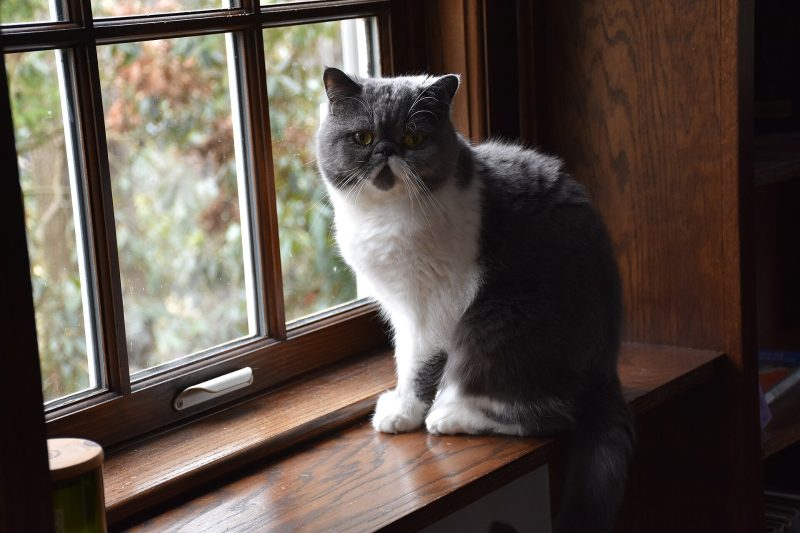
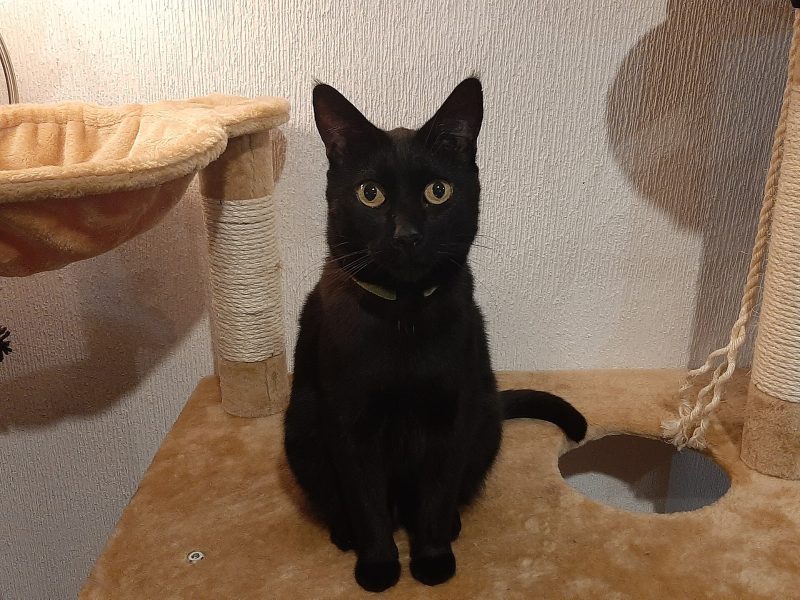
Breeds similar to the American Shorthair
What American Shorthair owners say
Real pets, photos, stories and tips from the SitterNation community — separate from the editorial guide above.
Log in to add your pet, photos, stories and tips.
Meet American Shorthairs on SitterNation
No American Shorthairs have joined yet. Owners can show their pet here from the pet's profile.
American Shorthair community photos
No American Shorthairs photos yet — be the first to share one.
Stories from American Shorthair owners
No stories yet. What is life with yours really like?
Tips from American Shorthair owners
No tips yet. One practical thing that works for you is enough.
Ask American Shorthair owners
No questions yet. Ask the people who live with the breed.