Typical tendencies
Energy level
Calm at home with short bursts of play.
Good with children
Gentle and tolerant around children.
Good with other pets
Easygoing with most household animals.
Shedding
Noticeable, with heavier seasonal blows.
Vocalization
Nearly silent; you may forget it is there.
Sociability
Follows the household from room to room.
More traits
Exercise needs
Adaptability
Grooming needs
Trainability
Intelligence
Family friendly
Friendly with strangers
Apartment friendly
Overview
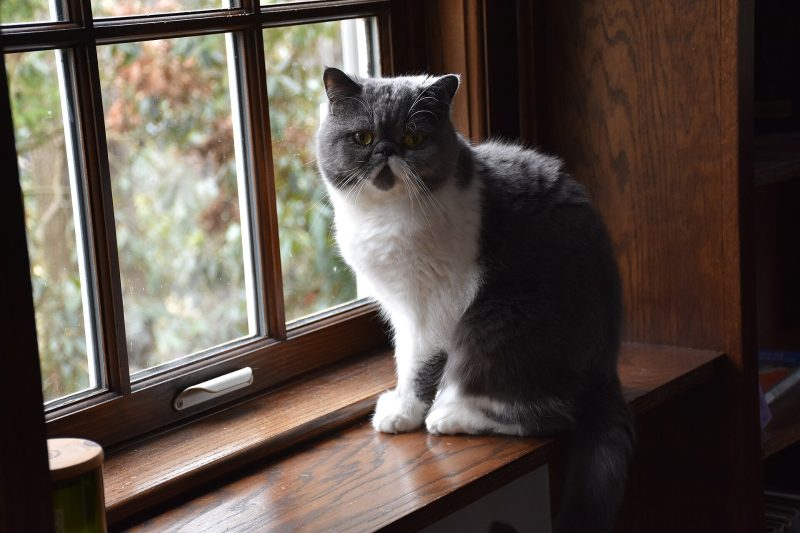
The Exotic Shorthair is the Persian for people who cannot comb a cat every day. It has the same round head, snub nose, big eyes and cobby body, wrapped in a plush, dense short coat that stands away from the skin like a teddy bear's. Males weigh 10 to 14 pounds and females 8 to 12, and most live 12 to 15 years. Exotics suit apartment dwellers, quiet families, first-time owners and anyone who wants a calm, cuddly cat with a bit more play than a Persian but far less grooming. They are not for homes that want an energetic acrobat, and the flat face means the same heat and breathing cautions as the Persian. A weekly comb, a cool room and a lap are the essentials; in return you get a gentle, quiet, slightly comical companion.
History & Origin
In the 1950s a few American Shorthair breeders on the West Coast crossed their cats with Persians, hoping to borrow the Persian's silver coloring and heavier build. The kittens looked more Persian than Shorthair, which caused a row in American Shorthair circles, but the cats themselves were appealing. CFA judge Jane Martinke proposed treating them as a new breed, and CFA accepted the Exotic Shorthair for championship in 1967. Early breeders also used Burmese and Russian Blues to bring in short hair, but the outcrosses were soon restricted, and since 1987 the Persian has been the only permitted outcross in CFA. Because the breed was repeatedly bred back to Persians, its standard is identical to the Persian's except for the coat, and CFA judges it in the longhair group. The word Shorthair was later dropped from CFA's name for the breed. Longhaired kittens still appear in litters and are registered as Exotic Longhairs or, in some registries, as Persians. TICA, FIFe and the GCCF all recognize the breed.
Appearance
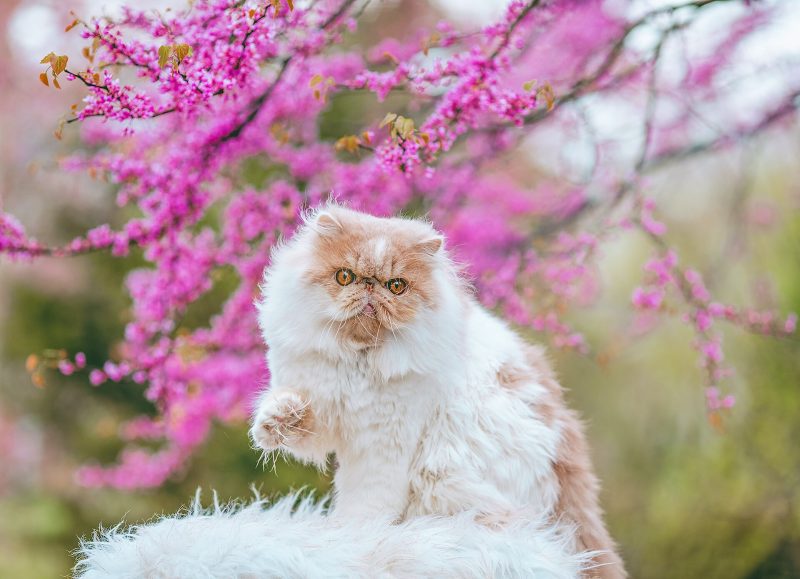
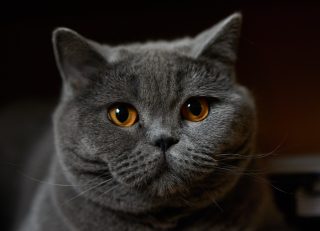
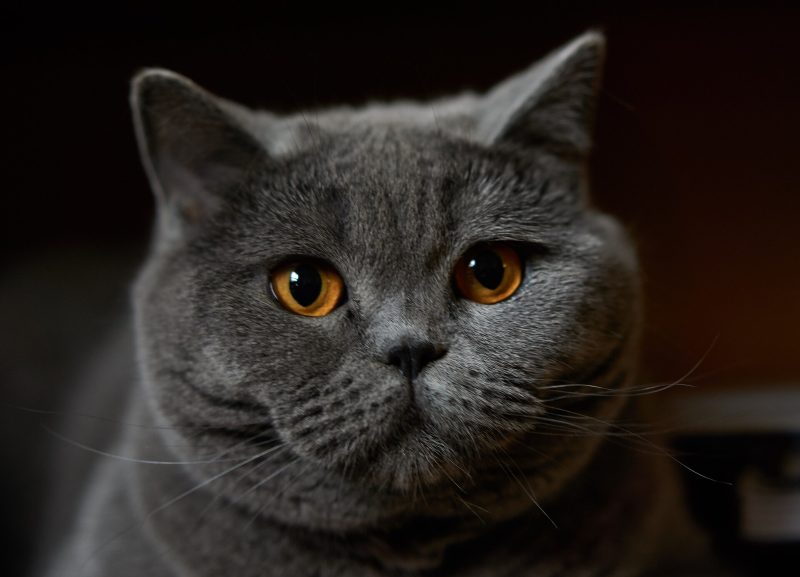
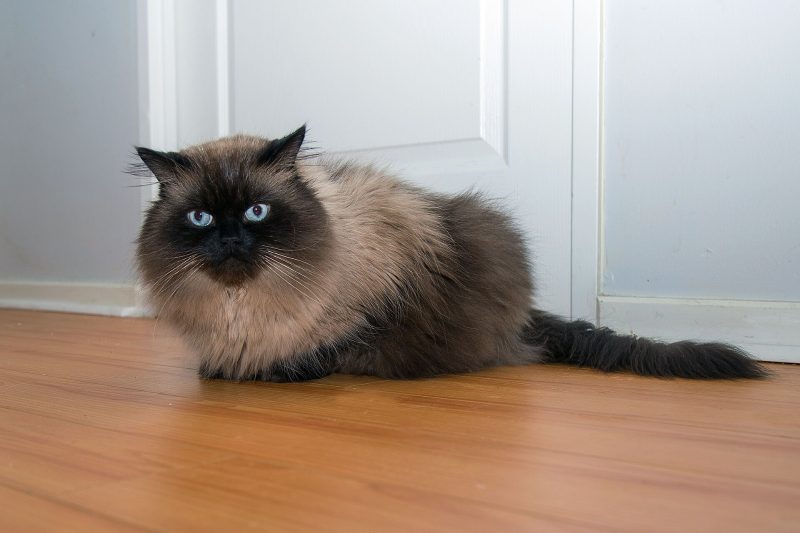
Picture a Persian and swap the coat. The Exotic has a round, massive head with full cheeks, a short, broad nose with a break between large, round, wide-set eyes, and small, round-tipped ears set low on the skull. The body is cobby and heavy-boned on short, thick legs, with a broad chest and a short, full tail. The coat is the defining feature: medium-short, dense and plush, with a thick undercoat that makes it stand away from the body rather than lie flat, so the cat feels like a stuffed toy. Every Persian color and pattern is accepted, in the same seven divisions, from solids and silvers to tabbies, bicolors and pointed. Eye color matches the coat: copper in most, green in silvers and goldens, blue in whites and pointed cats. A British Shorthair has a longer nose and a crisper coat; a Persian has the same face under a long coat.
Temperament & Personality
Exotics inherit the Persian's calm, with a little extra bounce from their shorthair ancestors. They are sweet, quiet and undemanding, content to sit beside you or on you, and they ask for attention with a stare and a squeaky mew rather than a yowl. Many follow their person from room to room and settle nearby. Strangers are met with reserve at first, then acceptance; this is not a cat that bolts, but it takes its time. With children an Exotic is patient as long as handling is gentle, and it usually gets on with calm dogs and other cats. Play comes in short bursts, with a feather or a thrown ball, and then it is nap time. The breed is rarely destructive and seldom climbs high. Males are often described as more affectionate and lap-oriented, females as slightly more independent. Exotics do not enjoy long stretches alone.
Exercise & Activity
An Exotic needs gentle, regular play rather than hard exercise: two sessions of 10 minutes a day with a wand toy, a crinkle ball or a treat rolled down the hall. The breed is a bit more playful than the Persian and will chase a toy mouse with real enthusiasm, but it tires quickly and should never be pushed to the point of open-mouth breathing. A low cat tree, a scratching post and a window perch give it somewhere to sit and watch. Puzzle feeders and treat balls provide mental work and slow a cat that loves its food. Keep play in cool rooms; the flat face limits heat tolerance. A bored Exotic eats more and sleeps more, so a short daily game matters for weight as much as for mood.
Two short play sessions daily, low intensity
Puzzle feeders and a window view
Cool rooms, and stop at the first sign of panting
Training
Exotics are easygoing learners that respond to food, praise and quiet patience. Litter habits are usually spotless; keep the box clean and large enough for a stocky cat, and use a low-sided tray for kittens and older cats. Provide a sisal post and a cardboard scratcher, and reward their use from the first week. Clicker training works for come, sit and a high-five in sessions of two or three minutes, and the breed is good at learning a routine, such as waiting on a mat at mealtimes. Grooming tolerance is the most useful skill to teach: handle paws, comb weekly and wipe the eyes daily from kittenhood. Carrier training pays off because flat-faced cats see the vet more often; leave the carrier open with a soft bed inside. Some Exotics accept a harness for a patio, but keep outings short and cool.
Grooming & Care
The Exotic's coat is a relief after a Persian's but still needs work. Comb once or twice a week with a steel comb and a slicker brush to lift loose undercoat; during the spring and fall sheds, comb every other day, because the dense coat drops a surprising amount of hair and can mat under the arms and on the belly if ignored. An occasional bath during shedding season helps, with thorough drying. Wipe the eyes daily with a soft, damp cloth, since the flat face causes tear overflow and staining in the facial folds; dry the folds afterwards to prevent skin infection. Check the small ears weekly, trim nails every two to three weeks and brush teeth several times a week because crowded teeth collect plaque. Most owners manage without a professional groomer.
Weekly comb, more in shedding season
Daily eye and face-fold wipe
Nails every two to three weeks, teeth several times a week
Health
Exotics share the Persian's health profile. Polycystic kidney disease, from a dominant PKD1 mutation, is the most important inherited condition; cysts form before birth and can lead to kidney failure in middle age, and a simple DNA test identifies affected cats, so ask breeders for clear results on both parents. Brachycephalic airway syndrome, with narrow nostrils and a long soft palate, causes snoring, noisy breathing and poor heat tolerance; severity depends on how extreme the head is. The same anatomy brings tear overflow, shallow eye sockets prone to corneal ulcers, crowded teeth and skin-fold infections. Hydrocephalus is occasionally seen in extremely flat-faced kittens. Hypertrophic cardiomyopathy has been reported, and some breeders screen hearts by ultrasound. Obesity is common and makes breathing worse. Lifespan is 12 to 15 years. Ask your vet about open-mouth breathing, snoring that worsens, eye squinting, increased thirst or weight gain.
Nutrition
Feed a complete and balanced diet for the cat's life stage, starting with kitten food and moving to adult maintenance at about one year. Exotics love food and move little, so measured portions two or three times a day are essential; have your vet set a calorie target and adjust by body condition, feeling for ribs under the thick coat. The flat face makes grabbing kibble clumsy; wide, shallow bowls and either wet food or kibble shaped for flat-faced cats help, and wet food also supports hydration and urinary health. Hairballs are moderate in this breed, more during shedding seasons, when a hairball formula or extra fiber can help. Cats diagnosed with kidney disease need a specific renal diet from their vet. Count treats inside the daily total. Ask your vet before adding supplements, and give sitters exact amounts and a note about the cat's usual eating style.
Living With This Breed
An Exotic is a near-perfect apartment cat: quiet, low-energy, not a climber and content with a cushion by the window. It belongs indoors, with a catio or harness for fresh air in cool weather. Air conditioning in summer is important for a flat-faced cat, and travel on hot days should be avoided. The breed suits calm homes with gentle children and mellow dogs or cats. Exotics tolerate a workday alone but dislike long, repeated absences; a second pet helps. Snoring is normal, but watch for breathing that sounds labored.
Sitters: wipe the eyes daily and dry the facial folds
Keep rooms cool and water fresh; call the vet for open-mouth breathing
Measure food exactly; this cat will lobby for more
Interesting Facts
The breed was nearly named Sterling, after the silver coloring early breeders were chasing, before Exotic Shorthair was chosen.
Garfield, the lasagna-loving cartoon cat, is widely assumed to be an orange tabby Exotic because of his round face and plush coat.
CFA judges the Exotic in its longhair group, because apart from the coat the breed standard is word for word the Persian's.
In some years CFA has registered more Exotics than Persians, making the short-coated version the more popular of the two.
Longhaired kittens still turn up in Exotic litters because the long-hair gene is recessive; they are registered as Exotic Longhairs.
Exotics are famously quiet, communicating with a wide-eyed stare and an occasional squeak rather than a meow.
Breeds similar to the Exotic Shorthair
What Exotic Shorthair owners say
Real pets, photos, stories and tips from the SitterNation community — separate from the editorial guide above.
Log in to add your pet, photos, stories and tips.
Meet Exotic Shorthairs on SitterNation
No Exotic Shorthairs have joined yet. Owners can show their pet here from the pet's profile.
Exotic Shorthair community photos
No Exotic Shorthairs photos yet — be the first to share one.
Stories from Exotic Shorthair owners
No stories yet. What is life with yours really like?
Tips from Exotic Shorthair owners
No tips yet. One practical thing that works for you is enough.
Ask Exotic Shorthair owners
No questions yet. Ask the people who live with the breed.