Typical tendencies
Energy level
Happiest dozing; a stroll is an event.
Good with children
Patient with kids when well supervised.
Good with other pets
Easygoing with most household animals.
Shedding
Keep the lint roller within reach.
Vocalization
Nearly silent; you may forget it is there.
Sociability
Likes being in the room with people.
More traits
Exercise needs
Adaptability
Grooming needs
Trainability
Intelligence
Family friendly
Friendly with strangers
Apartment friendly
Overview
The Persian is the classic longhaired show cat: a round, heavily boned body, a flat sweet face, enormous eyes and a flowing coat that needs a comb every day. Males weigh 9 to 14 pounds and females 7 to 11, and the breed lives 12 to 17 years. Persians suit calm households, apartment dwellers, seniors and anyone who wants a quiet lap cat that would rather be groomed than chase a toy. They are not for people who cannot commit ten minutes a day to combing, who want a playful acrobat, or whose home is loud and chaotic. The flat face brings real health considerations, so choose a breeder who screens for kidney disease and avoids extreme heads. In return you get a serene, decorative, affectionate companion that treats a sunny cushion as a full-time job.
History & Origin
Longhaired cats reached Western Europe from Persia and Turkey in the early 1600s, carried home by travelers such as the Italian Pietro della Valle, who described cats from the Khorasan region. For two centuries they were simply called longhairs or Angoras. When organized cat shows began at London's Crystal Palace in 1871, Persians were among the stars, and Victorian breeders fixed the rounder head and heavier body that set them apart from the Angora. The first imports reached the United States in the late 1880s, and when CFA was founded in 1906 the Persian was one of its original breeds. Through the 20th century the face grew shorter and the coat longer, dividing the breed into traditional, doll-faced cats and the extreme show type; CFA's standard today requires open nostrils and unrestricted breathing. Recent genetic studies show the modern Persian is closer to Western European cats than to any Middle Eastern population. The Himalayan, a pointed Persian, was developed in the 1950s and is a color division in CFA.
Appearance
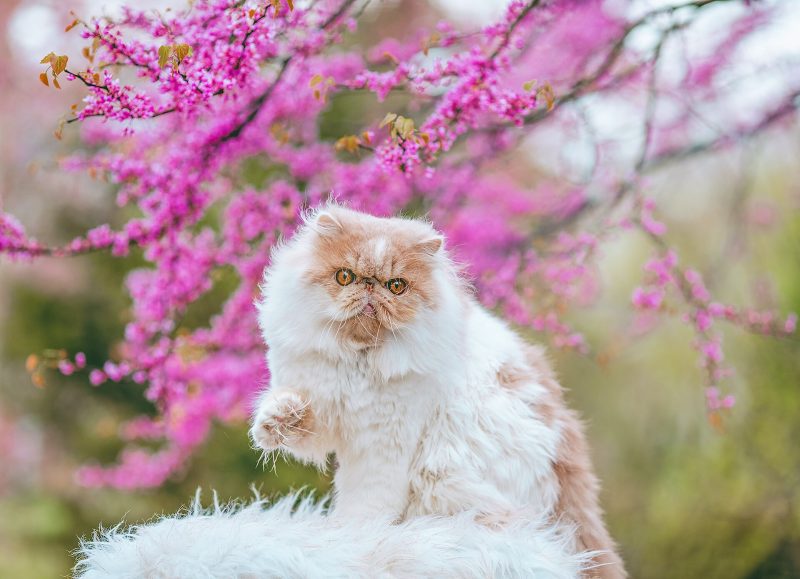
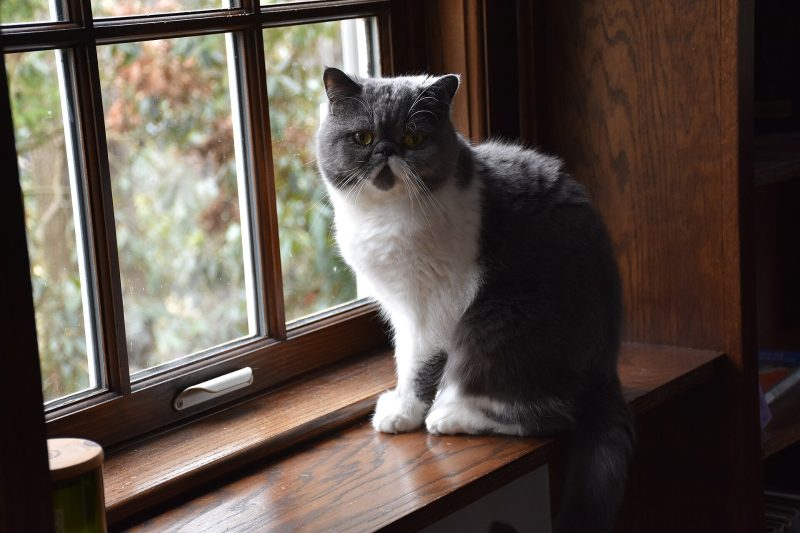
A Persian is built in circles. The body is cobby and low on short, thick legs, with a broad chest, a short tail and heavy bone. The head is round and massive with full cheeks, a short snub nose set between large, round, widely spaced eyes, and small, round-tipped ears set low. In profile the forehead, nose and chin line up in the show type, while traditional or doll-faced Persians keep a longer nose. The coat is long and dense over the whole body, standing away from the skin, with a full ruff, a frill between the front legs, long ear and toe tufts and a brush tail. Colors span seven divisions: solids, silvers and goldens, shaded and smokes, tabbies, parti-colors such as tortoiseshell, calicos and bicolors, and the pointed Himalayan. Eye color follows coat color: copper in most, green in silvers and goldens, blue in Himalayans, and blue, copper or odd-eyed in whites. The Exotic Shorthair is the same cat in a plush short coat.
Temperament & Personality
Persians are the quietest and most sedentary of the popular breeds. A typical cat spends the day draped over a favorite chair, moving when the sun does, and asks for attention with a long look and a soft chirp rather than a demand. They are affectionate on their own terms, happy to be stroked and groomed, and often pick one or two people to follow. Strangers and loud visitors are met with a retreat under the bed; this breed likes a predictable routine and dislikes surprises. With gentle, older children Persians do fine, but toddlers who grab fur are too much. Other calm cats and quiet dogs are accepted after a slow introduction. Play is real but brief: a short chase after a feather, then back to the cushion. Persians rarely climb or jump high, which keeps them off counters and curtains. They are not watchful or territorial and are rarely vocal.
Exercise & Activity
Persians are low-energy, which makes them easy to live with and easy to overfeed. Two short play sessions of five to ten minutes a day keep muscles and weight in check; a feather wand dragged slowly along the floor, a crinkle ball rolled past the nose or a treat tossed down the hallway are about the right intensity. Puzzle feeders turn mealtime into gentle work. Low, wide cat furniture suits a breed that prefers not to jump, and a window seat with a bird feeder outside provides hours of entertainment. Heat is a hazard: the flat face and heavy coat make Persians intolerant of hot, humid weather, so play in cool rooms and never push a cat that is breathing with its mouth open. Boredom in this breed looks like overgrooming or sleeping even more.
Two gentle sessions daily, low-impact toys
Puzzle feeders rather than free bowls
Stop play at the first sign of open-mouth breathing
Training
Persians learn at their own pace and are motivated by calm attention and food more than by excitement. Litter box habits are generally excellent as long as the box is scooped daily; this fastidious breed will refuse a dirty tray. Keep the box large and low-sided, and trim the hair around the hind end so litter does not cling. Scratching needs are modest, but provide a horizontal cardboard pad and a short post anyway. Clicker training works for simple cues such as coming when called or stepping onto a scale, with sessions kept to a few minutes. The most important training is grooming tolerance: handle paws, comb daily and introduce the bath and dryer in kittenhood so adult grooming is routine. Carrier training matters too, because vet visits are frequent with a flat-faced breed; leave the carrier out as a bed. Harness walks are optional and only in cool weather.
Grooming & Care
This is the most demanding coat in the cat world, and skipping days is not an option. Comb the whole cat daily with a wide-toothed steel comb, reaching the undercoat on the belly, armpits, britches and behind the ears where mats form fastest; a mat left for a week becomes a felted pad that must be clipped out. Bathe every few weeks to remove oil and loose hair, then dry completely with a blow dryer on low while combing. Clean the eyes daily with a soft damp cloth, since the flat face causes tears to overflow and stain. Check the ears weekly, trim nails every two to three weeks and brush teeth several times a week because crowded teeth collect plaque. Many owners book a professional groomer monthly, and a sanitary trim or a full lion clip is a practical choice for cats that resist combing.
Daily combing, bath every two to four weeks
Eyes wiped daily, nails and ears checked weekly
Professional grooming is common and sensible
Health
Persians live 12 to 17 years, but two inherited problems need screening. Polycystic kidney disease, caused by a dominant mutation in the PKD1 gene, once affected more than a third of the breed; cysts are present from birth and lead to kidney failure, usually in middle age. A DNA test exists and breeders should show a clear result for both parents; the GCCF requires it for breeding cats. The flat face brings brachycephalic airway problems: narrow nostrils, a long soft palate and noisy breathing, with heat and exercise intolerance; the degree varies with head type. The same anatomy causes tear overflow, shallow eye sockets and corneal injuries, crowded teeth and skin-fold infections. Progressive retinal atrophy occurs in some lines and has a DNA test. Hypertrophic cardiomyopathy has been reported, and ringworm and other skin infections take hold easily in the dense coat. Ask your vet about any open-mouth breathing, increased drinking, eye squinting or weight loss.
Nutrition
Feed a complete and balanced food for the cat's life stage, with kitten food for the first year and adult maintenance thereafter. Persians are sedentary and gain weight easily, so measured meals two or three times a day beat free feeding; have your vet set a calorie target and adjust by body condition, which is hard to judge under all that coat until you feel for the ribs. The flat face makes picking up kibble awkward, so some cats do better with wet food or with kibble shapes designed for flat-faced cats; shallow, wide dishes help. Hairballs are a constant issue with a long, dense coat, and a hairball formula or added fiber plus daily combing reduces them. Wet food supports water intake, which is helpful for the kidneys in a breed with a PKD history. Cats diagnosed with kidney disease need a specific diet from their vet. Ask your vet before adding supplements.
Living With This Breed
A Persian is the ideal apartment cat: quiet, low-energy, not a climber and content to spend the day on a cushion. It belongs indoors; the coat picks up every burr, the breed has little street sense, and heat is dangerous. Air conditioning in summer is close to a necessity for flat-faced cats. Households should be calm, with a predictable routine, gentle older children and other mellow pets. Persians tolerate being alone during a workday but need their daily comb regardless of your schedule. Keep the litter box immaculate and trim the hind-end fur. Expect hair on furniture and an eye-wiping cloth in every room.
Sitters: comb daily, wipe eyes and check for mats behind the ears and under the arms
Keep rooms cool; call the vet for open-mouth breathing
Approach slowly and quietly; this cat hides from bustle
Interesting Facts
Persians were exhibited at the first organized cat show, held at London's Crystal Palace in 1871, and were one of CFA's founding breeds in 1906.
Queen Victoria kept blue Persians, which helped make the breed fashionable in late Victorian Britain.
The white cat stroked by the villain Blofeld in the James Bond films is a Persian, probably the most famous movie cat of all.
Persians are shown in seven color divisions covering dozens of colors and patterns, from chinchilla silver to calico to the pointed Himalayan.
Doll-faced or traditional Persians keep the longer nose of the breed's early days, while the show type has the flat, high-nosed profile.
A show Persian's coat can reach several inches in length, and some are combed and blow-dried for an hour before judging.
Breeds similar to the Persian
What Persian owners say
Real pets, photos, stories and tips from the SitterNation community — separate from the editorial guide above.
Log in to add your pet, photos, stories and tips.
Meet Persians on SitterNation
No Persians have joined yet. Owners can show their pet here from the pet's profile.
Persian community photos
No Persians photos yet — be the first to share one.
Stories from Persian owners
No stories yet. What is life with yours really like?
Tips from Persian owners
No tips yet. One practical thing that works for you is enough.
Ask Persian owners
No questions yet. Ask the people who live with the breed.