Typical tendencies
Energy level
Needs a real outlet most days.
Good with children
A famously patient playmate for kids.
Good with other pets
Friends with everything that lives at home.
Shedding
A light scatter, easy to keep up with.
Vocalization
A comment now and then.
Sociability
Hates being left out of anything.
More traits
Exercise needs
Adaptability
Grooming needs
Trainability
Intelligence
Family friendly
Friendly with strangers
Apartment friendly
Overview
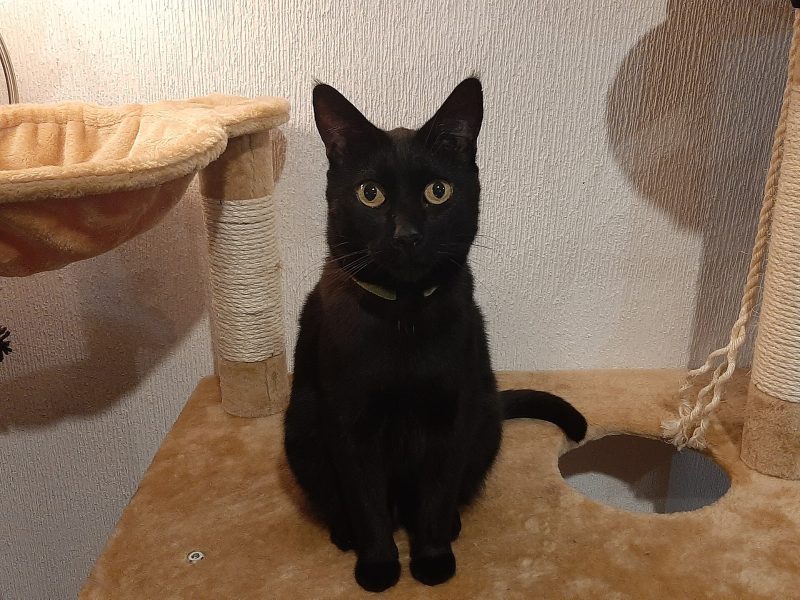
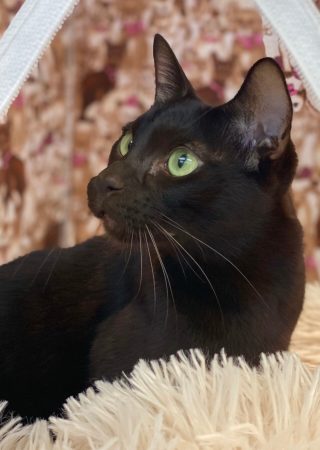
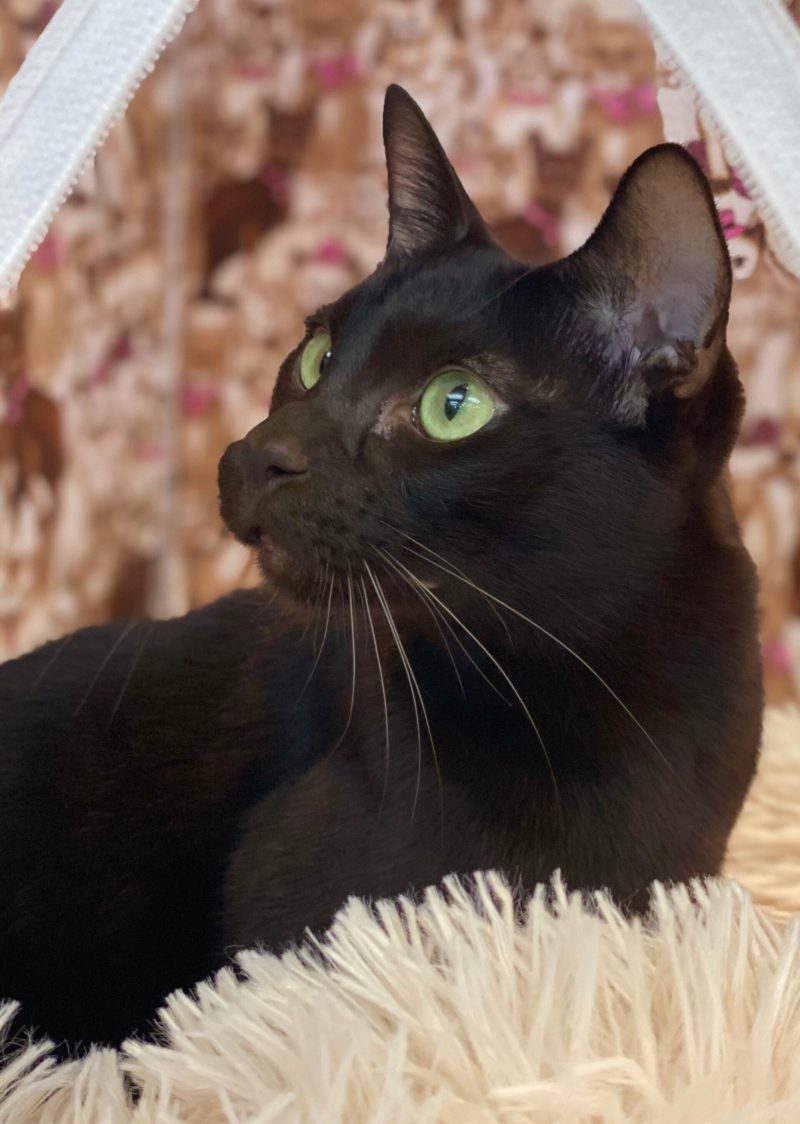
The Bombay was created to look like a miniature black panther, and it does: a solid, muscular cat with a short, glossy black coat and large copper eyes. What the look does not tell you is that this is one of the friendliest, most people-oriented breeds there is. A Bombay wants to be on you, beside you or at least in the same room, and it will greet guests, follow children and curl up with the dog.
It suits families, first-time cat owners and anyone who wants a companionable, affectionate cat that is easy to groom and adapts well to apartment life. It does not suit a home where it would be alone all day, every day, because it genuinely minds. Its energy is moderate: playful and curious, especially when young, but equally happy to warm a lap in the evening. Health is generally good, with heart screening the main thing to ask breeders about.
History & Origin
The Bombay is an American creation. Nikki Horner, a breeder in Louisville, Kentucky, set out in the late 1950s to produce a cat with the sleek black coat and copper eyes of a black leopard; she named it after the Indian city, then called Bombay, where such leopards were famous. Her first attempts failed, but by the mid-1960s crosses between a sable Burmese and a black American Shorthair gave her the type she wanted, and she refined it through several generations.
The Cat Fanciers' Association accepted the Bombay for registration in 1970 and granted championship status in 1976; TICA recognized it in 1979. A separate British Bombay, developed later from Burmese and black domestic shorthairs, is registered by the GCCF within its Asian group and is a different cat. The American Bombay remains rare, with only a handful of breeders, and limited outcrossing to black American Shorthairs and sable Burmese is still permitted to keep the gene pool healthy.
Appearance
Picture a small panther. The Bombay is medium sized and surprisingly heavy for its frame, with a compact, muscular body, medium-length legs and a straight tail of medium length. The head is rounded with no sharp angles, the muzzle short and broad with a visible but moderate stop below the eyes, and the ears medium, set wide and tilted slightly forward. The eyes are large and round, in gold to deep copper; green eyes disqualify a show cat.
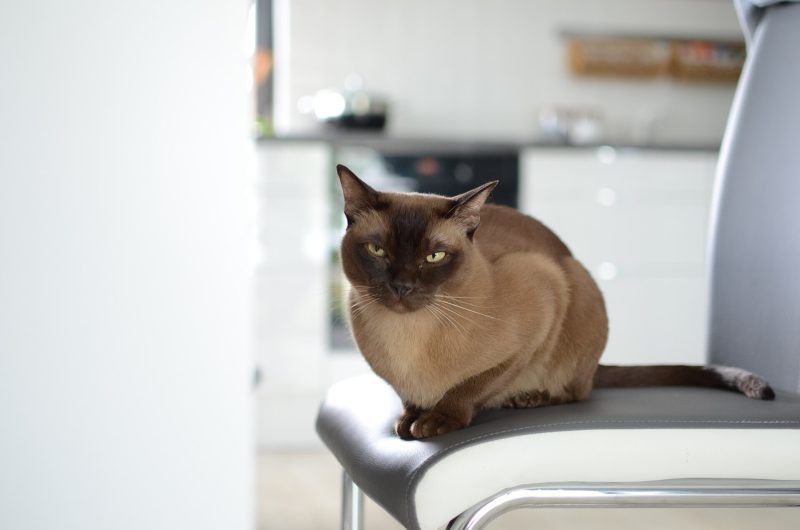
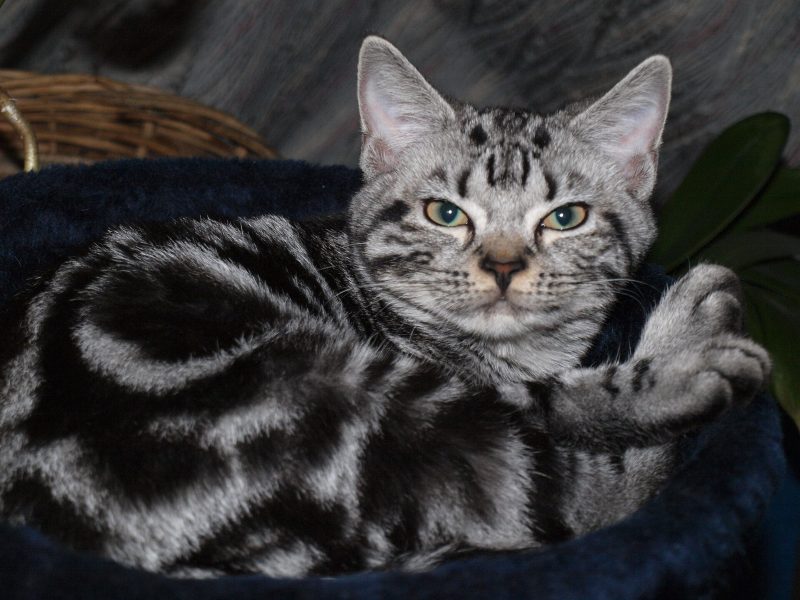
The coat is the breed's trademark: short, close-lying and satiny, with a sheen often compared to patent leather, and it is black to the roots with black nose leather and paw pads. Kittens may show faint tabby ghosting that disappears with maturity. Beside a black American Shorthair the Bombay is rounder in head and far glossier; beside a Burmese it is a little larger and longer-bodied, with a blacker, shinier coat. There is only one color.
Temperament & Personality
The Bombay is a lap cat with a sense of humor. It is affectionate to the point of insistence, head-butting, kneading and climbing onto shoulders, and it tends to attach to the whole household rather than one person. It likes visitors and will investigate a new face rather than hide. Playfulness lasts well into adulthood, with fetch, paper bags and cardboard boxes high on the list, but the breed is not hyperactive and is content to doze beside you between games.
It is moderately vocal with a soft, chirpy voice. With children it is patient and engaged, and it usually gets on with dogs and other cats after sensible introductions. Its Burmese side shows in a love of warmth: a Bombay will find the sunniest spot, the radiator or your lap under a blanket. The flip side of all this sociability is that it dislikes solitude and may become clingy or mischievous if left alone too much.
Exercise & Activity
The Bombay is athletic but not frantic, and about twenty minutes of play a day in two sessions keeps it fit and content. Wand toys, fetch with a soft ball and a laser pointer that ends on a real toy all work; many Bombays retrieve reliably. A cat tree and a window perch give it the climbing and watching it enjoys, and puzzle feeders slow a breed that loves its food. Some Bombays take to a harness and enjoy a stroll on a quiet street or time in a catio.
Heat is welcome, cold is not. The short coat gives little insulation, so this cat seeks warmth and should have a heated bed in a cool house.
Boredom shows as overeating, raiding cupboards and shredding paper
Play before meals mimics the hunt and reduces begging
Rotate toys; the Bombay quickly tires of the same mouse
Training
The Bombay is one of the more trainable cats, because it is bright, food-loving and keen to interact. Clicker training teaches sit, come, fetch and jumping onto a stool in a handful of short sessions, and a trick repertoire is a good way to burn mental energy. Litter habits are reliable: provide one box per cat plus one and scoop daily. Scratching is easily redirected to a sisal post placed near the sofa, with claws trimmed regularly.
Carrier training is simple with a breed this confident; feed in the open carrier and take short practice trips so the vet run is routine. Harness training works for many Bombays, particularly those started young. The sticking points are food and attention: a Bombay will learn to open cupboards and to wake you at five with a paw on your face, and the fix is a feeder on a timer and strict refusal to reward the behavior. Socialization is easy, but keep it up through kittenhood anyway.
Grooming & Care
The Bombay is a wash-and-wear cat. Its short, close coat sheds lightly and needs only a weekly pass with a rubber curry brush or a soft bristle brush, which lifts dead hair and brings up the famous shine; a wipe with a chamois or a damp cloth finishes the job. Shedding increases modestly in spring and fall. Baths are rarely needed. Because of the breed's short, broad muzzle, many Bombays have mildly watery eyes, so wipe the corners daily with a soft, damp cloth and watch for colored discharge, which needs a vet.
Nails every two to three weeks
Teeth brushed daily if possible; gum disease is reported in the breed
Ears checked weekly and cleaned only if dirty
A high-quality diet does more for coat gloss than any product
Grooming is a cuddle to this cat, so sessions are easy to keep up
Health
The Bombay is generally healthy, with a typical lifespan of 12 to 16 years and some reaching 20. Its Burmese ancestry brings two inherited concerns worth asking about. Hypertrophic cardiomyopathy, a thickening of the heart muscle, has been found in the breed; there is no breed-specific DNA test, so responsible breeders have breeding cats examined by echocardiogram, and your vet should listen for a murmur at every visit. The Burmese head defect, a severe craniofacial malformation in kittens that inherit two copies of a variant in the ALX1 gene, is a Burmese problem that can appear in related breeds, and a DNA test lets breeders avoid pairing carriers; ask whether the parents were tested.
The short muzzle makes some Bombays prone to excessive tearing, noisy breathing and sinus trouble, and gum disease is reported, so dental care matters. Obesity is the most common everyday problem in a breed that loves food and warmth. See your vet for any breathing difficulty, lethargy or sudden hind-leg weakness, which can signal heart disease.
Nutrition
Feed a complete, balanced food for life stage: kitten food until about twelve months, adult food after, and a senior or veterinary diet later if advised. The Bombay's defining nutritional trait is appetite. It eats with enthusiasm, gains weight easily and hides the extra under a sleek coat, so weigh portions, feed two or three measured meals rather than leaving food down, and keep treats under a tenth of daily calories. Check body condition monthly: you should feel ribs easily and see a waist from above. A puzzle feeder slows eating and turns a meal into a game.
Wet food adds water, which supports the kidneys and urinary tract, and a fountain encourages drinking. A diet with adequate protein and fatty acids keeps the coat glossy, which is the quickest visible sign that the food suits the cat. Older Bombays may need kidney or weight-management diets; ask your vet before switching and before any supplement.
Living With This Breed
The Bombay is an easy housemate. It thrives in apartments, is quiet, and is one of the better breeds for families with children and for multi-pet homes, including those with dogs. It is strictly an indoor cat by temperament and by sense: a black cat is hard to see at night and this one is too trusting of strangers. A catio or harness walks give it outdoor time. The one real requirement is company. A Bombay alone all day, every day, becomes anxious or destructive, and a second cat or a dog is a genuine help for working households.
Climate: loves warmth; give heated beds and sunny windows in cold homes
Noise: low to moderate, a soft chirp rather than a yowl
Escape habits: not a bolter, but will follow you out of curiosity
For sitters: expect a cat that wants to be held; feed measured portions only, wipe the eyes if needed, and allow lap time, which matters to this breed as much as food
Interesting Facts
Nikki Horner's goal was a cat that looked like the black leopard of India, and the name Bombay comes from the city now called Mumbai.
The breed has been described as a patent-leather kid with new-penny eyes, a phrase breeders still use.
Although it is solid black to the skin, a Bombay kitten may show faint ghost tabby stripes that fade as the adult coat comes in.
The British Bombay is a different cat: a black member of the GCCF's Asian group, developed from Burmese and black domestic shorthairs rather than American Shorthairs.
The Bombay is one of the rarest CFA breeds, yet it has won national awards since 1982.
Many Bombays carry things: paper bags, cracker boxes and the occasional sock get dragged proudly across the house.
Breeds similar to the Bombay
What Bombay owners say
Real pets, photos, stories and tips from the SitterNation community — separate from the editorial guide above.
Log in to add your pet, photos, stories and tips.
Meet Bombays on SitterNation
No Bombays have joined yet. Owners can show their pet here from the pet's profile.
Bombay community photos
No Bombays photos yet — be the first to share one.
Stories from Bombay owners
No stories yet. What is life with yours really like?
Tips from Bombay owners
No tips yet. One practical thing that works for you is enough.
Ask Bombay owners
No questions yet. Ask the people who live with the breed.