Typical tendencies
Energy level
Needs a real outlet most days.
Good with children
A famously patient playmate for kids.
Good with other pets
Friends with everything that lives at home.
Shedding
A light scatter, easy to keep up with.
Vocalization
A comment now and then.
Sociability
Hates being left out of anything.
More traits
Exercise needs
Adaptability
Grooming needs
Trainability
Intelligence
Family friendly
Friendly with strangers
Apartment friendly
Overview
The Burmese is a compact, muscular cat in a satin coat, famous for weighing far more than it looks and for a people-loving, puppyish personality that lasts into old age. It follows its owners, plays fetch, sleeps under the covers and greets strangers as potential friends. Males weigh 10 to 14 pounds, females 8 to 10, and the breed is long-lived, typically 12 to 18 years. A Burmese suits families with children, multi-pet homes, people who want an interactive, affectionate cat and anyone who likes a companion that is always nearby. It is a poor fit for people away from home all day with no other pet, since this is one of the breeds most prone to loneliness, and for anyone who wants an independent, decorative cat. Two body types exist, the rounder American and the more moderate European; the temperament is the same in both.
History & Origin
Brown cats of Burmese type appear in Thai manuscripts alongside the Siamese and were called suphalak or thong daeng, but the modern breed began in 1930 when Dr. Joseph Thompson, a retired naval doctor, brought a small walnut-brown female named Wong Mau from Burma to San Francisco. Bred to a seal point Siamese, she produced some pointed kittens and some dark ones like herself, and breeding the dark kittens together gave solid brown cats that bred true. Wong Mau herself was later understood to be a Siamese-Burmese hybrid of the type now called Tonkinese. The Cat Fanciers' Association registered the Burmese in 1936, but so many breeders kept crossing to Siamese that the CFA suspended registration in 1947 and only restored it in the mid-1950s once three generations of pure Burmese breeding could be shown; championship status followed in 1959. Cats exported to Britain from 1949 founded a separate line, recognized by the GCCF in 1952 and developed with Siamese outcrosses into the more moderate European type with red, cream and tortie colors. The CFA recognizes that cat as the European Burmese, accepted for registration in 1993 and for championship in 2002.
Appearance
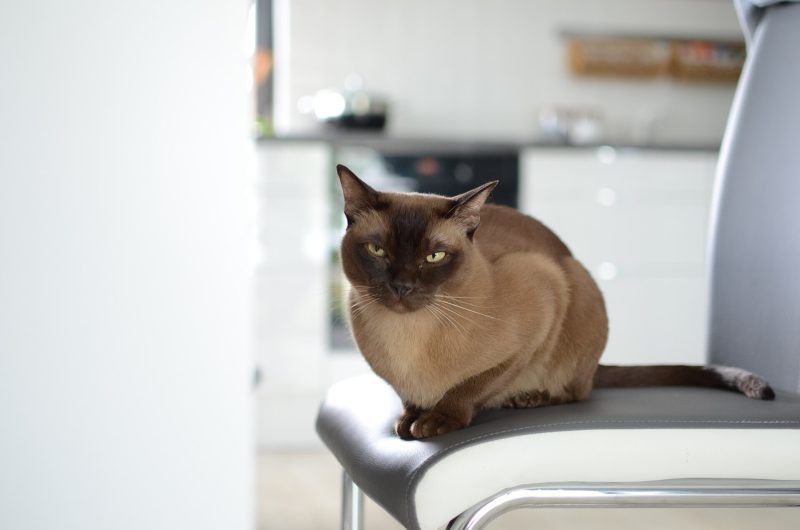
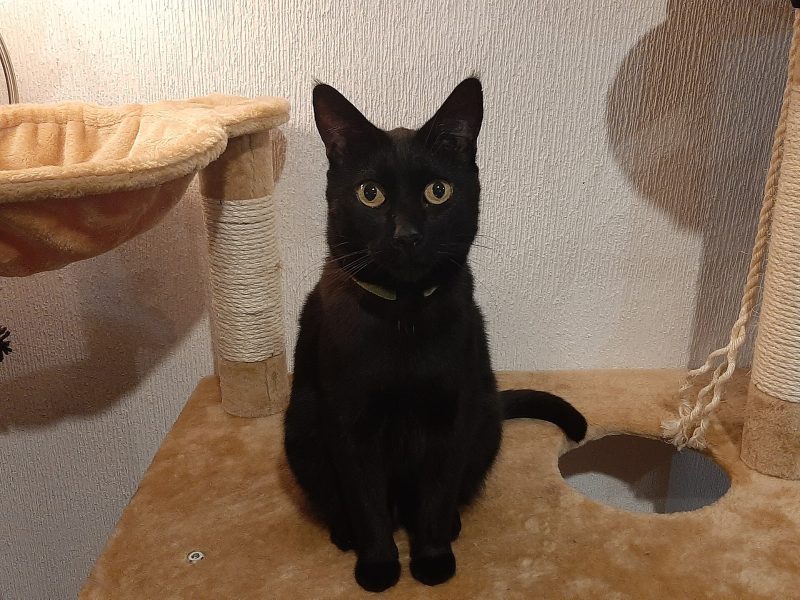
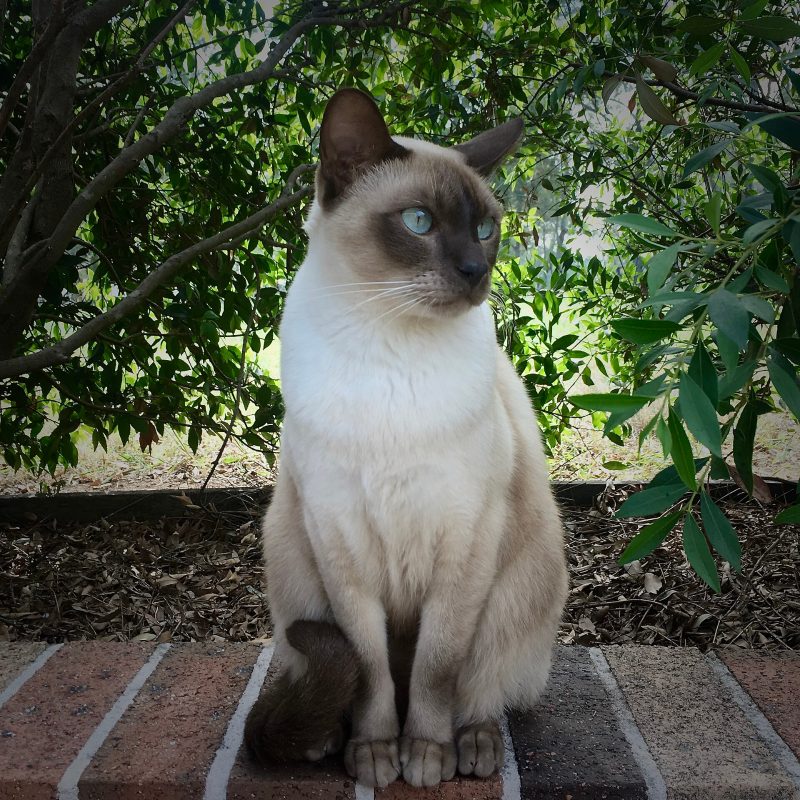
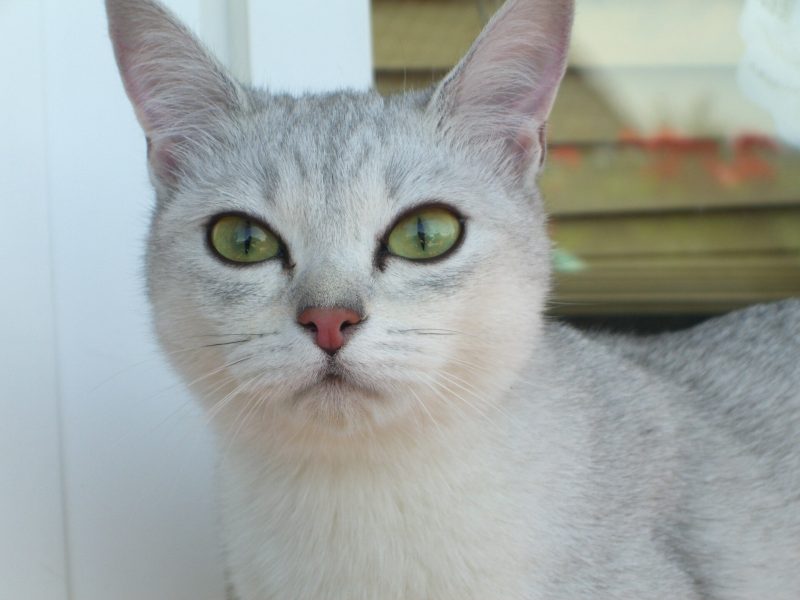
The American Burmese is a medium-sized cat of surprising weight, compact and rounded everywhere, with a broad chest, substantial bone, a short, straight tail and small round feet. The head is round with no flat planes, full cheeks, a short broad muzzle with a definite nose break and a firm rounded chin; the ears are medium, wide-set and tilted slightly forward. The eyes are large, round and set well apart, in any shade of yellow to gold, the deeper the better. The coat is very short, fine and glossy, lying close like satin, and it comes in four colors in the CFA: sable, a rich warm brown; champagne, a honey beige; blue, a medium gray with fawn undertones; and platinum, a pale silvery gray. The European Burmese is longer and more moderate, with a short blunt wedge head, wide cheekbones, slightly slanted eyes and a gently rounded top line, in ten colors that add red, cream and four torties. Both types darken slightly on the face and ears because the Burmese sepia gene is temperature-sensitive. The Bombay is a black Burmese cross; the Tonkinese is a Burmese-Siamese blend with aqua eyes.
Temperament & Personality
Burmese are among the most people-focused cats in the fancy, so much so that breeders call them Velcro cats. They follow their owners from room to room, ride on shoulders, sit on keyboards, greet visitors at the door and insist on sleeping in the bed, ideally under the duvet. They are playful and clever, learn fetch and other games readily, and keep a kitten's sense of fun well into their teens, though adults are calmer than the famously busy kittens. The voice is soft and sweet, used more often than a Russian Blue's but far less than a Siamese's, and it rises only when something is wrong. They are confident with children, friendly with dogs and sociable with other cats, especially other Burmese. The breed's weak point is solitude: a Burmese alone all day becomes depressed and clingy, and most breeders will say two are easier than one. Females are often described as the more opinionated sex, males as the more laid-back.
Exercise & Activity
A Burmese needs 20 to 30 minutes of interactive play a day in two or three sessions, and it will ask for more. Fetch is a breed favorite, and many will retrieve a small ball or crumpled paper for as long as you throw it. Wand toys, chase games across the floor and puzzle feeders suit its energetic, intelligent style. Cat trees, shelves and a window perch give it height and a view, and a second cat gives it the wrestling partner no human can replace. Mental work matters as much as running; training sessions and treat hunts tire the breed out. The short coat offers little insulation, so provide warm beds in winter; this is a cat that seeks laps and radiators. Heat tolerance is average. Boredom shows as persistent following, pawing at your face at dawn and raiding cupboards.
Two or three play sessions a day, with fetch
Food puzzles and a companion animal for the workday
Warm sleeping spots in cool weather
Training
Burmese are eager, food-motivated and attentive, which makes them a pleasure to train. Clicker training teaches sit, high five, spin, fetch and recall quickly, and the cat will treat the sessions as play. Keep sessions short and upbeat. Litter habits are reliable; one box per cat plus one, scooped daily, keeps them that way. Provide sturdy scratching posts in sisal and cardboard near sleeping and entry spots, and reward using them. Carrier training with the carrier left open as a bed makes vet visits calm for a cat that otherwise wants to be with you, not in a box. Harness walking suits many Burmese, who are confident and sociable outdoors; start indoors as a kitten and progress to a quiet garden. Socialize kittens to visitors, dogs and handling, though the breed's natural friendliness makes this easy. The usual sticking points are opening cupboards, stealing food and demanding attention while you work; routine and enrichment solve more than correction does.
Grooming & Care
The satin coat is one of the lowest-maintenance in the cat world. A weekly pass with a rubber brush or grooming mitt removes the little loose hair there is and polishes the sheen, and firm stroking with damp hands does the same job. Shedding is minimal. Baths are rarely needed. Trim nails every two to three weeks, check the ears weekly and wipe gently if there is debris, and watch the eyes on the American type, whose shorter face can show tear staining or discharge that warrants a vet look. Brush teeth several times a week and have the mouth checked at every vet visit; Burmese are prone to gingivitis and to a painful oral condition described under health.
Weekly brushing, no baths
Nails every two to three weeks, ears and eyes weekly
Teeth several times a week, with regular dental checks
Health
Burmese are long-lived, with a typical range of 12 to 18 years and a UK study putting their average life expectancy among the highest of all breeds, but several inherited conditions are recognized and most can be screened. Burmese hypokalaemia, a recessive WNK4 gene variant, causes episodes of low blood potassium with muscle weakness, a drooping neck and a stiff gait; a DNA test identifies carriers, and affected cats are managed with potassium under veterinary care. The Burmese head defect, a lethal craniofacial malformation in American lines, is caused by an ALX1 gene deletion and has a DNA test, so carriers are never paired. GM2 gangliosidosis, a fatal neurological storage disease caused by a HEXB variant, also has a test. Burmese have a well-documented predisposition to diabetes mellitus, especially in European and Australian lines, so weight control and glucose checks in older cats matter. They are the breed most often affected by feline orofacial pain syndrome, a nerve-related mouth pain that flares with dental disease and teething. Ask your vet about DNA results, weight tracking and senior bloodwork from about eight years old.
Nutrition
A Burmese is a heavy, muscular cat that should still have a visible waist, and because the breed is prone to diabetes, portion control matters more than for most cats. Feed a complete, balanced diet suited to life stage, kitten food until about a year, then measured adult meals two or three times a day rather than a full bowl. Ask your vet for a target weight and check it monthly. Many vets suggest a diet lower in carbohydrates and higher in protein for this breed as it ages, with wet food making up a good share; discuss this with your vet rather than switching on your own. Puzzle feeders slow a greedy eater and add play. Treats are useful for training and should stay under a tenth of daily calories. Burmese are determined food thieves, so keep counters clear and bins closed. Sitters should feed exactly the measured amounts the owner leaves and ignore the breed's persuasive begging.
Living With This Breed
A Burmese fits an apartment or a house equally well, because what it needs is people, not space. It should not be the only pet in a home that is empty all day; a second Burmese or another sociable animal makes the difference between a happy cat and a miserable one. Children who are gentle get a tolerant, playful friend, and dogs and other cats are usually welcomed. Visitors will be greeted and climbed on. Keep it indoors or in a secure enclosure: its trusting nature makes it easy to steal and poor at judging traffic. Expect a cat in the bed, on the laptop and in every bag you open.
Sitters: visit at least twice a day, play before feeding and expect a lap cat
Measure meals exactly; weight and diabetes risk go together in this breed
Check that doors and windows are secure, as it will follow you out
Interesting Facts
Every modern Burmese descends from Wong Mau, a single brown cat brought from Burma to San Francisco in 1930 by Dr. Joseph Thompson.
Wong Mau turned out to be a natural Siamese-Burmese hybrid, which makes her the ancestor of the Tonkinese as well.
The CFA suspended Burmese registration in 1947 because too many breeders were crossing back to Siamese, one of the few times a registry has paused a breed.
The Burmese is the ancestor of the Bombay, the Burmilla, the Tonkinese, the Australian Mist and the Asian group of breeds.
Burmese are often described as bricks wrapped in silk because they weigh so much more than their compact bodies suggest.
The sepia gene that gives the Burmese its color is temperature-sensitive, which is why the face, ears and tail are slightly darker than the body.
Breeds similar to the Burmese
What Burmese owners say
Real pets, photos, stories and tips from the SitterNation community — separate from the editorial guide above.
Log in to add your pet, photos, stories and tips.
Meet Burmeses on SitterNation
No Burmeses have joined yet. Owners can show their pet here from the pet's profile.
Burmese community photos
No Burmeses photos yet — be the first to share one.
Stories from Burmese owners
No stories yet. What is life with yours really like?
Tips from Burmese owners
No tips yet. One practical thing that works for you is enough.
Ask Burmese owners
No questions yet. Ask the people who live with the breed.