Typical tendencies
Energy level
Needs a real outlet most days.
Good with children
A famously patient playmate for kids.
Good with other pets
Friends with everything that lives at home.
Shedding
A light scatter, easy to keep up with.
Vocalization
Talkative, with opinions on most things.
Sociability
Hates being left out of anything.
More traits
Exercise needs
Adaptability
Grooming needs
Trainability
Intelligence
Family friendly
Friendly with strangers
Apartment friendly
Overview
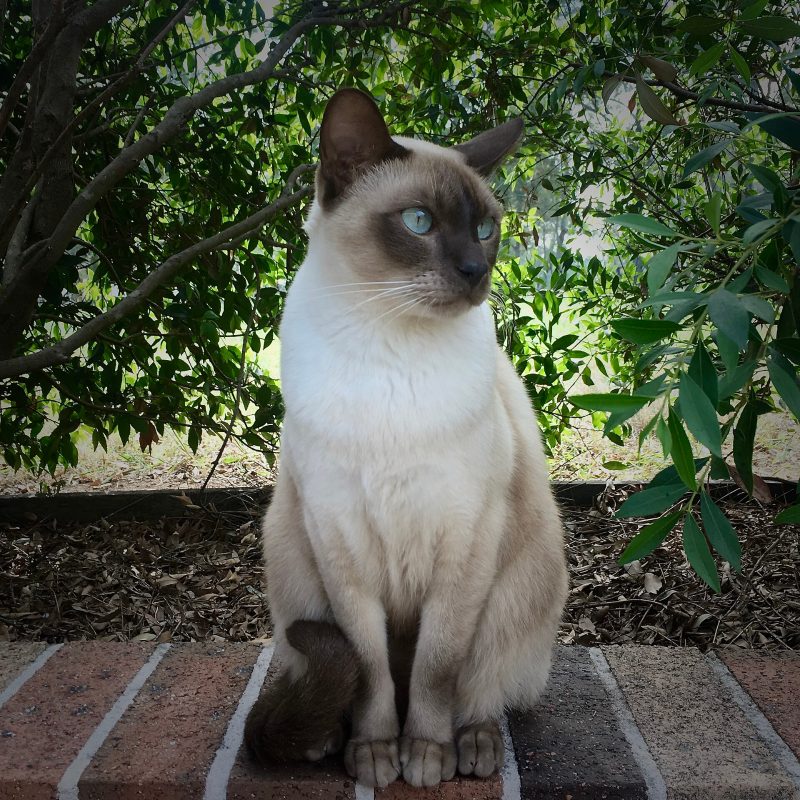
The Tonkinese is the Siamese and the Burmese shaken together and poured into one medium-sized, muscular cat with aqua eyes and a coat that comes in soft mink shades as well as pointed and solid versions. It suits people who want the engagement and conversation of a Siamese without quite so much volume, and the cuddliness of a Burmese with a little more bounce. Tonks are sociable to the core: they greet guests, ride on shoulders, sleep on the pillow and follow the household's routines closely. They do well with children, dogs and other cats and are one of the easiest breeds to live with in an apartment. Grooming takes minutes a week. What they cannot tolerate is being ignored or left alone all day, so a companion cat or a home where someone is usually around makes all the difference. For a lively, affectionate, moderately talkative cat, the Tonkinese is hard to beat.
History & Origin
Cats of Tonkinese type existed long before the breed had a name. The small walnut-brown female Wong Mau, brought from Burma to San Francisco in 1930 and used to found the Burmese breed, is now recognized as having been a mink-patterned cat, a cross between Siamese and Burmese coloring. Chocolate Siamese of similar look had been shown in England in the late nineteenth century. The deliberate breed began in the 1950s and 1960s: New York pet-shop owner Milan Greer sold Siamese-Burmese crosses as Golden Siamese, and Margaret Conroy in Canada and Jane Barletta in the United States independently set out to create a cat exactly midway between the two parents. The name, borrowed from the Tonkin region of Indochina, was chosen for its exotic sound rather than any real connection. The Canadian Cat Association was the first registry to accept the breed. CFA accepted it for registration at the start of the 1980s and advanced the mink pattern to championship in 1984, adding the pointed and solid patterns to the show ring in 2002. TICA also recognizes the breed, and the GCCF accepted it in 1991.
Appearance
A Tonkinese should feel heavier than it looks. The body is medium-sized and muscular, neither the long tube of the Siamese nor the compact cobby form of the Burmese, with a level back, slim legs and a tail of moderate length. The head is a modified wedge with gently rounded contours, a slight stop at the nose, medium ears and almond-shaped eyes set on a slant. Eye color is tied to pattern: mink cats have the breed's famous aqua, somewhere between blue and green; pointed cats have blue eyes; solid, or sepia, cats have green to gold. The coat is short, fine and silky with a soft sheen and lies close to the body. Four colors are accepted in each pattern: natural (a warm brown with dark seal points), champagne (buff with chocolate points), blue (soft gray with slate points) and platinum (pale silver with frosty points). In the mink pattern the body color shades gently into the points; in the pointed pattern the contrast is sharp; in the solid pattern it is barely visible. Tonks weigh more than they appear and mature at about two years.
Temperament & Personality
Tonkinese cats are warm, curious and people-centered, and most owners describe them as the cat that is always in the room. They greet visitors rather than hiding, climb into any available lap, perch on shoulders and insist on supervising cooking, homework and bedtime. They are talkative, with a voice softer and less insistent than a Siamese, and they use it in conversation, answering when spoken to. Energy is moderate to high: Tonks play hard, invent games, open doors and carry toys around, then settle for a long cuddle. They are sensitive to mood and will often press against an upset person and purr. With children they are patient and playful, and they get along with dogs and other cats so well that most breeders recommend a companion. Strangers are quickly accepted. The downside of such a social cat is that it does not do solitude; a Tonk left alone for long days becomes bored, vocal and sometimes destructive, and may become clingy when you return.
Exercise & Activity
A Tonkinese wants twenty to thirty minutes of interactive play a day, split into two or three sessions, and plenty to do in between. Wand toys, thrown toys for fetch, crinkle balls and a cat tree with high perches cover the basics; many Tonks love a game of hide-and-seek or chasing a ball down the hallway. Puzzle feeders and treat-dispensing balls make meals last and tire the mind. Because the breed is clever and moderately active, a stale environment leads to mischief: rotate toys, add a cardboard box or paper bag now and then, and set up a window perch with a view of birds. The short coat makes winter drafts unpleasant and summer heat manageable; a heated bed in a cool house is appreciated. Older Tonks stay playful and need gentle daily games to keep weight off.
Boredom signs: knocking things off tables, raiding cupboards, yowling at closed doors, over-grooming
A companion cat does more for a Tonk's exercise than any toy
Training
Tonkinese are bright, food-motivated and eager for attention, which is the perfect combination for training. Clicker sessions of two or three minutes teach sit, come, high five and fetch quickly, and the breed enjoys the interaction as much as the treats. Litter habits are dependable with a clean, large box; scoop daily and provide one box per cat plus one. Scratching needs an outlet from day one: a tall sisal post near the sleeping area and a horizontal cardboard scratcher, with nails trimmed every two or three weeks. Carrier training is easy if the carrier lives in the room as a bed with treats inside; the breed travels well. Many Tonks take to a harness and leash and enjoy supervised garden time, which is far safer than free roaming for such a trusting cat. Door-dashing is a common sticking point, so teach a station behavior, such as sitting on a mat when the door opens. Socialize kittens widely, including to vet handling and tooth brushing, because dental care will be a lifelong routine.
Grooming & Care
The Tonkinese coat practically cares for itself. A weekly stroke-through with a rubber curry brush or grooming mitt removes loose hair and distributes skin oils, and a wipe with a chamois or a slightly damp cloth brings up the sheen. Shedding is light and seasonal rather than constant, with a bit more coming out in spring; brushing two or three times a week during that period keeps it off the furniture. Baths are rarely needed. Ears need a monthly check and a gentle wipe if dirty. Nails grow quickly on an active cat and need trimming every two to three weeks. The one grooming task that matters most is dental: Tonks, like their Siamese and Burmese relatives, are prone to gingivitis, so brush the teeth several times a week with a cat toothpaste from kittenhood and keep up with professional cleanings. Check the eyes, which should be bright and clear, and the skin for any flaking.
Weekly: brush, wipe, tooth brushing
Monthly: ears and a quick weight check
Health
Tonkinese are generally healthy and often live well into their teens. Because the breed descends from Siamese and Burmese, breeders screen for the inherited problems of both parents, and DNA tests exist for most of them. Progressive retinal atrophy of the rdAc type (CEP290) causes gradual blindness from middle age; pyruvate kinase deficiency causes intermittent anemia; the Burmese head defect is a lethal skull malformation in kittens that inherit two copies; Burmese hypokalemia causes episodes of weakness from low blood potassium; and GM2 gangliosidosis is a rare, fatal nerve disorder. All are recessive, and a kitten whose parents were tested and sensibly paired will not be affected; the UK Tonkinese Breed Club makes these tests a condition of registration. Hepatic amyloidosis, seen in Siamese lines, and feline asthma occur occasionally. Dental disease, especially gingivitis, is the most common day-to-day problem. Hypertrophic cardiomyopathy is possible in any cat, so a murmur deserves an echocardiogram. Ask the breeder for DNA results for both parents and ask your vet about dental care and a baseline exam.
Nutrition
Feed a complete, balanced diet for the cat's life stage: growth food until about a year, then an adult maintenance diet, with a senior diet later if your vet suggests it. Tonks are active and muscular and usually keep a good shape, but they are also charming beggars and will gain weight if the household feeds them from plates. Two or three measured meals a day are better than free feeding. Wet food adds water, which benefits the kidneys and urinary tract, and dry food works in puzzle feeders. Feel the ribs and look for a waist from above each month; a Tonk is heavier than it looks, so judge by hand, not by eye. Because gum disease is common in the breed, your vet may suggest a dental diet or dental chews that carry a veterinary oral health seal. Keep treats under ten percent of daily calories and ask your vet before adding any supplement.
Living With This Breed
The Tonkinese is one of the most adaptable companion breeds. It is content in an apartment, where it uses the vertical space, and equally happy in a busy family house. It travels well, adjusts to new routines and usually accepts a new baby, dog or cat with curiosity rather than alarm. The trade-off is that it must not be lonely: a single Tonk in an empty house all day will find trouble, so plan on a second cat or a flexible schedule. Indoor life, with a catio or harness walks, is safest for a cat this friendly to strangers. Noise is moderate; expect conversation, not shrieking.
Time alone: a workday with a companion is fine; a daily sitter visit with real play is needed for trips
For sitters: it will greet you and want to be held; watch the door, keep string and small objects away, and note appetite
Hiding spots: under duvets, in open drawers and cupboards
Interesting Facts
Wong Mau, the founding mother of the Burmese breed in 1930, is now thought to have been a natural mink Tonkinese.
Two mink Tonks bred together produce, on average, half mink kittens, a quarter pointed and a quarter solid, which is why the breed does not breed true.
The name comes from Tonkin, the old name for northern Vietnam, chosen for its sound; the cats have no connection to the region.
Tonkinese were sold in 1950s New York as Golden Siamese before the breed was formally developed.
The mink pattern's aqua eye color is unique to the breed, a blend of Siamese blue and Burmese gold.
The pointed and solid Tonks were restricted to breeding programs in CFA until 2002, when they were admitted to the show ring.
Breeds similar to the Tonkinese
What Tonkinese owners say
Real pets, photos, stories and tips from the SitterNation community — separate from the editorial guide above.
Log in to add your pet, photos, stories and tips.
Meet Tonkineses on SitterNation
No Tonkineses have joined yet. Owners can show their pet here from the pet's profile.
Tonkinese community photos
No Tonkineses photos yet — be the first to share one.
Stories from Tonkinese owners
No stories yet. What is life with yours really like?
Tips from Tonkinese owners
No tips yet. One practical thing that works for you is enough.
Ask Tonkinese owners
No questions yet. Ask the people who live with the breed.