Typical tendencies
Energy level
Always on; boredom turns into mischief.
Good with children
Gentle and tolerant around children.
Good with other pets
Easygoing with most household animals.
Shedding
A light scatter, easy to keep up with.
Vocalization
Talkative, with opinions on most things.
Sociability
Hates being left out of anything.
More traits
Exercise needs
Adaptability
Grooming needs
Trainability
Intelligence
Family friendly
Friendly with strangers
Apartment friendly
Overview
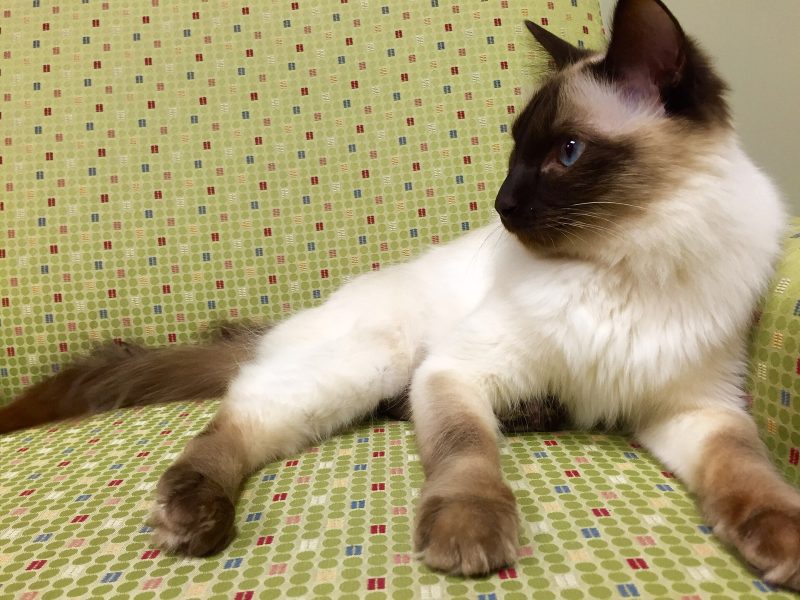
The Balinese is a Siamese in a silky semi-long coat: the same slender body, deep blue eyes and need to talk, with a plumed tail and a slightly softer voice and manner. It suits people who want a cat that is a full participant in family life, that follows them from room to room, comments on everything and sleeps under the covers. It is bright, trainable and playful well into old age, and it tends to live a long time.
It does not suit a home where it would be alone for most of the day, because it is a social animal that becomes lonely and loud. Grooming is easy for a longhair, as there is no undercoat to mat. The breed is good with children who engage with it and usually with other pets. Buyers should ask about retinal and liver disease screening, both of which are inherited in the Siamese family.
History & Origin
Siamese cats imported to the West from the late 1800s occasionally carried a recessive gene for long hair, and longhaired kittens appeared in Siamese litters through the early twentieth century; a longhaired Siamese was registered in the United States as early as the 1920s. Breeders treated them as faults and sold them as pets until the 1950s, when Marion Dorsey in California and Helen Smith in New York began breeding them deliberately. Smith named the breed after the graceful dancers of Bali, since longhaired Siamese struck her as unflattering.
The Cat Fanciers' Association accepted the Balinese for championship in 1970 in the four classic Siamese colors. Cats in red, cream, tortie and lynx points were registered separately as Javanese from 1979 until 2008, when CFA merged the two into one breed with a Javanese division. TICA and FIFe recognize the Balinese with a broader color range. As with the Siamese, a slender modern type and a rounder traditional type both exist.
Appearance
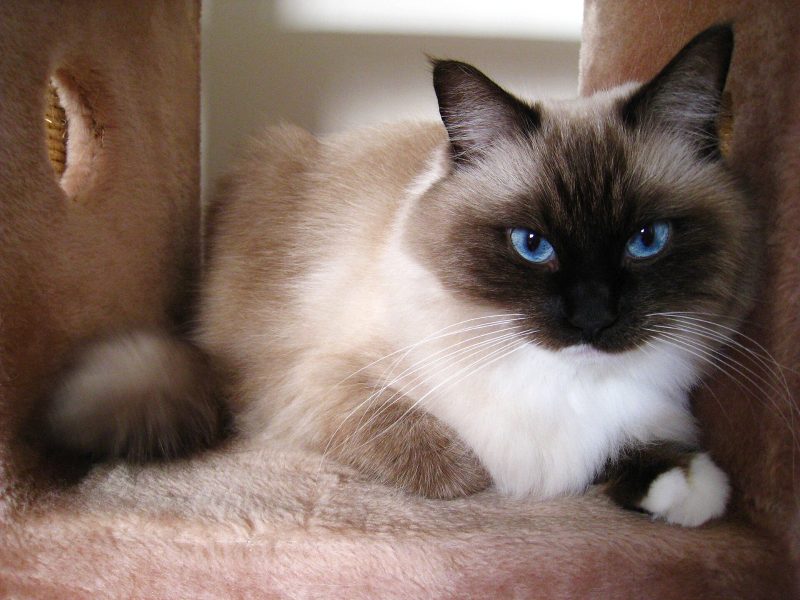
The Balinese is a long, slim, elegant cat with the tubular body, fine bones and long legs of the Siamese, the hind legs a little higher than the front. The head is a long, tapering wedge with a straight profile, large pointed ears that continue the lines of the wedge, and almond-shaped eyes slanted toward the nose in a vivid blue; only blue eyes are allowed. The coat is medium long, fine and silky, lying close to the body rather than standing out, with no downy undercoat; the longest hair is on the plumed tail, which is the quickest way to tell a Balinese from a Siamese.
Color is pointed: a pale body with darker mask, ears, legs and tail, in seal, chocolate, blue and lilac in the Balinese division, and red, cream, tortie, lynx (tabby) and smoke points in the Javanese division. Kittens are born white and color in over weeks. The coat looks warmer than it is; the cat underneath is small and light.
Temperament & Personality
A Balinese talks. The voice is softer and less raspy than a Siamese's, but it is used constantly: to greet you, to report on the empty bowl, to ask what you are doing and to object to closed doors. It is extremely people-oriented, choosing to be in whichever room you are in and often on you, and it bonds intensely with its household. Energy is high, with acrobatics, fetch and drawer-opening well into middle age, balanced by long lap sessions in the evening.
It is friendly to guests and good with children who treat it as a playmate rather than a toy, and it usually gets on with dogs and other cats, especially other Orientals. Sensitivity is part of the package: a Balinese notices mood and change and may sulk or shout about it. Left alone too long it becomes anxious and vocal, and a companion animal is the usual remedy.
Exercise & Activity
The Balinese keeps a kitten's energy for years. Aim for thirty minutes of active play a day across two or three sessions: wand toys for leaping, balls and fetch toys to retrieve, and puzzle feeders and treat balls for the brain. It is a climber, so a tall cat tree, shelves and a window perch are necessities, and many enjoy a harness walk or a catio. Trick training, feline agility and even a cat wheel suit this breed.
The fine single coat gives little insulation, so the Balinese seeks warmth and should have warm beds in a cool house; it tolerates heat reasonably well.
Boredom shows as yowling, shredding paper, opening cupboards and night-time zoomies
Vary the games; this cat learns a toy's tricks in a day
Play before bed helps it settle
A second social cat halves the demands on you
Training
Few cats train as readily as a Balinese. It is intelligent, attentive and motivated by both food and praise, so clicker training for sit, come, fetch, spin and jumping to a target goes quickly, and tricks are a good outlet for its energy. Litter habits are reliable; give one box per cat plus one and scoop daily, since this fastidious breed will complain about a dirty tray. Scratching is easily channeled to a tall sisal post; put it near the cat's favorite sleeping spot.
Harness training works well, especially started young, and carrier training is simple if the carrier is left open with a bed in it and used for short pleasant trips. The sticking points are vocal demands and separation anxiety: never reward yowling with food or attention, and build up time alone gradually. Socialize kittens to visitors and children early; the breed is naturally outgoing and stays so.
Grooming & Care
The Balinese is the easiest longhair to keep. Its silky coat has no undercoat, so it rarely mats and sheds relatively little. Comb once or twice a week with a fine-toothed metal comb, paying attention to the tail, ruff and britches, and more often in spring when the light winter coat thins. Baths are rarely needed; if the coat looks greasy, use a gentle cat shampoo and let the cat air dry in a warm room. Seal points may show slight darkening of body color with age or after a shaved patch, which is normal for a temperature-sensitive coat.
Nails every two to three weeks
Teeth brushed daily if possible; the Siamese family is prone to gum disease
Ears checked weekly; the large ears collect dust
Eyes wiped if any crust forms at the corners
Start handling and combing in kittenhood with short, rewarded sessions
Health
The Balinese is a long-lived breed, commonly reaching 12 to 20 years, but it inherits the Siamese family's known problems. Progressive retinal atrophy of the rdAc type is a recessive CEP290 variant that causes night blindness from one to two years and full blindness by three to five; a DNA test identifies carriers, and breeders should test both parents. Amyloidosis, abnormal protein deposited mainly in the liver in Siamese-type cats, typically appears between one and seven years and has no genetic test, so ask breeders about it in their lines.
Siamese-related cats are also thought to be more prone to asthma, though the evidence is not conclusive, and to gum disease. Crossed eyes and nystagmus occur, are linked to the pointed-coat gene and do not affect quality of life; a visible tail kink is a show fault only. Hypertrophic cardiomyopathy, the common feline heart disease, is screened by echocardiogram in some breeding programs. See your vet promptly for coughing, weight loss, jaundice or any vision change.
Nutrition
Feed a complete, balanced diet for life stage: kitten food to about a year, adult food after, and a senior diet in later life if your vet advises. The Balinese is slim and active, and its narrow frame hides weight gain less well than a stockier breed, which is helpful; judge by ribs and waist, feed measured meals two or three times a day, and use a puzzle feeder for part of the ration. Many are fussy eaters, so avoid frequent changes and introduce new foods slowly. Wet food supports hydration, and a fountain encourages drinking.
The coat sheds little and hairballs are uncommon, so hairball formulas are rarely needed. Because the Siamese family is prone to gum disease, ask your vet whether a dental diet or dental chews would help. A cat diagnosed with amyloidosis or kidney disease may need a prescription diet from your vet. Keep treats under a tenth of daily calories and ask before any supplement.
Living With This Breed
A Balinese wants to live where you live. It adapts to apartments, provided it has climbing space and a window, and its voice, while softer than a Siamese's, is still a consideration with thin walls. It is an indoor cat by preference and by safety; a catio or harness walks satisfy its curiosity. It is unhappy alone for long days, and a second cat, ideally another social breed, makes a working household workable. It is good with children who play, with dogs that are gentle and with most cats.
Climate: seeks warmth; heated beds and sunny windows in winter
Noise: moderate, conversational, louder when lonely
Escape habits: curious at doors but more interested in you than in the outside
For sitters: expect a chatty shadow; talk back, play with a wand toy, allow lap time and keep the routine, since this breed stresses with change. Report any loss of appetite the same day
Interesting Facts
The breed has no connection to Bali; breeder Helen Smith chose the name because the cat's grace reminded her of Balinese dancers.
Balinese kittens are born pure white; the points darken over the first weeks because the color-producing enzyme works only on the cooler parts of the body.
Breeders sometimes report that individual Balinese produce less of the Fel d 1 allergen, but the claim is not well established and no cat is truly hypoallergenic.
CFA's 2008 merger with the Javanese gave the breed more colors overnight, and red, cream and lynx-point cats are now shown as a Balinese division.
Many Balinese open drawers, carry socks about and learn to fetch, and owners often compare them to small dogs.
Lifespans of 18 to 20 years are not unusual in the breed, with some cats living into their early twenties.
Breeds similar to the Balinese

What Balinese owners say
Real pets, photos, stories and tips from the SitterNation community — separate from the editorial guide above.
Log in to add your pet, photos, stories and tips.
Meet Balineses on SitterNation
No Balineses have joined yet. Owners can show their pet here from the pet's profile.
Balinese community photos
No Balineses photos yet — be the first to share one.
Stories from Balinese owners
No stories yet. What is life with yours really like?
Tips from Balinese owners
No tips yet. One practical thing that works for you is enough.
Ask Balinese owners
No questions yet. Ask the people who live with the breed.